What’s Inside
- Invest In Quality, Leak-Proof Containers For Longevity
- Master Protein Portioning With A Kitchen Scale (Initially)
- Batch Cook Versatile, Affordable Proteins
- Embrace The 50/25/25 Rule For Balanced Meals
- Pre-Portion Carbohydrates Accurately
- Maximize Vegetable Intake With Smart Prep
- Utilize Ingredient Prep For Variety And Flexibility
- Avoid The Common Mistake Of Overcomplicating Recipes
- Strategize Snacks With High-Protein Options
- Prevent Soggy Meals By Separating Dressings
- Maximize Freezer Storage With Silicone Cubes
- Final Thoughts On Your Prep Routine
Last Tuesday at Whole Foods, I found myself staring at a $12 pre-made salad in a plastic clamshell. The spinach was limp. The vinaigrette smelled like old socks. I threw it in my cart anyway because I was desperate. That’s when I realized my system was broken. I relied on overpriced, soggy store options because I lacked a plan. Mastering meal prep requires a rigid system, not just a chaotic Sunday afternoon of boiling pasta and hoping for the best. I spent months making every mistake possible. I stored acidic dressing on top of delicate lettuce. I eyeballed chicken portions and ran out of food by Wednesday. I cooked dry, chalky chicken breasts that tasted like wet cardboard. Nailing meal prep isn’t about complex culinary skills. It’s about executing a few basic, repeatable steps. The upfront effort stings, but it eliminates the midday panic of figuring out what to eat. Here’s the exact, methodical approach I use to prepare a week of food without losing my mind or wasting expensive groceries.
1. Invest In Quality, Leak-Proof Containers For Longevity

Don’t underestimate the mechanics of good containers. I learned that the hard way. I packed a vibrant, tomato-based turkey stew in a flimsy plastic container. I hit a pothole, the lid popped off, and the stew leaked everywhere. It stained my passenger seat. After that, I tossed all my cheap plastic. You need airtight, leak-proof options to keep food fresh. I bought the Rubbermaid Brilliance 10-piece set for $29.99 at Target. The clear Tritan plastic resists stains, even from heavy sauces. The latches snap down with a click, sealing the rubber gasket tight. If you prefer glass, the Bayco 12-pack sets run $28 at Amazon. Glass is heavy, but it doesn’t absorb odors. You won’t open your lunch and smell last week’s garlic chicken. For budget-conscious preppers, Prep Naturals Glass Containers offer excellent quality, usually under $25 for a 5-pack. Investing in the right vessel is the foundation. Without a proper seal, your food oxidizes faster, spoiling before Thursday. The upfront cost pays for itself when you aren’t throwing away spoiled food every Friday. The rigid latches on the Rubbermaid set mean I can toss my lunch into my gym bag without a second thought.
2. Master Protein Portioning With A Kitchen Scale (Initially)

Eyeballing your food is a great way to ruin your budget. When I started, I guessed. I’d cook a batch of turkey meatballs and eat six in one sitting. By Wednesday, my fridge was empty. For precise nutrition, you must use a kitchen scale. I bought the OXO Good Grips 11 lb Food Scale for $55.99 at Costco. The pull-out display lets me read the numbers even with a giant bowl on top. Aim for 3 to 4 ounces (85 to 113 grams) of cooked protein per meal. This provides 20 to 30 grams of protein, the baseline for staying full. I place my empty glass container on the scale, hit the tare button, and add exactly 4 ounces of meat. It takes ten seconds. After a few weeks, you’ll develop an accurate eye for portions. You can eventually switch to visual guides. A 4-ounce portion of chicken roughly matches your palm. Until you develop that instinct, the scale prevents you from overeating your proteins on Monday and starving on Thursday.
3. Batch Cook Versatile, Affordable Proteins

Cooking raw meat every night is exhausting. Save time and money by cooking in bulk on the weekend. I used to buy expensive boneless, skinless chicken breasts. They dry out in the microwave and get stringy by day three. I switched to chicken thighs. They’re cheaper and more forgiving. I buy a 3-pound pack at Kroger for about $8.99. I roast them at 400 degrees for 25 minutes. The higher fat content keeps them moist when reheated. Eggs are another cost-effective option, running $2 to $4 per dozen. I hard-boil a dozen on Sunday, plunging them into an ice bath so the shells peel easily. I also keep StarKist Chunk Light Tuna cans ($1.14 per 5 oz can) in the pantry. A single can provides 20 grams of protein with zero cooking. I rely on lentils and Fage Total 2% Greek Yogurt ($6.49 for 35.3 oz) to round out my needs. Skip the fat-free yogurt. It lacks the fat to keep you satiated, and the texture is thin.

Food Scale, 11lb Digital Kitchen Scale with 6 Units LCD
Food Scale has been one of the most consistently praised picks in this category. 21 reviewers averaged 4.5/5.
4. Embrace The 50/25/25 Rule For Balanced Meals

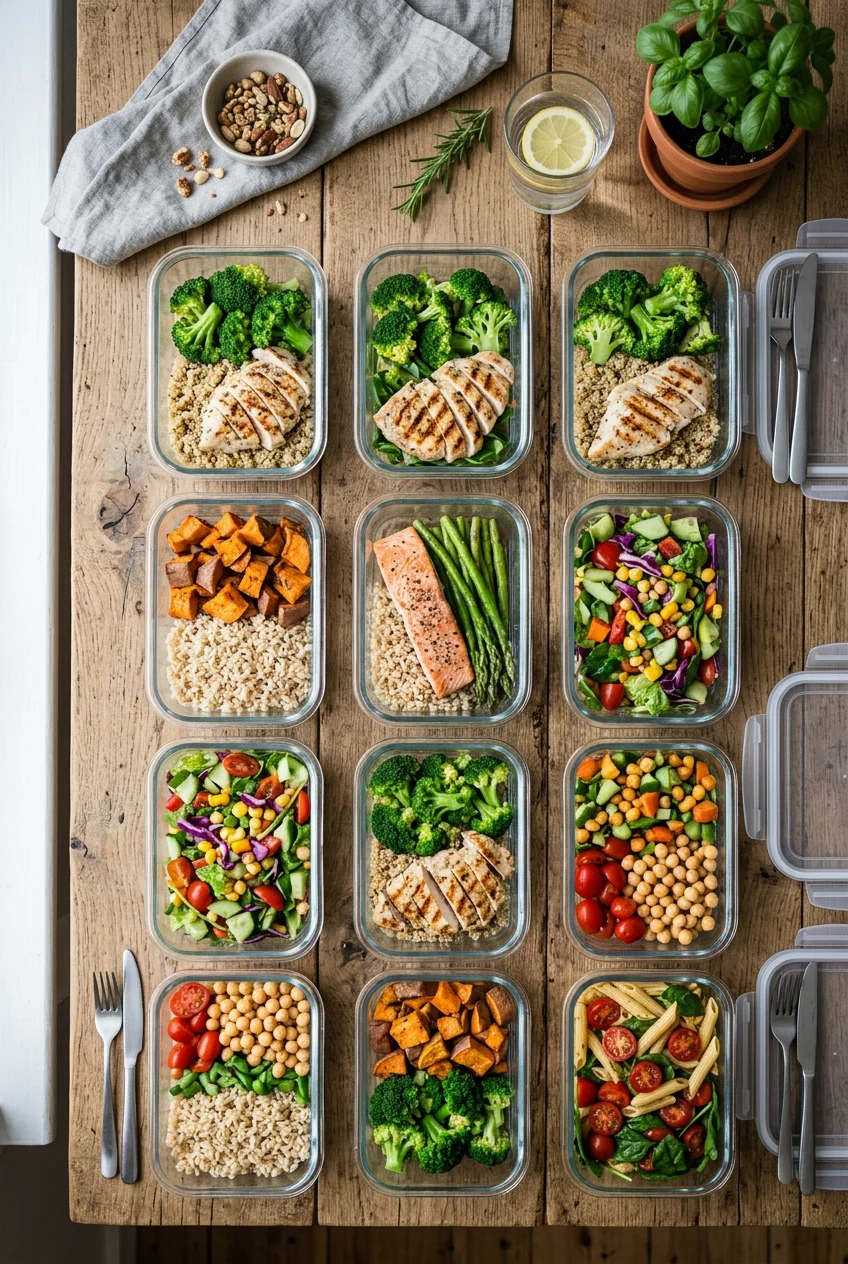
A simple, recommended approach is the 50/25/25 rule. This ratio dictates 50 percent of your plate should be fruits and vegetables, 25 percent lean protein, and 25 percent grains or starchy vegetables. I used to pack 80 percent white rice and a tiny handful of broccoli. I’d eat at noon and crash by 2 PM, reaching for sugary snacks. This ratio ensures a balance of macronutrients and prevents the afternoon energy slump. To force myself to adhere to this, I use Bentgo Prep 3-Compartment containers. A 10-pack costs around $24.99 at Walmart. The physical dividers make it impossible to cheat. I fill the largest compartment with roasted zucchini and bell peppers. I put 4 ounces of ground turkey in one small section, and 1/2 cup of quinoa in the other. The visual constraint trains your brain to recognize a balanced meal. It stops you from over-serving pasta just because you have room in a massive open container.
5. Pre-Portion Carbohydrates Accurately

Carbs are essential for brain function and gym energy, but portion control is critical. A standard serving of cooked grains is 1/2 to 1 cup. Visually, that’s about the size of your closed fist. If you track macros, 1/3 cup of cooked rice is a standard serving. I cook a batch of Lundberg Family Farms Short Grain Brown Rice. A 32-ounce bag costs $4.99 at Sprouts. The nutty, earthy smell of boiling brown rice fills the kitchen on Sunday. I measure out 1/2 cup portions while the rice is warm. If you wait until it gets cold, it clumps into a brick that’s impossible to portion. I also rely on sweet potatoes. I buy a 3-pound bag at Trader Joe’s for $4.49. I dice them, toss them in olive oil, and roast them until crispy. I weigh out 100 grams of sweet potatoes per container. Accurate portioning stops the accidental calorie surplus that happens when you blindly scoop rice with a massive spoon.
6. Maximize Vegetable Intake With Smart Prep

If I put whole bell peppers in my crisper drawer, they turn to mush by Friday. You have to wash and chop produce immediately after getting home. Don’t sit down. Don’t put the bags away for later. I slice three bell peppers, two cucumbers, and a bunch of celery into sticks right away. I store these ready-to-eat vegetables at eye level in the fridge. If you can’t see them, you won’t eat them. For storage, I use Stasher Reusable Silicone Bags. The sandwich size costs $12.99 at Whole Foods. They feature a thick seal that keeps air out, preventing cucumbers from getting rubbery. Aim for 2 cups of raw vegetables or 1 cup of cooked vegetables per meal. You can estimate this as two cupped hands of produce. Having vegetables pre-chopped removes the friction of healthy snacking. When I’m starving at 4 PM, grabbing a Stasher bag of crisp bell pepper slices is as easy as grabbing potato chips. You might also like: 15 Creative Healthy Meal Prep Ideas That Make a Real Difference

Food Scale -33lb Digital Kitchen Scale for Food Ounces
If you want something that just works, Food Scale -33lb Digital Kitchen Scale for Food Ounces Grams Rechargea is a safe bet (78 reviews, 4.5 stars).
7. Utilize Ingredient Prep For Variety And Flexibility

Prepping five identical meals leads to extreme menu fatigue. By Thursday, you’re so sick of the same chicken and rice that you end up ordering a $25 pizza. Instead of building full meals, I use “ingredient prep.” I cook large batches of individual components. I roast a sheet pan of mixed vegetables. I line a baking sheet with Reynolds Wrap Heavy Duty Foil ($10.49 for 130 sq ft at Target) to prevent sticking. I toss broccoli and carrots with 2 tablespoons of Pompeian Extra Virgin Olive Oil, 1 teaspoon of kosher salt, 1/2 teaspoon of black pepper, and oregano. I cook grains in a rice cooker and proteins in a separate dish. Storing these in separate containers lets you mix and match. On Tuesday, I might build a grain bowl. On Wednesday, I wrap the same veggies and chicken in a Mission Whole Wheat Tortilla ($3.48 for a 10-pack) with hummus. This modular approach prevents boredom while requiring zero actual cooking during the week. You might also like: 8 Vegetarian Meal Prep for Every Budget
8. Avoid The Common Mistake Of Overcomplicating Recipes

A major pitfall for beginners is choosing complex recipes that lead to burnout. I once tried making a traditional lemongrass curry from scratch. It required fourteen ingredients, took three hours, dirtied every pot, and I hated the texture by day two. I threw away $30 worth of groceries. As dietitian Chelsea Jackie, RDN, suggests, “If you tend to get bored with meal prep, or you find yourself wasting a lot of what you prepare, focus on making a simple, rotating menu instead.” I stick to 2 to 3 simple, complete dishes per week to avoid waste. I rely on basic spice blends to change the flavor profile. I buy Simply Organic Garlic Powder ($6.79 for 3.64 oz) and generic oregano for a Mediterranean vibe one week. The next, I’ll use Trader Joe’s Curry Powder ($2.99) on the same chicken and rice. Rotating spices keeps familiar ingredients exciting without requiring you to learn new, complicated cooking techniques. You might also like: 20 Inspiring Sunday Dinner Ideas You Need to See
Strategize Snacks With High-Protein Options

Many meal prep routines fail when hunger strikes between meals. If you only plan your lunches, you’ll end up eating stale donuts from the breakroom. Sports dietitian Morgan Walker recommends packing protein into your snacks. I rely on smoothies made with Optimum Nutrition Gold Standard Whey Protein ($44.99 for 2 lbs at Amazon). The chocolate flavor masks the frozen spinach I blend into it. If I don’t want a smoothie, I pack Greek yogurt with fruit and nuts. I buy Blue Diamond Whole Natural Almonds ($6.98 for 16 oz) and measure 1/4 cup. The almonds provide a loud crunch that satisfies the urge to chew. Hard-boiled eggs are another grab-and-go option. Two large eggs deliver 12 grams of protein. I sprinkle them with Trader Joe’s Everything But The Bagel Seasoning ($1.99). Planning snacks with the same rigor as main meals prevents the blood sugar crashes that ruin your discipline.

Rubbermaid Brilliance Tritan Plastic Food Storage
Rubbermaid Brilliance Tritan Plastic Food Storage Containers BPA Free has been one of the most consistently praised picks in this category. 583 reviewers averaged 4.5/5.
Prevent Soggy Meals By Separating Dressings

A common mistake that ruins prepped salads is adding the dressing too early. The acid in a vinaigrette breaks down the lettuce leaves overnight. By lunch, you’re eating a slimy mess. Always store dressings, sauces, and items like sliced avocado in separate containers. I use Sistema To Go Dressing Containers. A 4-pack costs $6.99 at Target. They hold 1.1 ounces of liquid, which enforces portion control. I pour my vinaigrette into the pod, twist the lid tight, and drop it into my salad container. You also need to isolate crispy components. Croutons and toasted nuts will absorb moisture and turn to mush. I keep them in a tiny baggie until just before eating. If you use the Bentgo Prep 3-Compartment containers, you can keep wet ingredients away from dry greens. Taking thirty seconds to separate components guarantees that your Friday salad is as crisp as your Monday salad.
Maximize Freezer Storage With Silicone Cubes

For batch cooking soups, stews, or sauces, silicone freezing trays are effective. I use Souper Cubes. A tray costs $19.99 at Amazon. These thick, rigid trays allow you to freeze perfect 1-cup or 2-cup blocks of liquid food. Before I found these, I froze chili in random containers. They stacked terribly and wasted freezer space. Now, I pour my hot turkey chili into the Souper Cubes compartments. Once frozen, I pop the blocks out and store them in a gallon freezer bag. It saves space and lets me pull out one portion at a time. Cooked proteins and grains can be frozen for 2 to 3 months, while dense soups last up to 3 months. To keep track, label everything. I use a Sharpie Extreme Permanent Marker ($5.49 for a 4-pack) and masking tape. I write the contents and the date. Cooked proteins are good for 3 to 4 days in the fridge. Labeling prevents you from playing a guessing game with five-day-old chicken.
Final Thoughts On Your Prep Routine
Building a sustainable routine takes a few weeks of trial and error. You’ll probably overcook your rice or forget to separate your dressing once. That’s part of the process. Stick to the basics. Buy the Rubbermaid containers, weigh your proteins on the OXO scale, and rely on cheap staples like chicken thighs and brown rice. Don’t try to cook five gourmet meals on a Sunday. Keep your menu rotating, utilize your freezer with Souper Cubes, and always wash your vegetables the second you get home. If you found this breakdown helpful, pin this article to your favorite recipe board so you can reference the 50/25/25 rule and portion measurements next Sunday.
Frequently Asked Questions
How long does meal prepped food last in the fridge?
Cooked proteins and most prepared meals are typically safe for 3 to 4 days in the refrigerator. To extend freshness, use airtight containers and ensure your fridge is set below 40 degrees Fahrenheit. Always label your containers with the prep date.
What is the 50/25/25 rule for meal prep?
The 50/25/25 rule is a dietitian-recommended method for building balanced meals. It dictates that 50 percent of your container should be fruits or vegetables, 25 percent lean protein, and 25 percent complex carbohydrates or starchy vegetables.
How can I prevent my meal prep salads from getting soggy?
Never add dressing directly to your greens during prep. Store vinaigrettes and heavy sauces in separate, small leak-proof containers. Keep wet ingredients like tomatoes away from delicate lettuces, and store dry toppings like nuts in a separate baggie until eating.
What are the best cheap proteins for meal prepping?
Chicken thighs are highly cost-effective and reheat much better than chicken breasts. Other affordable, high-protein options include eggs, canned chunk light tuna, dried lentils, and large tubs of low-fat Greek yogurt.
