What’s Inside
- Invest in Pyrex Glass, Not Flimsy Plastic
- Anchor Your Fitness Meal Prep With Budget Proteins
- Use the 50/25/25 Hand-Portioning Method
- Switch to Component Prep to Avoid Flavor Fatigue
- Let Store-Bought Convenience Items Do the Heavy Lifting
- Stop Struggling With Dull Kitchen Knives
- Run Three Appliances Simultaneously
- Use a Wireless Meat Thermometer for Perfect Chicken
- Prep Your Snacks So You Don’t Crash
- Rely on No-Cook Assembly Days for the Final Stretch
Last Tuesday at Whole Foods, I dropped a flimsy plastic container of chicken and broccoli right in the parking lot. The lid popped off, scattering dry quinoa across the wet asphalt. That was the moment I realized my fitness meal prep routine was completely broken. I spent four hours every Sunday cooking identical, sad meals that tasted like wet cardboard by Wednesday. It’s a common trap. You buy all the right ingredients, spend your entire weekend in the kitchen, and end up hating your food. I tried doing this the hard way for months before figuring out that spending three hours on a Sunday isn’t a badge of honor. It’s just a waste of time. Let’s fix this. I’ve broken down my exact 30-minute system.
1. Invest in Pyrex Glass, Not Flimsy Plastic

If you’re still using stained plastic containers from three years ago, throw them out today. I tried forcing myself to eat out of warped plastic tubs for a year, and the lingering smell of old taco seasoning completely ruined my appetite. (Learned that the hard way.) For home meal prep, glass containers with airtight snap-lock lids are non-negotiable. They’re safe for the microwave and oven, they don’t absorb odors, and they easily last five to ten times longer than cheap plastic alternatives.
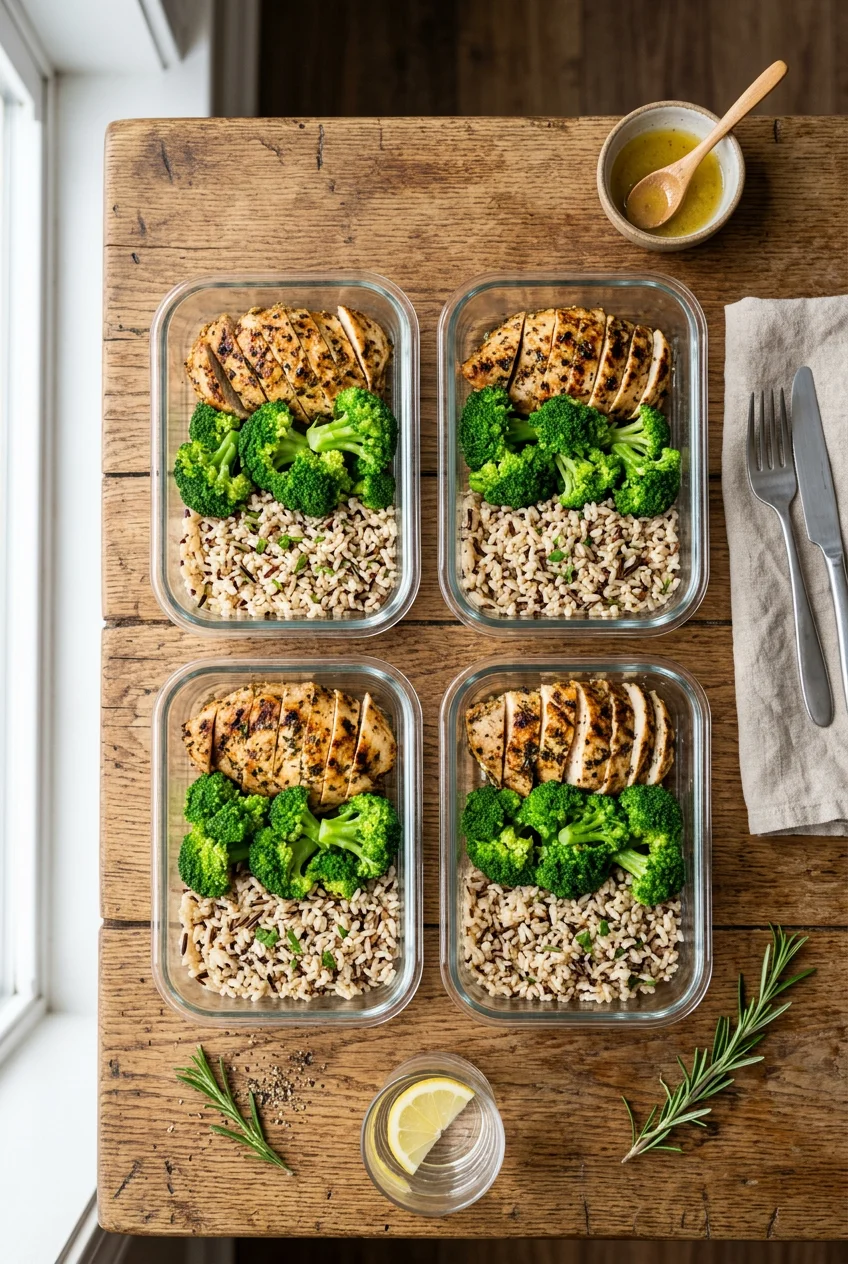
I bought a set of Pyrex 3-cup rectangular glass containers ($24.99 for a set of six at Target) last October after my plastic ones started warping in the dishwasher bottom rack. The 3-cup size is exactly what you need for individual portions. It holds exactly 4 oz of cooked protein, 1/2 cup of grains, and a full cup of chopped vegetables without squishing the broccoli florets into a mushy paste. The snap lids latch perfectly one-handed, which matters when I’m trying to pack a bag while holding my morning coffee.
A set of ten to twelve of these glass containers can efficiently manage a week’s worth of meals. To keep everything organized, I use a roll of blue painter’s tape ($4.50 at Home Depot) and a black Sharpie to label the top of every lid. Clearly label all prepped containers with the meal name and the exact preparation date. This practice helps track freshness and keeps you strictly adhering to the recommended refrigeration time of three to four days for most cooked foods. It minimizes food waste and stops the Wednesday morning guessing game of whether that chicken is still safe to eat.
2. Anchor Your Fitness Meal Prep With Budget Proteins

Building your meals around budget-friendly protein sources is the only way to maximize nutritional value without spending your entire paycheck at the grocery store. I used to buy pre-marinated, premium cuts of steak and chicken every Sunday. I’d spend $150 just on meat, and half of it would go bad in the fridge because I didn’t want to eat it all week. You need to prioritize affordable, high-protein staples that give you flexibility.
Excellent options include standard large eggs, which run approximately $2.50 per dozen at Walmart and provide 6 grams of protein per egg. Canned tuna is another massive cost-saver. I buy Starkist Chunk Light Tuna in water (around $1.14 per 5-ounce can at Kroger). Each can delivers 22 grams of protein per 3-ounce serving. If you hate the smell of plain canned tuna, mix it with Greek yogurt instead of mayonnaise. I use Kirkland Signature Non-Fat Greek Yogurt ($6.49 for a 48 oz tub at Costco). A single cup of that yogurt packs 23 grams of protein and gives tuna salad a thick, creamy texture without the heavy grease of mayo. Trust me on this.
Don’t ignore plant-based proteins either. A 15-ounce can of store-brand black beans costs about $1.00 and gives you 7.6 grams of protein per half cup. Dried lentils are even better, offering 16 grams of protein per cooked cup. Before finalizing your menu, review the weekly grocery store flyers for sales on these proteins. Building your menu around discounted ingredients brings your weekly grocery spending down to $60-$120 for one person. It’s a simple math equation that leaves you with more money for things you actually enjoy.
3. Use the 50/25/25 Hand-Portioning Method

To ensure balanced macronutrient intake without losing your mind, aim for a meal composition of 50 percent vegetables, 25 percent lean protein, and 25 percent complex carbohydrates. I tried weighing every single almond and measuring every grain of rice on a digital scale for six months. It’s a miserable way to live. I eventually abandoned the kitchen scale completely and switched to the hand-portioning method.
For practical portioning, use your own hand as a visual guide. You want a palm-sized piece for protein. That translates to one boneless, skinless chicken breast, roughly 1/3 cup of cooked ground beef, or 1/2 cup of ground turkey. Next, use a fist-sized portion for your carbohydrates, like a scoop of cooked quinoa or roasted sweet potatoes. Finally, use a large, cupped hand measurement for your vegetables. If you’re using leafy greens like spinach, double the cupped hand portion because it shrinks down to nothing once you chew it.
This method completely changed how I handle Sunday afternoons. I just line up my Pyrex containers on the counter and drop the food in by sight. A palm of sliced flank steak, a fist of brown rice, and a heaping cupped hand of roasted Brussels sprouts. It takes exactly ten seconds per container. Skip the complicated macro-tracking apps unless you’re two weeks out from a bodybuilding stage. For standard fitness meal prep, the 50/25/25 visual rule guarantees you get enough protein to recover from workouts while keeping your vegetable intake high enough to actually feel full. You might also like: 11 Vegan Meal Prep That Actually Work

Bento Box Adult Lunch Box – 4 Pack, 5
Honestly, Bento Box Adult Lunch Box – 4 Pack surprised me — sturdier than it looks in the photos, and over 24 buyers gave it 4.5 stars.
4. Switch to Component Prep to Avoid Flavor Fatigue

Eating identical meals daily leads directly to boredom and will absolutely derail your fitness goals. Certified exercise physiologist Jim White points out that eating the exact same thing every day is a recipe for burnout. I know this firsthand. I used to make five identical plastic containers of turkey meatballs and whole wheat pasta. By Thursday, the texture of the meatballs was grainy, the pasta was mushy, and the smell made me want to order a pizza. You might also like: 15 Cozy Easy Dinner Ideas for Every Budget
Instead of preparing entire, identical meals, focus entirely on component prep. This involves cooking large batches of individual ingredients and storing them in separate large glass containers. On Sunday, I cook 2 lbs of plain grilled chicken breasts, 3 cups of brown rice, and two large baking sheets of roasted zucchini. I store the chicken in one container, the rice in another, and the zucchini in a third. You might also like: 15 Stunning Aesthetic Batch Cooking You Need to See
This approach offers massive flexibility. On Monday, I might eat the chicken and rice with a splash of soy sauce. On Tuesday, I can chop up that same chicken, throw it over fresh spinach, add a handful of cherry tomatoes, and call it a salad. On Wednesday, I can wrap the chicken and zucchini in a tortilla with a slice of cheese. You mix and match components throughout the week to create varied meals. It prevents flavor fatigue entirely. You aren’t locked into eating the exact same flavor profile five days in a row, which is the number one reason people abandon their meal prep plans by Wednesday afternoon.
5. Let Store-Bought Convenience Items Do the Heavy Lifting

There is a strange amount of guilt in the fitness community about buying pre-chopped vegetables. Ignore it completely. Don’t hesitate to use pre-cut vegetables, frozen fruits, and canned goods. While pre-cut items carry a slightly higher price tag, they significantly reduce your chopping and preparation time. If spending an extra two dollars saves you twenty minutes of standing over a cutting board, it’s money well spent.
I regularly buy the pre-chopped mirepoix mix (onions, carrots, celery) from Sprouts for $3.99. I just dump the entire plastic tub into a hot skillet with 1 tablespoon of olive oil, and my vegetable base is done in five minutes. I also rely heavily on frozen produce. Frozen vegetables are often more nutrient-dense than fresh ones because they are picked and flash-frozen at peak ripeness. Fresh broccoli often sits on a truck for a week before it hits the grocery store shelf.
I keep three bags of Trader Joe’s frozen organic broccoli florets ($2.49 for a 16 oz bag) in my freezer at all times. You don’t even need to thaw them. Toss the frozen florets directly onto a baking sheet, drizzle with 1 tablespoon of avocado oil, sprinkle with heavy salt, and roast at 400 degrees for 25 minutes. The edges get crispy and charred, and the center stays tender. I tried roasting fresh broccoli for months, and half the time it would turn yellow and soft in my crisper drawer before I ever got around to cooking it. Let the grocery store do the hard work for you.
6. Stop Struggling With Dull Kitchen Knives

A high-quality, sharp chef’s knife is the most important tool in your kitchen for efficient meal prep. I spent my entire twenties hacking at sweet potatoes with a dull, $10 plastic-handled knife I bought at a discount store. It was dangerous and exhausting. I actually slipped while cutting a butternut squash last November and nearly took off a finger. A dull knife requires you to use excessive force, which is exactly how accidents happen.
I finally upgraded to the Misen 8-inch Chef’s Knife, which costs around $65 online. The difference is hard to overstate. A sharp knife makes chopping vegetables and slicing raw proteins incredibly fast. When you need to cube 3 lbs of raw chicken breast, a sharp blade glides through the meat in two minutes. A dull blade forces you to saw back and forth, tearing the meat and turning a two-minute job into a ten-minute frustration.
If you want your prep to actually take 30 minutes, you can’t waste time fighting your equipment. The Misen knife has a sloped bolster that lets you grip the blade properly with your thumb and index finger. It gives you total control. I wash it by hand immediately after using it and dry it with a towel. Never put a good knife in the dishwasher, because the harsh detergent and high heat will ruin the steel edge in a matter of weeks. Spend the $65 once, and your Sunday prep time will literally get cut in half.

Food Scale, 11lb Digital Kitchen Scale with 6 Units LCD
If you want something that just works, Food Scale is a safe bet (21 reviews, 4.5 stars).
7. Run Three Appliances Simultaneously

The secret to a 30-minute fitness meal prep session is treating your kitchen like a factory floor. You have to maximize efficiency by utilizing multi-functional kitchen appliances at the exact same time. If you cook your rice, then wait for it to finish before you start your chicken, you’ll be in the kitchen for two hours. You need to overlap your cooking times using an Instant Pot, a slow cooker, or an air fryer.
These tools allow you to cook different meal components with zero supervision. I set up my kitchen in three zones. First, I use my Ninja 4-Quart Air Fryer ($89 at Walmart) for vegetables. I toss 2 cups of halved Brussels sprouts in olive oil, dump them in the basket, and set it for 12 minutes at 400 degrees. Second, I use my Instant Pot Duo 7-in-1 ($99 at Target) for my protein. I drop in 2 lbs of chicken breasts and a jar of salsa, lock the lid, and set it to high pressure for 15 minutes.
Third, I use the standard stovetop for my carbohydrates. I boil a pot of water and drop in 2 cups of lentil pasta, which takes about 9 minutes. While all three appliances are running simultaneously, I wipe down the counters and line up my glass containers. The active cooking time is literally just the five minutes it takes to load the machines. By the time the Instant Pot beeps, the air fryer is done, and the pasta is drained. You assemble the containers and you’re completely finished.
8. Use a Wireless Meat Thermometer for Perfect Chicken

Nobody wants to eat dry, rubbery chicken breast on a Tuesday afternoon. It’s the primary reason people give up on fitness meal prep entirely. A meat thermometer is an absolute requirement, especially if you’re cooking large batches of protein. You need to ensure proteins like chicken and steak are cooked to a safe internal temperature without becoming chalky and overcooked.
I use the Typhur Sync Wireless Thermometer ($229), though a basic digital ThermoPro ($14.99 on Amazon) works fine if you’re on a budget. The wireless one is great because I can monitor the temp from my phone while I clean the living room. For poultry, the safe internal temperature is 165 degrees Fahrenheit. I pull my chicken out of the oven when the thermometer hits 160 degrees and let it rest on the cutting board. The residual heat brings it up to 165 degrees perfectly. It stays juicy and tender all week.
You also have to implement strict food safety guidelines once that meat is cooked. Always refrigerate cooked foods within two hours of cooking. I use shallow glass containers to facilitate rapid cooling in the fridge. Most cooked leftovers remain safe for three to four days when stored in a refrigerator at 40 degrees Fahrenheit or below. I once left a batch of cooked turkey meatballs on the counter to cool for four hours in college and ended up with terrible food poisoning. (No exaggeration.) Don’t risk it. Cool it quickly and get it in the fridge.
9. Prep Your Snacks So You Don’t Crash

Neglecting to prep healthy snacks is a massive mistake that guarantees you’ll make impulsive, unhealthy food choices by 3 PM. I used to prep perfectly balanced lunches, but I’d completely ignore my afternoon hunger. By the time I left the office, my blood sugar would crash, and I’d end up buying a massive chocolate chip cookie at the coffee shop next door. You have to prep your snacks with the exact same focus you use for your main meals.
Prepare quick, nutritious options on Sunday so they are ready to grab. I boil a dozen eggs, peel them immediately, and store them in a glass container with a damp paper towel to keep them fresh. I also pre-portion nuts into small bags. I buy Blue Diamond Lightly Salted Almonds ($6.98 for a 16 oz bag at Walmart) and measure exactly 1 ounce into tiny ziplock bags. Having that pre-portioned bag stops me from mindlessly eating an entire sleeve of almonds while staring at my computer screen.
For a crunchier snack, I chop up celery and carrots and portion them into small containers with 2 tablespoons of Sabra Classic Hummus ($3.99 for a 10 oz tub at Kroger). Don’t forget about hydration, either. I prepare a large 64-ounce glass pitcher of unsweetened iced green tea with lemon slices on Sunday night. Having a cold, flavored beverage ready in the fridge stops me from reaching for a soda when I want something other than plain water.

Rubbermaid Brilliance Tritan Plastic Food Storage
Rubbermaid Brilliance Tritan Plastic Food Storage Containers BPA Free punches above its price — 583 buyers rated it 4.5 stars. I would buy it again.
10. Rely on No-Cook Assembly Days for the Final Stretch

To truly keep your prep time under 30 minutes, you need to integrate meals that require absolutely no cooking into your weekly plan. These are assembly-only meals. Examples include large salads with pre-cooked protein, wraps made with leftovers, or overnight oats for breakfast. This strategy significantly reduces your active time in the kitchen and gives you a break from eating hot meals.
I make three jars of overnight oats every Sunday night. I use 32-ounce wide-mouth Mason jars ($12.99 for a dozen at Walmart). In each jar, I combine 1/2 cup of Quaker Old Fashioned Oats ($5.29 for a 42 oz tub at Target), 1 cup of unsweetened almond milk, 1 tablespoon of chia seeds, and a handful of frozen blueberries. You just screw the lid on and shake it. It takes exactly three minutes, and breakfast is completely handled for the first half of the week.
I also assemble salad jars for quick, grab-and-go lunches. The trick is layering them correctly so the greens don’t turn into a soggy mess. Put 2 tablespoons of vinaigrette at the very bottom of the jar. Add your heavy, wet ingredients next, like cherry tomatoes and cucumbers. Then add a layer of complex carbs. I buy bulk organic quinoa at Costco ($10.99 for a 4.5 lb bag) and cook a large batch, adding 1/2 cup to the middle of the jar. Finally, pack the top completely full of dry spinach. When you’re ready to eat, just shake the jar and dump it into a bowl.
I hope this breakdown proves that fitness meal prep doesn’t have to consume your entire weekend. Once I stopped trying to cook gourmet, complex recipes and shifted to simple component prep, my Sundays opened up completely. I actually have time to relax now, and my fridge is still stocked with food I genuinely want to eat. Start small this weekend. Pick just two proteins and two vegetables, grab some quality glass containers, and see how fast you can get it done. If you found this 30-minute system helpful, pin this article to your favorite meal prep board so you can reference the exact temperatures and grocery prices before your next shopping trip. You’ve got this.
Frequently Asked Questions
How long does fitness meal prep last in the fridge?
Most cooked foods, including chicken, rice, and roasted vegetables, remain safe to eat for three to four days when stored in airtight glass containers at 40 degrees Fahrenheit or below. Always refrigerate leftovers within two hours of cooking.
What is the 50/25/25 rule for fitness meal prep?
The 50/25/25 rule is a visual portioning method for balanced meals. You fill 50 percent of your container with vegetables, 25 percent with lean protein (like a palm-sized piece of chicken), and 25 percent with complex carbohydrates (like a fist-sized scoop of rice).
What are the cheapest proteins for meal prep?
To keep your grocery budget low, build your meals around affordable staples like large eggs, canned tuna, black beans, dried lentils, and non-fat Greek yogurt. Buying these items in bulk or during weekly sales can significantly reduce your costs.
How do I avoid getting bored with my meal prep?
Use component prep instead of making full, identical meals. Cook large batches of individual ingredients—like grilled chicken, quinoa, and roasted zucchini—and store them separately. This allows you to mix and match components daily to prevent flavor fatigue.
