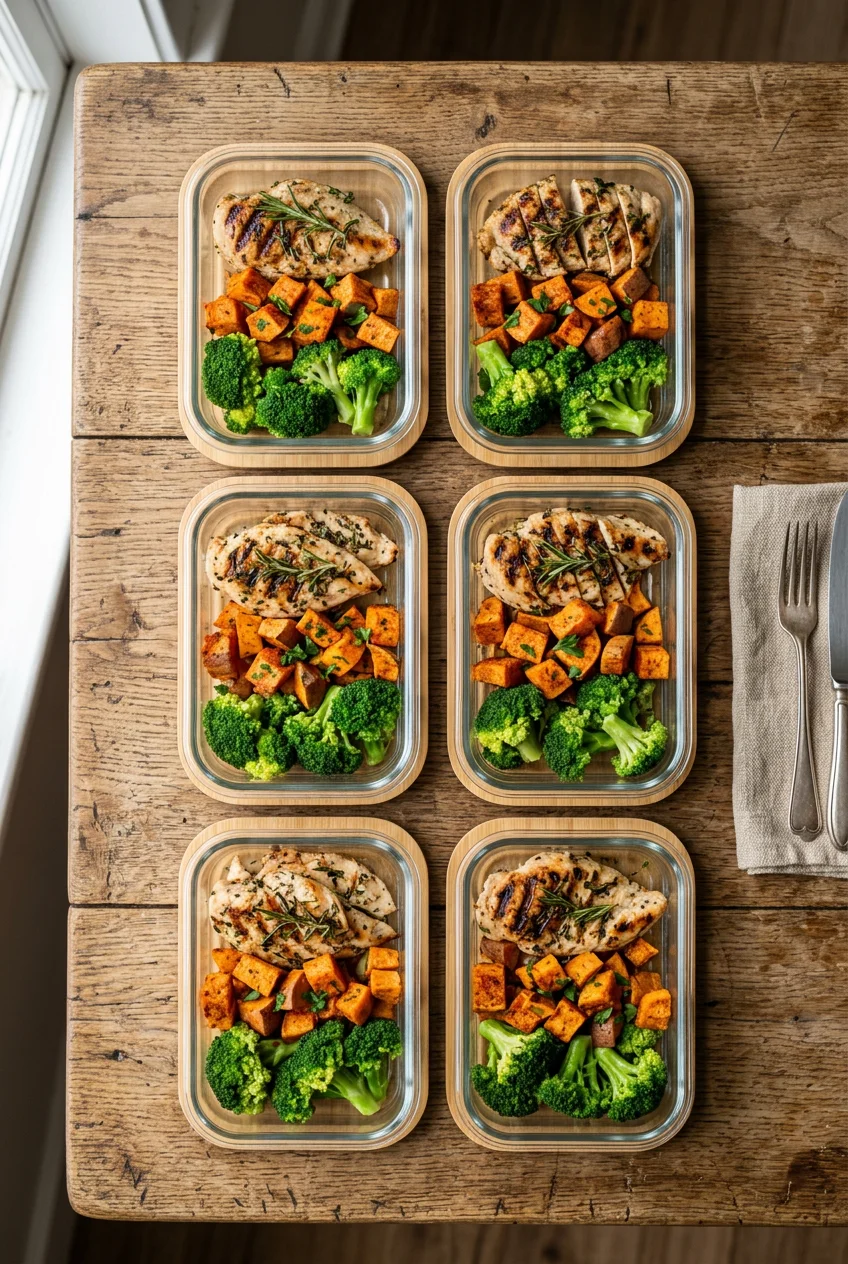
What’s Inside
- Start Small With Simple Healthy Meal Prep to Avoid Burnout
- Ditch Plastic for Pyrex Ultimate Glass Containers
- Buy Base Grains in Bulk at Costco
- Harvest Walmart Rotisserie Chickens for Quick Protein
- Rely on Trader Joe’s Frozen Vegetables
- Batch Roast Sweet Potatoes on Sheet Pans
- Blend a 16-Ounce Jar of Tahini Dressing
- Master Simple Healthy Meal Prep With Canned Beans
- Pre-Portion Bulk Snacks in 4-Ounce Jars
Last October, I stood in my office breakroom crying over a puddle of lentil soup. My cheap plastic container had warped in the microwave, the lid popped off, and my lunch exploded across the glass turntable. That specific disaster forced me to rethink my entire approach to food storage and cooking. I needed a system for simple healthy meal prep that actually worked. Most advice online tells you to spend six hours on Sunday cooking elaborate recipes you’ll hate by Wednesday. I tried that. I wasted money and threw away rotting produce. I realized simple healthy meal prep requires mechanical efficiency, not culinary ambition. I stopped trying to make bento boxes. I started tracking exact grocery costs and measuring the active time I spent chopping vegetables. I reduced my grocery bill to under five dollars per serving by focusing on bulk dry goods, strategic frozen shortcuts, and durable glass storage. You don’t need a culinary degree to feed yourself cheaply. You just need a methodical routine and a few specific ingredients from normal grocery stores. Here’s the exact system I use to keep my food costs low without eating bland, dry chicken every single day.
1. Start Small With Simple Healthy Meal Prep to Avoid Burnout

When I first started prepping, I tried to cook twenty-one meals on a single Sunday. I stood in my kitchen for six hours straight. By Tuesday, the spinach in my plastic containers smelled like swamp water. I threw away $45 worth of groceries. That failure taught me to scale back. Dietitian Samantha Nimmons advises, “If cooking meals for a full week seems daunting, try starting with two or three days first.” I follow this rule strictly now. I only prep lunches for Monday through Wednesday. You don’t need a fridge full of identical boxes to be successful. I buy a 1.5-pound pack of Trader Joe’s Organic Chicken Breasts for $7.99. I bake them with 1 tablespoon of olive oil and 1 teaspoon of kosher salt. This yields exactly three 6-ounce portions. It takes twenty minutes of active work. You’re not running a commercial kitchen. You’re just trying to feed yourself without spending $15 on a mediocre salad at noon. If you try to prep for the whole week immediately, you’ll burn out. I’ve seen it happen to dozens of people. They buy sixty dollars of produce, chop it all, and then order pizza on Thursday because the prepped food looks soggy. Start with three days. Evaluate how the food holds up. Adjust your grocery list. It’s a methodical process. Your future self will appreciate the three days of food much more than a trash can full of rotten aspirations.
2. Ditch Plastic for Pyrex Ultimate Glass Containers

I used cheap plastic containers for two years until that office microwave incident. Red grease permanently stained the sides of my old bowls. I threw the plastic containers in the trash that afternoon. I replaced them with the Pyrex Ultimate 10-piece glass set. I bought it at Target for $44.99. The initial cost felt high, but it’s cheaper than replacing stained plastic every three months. Glass doesn’t retain the smell of yesterday’s garlic salmon. The silicone rims on the Pyrex lids seal tightly. I can turn a bowl of lentil stew upside down in my canvas tote bag and it won’t leak. That specific detail matters when you’re carrying a laptop in the same bag. Each rectangular container holds exactly 3 cups of food. This forces me to control my portion sizes naturally. I put 1/2 cup of rice, 4 ounces of meat, and 1 cup of vegetables inside. It fits perfectly. Don’t buy the sets with snap-hinge lids. I’ve broken three of those hinges just by opening them too fast when they’re cold from the fridge. The plain silicone stretch lids on the Pyrex Ultimate set handle temperature changes without snapping. You load them in the bottom rack of the dishwasher and they come out completely clean.
3. Buy Base Grains in Bulk at Costco

Rice and quinoa form the base of almost every meal I make. Buying small 12-ounce bags at the regular grocery store destroys a five-dollar-per-meal budget. I learned this the hard way when I audited my grocery receipts last year. I was spending $6.49 on tiny bags of organic quinoa every week. I switched my grain shopping entirely to Costco. I buy the Kirkland Signature Organic Quinoa. It costs $10.99 for a massive 4.5-pound bag. That brings the cost down to about twenty cents per 1/4-cup dry serving. The math is undeniable. I store the bulk grains in two large 4-quart Cambro containers in my pantry to keep pantry moths out. Quinoa has a natural coating called saponin that tastes bitter and soapy if you don’t rinse it. I measure 2 cups of dry quinoa into a fine mesh strainer. I run cold water over it for exactly two minutes, rubbing the seeds with my hands. I cook it in my rice cooker with 3.5 cups of water and 1 teaspoon of chicken bouillon. It yields about 6 cups of fluffy, nutty grains. I let it cool completely on a wide baking sheet before packing it. If you put hot quinoa straight into a container and seal it, the trapped steam turns the grains into a wet, sticky paste. I ate mushy quinoa for months before I figured out the cooling step. It’s a small adjustment that completely changes the texture.

Food Scale, 11lb Digital Kitchen Scale with 6 Units LCD
Honestly, Food Scale surprised me — sturdier than it looks in the photos, and over 21 buyers gave it 4.5 stars.
4. Harvest Walmart Rotisserie Chickens for Quick Protein

Cooking raw chicken breasts every Sunday gets tedious. Sometimes I just don’t have the energy to trim fat, pound the meat flat, and monitor a skillet. When I feel lazy, I buy a hot rotisserie chicken from Walmart. It costs exactly $4.97. You can’t buy raw whole chickens for that price. It’s a loss leader for the store. I bring it home and immediately pull the meat off the bones while it’s still warm. Cold chicken fat congeals into a rubbery mess that makes shredding miserable. I wear disposable nitrile gloves. I pull the breasts off first, shredding them into large chunks. Then I strip the dark meat from the thighs and legs. One Walmart chicken yields about 12 to 14 ounces of light meat and 8 ounces of dark meat. That’s enough protein for five meals. I store the meat in a glass bowl with 1/4 cup of the gelatinous pan drippings poured over the top. The drippings keep the meat moist when you microwave it later. I don’t throw the carcass away. I put the bones, skin, and cartilage into a gallon-sized bag and freeze it. When I have three carcasses, I boil them with 1 onion and 2 carrots to make bone broth. Buying a pre-cooked chicken isn’t cheating. It’s a practical calculation of time versus money. I save forty-five minutes of cooking and cleaning, and the meat tastes better than my dry baked chicken anyway. You might also like: 15 Gorgeous Chicken Breast Dinner Ideas That Make a Real Difference
5. Rely on Trader Joe’s Frozen Vegetables

Most people buy fresh broccoli on Sunday intending to eat it on Thursday. By Thursday, the florets turn yellow and smell like sulfur. I threw away so much rotten produce during my first year of prepping. I finally stopped buying fresh vegetables for my prep containers. I buy Trader Joe’s Organic Frozen Broccoli Florets instead. A 16-ounce bag costs $2.29. Frozen vegetables are flash-frozen at the peak of ripeness. They actually contain more nutrients than a fresh head of broccoli that sat on a truck for two weeks. I don’t thaw the broccoli before packing it. I take my glass containers, add my cooked rice and chicken, and drop 1 cup of frozen broccoli directly into the container. I snap the lid on. The frozen broccoli acts like a small ice pack in my lunch bag. When I microwave the container at work for two minutes, the broccoli steams perfectly. It stays bright green and keeps a slight crunch. If you cook fresh broccoli on Sunday and reheat it on Wednesday, it turns into olive-green mush. The texture is awful. The only trick with frozen vegetables is avoiding the ones with heavy ice crystals inside the bag. If the bag feels like a solid block of ice at the store, it thawed and refroze during shipping. Put it back. Look for bags where you can feel the individual florets loose inside the plastic. You might also like: 20 Inspiring Sunday Dinner Ideas You Need to See
6. Batch Roast Sweet Potatoes on Sheet Pans

Sweet potatoes provide cheap, filling complex carbohydrates. I buy a 3-pound bag at Sprouts Farmers Market for $3.99. I don’t peel them. The skins hold the chunks together and provide fiber. Peeling three pounds of sweet potatoes takes too long anyway. I scrub them under cold water with a stiff brush to remove the dirt. I chop them into uniform 1-inch cubes. If you cut them unevenly, the small pieces burn while the large pieces stay raw in the center. I toss the cubes in a large metal bowl with 2 tablespoons of avocado oil, 1 teaspoon of smoked paprika, and 1 teaspoon of coarse sea salt. I line a large commercial half-sheet pan with Reynolds Wrap Heavy Duty Foil. A 50-square-foot roll costs $5.49. Don’t use the cheap store-brand foil. The sweet potato sugars caramelize and stick to thin foil, tearing it when you try to scoop them up. I spread the cubes in a single layer. Overcrowding the pan traps steam, and the potatoes boil in their own juices instead of roasting. I bake them at 400 degrees for thirty-five minutes. I use a metal spatula to flip them exactly once at the twenty-minute mark. They shrink considerably during roasting. Three pounds of raw potatoes yield about 4 cups of roasted cubes. I let them cool completely on the baking sheet. I add 1/2 cup of these roasted cubes to my lunches. They reheat beautifully and add a dense, sweet texture that breaks up the monotony of rice. You might also like: 12 Ground Beef Meal Prep That Actually Work

Food Scale -33lb Digital Kitchen Scale for Food Ounces
Food Scale -33lb Digital Kitchen Scale for Food Ounces Grams Rechargea has been one of the most consistently praised picks in this category. 78 reviewers averaged 4.5/5.
7. Blend a 16-Ounce Jar of Tahini Dressing

Plain chicken, rice, and broccoli will make you hate eating prepped food. Food needs fat and acid to taste good. I refuse to eat dry lunches. I rely on one versatile tahini sauce that I make every Sunday. I buy a 16-ounce jar of Whole Foods 365 Organic Tahini for $6.79. Tahini separates in the jar. You have to stir the hard paste at the bottom into the oil at the top. I use a long iced-tea spoon for this. I measure 1/2 cup of stirred tahini into a glass measuring cup. I whisk in 1/4 cup of warm water, 3 tablespoons of fresh lemon juice, 1 clove of minced garlic, and 1/2 teaspoon of salt. At first, the mixture seizes up and looks chunky. Keep whisking. The water eventually emulsifies with the sesame oil, turning into a smooth, pale dressing. I store it in a small glass jar in the fridge. It thickens as it chills. I don’t pour the sauce over my prepped meals on Sunday. If you dress the food in advance, the rice absorbs all the liquid and becomes gummy. I pack 2 tablespoons of the tahini sauce in a tiny 2-ounce stainless steel condiment container. I buy the LunchBots brand. They cost $15.99 for a set of three on Amazon, but I found mine at a local kitchen supply store. I pour the sauce over my food right before I eat. The nutty, acidic flavor cuts through the blandness of plain vegetables. It’s a mechanical upgrade to the meal.
8. Master Simple Healthy Meal Prep With Canned Beans

Meat gets expensive. When I want to keep my simple healthy meal prep strictly under five dollars a serving, I use canned beans for protein. I buy Kroger Simple Truth Organic Black Beans. A 15-ounce can costs $1.29. Canned beans sit in a thick, starchy liquid composed of water and salt. You must rinse them thoroughly. I dump the can into a colander and spray cold water over them until the water runs completely clear. If you skip this step, that metallic-tasting starch clings to your food. I let them drain for ten minutes. I shake the colander vigorously to remove excess water. Wet beans will ruin a salad. I mix 1 cup of rinsed black beans with 1/2 cup of diced red bell pepper, 1/4 cup of chopped red onion, and 1 tablespoon of lime juice. This creates a dense, filling bean salad that costs less than eighty cents per serving. I tried cooking dried beans from scratch for a few months to save even more money. It wasn’t worth the effort. Soaking beans overnight, boiling them for two hours, and constantly checking the water level drained my time. Canned beans offer immediate convenience. I also keep cans of chickpeas on hand. I mash 1 cup of rinsed chickpeas with 1 tablespoon of mayonnaise and 1 teaspoon of Dijon mustard. It mimics the texture of tuna salad without the sharp fishy smell that bothers coworkers in an open office plan.
9. Pre-Portion Bulk Snacks in 4-Ounce Jars

I used to bring entire bags of almonds to my desk. I’d mindlessly eat five handfuls while staring at spreadsheets. I was consuming eight hundred calories of nuts by 2:00 PM. Bulk snacking defeats the purpose of tracking your food. Now, I strictly pre-portion my snacks on Sunday. I buy a 16-ounce bag of Blue Diamond Whole Natural Almonds at Target for $6.89. I also buy a 12-pack of Ball 4-ounce quilted jelly jars for $12.99. These tiny glass jars are perfect for dry snacks. I place six jars on my counter. I use a digital kitchen scale to measure exactly 1 ounce of almonds into each jar. That equals about twenty-three almonds per jar. I screw the metal lids on tight. I stack them in my pantry. In the morning, I just grab one jar and drop it in my bag. The glass protects the nuts from getting crushed, and the visual boundary of the small jar stops me from overeating. When the jar is empty, I’m done snacking. I do the same thing with baby carrots. I weigh out 3 ounces of carrots into small containers. I learned not to store wet carrots in sealed jars for more than three days. They develop a slimy film. I only portion three days of wet snacks at a time. The physical act of measuring snacks forces you to acknowledge portion sizes. It removes the guesswork and the guilt from your afternoon routine.
Building a routine takes time. I ruined a lot of rice and threw away dozens of limp carrots before I figured out how to make this work. You’ll make mistakes too. You might accidentally buy mushy frozen vegetables or scorch a pan of sweet potatoes. That’s part of the process. I rely on these nine methods because they remove the friction from my week. I don’t stare at the fridge at 6:00 PM wondering what to cook. I just open a glass container and microwave it. The financial savings are real. By keeping my portions under five dollars each, I’ve cut my monthly food budget by hundreds of dollars. I don’t miss the twelve-dollar takeout salads. If you found these methods helpful, pin this article to your weekly planning board. Save it so you can reference the cooking times and grocery prices before your next shopping trip. Start with just three days of food this Sunday. Buy the bulk grains, grab a rotisserie chicken, and see how much time you actually save.

Etekcity Food Kitchen Scale
A dependable everyday pick — Etekcity Food Kitchen Scale pulls in 1,736 ratings at 4.5 stars. Not flashy, just solid.
Frequently Asked Questions
How long does meal prepped chicken last?
Cooked chicken lasts three to four days in an airtight glass container in the fridge. I never push it to five days. If you prep on Sunday, eat your last chicken meal on Wednesday or freeze it.
Can I freeze glass meal prep containers?
Yes, tempered glass containers handle freezing well. You must leave an inch of empty space at the top because food expands as it freezes. I let the glass thaw in the fridge overnight before microwaving.
How do you keep rice from getting hard?
Store rice in a completely airtight container. When reheating, sprinkle one tablespoon of water over the rice and cover the container loosely with a damp paper towel. The steam softens the starches perfectly.
Is simple healthy meal prep actually cheaper?
Yes. Buying bulk dry grains and relying on frozen vegetables drops the cost per meal significantly. My average prepped lunch costs around three dollars, compared to twelve dollars for a basic takeout salad.
