What’s Inside
- Start Small on Your Meal Prep Vision Board
- Invest in Quality, Versatile Containers
- Master the 50/25/25 Portion Rule
- Strict Temperature Control for Food Safety
- Utilize Smart Appliances for Maximum Efficiency
- Component-Based Prep for Your Meal Prep Vision Board
- Don’t Shy Away from Strategic Convenience Foods
- Visualizing Bold Flavor Profiles and Sauces
- Integrating Clean Snack Prep
- Hydration Station Planning and Tracking
- Tracking, Reflecting, and Adjusting Your Routine
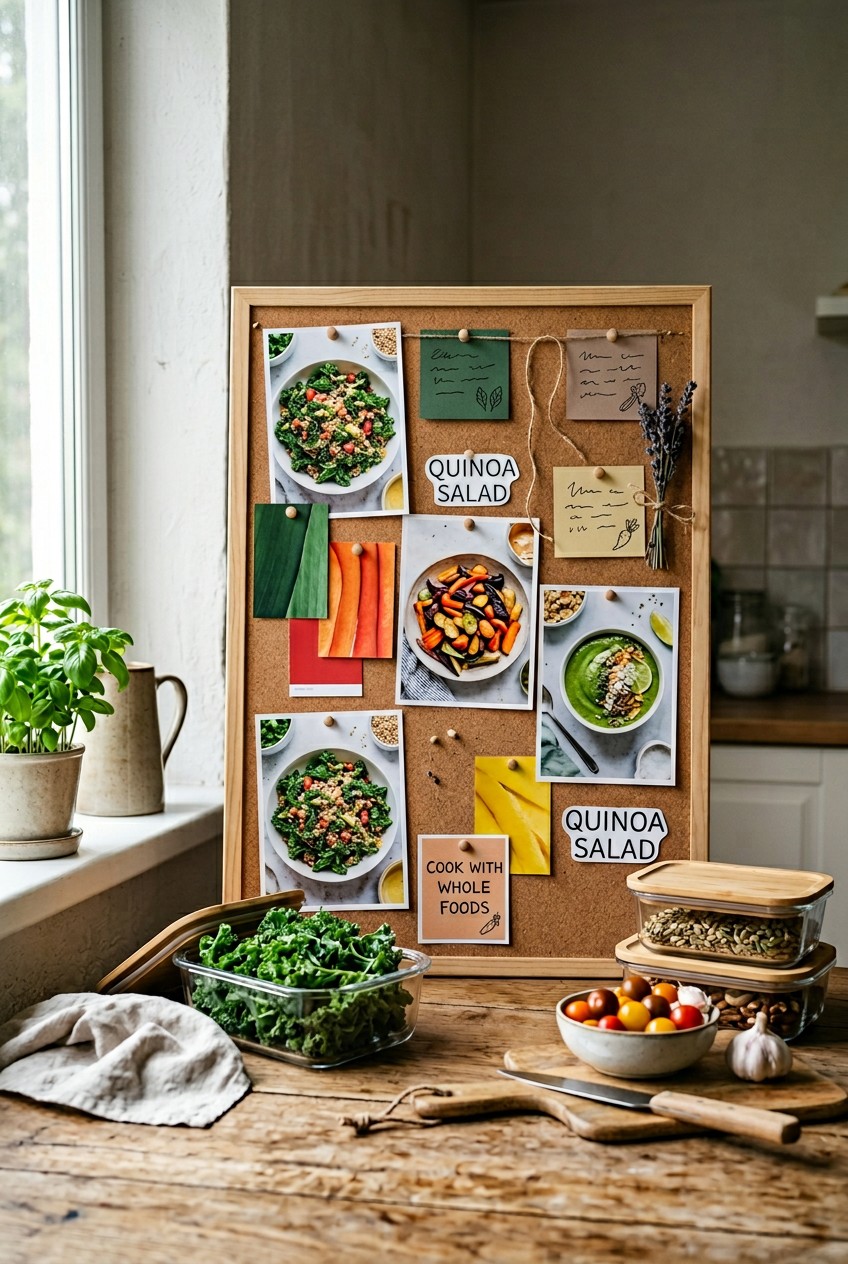
Last Tuesday at Whole Foods, I dropped a $7.99 tub of organic blueberries right in the produce aisle. They rolled under the kombucha display while I stood there holding my soggy, handwritten list. That moment of pure frustration is why I finally built a physical meal prep vision board. My brain couldn’t handle the chaos anymore. I’m telling you, if you’re tired of tossing wilted spinach and eating dry chicken on Thursdays, a meal prep vision board is the anchor you need. I used to just wing it. I’d buy random veggies, shove them in the crisper, and hope for inspiration. It never came. I’d end up ordering a $22 greasy pizza on Wednesday night instead. Putting my goals, favorite recipes, and portion guides on a board in my kitchen fixed my routine. Let’s break down what you need to pin up for clean eating success.
1. Start Small on Your Meal Prep Vision Board

I did this wrong for months. I’d spend six hours on Sunday cooking 21 identical meals. By Wednesday, the smell of reheated broccoli made me gag. I learned that the hard way. Dietitian Erin Palinski-Wade suggests starting by focusing on just one meal type. Pin a sticky note to your board that says “Lunches Only.” Start with prepping lunches for just three days. You aren’t going to fix your entire diet in one weekend. I swear by prepping a simple grain bowl first. I buy the Kroger brand 16 oz brown rice ($1.49 per bag) and make 2 cups. The texture is perfect if you cook it right. I’ll pair that with basic roasted vegetables. When I tried to do breakfasts, lunches, and dinners at once, I ended up crying over a mountain of dirty Tupperware. The sound of clanking dishes haunts me. Scaling up gradually prevents burnout. Once you nail three days of lunches, add a couple of breakfasts next week. It’s all about building a habit that won’t make you hate Sundays.
2. Invest in Quality, Versatile Containers

Skip the cheap plastic from the dollar store. They warp in the microwave and hold onto the smell of old onions forever. It’s disgusting. Your board should include a picture of high-quality storage. I recommend glass options like Prep Naturals Glass Containers. They start around $24.99 for a 5-pack on Amazon. They’re heavy, durable, and oven safe. You won’t worry about chemicals leaching into your hot food. If glass is too heavy for your work bag, I get it. I once dropped a glass container in the parking lot and spent twenty minutes picking up shards and mashed sweet potatoes. For plastic, I only use Rubbermaid Brilliance containers. A 10-piece set is usually $29.98 at Target. The lids make a satisfying click, and they’re leak-proof. I ruined a leather purse once when a container of tomato soup exploded inside it. The stain never came out. Spending a little extra upfront on good containers saves you stress and money.
3. Master the 50/25/25 Portion Rule

You don’t need to weigh every almond. That’s exhausting. Pin the 50/25/25 portion rule in the center of your board. For balanced eating, your container should be 50% fruits and veggies, 25% lean protein, and 25% grains or starchy vegetables. I use visual cues because I’m too lazy to wash measuring cups. Use your palm to measure out 3 to 4 ounces of protein. Use two cupped hands for 1 to 2 cups of vegetables. Last month, I bought Trader Joe’s Organic Chicken Breasts ($7.49 per pound) and visually sliced them into palm-sized portions before grilling. It’s so much faster. Most people fill half the bowl with heavy pasta and toss in three lonely broccoli florets. I used to do that. I’d feel sluggish by 2 PM. Filling half the container with roughage like spinach or roasted zucchini changes how you digest the meal. The crunch of fresh greens mixed with protein keeps you full without the crash. You might also like: 15 Brilliant Batch Cooking Ideas That Actually Work

M MCIRCO 10-Pack,22 Oz Glass Meal Prep Containers
If you want something that just works, M MCIRCO 10-Pack is a safe bet (86 reviews, 4.5 stars).
4. Strict Temperature Control for Food Safety

Food poisoning isn’t a joke. I left a batch of turkey meatballs on my counter for four hours while I watched Netflix. I ate them the next day and spent 48 hours shivering in bed. You must prioritize safety. Refrigerate perishable foods within two hours of cooking. Keep your food out of the danger zone, which is between 40°F and 140°F. In that range, bacteria multiply fast. Pin a thermometer graphic to your board as a reminder. Make sure your fridge is at or below 40°F. When you reheat leftovers at work, use a microwave or toaster oven to bring the internal temperature up to 165°F. I bought a Taylor Classic Instant Read Thermometer for $12.99 at Walmart just to be sure. Biting into cold, rubbery chicken is the worst. A quick temperature check guarantees you won’t get sick and that your food tastes good. You might also like: 15 Stunning Lunch Weekly Meal Prep Ideas You Haven’t Thought Of
5. Utilize Smart Appliances for Maximum Efficiency

If you’re still boiling rice in a pot for 45 minutes, you’re wasting your weekend. Smart appliances are mandatory. Print out a picture of your favorite gadget and stick it on your board to remind yourself to use it. I swear by my Instant Pot Duo 7-in-1. I got mine for $99.95 on Amazon. It cooks a batch of shredded chicken in 20 minutes flat. The meat comes out so tender it falls apart with a fork. I also rely on heavy-duty sheet pans for roasting. I use the Nordic Ware Half Sheet Pans ($22.50 for a 2-pack at Target). Cheap baking sheets warp in a 400-degree oven. They pop and cook your vegetables unevenly. I’ve burned so many batches of sweet potatoes on thin metal. Throwing chopped veggies on a thick sheet pan while your protein cooks in a pressure cooker frees up your hands. You can clean the kitchen while the machines do the heavy lifting. You might also like: 15 Creative Healthy Meal Prep Ideas That Make a Real Difference
6. Component-Based Prep for Your Meal Prep Vision Board

Eating the same chicken, rice, and broccoli for five days is a form of torture. I refuse to do it. Instead of preparing full, identical meals, your board should focus on component-based prep. Cook individual pieces and mix them up. I’ll make a big batch of grains. I grab the Costco Kirkland Signature Organic Quinoa ($10.99 for a 4.5 lb bag). I cook 2 cups of dry quinoa with 4 cups of vegetable broth for flavor. Then, I roast two different veggies, like Brussels sprouts and butternut squash. Finally, I prep a lean protein. Having these separate containers in the fridge allows for mixing and matching. On Monday, I’ll have a quinoa bowl with sprouts and chicken. On Tuesday, I’ll stuff the chicken and squash into a wrap. This prevents meal fatigue. I used to pack five identical containers on Sunday. By Thursday, I’d stare at the mushy, sad food and throw it out. Component prepping keeps textures fresh.

M MCIRCO 10-Pack,30 Oz Glass Meal Prep Containers 2
M MCIRCO 10-Pack punches above its price — 23 buyers rated it 4.5 stars. I would buy it again.
7. Don’t Shy Away from Strategic Convenience Foods

There’s a toxic mindset that you have to chop every vegetable yourself. That’s ridiculous. Don’t shy away from strategic convenience foods. Save time by incorporating pre-cut vegetables and frozen fruits. I constantly buy the Sprouts frozen organic broccoli florets ($2.99 for a 10 oz bag). Frozen vegetables are picked at peak ripeness and flash-frozen, so they’re nutrient-dense. Honestly, chopping a raw butternut squash is a nightmare. I nearly sliced my thumb off last Thanksgiving trying to peel one with a dull knife. Now, I just buy the pre-cubed squash at Trader Joe’s for $3.49. It’s worth every penny. Pin a list of shortcuts to your board. Minced garlic in a jar, bagged spinach, and canned tomatoes are fine. If buying pre-washed greens is the difference between you eating a salad or ordering a burger, buy the bag. It’s common sense.
8. Visualizing Bold Flavor Profiles and Sauces

Plain steamed vegetables and unseasoned chicken taste like wet cardboard. Skip the fat-free, sugar-free diet dressings. They have a slimy texture and a weird aftertaste. You need to pin flavor profiles to your board. I dedicate a corner of my board to sauce ideas and spice blends. Healthy food needs aggressive seasoning. I’m obsessed with Primal Kitchen Buffalo Sauce. It’s $6.99 at Whole Foods. It uses avocado oil and has a sharp, vinegary kick that wakes up a boring bowl of rice and chicken. I also make my own dry rubs. I’ll mix 1 tablespoon of smoked paprika, 1 teaspoon of garlic powder, and 1/2 teaspoon of sea salt. I rub this all over my proteins before roasting. The smell of smoked paprika filling the kitchen is incredible. I tried to eat plain, boiled chicken for a month in 2019. I was miserable. Don’t be afraid of healthy fats and strong spices. They make clean eating sustainable.
9. Integrating Clean Snack Prep

Most people forget about snacks. You prep these beautiful lunches, but at 3 PM, your blood sugar drops and you’re eating stale donuts in the breakroom. I’ve done it a hundred times. The guilt is awful. You must integrate snack prep into your routine. I keep a visual list of clean snacks on my board. I buy Blue Diamond Lightly Salted Almonds ($8.98 for a 16 oz bag at Walmart). I measure out exactly 1/4 cup into tiny glass jars on Sunday. The crunch hits that afternoon craving perfectly. I also wash and slice Fuji apples and pair them with 2 tablespoons of natural peanut butter. If you don’t prep snacks, you’ll grab whatever is loudest in a vending machine. Having a container of fresh grapes or sliced cucumbers stops the mindless grazing. It takes ten extra minutes on Sunday, but it saves you from ruining your goals all week.

Vtopmart 5Pack 22oz Glass Storage Containers with Lids
Vtopmart 5Pack 22oz Glass Storage Containers with Lids has been one of the most consistently praised picks in this category. 32 reviewers averaged 4.5/5.
10. Hydration Station Planning and Tracking

Clean eating doesn’t work if you’re dehydrated. Your body needs water to digest all that fiber. I used to get terrible dehydration headaches by 4 PM because I only drank iced coffee. Your board needs a hydration tracker. I use a Simple Modern 32 oz Tumbler with a straw. It costs $23.99 at Target, and the matte texture feels nice to hold. I fill it twice a day. If plain water bores you, plan for infused water. I buy fresh mint and lemons from Kroger (about $3.00 total) and toss them into a big pitcher in the fridge. The cold, crisp taste of lemon-mint water is refreshing after a workout. Don’t buy those sugary sports drinks. They coat your mouth in a sticky film. Pin a daily water goal to your board. Seeing a visual reminder to drink 64 ounces of water guilt-trips me into picking up my tumbler. It’s simple, but it changes your energy levels.
11. Tracking, Reflecting, and Adjusting Your Routine

Your meal prep vision board isn’t a museum piece. It’s a living tool. You have to track what works and adjust what doesn’t. I keep a small Moleskine Classic Notebook ($19.95 on Amazon) tucked behind my board. Every Friday, I write down what meals tasted great and what I hated. Last month, I prepped zucchini noodles for four days. By day three, they were a soggy, watery mess. The texture was revolting. I wrote “NEVER AGAIN” in huge letters in my notebook. If you don’t track failures, you’ll repeat them. I also track grocery prices. If avocados jump to $2.50 each at Whole Foods, I’ll note it and buy them at Trader Joe’s next week. Reflecting on your prep saves money and sanity. Clean eating is a constant learning process. Don’t beat yourself up if a recipe fails or you burn a pan of salmon. Just note it on your board, adjust your list, and try a different method next Sunday.
Start building your board this weekend. Grab a cheap corkboard, print out your favorite recipes, and pin up your portion guides. Honestly, this changed how I view my entire week. I’m no longer stressed at 5 PM on a Tuesday wondering what to cook. Save this guide, pin it to your own digital boards, and let’s get prepping.
Frequently Asked Questions
What should I include on my meal prep vision board?
Include visual portion guides like the 50/25/25 rule, your favorite clean eating recipes, a list of strategic convenience foods, and a hydration tracker. It’s also helpful to pin reminders about safe food temperatures.
How does a meal prep vision board help with clean eating?
It acts as a physical anchor in your kitchen. Seeing your goals, portion sizes, and flavor ideas daily stops you from making impulsive, unhealthy choices when you’re tired or hungry.
Should I prep all my meals at once?
No. Starting small is the best way to prevent burnout. Focus on prepping just three days of lunches first, then gradually scale up as you get more comfortable with your routine.
What are the best containers for meal prep?
Glass containers are the most durable and oven-safe option, preventing any chemical leaching. If you prefer plastic for portability, choose high-quality, leak-proof brands to avoid spills and stains.
