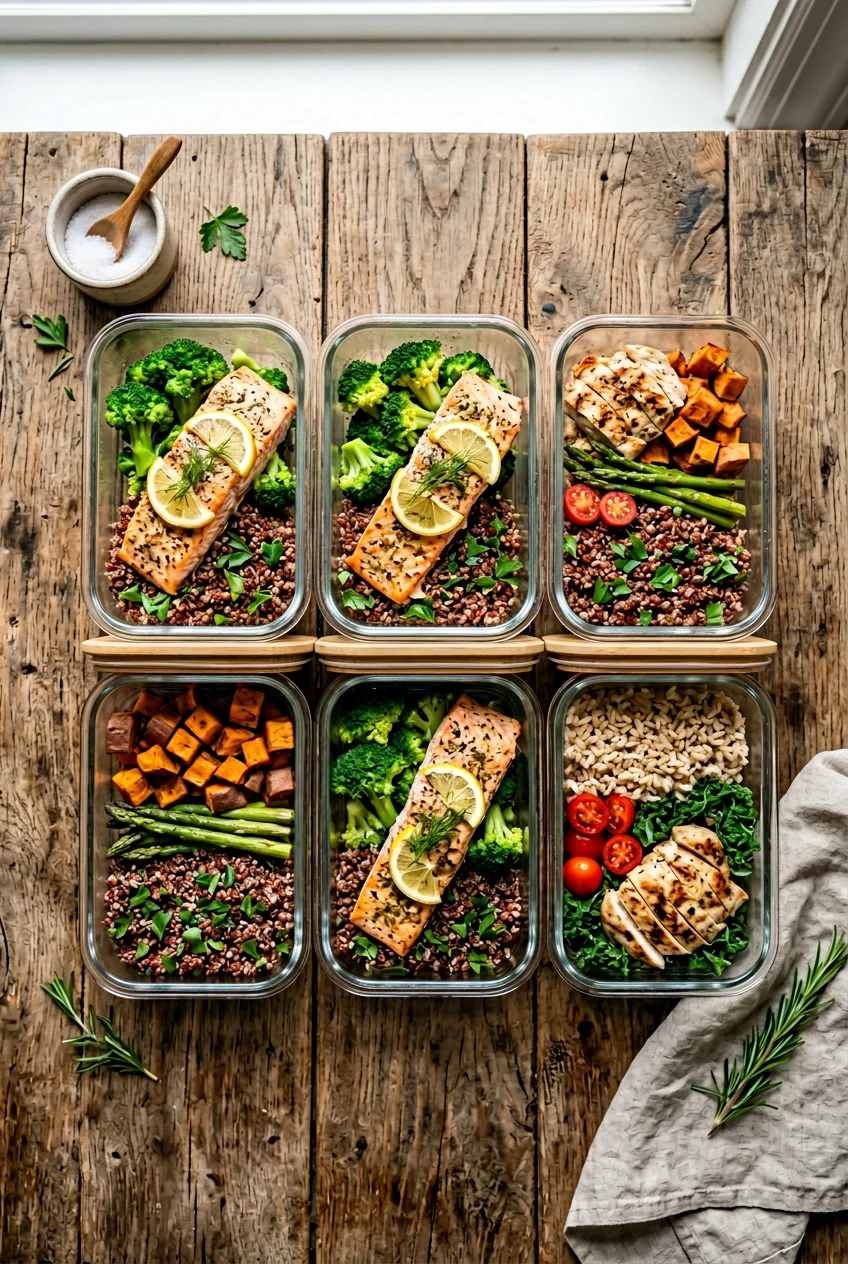
What’s Inside
- The “Ingredient Prep” Base Bowl Strategy
- Stacked Protein Chicken and Lentil Stew
- Meal Prep For The Week Recipes: The 333 Method Plates
- Gut-Healthy Kimchi and Grain Bowls
- Simple Scalable Turkey Meatballs
- The Two-Hour Rule Roasted Veggie Medley
- High-Protein Greek Yogurt and Hemp Seed Parfaits
- Meal Prep For The Week Recipes: Precision Portioned Beef and Broccoli
- Freezer-Friendly Black Bean Enchilada Casserole
- Deconstructed Cabbage Roll Skillet
- Fiber-Rich Quinoa and Roasted Chickpea Salad
- Sheet Pan Salmon and Asparagus
I sat on my kitchen floor last Tuesday at 10 PM, staring at a puddle of gray liquid leaking from a cheap plastic container of chicken and rice. Finding meal prep recipes that still taste good by Thursday takes more than just cooking a massive batch on Sunday. I spent my first two years trying to get healthy by throwing away spoiled spinach from Whole Foods because I didn’t know how to store it. I’d make five identical containers of dry chicken breast and limp asparagus, force down two, and order takeout by Wednesday night. It’s a miserable cycle.
You don’t need to spend six hours in the kitchen to feed yourself. You just need a better system. I’ve ruined enough expensive groceries to know exactly what fails in the fridge after forty-eight hours. Skip the fat-free dressings and intricate, five-step glazes. They taste like wet cardboard by the time you reheat them in an office microwave. Let’s look at the methods, containers, and formulas that keep food fresh, safe, and appetizing all week long.
1. The “Ingredient Prep” Base Bowl Strategy

Instead of full, pre-assembled meals that get soggy, I focus on “ingredient prep” for my base carbohydrates. I cook 3 cups of dry quinoa or brown rice on Sunday, store it plain, and build bowls daily. This keeps grains from soaking up sauce and turning to mush. I tried storing fully assembled rice bowls for months before realizing that keeping components separate is the only way to maintain texture.
For accurate cooking and portion control, I use the Vitafit 15kg Digital Kitchen Scale ($14.99 at Target). I bought this in October after my old plastic scale cracked under a heavy glass bowl. It’s responsive, which matters when I’m measuring exactly 150 grams of cooked rice per container.
When you prep ingredients instead of full meals, you stay flexible. You aren’t locked into the same flavor profile every day. Take that plain rice, add soy sauce on Tuesday, then switch to a lemon tahini dressing on Wednesday. Store the cooked grains in an airtight container, and they’ll easily last four to five days in the fridge.
2. Stacked Protein Chicken and Lentil Stew

A great method I use now is “stacking proteins,” which means combining multiple sources in one meal. I combine 1 pound of diced chicken breast with 1 cup of dry green lentils. Boiling them in 4 cups of chicken broth yields a stew that keeps me full for six hours. The lentils break down slightly, thickening the broth without flour or cornstarch.
To combat boredom and extend food life, I use my freezer for this stew. I freeze single-sized portions using Souper Cubes (the 1-cup silicone freezer mold gift set costs $79). I switched to these after trying to freeze stew in a huge plastic tub and having to chisel out portions with a butter knife. It took me years to figure that out.
The silicone sides let you pop out a perfect frozen block of stew. I transfer the blocks to a freezer bag, label them with the date, and grab one when I’m too tired to cook. Just microwave the block in a ceramic bowl for four minutes. It provides a massive 35 grams of protein per serving, which is perfect for energy.
3. Meal Prep For The Week Recipes: The 333 Method Plates

Registered Dietitians suggest the “333 Method” to avoid burnout. Choose 3 proteins, 3 carbohydrates, and 3 vegetables, then rotate them. For my proteins, I buy 1 pound of ground turkey, 1 block of extra firm tofu, and 1 pound of pre-marinated shawarma chicken from Trader Joe’s. My carbs are usually 2 sweet potatoes, 1 box of chickpea pasta, and 2 cups of jasmine rice.
For the vegetables, I stick to 2 heads of broccoli, 1 bag of spinach, and 3 bell peppers. I roast them on a sheet pan at 400 degrees for 25 minutes. Storing this variety requires good containers. I use the Rubbermaid Brilliance Glass set ($29.99 for a 4-pack of 3.2-cup containers). I’ve used this set for two years because the lids latch one-handed.
The glass doesn’t leach chemicals or absorb the intense garlic smell from the shawarma chicken. I learned my lesson after putting curry in a cheap plastic tub that permanently turned yellow and smelled like cumin for a year. Trust me. The 333 method ensures you hit your nutritional goals without feeling restricted.

buluker 4 Pack Bento Lunch Box Set 3 Compartment Food
A dependable everyday pick — buluker 4 Pack Bento Lunch Box Set 3 Compartment Food Storage Containe pulls in 23 ratings at 4.5 stars. Not flashy, just solid.
4. Gut-Healthy Kimchi and Grain Bowls

Plant-forward, fiber-rich meals are essential for my digestion, so I build bowls around fermented foods. I use 1/2 cup of farro, 1/4 cup of drained kimchi, 1/2 cup of edamame, and a handful of shredded carrots. The acid in the kimchi acts as a natural dressing, so I don’t even need a separate vinaigrette. You might also like: 15 Stunning Aesthetic Batch Cooking You Need to See
To cut chopping time, I use the Fullstar 4-in-1 Vegetable Chopper ($23.99 at Walmart). I bought this because dicing carrots by hand took twenty minutes and hurt my wrist. It pushes vegetables through a stainless steel grid, dicing an entire onion or two large carrots in about ten seconds.
I assemble these in glass containers, but I keep the kimchi in a separate small silicone cup inside the main container. I made the mistake of mixing the kimchi directly into the farro on Sunday, and by Wednesday, the grains were waterlogged and sour. Keeping the wet, fermented ingredients isolated until lunchtime solves the texture issue completely. You might also like: 11 Meal Prep For The Week High Protein That Actually Work
5. Simple Scalable Turkey Meatballs

A common mistake leading to burnout is choosing complex recipes. I tried making intricate stuffed chicken breasts for a month, which took three hours every Sunday and fell apart in the microwave. Now, I stick to simple, scalable recipes like turkey meatballs. I buy the 4-pound pack of ground turkey from Costco ($19.99) and make a massive batch. You might also like: 12 Summer Meal Prep for Every Budget
I mix 2 pounds of ground turkey with 1/2 cup of panko breadcrumbs, 2 eggs, and 1 tablespoon of Italian seasoning. I bake them at 375 degrees for 20 minutes. This yields about 24 meatballs. I store them in Pyrex Simply Store glass containers ($22.50 for a 6-piece set). The glass handles the transition from the fridge to the microwave without warping.
I portion 4 meatballs per container alongside 1 cup of roasted zucchini. Meatballs hold their moisture well over four days, unlike sliced chicken breast which turns to dry rubber. You can eat them plain, dip them in hummus, or crumble them over a salad. Simplicity wins when you’re packing lunches for a busy work week.
6. The Two-Hour Rule Roasted Veggie Medley

Food safety matters. A critical guideline is to cool cooked food to room temperature within two hours before refrigerating. I roast a massive tray of vegetables: 2 diced sweet potatoes, 1 chopped red onion, and 2 cups of Brussels sprouts tossed in 2 tablespoons of olive oil. Once they come out of the oven, I spread them on the counter to cool.
I used to pack piping hot roasted vegetables directly into containers and snap the lids shut. The trapped steam created condensation, turning my crispy Brussels sprouts into a soggy, sulfur-smelling disaster by Monday. Now, I set a timer for 45 minutes to let them cool before packing them into shallow, airtight containers.
Roasted vegetables last 4-5 days when stored right. I buy bulk vegetables at Kroger, usually spending around $12 for enough produce to yield 6 cups of roasted veggies. I divide them into 1-cup portions. They serve as a high-fiber side dish I can pair with any protein.
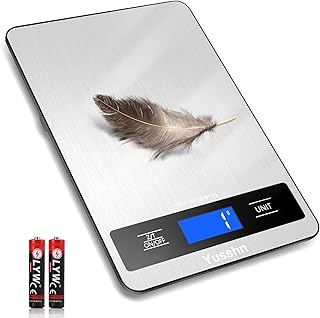
Food Scale, 11lb Kitchen Scale with 0.05oz/1g Precision
Honestly, Food Scale surprised me — sturdier than it looks in the photos, and over 15 buyers gave it 4.5 stars.
7. High-Protein Greek Yogurt and Hemp Seed Parfaits

I apply the protein stacking concept to my breakfasts, too. I combine 1 cup of plain Greek yogurt with 2 tablespoons of hemp hearts and 1 tablespoon of chia seeds. This combination provides more sustained energy than yogurt alone. I buy the Fage 2% Greek Yogurt (32 oz tub, $6.49) at Sprouts because the 0% fat version tastes like sour chalk.
I portion the yogurt and seeds into small glass jars on Sunday. However, I don’t add the fresh fruit until the morning I plan to eat it. I ruined a whole week of breakfasts once by putting fresh raspberries at the bottom of the jars. The berries fermented and released all their juices, turning the yogurt into a watery, separated mess. Learned that the hard way.
By keeping the yogurt and seeds as the base, I save time and preserve quality. I just grab a jar, throw in a handful of blueberries, and I’m out the door. The chia seeds absorb some moisture overnight, creating a thick, pudding-like texture that keeps me full until lunch.
8. Meal Prep For The Week Recipes: Precision Portioned Beef and Broccoli

If you’re tracking macros or just want enough fuel, eyeballing doesn’t work. I aim for 25-35g of protein per meal. I use my digital scale to measure exactly 4 ounces of cooked flank steak for my beef and broccoli bowls. Before I started weighing my food, I was accidentally eating 800-calorie lunches and feeling sluggish all afternoon.
I marinate 1.5 pounds of sliced flank steak in 1/4 cup of Kikkoman Less Sodium Soy Sauce (10 oz bottle, $3.29) and 1 tablespoon of sesame oil. I stir-fry the beef, then steam 3 cups of broccoli florets. I fill half my container with broccoli, a quarter with beef, and a quarter with 1/2 cup of brown rice.
This visual division ensures I get enough fiber to offset the heavy protein. The soy sauce marinade keeps the beef tender even after three days. I always slightly undercook the broccoli so that when I microwave the container for two minutes at work, the vegetables finish steaming instead of turning to mush.
9. Freezer-Friendly Black Bean Enchilada Casserole

Cooked meats and poultry should be consumed within 3-4 days. Because I don’t want to cook twice a week, I rely on freezer-friendly casseroles for Thursday and Friday. I make a black bean enchilada casserole using 1 can of rinsed black beans, 12 corn tortillas, and 1 can of Hatch Green Chiles (4 oz can, $1.99 from Walmart).
I layer the ingredients in a 9×13 glass baking dish with 2 cups of shredded cheddar cheese and 1 can of enchilada sauce. After baking at 375 degrees for 25 minutes, I let it cool. I cut it into six portions and freeze three in individual glass containers. Casseroles freeze well because the dense layers protect ingredients from freezer burn.
I tried freezing delicate meals like zucchini noodles in the past, and they thawed into a puddle of water. Sticking to starch-heavy casseroles ensures the texture stays intact. I pull a portion out on Wednesday night to thaw in the fridge for Thursday’s lunch.

Rubbermaid Brilliance Tritan Plastic Food Storage
If you want something that just works, Rubbermaid Brilliance Tritan Plastic Food Storage Containers BPA Free is a safe bet (583 reviews, 4.5 stars).
10. Deconstructed Cabbage Roll Skillet

I love the flavor of stuffed cabbage, but boiling whole leaves takes too much time and makes my kitchen smell like a gym sock. Instead, I make a deconstructed cabbage roll skillet. I chop 1 small head of green cabbage and 1 yellow onion using my chopper to get uniform pieces.
I brown 1 pound of lean ground beef, drain the fat, and add the cabbage, onion, and 1 can of Muir Glen Organic Diced Tomatoes (14.5 oz, $2.69). I simmer for 20 minutes until the cabbage is tender. This one-pan meal yields four massive servings and requires almost zero skill.
Because the cabbage is braised in tomato juice, it actually tastes better on day three as the flavors meld. I portion 1.5 cups of the mixture over 1/2 cup of cooked quinoa. It’s a high-volume, low-calorie meal that fills the stomach without causing a heavy energy crash at 2 PM.
11. Fiber-Rich Quinoa and Roasted Chickpea Salad

Building meals around pulses and whole grains supports gut health and keeps costs low. I make a cold salad using 2 cups of cooked Bob’s Red Mill Quinoa (13 oz bag, $6.99 at Whole Foods) and 1 can of chickpeas. I roast the chickpeas at 400 degrees for 20 minutes with paprika and salt so they get firm.
I used to undercook my quinoa because I was impatient, and it crunched like sand. Now, I use exactly a 1:2 ratio of quinoa to water, bring it to a boil, and let it simmer covered for 15 minutes. Letting it rest off the heat for 5 minutes makes it perfectly fluffy.
I toss the quinoa and chickpeas with 1/2 cup of diced cucumbers, 1/4 cup of kalamata olives, and a simple lemon-olive oil dressing. Because there are no leafy greens to wilt, this salad stays crisp for five days. It’s my go-to prep when I know I won’t have a microwave at lunchtime.
12. Sheet Pan Salmon and Asparagus

When I need a premium protein but want to keep it scalable, I turn to sheet pan salmon. I buy the Kirkland Signature Wild Alaskan Sockeye Salmon (3 lbs, $34.99) from Costco. I cut four 5-ounce fillets and place them on a parchment-lined baking sheet with 1 bunch of trimmed asparagus.
I drizzle everything with 1 tablespoon of olive oil, salt, and pepper, and bake at 400 degrees for 12-14 minutes. The trick with seafood is that you can’t blast it in the microwave later. I tried reheating salmon on high power in the office microwave once, and my coworkers practically mutinied over the smell. No exaggeration.
Now, I eat my salmon cold over mixed greens, or I microwave it on 30% power for 45 seconds to take the chill off without recooking the fish. The asparagus holds up for three days. It’s a high-omega-3 meal that feels like a restaurant dish but takes less than twenty minutes to prep.
If you’re tired of sad desk lunches, pick just two of these methods to try this Sunday. Grab a reliable glass container set, pull out your digital scale, and stop overcomplicating the recipes. Pin this guide so you have the exact temperatures and measurements handy when you’re writing your grocery list this weekend.

Etekcity Food Kitchen Scale
Honestly, Etekcity Food Kitchen Scale surprised me — sturdier than it looks in the photos, and over 1,736 buyers gave it 4.5 stars.
Frequently Asked Questions
How long do meal prepped recipes last in the fridge?
Cooked meats and poultry generally last 3-4 days in airtight glass containers. Roasted vegetables and cooked grains can last 4-5 days. For anything you plan to eat after Thursday, it’s safer to freeze single portions on Sunday and thaw them as needed.
What is the best way to reheat meal prep for the week recipes?
Always use microwave-safe glass containers. For meats like chicken or beef, add a splash of water or broth before heating to prevent drying out. Microwave on medium power (50-70%) rather than high to heat the food evenly without turning the edges to rubber.
How do I stop my meal prep salads from getting soggy?
Keep wet ingredients completely separate. Store your dressings in small silicone cups or jars, and wait to add them until right before eating. Use hearty bases like quinoa, farro, or cabbage instead of delicate leafy greens which wilt quickly.
What is the 333 method for meal prepping?
The 333 method involves preparing 3 proteins, 3 complex carbohydrates, and 3 vegetables for the week. Instead of making fully composed meals, you mix and match these individual components daily to prevent flavor fatigue and ensure balanced nutrition.
