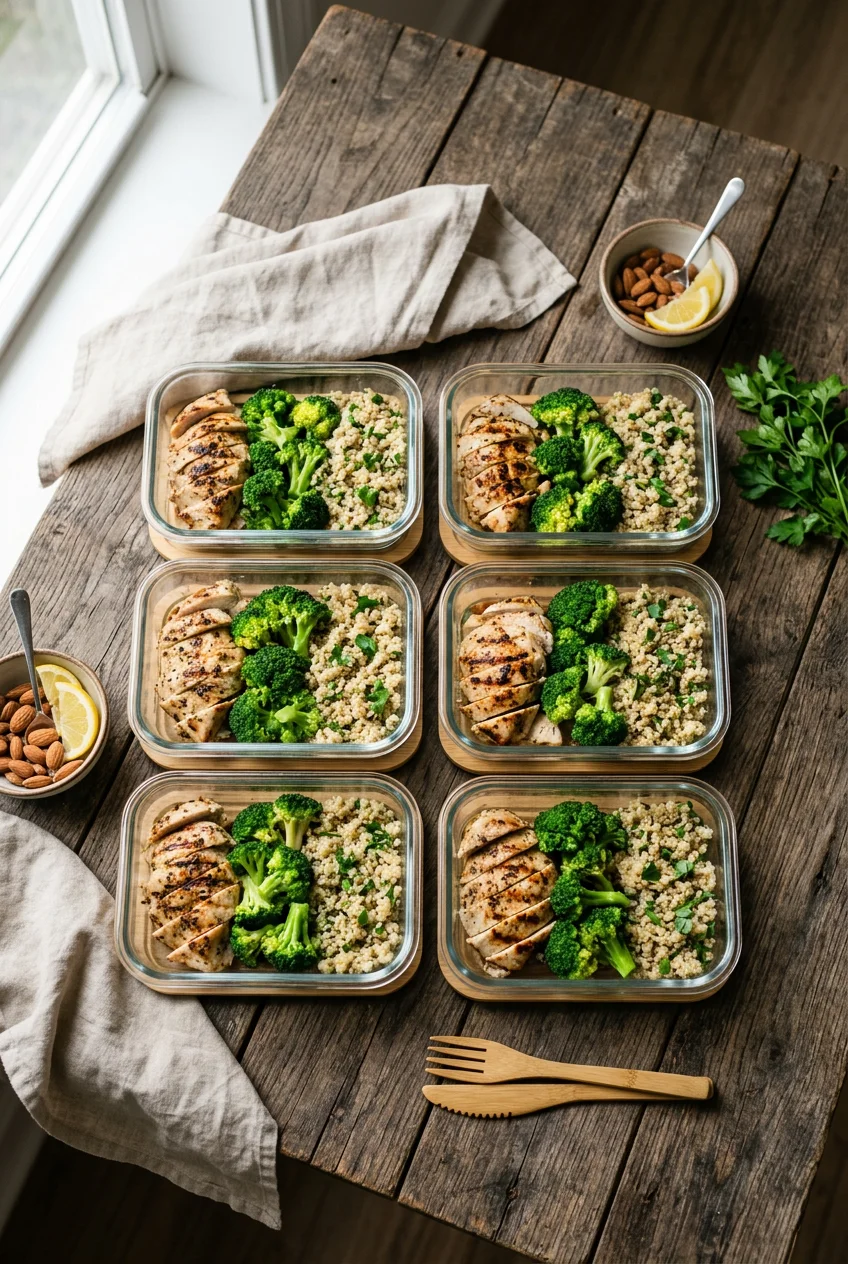
What’s Inside
- Prioritize a Sustainable Calorie Deficit for Cut Diet Meal Prep
- Master Your Protein Intake for Satiety
- Invest in Quality, BPA-Free Containers
- Adopt the “Harvard Healthy Eating Plate” Model
- Batch Cook Smart, Not Just More
- Leverage Low-Calorie Sauces for Flavor
- Don’t Forget Healthy, Pre-Portioned Snacks
- Embrace “Volume Eating” with Fiber-Rich Foods
- Consider Protein Powders for Macro Goals
- Label, Date, and Repurpose for Cut Diet Meal Prep
Last January, I sat on my cold kitchen floor crying over a plastic container of unseasoned, boiled chicken breast and limp, gray broccoli. The fridge hummed behind me, and the whole kitchen smelled like sulfur and defeat. That was my first attempt at cut diet meal prep. I quit three days later because my jaw actually hurt from chewing dry meat. Successful meal prep doesn’t mean eating like a sad bodybuilder in the 1990s. I spent the next two years figuring out how to drop body fat without hating my lunches. Staring at a fridge full of identical, flavorless meals is the fastest way to trigger a binge. I learned that the hard way. The smell of reheated tilapia in an office microwave is enough to make anyone give up on their goals. I needed a system that prioritized actual flavor, specific macros, and food that didn’t turn to mush by Thursday. Let’s look at the math, the grocery store aisles, and the container strategies that work. I’ve tested these methods, wasted plenty of money on bad protein powders, and finally built a routine that keeps me full while in a calorie deficit.
Prioritize a Sustainable Calorie Deficit for Cut Diet Meal Prep

I used to slash my calories to 1,200 a day right out of the gate. I’d buy a cart full of celery at Sprouts and pretend I was full while my stomach growled through morning meetings. My hands were always cold, and I had a constant headache. By Thursday night, I’d eat a sleeve of Oreos in my car because my willpower was shot. Dietitians like Jessica M. Kelly point out that aiming for a daily deficit of 250 to 750 calories is the only way to safely lose 1 to 2 pounds per week. Drastic cuts lead to fatigue and muscle loss. They aren’t sustainable. I calculate my maintenance calories, then subtract 400. That gives me enough room to eat real food that requires chewing. I buy the 3-pound bag of Mahatma Jasmine rice at Walmart for $3.48 and weigh out exactly 1/2 cup cooked per meal. It’s enough carbohydrates to keep my brain functioning during afternoon conference calls. A common mistake is cutting out entire food groups instead of just adjusting the portions. Your body needs energy to burn fat. If you drop your calories too low, your workouts suffer, your sleep tanks, and you burn fewer calories overall because you’re too tired to move off the couch. Keep the deficit moderate. You won’t see results in three days. But you won’t quit on day four either.
Master Your Protein Intake for Satiety

Protein is the only thing standing between you and a mid-afternoon vending machine run. I aim for 1.0 to 1.2 grams of protein per pound of my target body weight. My target is 140 pounds, so I hit 140 to 168 grams of protein every single day. This preserves lean muscle mass and keeps your stomach full because protein takes longer to digest. I buy the Kirkland Signature chicken breasts at Costco. They run about $14.99 for a 6-pound pack. I weigh out exactly 5 ounces of raw chicken for each container, which yields about 35 grams of cooked protein. I tried eyeballing my portions for months before realizing I was under-eating by at least 40 grams a day. Took me years to figure out. Buy a digital food scale. The Escali Primo scale costs $24.95 on Amazon and handles the math for you. Pressing the tare button and watching the numbers climb is the only way to be accurate. If you don’t track your protein, you’re likely replacing those calories with fats or carbs. I eat 4 ounces of 93/7 lean ground turkey mixed with 1 tablespoon of Old El Paso taco seasoning for lunch. The dense texture keeps me full until dinner. Don’t guess your macros. Weigh the meat raw before it hits the pan.
Invest in Quality, BPA-Free Containers

You can’t do proper meal prep if your food tastes like old dish soap from cheap, scratched plastic. I bought a 14-piece Pyrex glass storage set at Target last November for $34.99. Glass prevents chemical leaching and keeps food fresh. The lids snap on tight with thick silicone seals, so my fridge doesn’t smell like roasted Brussels sprouts. If you commute and need lighter options, the Rubbermaid Brilliance BPA-free plastic containers are excellent. Dietitian Joanna Smyers recommends them, and I bought a 10-piece set for $22.99 at Kroger. They stack perfectly in my lunch bag. One negative: glass is heavy and slippery when wet. I dropped one on my kitchen tile last Tuesday and spent twenty minutes sweeping up shards and ruined quinoa. But the tradeoff is worth it because glass reheats evenly without warping. A pro tip: buy containers that are the same size and shape. Trying to play Tetris in your fridge with fifteen different types of Tupperware will ruin your Sunday. Stick to the standard 3-cup rectangular size so the lids always match.

Rubbermaid Brilliance Tritan Plastic Food Storage
Rubbermaid Brilliance Tritan Plastic Food Storage Containers BPA Free has been one of the most consistently praised picks in this category. 583 reviewers averaged 4.5/5.
Adopt the “Harvard Healthy Eating Plate” Model

I used to pack containers with 80 percent rice and a tiny piece of dry chicken. Now I follow the Harvard Healthy Eating Plate model. For each meal, I fill half the container with non-starchy vegetables, a quarter with lean protein, and a quarter with complex carbs. This guarantees balanced nutrition within a 400 to 600 calorie range. I buy 12-ounce bags of fresh, trimmed green beans at Trader Joe’s for $2.49. I roast the bag on a sheet pan with 1 tablespoon of olive oil and divide it between two containers. That covers the vegetable half of the box. Then I add 4 ounces of baked cod and 1/2 cup of roasted sweet potatoes. The cod flakes perfectly with a fork. This visual structure removes the guesswork. You don’t need a culinary degree. Just pick a vegetable, a meat, and a carb. A common mistake is counting corn or peas as the vegetable portion. They belong in the carb quarter because of their high sugar content. Keep the vegetable half focused on leafy greens, broccoli, or asparagus. It keeps the volume high and the calories controlled. You might also like: 15 Brilliant Batch Cooking Ideas That Actually Work
Batch Cook Smart, Not Just More

Spending four hours making 21 identical meals is a fast track to hating your life. I did that once in 2021 and threw away six portions of mushy, foul-smelling salmon. Instead, I focus on batch-cooking core components. This is part of the “Sunday Reset” method. Every Sunday at 2 PM, I turn on a podcast and prep 4 days’ worth of carbs. I buy 365 brand organic brown rice at Whole Foods for $3.39 a bag and cook 2 cups dry in my rice cooker. I also grill 3 days’ worth of chicken breast seasoned with smoked paprika and garlic powder. Hearing the chicken sizzle is my weekly cue that prep has started. Cooking plain components instead of composed meals allows for variety. On Monday, I might eat chicken and rice with steamed broccoli. On Tuesday, I’ll slice that same chicken cold and put it over a bed of crunchy romaine with a low-calorie dressing. Cooked chicken only lasts 3 to 4 days anyway. Prepping for the whole week on Sunday just means you’re eating slimy meat by Thursday. Prep twice a week. I do a big batch on Sunday and a 30-minute refresh on Wednesday night to boil eggs and roast fresh veggies. You might also like: 15 Cozy Easy Dinner Ideas for Every Budget
Leverage Low-Calorie Sauces for Flavor

Dry food is the enemy of a successful cut. I spent a year choking down plain ground turkey because I thought sauce would ruin my goals. You just need the right ones. I keep a bottle of Frank’s Red Hot Sauce in my desk drawer. It has zero calories and costs $3.98 at Walmart. I pour it over hard-boiled eggs and chicken bowls to add a sharp vinegar bite. I also use Flying Goose Sriracha, which has about 6 calories per teaspoon. It adds heat without blowing up my calorie budget. The Skinny Food Co makes virtually zero-calorie sauces, though they can be pricey. I ordered their Sugar-Free Sweet Chili sauce online for $6.99. It has a slightly artificial aftertaste if you use too much, but a tablespoon mixed into a stir-fry is perfect. Skip the fat-free mayo and ranch from the grocery aisle. They taste like wet cardboard and are usually packed with sugar. Stick to hot sauces, Dijon mustard, apple cider vinegar, and specific low-calorie brands that rely on strong spices. You might also like: 10 Dinner Meal Prep for Every Budget

Food Scale, 11lb Digital Kitchen Scale with 6 Units LCD
A dependable everyday pick — Food Scale pulls in 21 ratings at 4.5 stars. Not flashy, just solid.
Don’t Forget Healthy, Pre-Portioned Snacks

If you only prep main meals, you’re going to fail at 3 PM when the office donuts appear. Neglecting snacks is a common mistake. I prep snacks just like I prep lunches. I boil a dozen eggs on Sunday. I buy pasture-raised Vital Farms eggs at Target for $6.89. I peel them immediately under cold water so the shells don’t tear the whites. Then I store them in a glass container with a damp paper towel to keep them from drying out. Two hard-boiled eggs give me 12 grams of protein for 140 calories. I also buy the 5.3-ounce single-serve Fage 0% Greek yogurt cups for $1.49 each. They pack 18 grams of protein and have a thick texture that forces you to eat slowly. I weigh out exactly 15 grams of raw almonds into tiny baggies. If you bring a whole 16-ounce bag to work, you’ll eat 600 calories of nuts without realizing it. Portion control is mandatory. I also slice up raw green bell peppers and portion out 2 tablespoons of Sabra classic hummus. Having these ready stops me from hitting the vending machine.
Embrace “Volume Eating” with Fiber-Rich Foods

Volume eating saved my sanity. To feel fuller on fewer calories, you have to prioritize high-volume, low-calorie foods that stretch your stomach lining. I eat massive portions of steamed green beans and roasted asparagus. They provide lasting satiety for the same calories as a tiny protein bar that leaves you hungry ten minutes later. I rely heavily on frozen produce. People think frozen is inferior, but it’s picked at peak ripeness and flash-frozen to lock in nutrients. I buy the 16-ounce bags of organic frozen broccoli florets at Trader Joe’s for $2.29. I microwave a whole bag, spray it with zero-calorie olive oil cooking spray, and sprinkle on 1/2 teaspoon of kosher salt. That entire bag is only 120 calories. I also keep bags of frozen mixed berries on hand. I measure 140 grams of frozen raspberries, microwave them for 30 seconds until they get jammy, and stir them into Greek yogurt. It feels like a decadent dessert. Don’t waste calories on dried fruit like raisins. They’re too dense. Stick to water-heavy fresh or frozen produce.
Consider Protein Powders for Macro Goals

Sometimes chewing 150 grams of solid protein is exhausting. When my jaw is tired of chicken, I use protein powder to hit my goals. I buy the Optimum Nutrition Gold Standard Whey in Extreme Milk Chocolate. A 5-pound tub costs $84.99 at Costco, which breaks down to $1.15 per serving. One scoop gives me 24 grams of protein for 120 calories. I mix it with 8 ounces of unsweetened almond milk in a shaker bottle. Hearing the whisk ball clanking is my post-workout soundtrack. If whey hurts your stomach, Transparent Labs Organic Vegan Protein is a great alternative. It’s a blend of pea and rice protein that costs around $2.00 per serving. I tried a cheap soy protein once, and it clumped into a chalky sludge. Spend the money on a quality powder that dissolves without grit. A pro tip: don’t just drink it. I mix a scoop of vanilla whey into 1/2 cup of dry rolled oats, add 1 cup of water, and microwave it for 2 minutes. It makes a filling protein oatmeal that keeps me full for four hours.

buluker 4 Pack Bento Lunch Box Set 3 Compartment Food
If you want something that just works, buluker 4 Pack Bento Lunch Box Set 3 Compartment Food Storage Containe is a safe bet (23 reviews, 4.5 stars).
Label, Date, and Repurpose for Cut Diet Meal Prep

You need a strict labeling system, or you’ll end up throwing away spoiled food. I label every container with blue painter’s tape and a black Sharpie. The smell of the ink reminds me I’m organized. I write the meal name and the date. I follow the “first in, first out” rule. Cooked chicken lasts 3 to 4 days. If I don’t eat it by day four, I dump it. To prevent meal fatigue, I repurpose leftovers instead of eating the same bowl twice. On Wednesday, I take Monday’s leftover chicken and zucchini and wrap it in a Mission Carb Balance tortilla ($5.48 at Walmart). I add 1 teaspoon of Yellowbird Blue Agave Sriracha. It feels like a brand-new meal. I also track my plant variety. Research shows eating 30 different plant foods per week creates a diverse gut microbiome. I hit this by buying a 10-ounce bag of shredded red cabbage and carrots at Sprouts for $2.99. I throw a handful into wraps, salads, and rice bowls. It adds crunch and sneaks extra nutrients into my routine.
I hope these strategies save you from the sad, dry chicken dinners I used to force down. Cut diets are demanding, so you can’t afford to eat food you hate. Start by prepping just your lunches for three days, grab a digital food scale, and actually measure your protein instead of guessing. Pin this article to your fitness board for your next Sunday grocery run, and let me know if you find a hot sauce that beats Frank’s.
Frequently Asked Questions
How many calories should I cut for meal prep?
Aim for a moderate deficit of 250 to 750 calories below your maintenance level. This allows you to safely lose 1 to 2 pounds per week while maintaining enough energy for workouts and preserving lean muscle mass.
How much protein do I need during a cut diet?
Target 1.0 to 1.2 grams of protein per pound of your goal body weight. High protein intake preserves your muscle mass during a deficit and physically keeps you full, preventing mid-day snacking.
How long does meal prepped chicken last in the fridge?
Cooked chicken safely lasts 3 to 4 days in the refrigerator. To avoid eating spoiled meat, prep twice a week instead of making 7 days’ worth of food on Sunday.
What are the best containers for meal prep?
Glass containers, like Pyrex, are best because they prevent chemical leaching, don’t absorb food odors, and reheat evenly. If you need a lighter option for commuting, look for high-quality, BPA-free plastic like Rubbermaid Brilliance.
