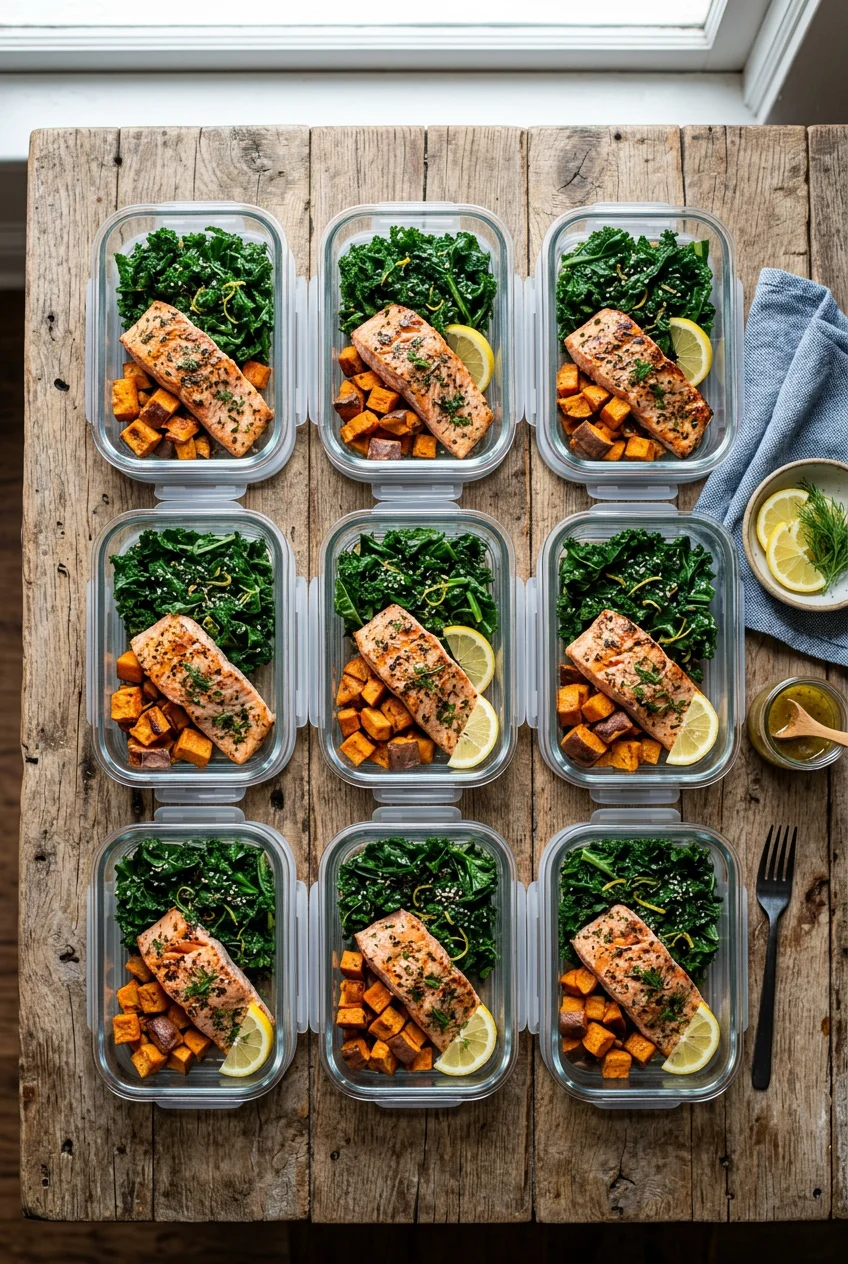
What’s Inside
- Buffet-Style Shredded Chicken Bowls
- Freezer-Friendly Spiced Lentil Stew
- Deconstructed Crisp Quinoa Salads
- Instant Pot Beef Barbacoa
- Sheet Pan Roasted Tofu and Broccoli
- Slow Cooker Turkey and Black Bean Chili
- Component-Prepped Fajita Bowls
- Glass Container Zucchini Noodle Soups
- Bulk-Prepped Farro and Roasted Root Veggies
- Marinated Chickpea and Feta Salads
Last Tuesday at 7:30 PM, I stood in front of my open fridge staring at a plastic container of gray, waterlogged zucchini. Finding healthy meal prep dinners you actually want to eat by Thursday is harder than it looks. That mushy mess is why most people give up on Sunday prep. I tossed the whole thing, ordered a $28 pizza, and realized my entire strategy was broken. I spent months making soggy, fully assembled meals before I learned how to keep food from falling apart. Learned that the hard way.
You don’t need to eat wet cardboard to hit your protein goals. Skip the fat-free dressings and boiled chicken breasts. They taste terrible, and you’ll just order takeout by Wednesday. Real prep takes specific storage, the right gear, and an understanding of how food degrades in the fridge. I did this wrong for a long time. Now, I stick to strict rules about how I cook and store everything. Let’s fix your Sunday routine with ten methods I use every single week.
1. Buffet-Style Shredded Chicken Bowls

I prepped full chicken and grain bowls for months. By Wednesday, the quinoa soaked up all the chicken juice and turned into a dense, sad paste. Now, I do buffet-style prep. Instead of building five identical bowls, I store every component in its own container. It lets me mix and match, which stops the palate fatigue that hits by Thursday.
I use the 50/25/25 rule. Aim for 50 percent vegetables, 25 percent lean protein, and 25 percent whole grains. I measure out 1.5 cups of roasted broccoli, 4 ounces of shredded chicken, and 1/2 cup of cooked quinoa. A digital scale is the only way to get this right. I bought an Ozeri scale for $14.99 at Target, and it keeps my portions exact. You need 20 to 40 grams of protein per meal to actually feel full.
For the chicken, I buy 3-pound family packs at Kroger for about $12.99. I bake the breasts at 400 degrees with 1 tablespoon of olive oil, 1 teaspoon of smoked paprika, and 1/2 teaspoon of kosher salt. Storing the chicken separately from the Target Good & Gather quinoa ($3.29 a bag) keeps the grains fluffy. When I’m hungry, I pull a handful of each from the fridge, heat them up, and have dinner in three minutes.
2. Freezer-Friendly Spiced Lentil Stew

Most people fail at freezer prep because they freeze giant pots of soup in plastic containers. I did this last winter. I had to hack at a frozen block of chili with a butter knife just to get one portion. I finally bought a set of Souper Cubes. These are heavy-duty silicone trays that freeze liquids into perfect 1-cup blocks. I grabbed the 1-cup tray for $34.95 from their site, and it fixed my freezer issues instantly.
Lentil stew is my go-to for cheap, plant-based protein. Meat adds up, but a 1-pound bag of dry brown lentils from the Sprouts bulk bins is only $1.99. Lentils are packed with fiber and protein, and they hold their shape after freezing. I cook 2 cups of dry lentils with 6 cups of veggie broth, 1 cup of diced carrots, and 2 tablespoons of tomato paste.
Once it cools, I ladle it into the Souper Cubes and freeze it overnight. The next morning, I pop the blocks out and move them to a gallon-sized freezer bag. Label the bag with a Sharpie. You have to date everything. I found a mystery bag of brown liquid in my freezer in October and had to toss it because I couldn’t remember if it was beef broth or old coffee. Not kidding. Lentil stew lasts six months in the freezer stored this way.
3. Deconstructed Crisp Quinoa Salads

A big mistake is dressing salads too early. I used to dump vinaigrette on my spinach and quinoa on Sunday. By Tuesday, the greens were black and slimy. The acid in the dressing breaks down the vegetables. If you want crisp salads, you have to store your dressings in separate containers.
I use 4-ounce Ball mason jars for this. I bought a 12-pack at Walmart for $10.49. They’re the perfect size, and the lids seal tight so oil doesn’t leak in my bag. I make a lemon-tahini vinaigrette on Sundays. I whisk 2 tablespoons of Whole Foods 365 tahini ($5.99 a jar), 1 tablespoon of lemon juice, 1 teaspoon of maple syrup, and a pinch of salt. I pour this into the jars and keep them next to my salad tubs. You might also like: 11 Meal Prep For The Week High Protein That Actually Work
For the base, I use 2 cups of chopped kale, 1/2 cup of cooked quinoa, and 1/4 cup of chopped walnuts. Kale beats spring mix because the sturdy leaves don’t wilt as fast. I keep the dry ingredients in a large glass container. When it’s dinner time, I pour the dressing over the greens and massage it in. Everything stays crunchy all week. You might also like: 11 Meal Prep Ideas High Protein for Every Budget
![C CREST [10 Pack] Glass Meal Prep Containers](https://m.media-amazon.com/images/I/81HfSfzlqUL._AC_UL320_.jpg)
C CREST [10 Pack] Glass Meal Prep Containers
A dependable everyday pick — C CREST [10 Pack] Glass Meal Prep Containers pulls in 349 ratings at 4.5 stars. Not flashy, just solid.
4. Instant Pot Beef Barbacoa

My old oven dried out chuck roast until it was like chewing leather. Batch cooking tough meat in the oven takes hours and heats up the whole house. I switched to pressure cooking two years ago. I use an Instant Pot Duo Plus 6 Qt, which I grabbed for $129.99 at Target. It’s energy-efficient and turns cheap beef into tender shreds in under an hour. You might also like: 15 Creative Healthy Meal Prep Ideas That Make a Real Difference
I buy a 3-pound chuck roast from Costco for about $22. I cut it into 2-inch chunks and sear it in the Instant Pot using the sauté function with 1 tablespoon of avocado oil. Then I add 1/2 cup of beef broth, 3 canned chipotle peppers in adobo, 4 cloves of smashed garlic, and 1 tablespoon of cumin. I cook it on high pressure for 45 minutes. The meat falls apart the second you touch it.
Temperature control is critical. I left a pot of shredded beef on the counter for five hours once and got terrible food poisoning. Cool cooked foods fast. I spread the hot barbacoa into shallow glass containers and put them in the fridge within two hours. Ensure your fridge is at or below 40 degrees. When I reheat a 4-ounce portion, I microwave it until it hits 165 degrees.
5. Sheet Pan Roasted Tofu and Broccoli

Most people get tofu wrong because they don’t press the water out, leaving a spongy, flavorless cube. I refused to eat tofu for years until I learned how to prep it. Now, it’s a staple. Plant-based proteins cut your grocery bill down significantly. I buy House Foods organic firm tofu from Costco. It’s $6.99 for a 4-pack, which is much cheaper than chicken.
I take two blocks, wrap them in paper towels, and put a heavy cast iron skillet on top for 20 minutes to squeeze out moisture. Then I cut the tofu into 1-inch cubes and toss them with 1 tablespoon of soy sauce, 1 tablespoon of sesame oil, and 1 tablespoon of cornstarch. The cornstarch is mandatory. It creates a crispy crust. I spread the cubes on a baking sheet with parchment paper.
On a second sheet, I toss 4 cups of broccoli florets with 1 tablespoon of olive oil and a pinch of salt. I roast both at 400 degrees for 25 minutes. Tofu acts like a sponge, so it absorbs whatever flavors you use. Storing roasted tofu in glass keeps the edges firm. I eat this over 1/2 cup of brown rice for a dinner that fits my macro goals perfectly.
6. Slow Cooker Turkey and Black Bean Chili

I bought a Crock-Pot 6-quart programmable slow cooker for $49.99 at Walmart for batch-cooking chili. Slow cookers are great for hands-off prep. I throw everything in the ceramic insert at 8:00 AM and come home to a hot dinner. It saves me from ordering expensive takeout when I’m exhausted at night.
I brown 1 pound of ground turkey in a skillet first. Skipping this leaves the meat with a weird, boiled texture. I add the turkey to the slow cooker with 2 cans of Kroger black beans ($0.89 each), 1 large can of crushed tomatoes, 1 diced onion, and 2 tablespoons of chili powder. Black beans are an affordable source of fiber. I let it simmer on low for eight hours.
When storing chili, I ditch the plastic. Plastic stains orange the second you add tomato-based food, and it keeps a garlic smell forever. I use glass. I have the OXO Good Grips 8-piece glass set, which costs about $32.99 at Target. Glass is non-reactive and microwave-safe. The silicone seals on the lids prevent leaks, so I don’t worry about chili spilling in my fridge.

KOMUEE 10 Packs 30 oz Glass Meal Prep Containers
KOMUEE 10 Packs 30 oz Glass Meal Prep Containers punches above its price — 46 buyers rated it 4.5 stars. I would buy it again.
7. Component-Prepped Fajita Bowls

Chopping three pounds of onions and peppers by hand makes me want to cancel dinner. I used to stand at my cutting board for an hour on Sundays. I finally bought a KitchenAid 13-Cup Food Processor with the dicing kit for $249.99 at Best Buy. It cuts my slicing time down to ninety seconds.
Dietitians suggest prepping ingredients rather than full meals. I wash and chop 3 large bell peppers and 2 red onions using the processor. I toss them with 1 tablespoon of olive oil and 1 teaspoon of fajita seasoning, then roast them at 400 degrees for 20 minutes. I store these in a large glass Pyrex container. I also cook 2 cups of brown rice and store that separately.
This makes assembly quick on busy nights. I scoop 1 cup of roasted peppers, 1/2 cup of rice, and 3 ounces of steak strips into a bowl. I microwave it for two minutes. Because I didn’t mix everything on Sunday, the peppers don’t turn into a watery mess and the rice stays perfect. It tastes like I just cooked it.
8. Glass Container Zucchini Noodle Soups

I tried making big batches of chicken noodle soup, but the pasta soaked up all the broth. By Wednesday, I had swollen, mushy noodles and zero liquid. I swapped the pasta for zucchini noodles, and it fixed everything. Zucchini holds up well in hot broth if you don’t overcook it.
I use a handheld spiralizer to make 4 cups of zucchini noodles. I portion 1 cup of raw noodles into four glass meal prep containers. I use the Pyrex 3-cup rectangular glass containers, which cost about $29.99 for a 6-pack at Target. Then I make a simple broth on the stove. I simmer 4 cups of chicken bone broth, 1 cup of diced carrots, 1 cup of diced celery, and 2 cups of shredded rotisserie chicken for twenty minutes.
I let the broth cool slightly, then pour it over the raw zucchini noodles. The heat softens the zucchini just enough without turning it to mush. I seal the containers and put them in the fridge. When I reheat a container for dinner, the noodles finish cooking in the microwave. The texture is perfect.
9. Bulk-Prepped Farro and Roasted Root Veggies

Buying produce out of season is a waste of money. I bought asparagus in December once. It cost $6.99 a bunch and tasted like wood. Shopping seasonally and in bulk for budget ingredients is how you prep without going broke. In the fall and winter, I rely on root vegetables and grains like farro.
I buy dry farro in bulk. I get the Whole Foods 365 Organic brand for $3.49 for a 24-ounce bag. Farro has a chewy texture that holds up for five days. I boil 2 cups of dry farro in salted water for 30 minutes until tender, then drain it. For the vegetables, I peel and dice 3 cups of sweet potatoes and 2 cups of parsnips. I toss them with 2 tablespoons of olive oil and roast at 425 degrees until caramelized.
I store the farro and the roasted root vegetables in separate containers. When I build my dinner, I follow the 50/25/25 rule. I use 1.5 cups of root vegetables, 1/2 cup of farro, and 3 ounces of pork tenderloin for protein. This meal is filling, packed with fiber, and costs less than three dollars per serving.
![[8-Pack,30 oz]Glass Meal Prep Containers](https://m.media-amazon.com/images/I/713Zfdsgi4L._AC_UL320_.jpg)
[8-Pack,30 oz]Glass Meal Prep Containers
If you want something that just works, [8-Pack is a safe bet (7 reviews, 4.5 stars).
10. Marinated Chickpea and Feta Salads

If you’re a beginner, avoid over-prepping so you don’t burn out. I used to prep 21 meals on Sunday. By Friday, I was sick of the same food and ended up throwing away six containers of spoiled chicken. Start by prepping just two or three dinners for the first few days. Cooked proteins are best eaten within three to four days.
To stretch my prep without cooking meat, I boost flavor with long-lasting ingredients. I make a marinated chickpea salad that tastes better on day four. I rinse 2 cans of Kroger garbanzo beans ($0.89 each) and mix them with 1/2 cup of crumbled feta, 1/4 cup of diced red onion, and 2 tablespoons of olive oil. I add 2 cloves of minced garlic. Garlic lasts four months at room temperature, so I always keep a bag in my pantry. Took me years to figure that out.
The chickpeas soak up the oil and garlic over time. Fermented or marinated ingredients are durable. I keep the mixture in an airtight glass container in the fridge. For a quick dinner on Thursday night, I scoop 1 cup of the marinated chickpeas over a bed of arugula. It requires zero reheating and zero cooking, but it’s loaded with protein and healthy fats.
Getting your dinner prep right takes trial and error, but focusing on ingredient separation and glass storage will solve your texture issues. I recommend starting with the buffet-style chicken bowls or the marinated chickpeas this week. Don’t try to prep 20 meals at once. Start small, buy a kitchen scale, and label your containers. Pin this article for your next Sunday session, and let me know which method you try first.
Frequently Asked Questions
How long do healthy meal prep dinners last in the fridge?
Most cooked proteins and roasted vegetables last 3 to 4 days in the refrigerator. To prevent foodborne illness, ensure your fridge is set below 40 degrees Fahrenheit and store meals in airtight glass containers.
What is the best way to reheat meal prep dinners?
Microwave your meals until they reach an internal temperature of 165 degrees Fahrenheit. If you prepped components separately, heat the proteins and grains first, then add fresh greens or sauces afterward to maintain texture.
How do I stop my meal prep salads from getting soggy?
Never dress your salads in advance. Store your vinaigrettes in separate small containers, like 4-ounce mason jars, and pour the dressing over your greens right before eating. Use sturdy greens like kale instead of spring mix.
What is the 50/25/25 rule for healthy meal prep?
It is a dietitian-approved plate ratio for balanced meals. Fill 50 percent of your container with vegetables, 25 percent with lean protein like chicken or tofu, and 25 percent with complex carbohydrates like quinoa or sweet potatoes.
