What’s Inside
- Anchor Your Main Meal Before Your Shift
- Prioritize High-Protein, Low-Glycemic Foods for Your Night Shift Meal Prep
- Embrace Strategic Snacking with Protein and Fiber
- Invest in Quality, Multi-Purpose Meal Prep Containers
- Master the Art of Batch Cooking and Component Prep
- Hydrate Smartly with Water and Herbal Teas
- Avoid the Vending Machine Trap with Prepared Keto Snacks
- Don’t Forget a Light, Sleep-Promoting Meal Post-Shift
- Label Everything to Prevent Mystery Meals During Night Shift Meal Prep
- Separate Dressings and Sauces to Maintain Texture
I’m staring at a vending machine at 3 AM. It’s buzzing under flickering fluorescent lights in the hospital breakroom. My stomach is growling so loud my coworker can hear it. I’ve got three crinkled dollar bills, and my only options are a stale honey bun or a bag of neon orange cheese puffs. This was my life before I mastered night shift meal prep. If you’re working the graveyard shift, you know exactly what I’m talking about. Meal prep isn’t just about saving money on takeout. It’s about surviving until 7 AM without feeling like a zombie. I did this wrong for months. I’d pack a massive container of pasta, eat it at 2 AM, and spend the rest of my shift fighting a food coma while my heart raced from cheap coffee. The fatigue was bone-crushing. The brain fog was thick. You can’t eat a normal daytime diet when you’re awake all night. Your digestion slows down. Your blood sugar goes crazy. Let’s fix this mess. I’ll show you exactly how I prep my food now to stay energized, avoid the vending machine trap, and actually sleep when I get home.
1. Anchor Your Main Meal Before Your Shift

Last Tuesday at Whole Foods, I was wandering the aisles exhausted before my shift. I grabbed a greasy slice of pizza and a sugary energy drink. I ate it in my car. Two hours later, I felt sick, bloated, and sluggish. That’s when I realized I needed to anchor my main meal before I clocked in. You want your largest, most balanced meal 1-2 hours before your shift starts. Your metabolism is awake then. Your body can digest the food. I’ve started making a specific plate for my pre-shift meal. I cook exactly 6 ounces of lean protein. Usually, it’s a grilled chicken breast with salt and pepper. Then I add exactly 2/3 cup of cooked quinoa. Quinoa is a complete protein and gives you 5g of fiber per cup. Finally, I roast exactly 1 cup of fresh asparagus with 1 tablespoon of olive oil. I buy the 365 Everyday Value Organic Quinoa for $4.99 (16 oz bag) at Whole Foods. Eating this at 5 PM or 6 PM gives me sustained energy. I don’t get that crash at midnight anymore. Skip the heavy, fat-laden takeout before work. It tastes like wet cardboard by the time the heartburn hits. You’re just setting yourself up for a miserable night. Prep this meal at home.
2. Prioritize High-Protein, Low-Glycemic Foods for Your Night Shift Meal Prep

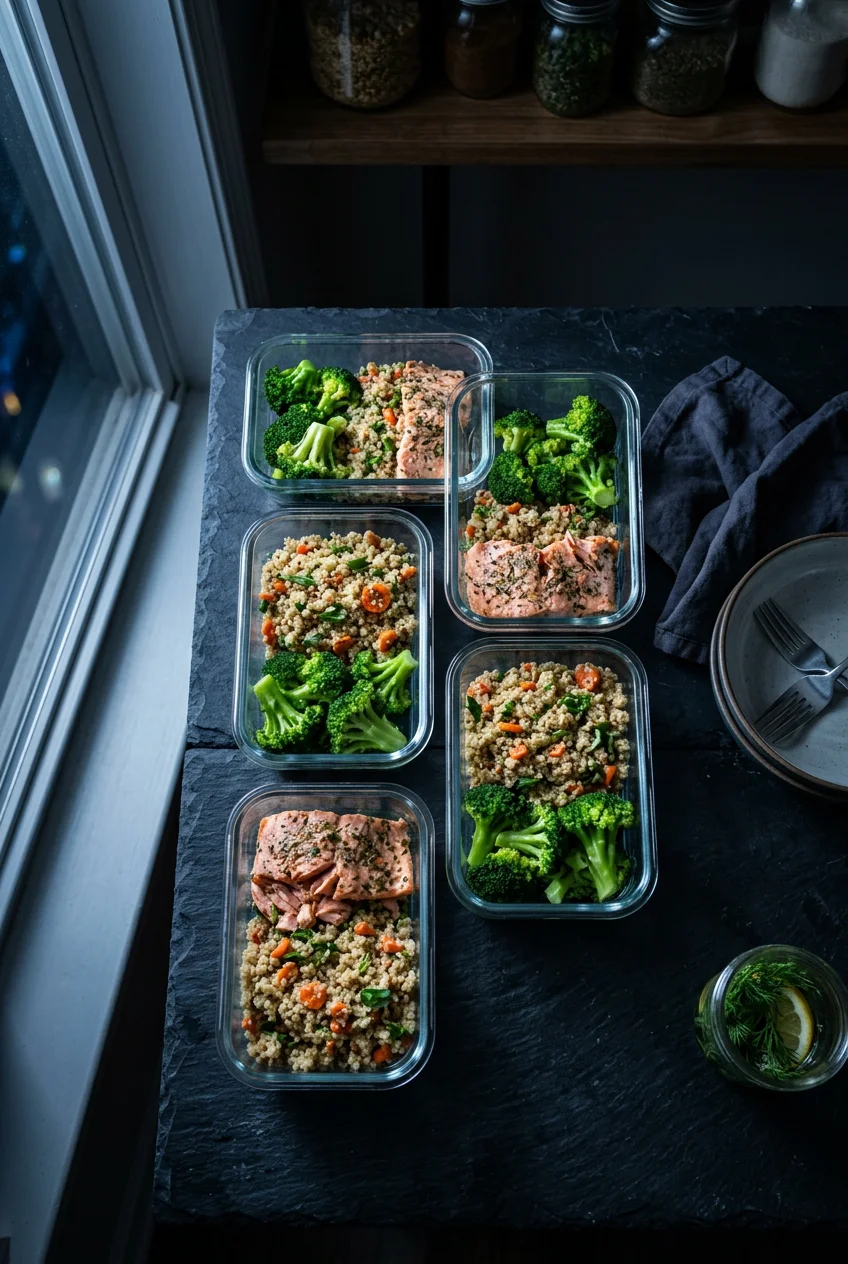
When you’re prepping for a night shift, you have to think about your 2 AM dinner differently. Between midnight and 6 AM, your digestive system wants to be asleep. If you eat a massive bowl of spaghetti, you’re going to suffer. I learned this the hard way last month. I brought a huge container of leftover macaroni and cheese. I ate the whole thing at 3 AM. The stomach cramps were blinding. I felt like I’d swallowed a bowling ball. Now, I strictly opt for high-protein, low-glycemic foods to minimize blood sugar spikes. Research shows a dinner with 41% energy from protein and 29% from carbohydrates can reduce blood sugar fluctuations by 71.4% compared to standard meals. For my middle-of-the-night meal, I bake exactly 4 oz of Atlantic salmon. I get the frozen fillets from Trader Joe’s for $10.99 (1 lb bag). I pair that with 1 cup of steamed green beans. I use 1/2 teaspoon of garlic powder for flavor. It’s light. It’s easy to digest. I don’t feel sluggish afterward. You won’t feel that heavy sensation in your gut. It’s enough to keep my brain working, but not enough to trigger a massive insulin spike. Keep your 2 AM meals small and protein-heavy.
3. Embrace Strategic Snacking with Protein and Fiber

Most people get this wrong. They try to eat three massive meals while working nights. You can’t do that. You need to plan for small, nutrient-dense snacks every 3-4 hours. This keeps your energy stable. I used to rely on sugary granola bars. I’d eat one at 1 AM, feel great for twenty minutes, and then crash. I was jittery and starving by 4 AM. Now, I pack specific snacks. I measure out exactly 1/4 cup of raw almonds. I buy the Kirkland Signature Supreme Whole Almonds from Costco for $13.99 (3 lb bag). They give you healthy fats, protein, and fiber. I also pack a single-serving container of plain Greek yogurt. I buy the Fage Total 2% Greek Yogurt (5.3 oz cup) for $1.49 at Target. I add exactly 4 tablespoons of fresh blueberries. Sometimes I’ll boil two large eggs on Sunday and bring one hard-boiled egg in a little plastic bag. These snacks are tiny, but they work. They stop my stomach from rumbling. They don’t make me sleepy. The crunch of the almonds mixed with the cold, tart yogurt is satisfying at 3 AM when the hospital corridors are dead quiet. Trust me. Stop bringing family-sized bags of chips to work. You’ll eat the whole bag out of boredom. You might also like: 20 Inspiring Meal Prep Ideas for Any Style

M MCIRCO 10-Pack,30 Oz Glass Meal Prep Containers 2
M MCIRCO 10-Pack punches above its price — 23 buyers rated it 4.5 stars. I would buy it again.
4. Invest in Quality, Multi-Purpose Meal Prep Containers

Let’s talk about soggy food. There is nothing worse than opening your lunch bag at 2 AM and finding a leaking, smelly mess. Two years ago, I bought a cheap pack of flimsy plastic containers. I packed a beautiful homemade chicken soup. By the time I got to the breakroom, the plastic lid had popped off. My entire tote bag smelled like chicken broth and wet fabric. It was a disaster. I had to throw away my planner and my favorite pen. You must invest in high-quality, freezer-safe, microwave-safe, stackable glass containers. I personally swear by the Pyrex 10-Piece Glass Food Storage Set. I bought mine at Target for exactly $34.99. The glass doesn’t absorb weird smells. The lids seal tight. When you microwave glass, your food heats evenly. Plastic containers always leave cold spots in the middle of your rice. If you’re going to spend hours cooking on Sunday, don’t ruin your food by storing it in cheap plastic. The Pyrex containers keep my 1 cup of roasted asparagus perfectly crisp. My 6 oz of chicken doesn’t dry out. It’s a small upfront cost, but it saves you so much grief. You won’t be wiping spilled dressing off your car seats at midnight. You might also like: 15 Creative Healthy Meal Prep Ideas That Make a Real Difference
5. Master the Art of Batch Cooking and Component Prep

I can’t stand eating the exact same meal five nights in a row. It makes me miserable. I used to prep five identical containers of chicken and broccoli. By Wednesday night, the smell of cooked broccoli made me gag. It was awful. I ended up throwing away Thursday and Friday’s meals and buying expensive takeout. Now, I do component prep. I dedicate two hours on Sunday afternoon to batch cook foundational ingredients. I’ll roast a massive sheet pan of vegetables. I chop 2 cups of zucchini, 2 cups of bell peppers, and 2 cups of red onions. I toss them with 2 tablespoons of avocado oil. I also cook a large batch of shredded chicken. I buy the Tyson All Natural Fresh Chicken Breasts at Walmart for $12.48 (approx 2.5 lbs). I boil the chicken and shred it with two forks. Then I make 3 cups of brown rice. I store all these components in separate large glass bowls in the fridge. On Tuesday night, I might mix 4 oz of chicken with 1/2 cup of rice and 1 cup of veggies, topped with salsa. On Wednesday, I’ll put the same chicken over 2 cups of romaine lettuce. You get variety without cooking every single day. It prevents meal fatigue. Mix and match your proteins and carbs. It’s the only way I survive long stretches of night shifts. You might also like: 20 Cozy High Protein Lunch Ideas for Any Style
6. Hydrate Smartly with Water and Herbal Teas

Dehydration on the night shift is a silent killer. The air conditioning is always blasting. The air is dry. You don’t realize how thirsty you are until your head starts pounding at 4 AM. I used to drink four cups of black coffee during a 12-hour shift. My mouth tasted like bitter ash. My hands shook constantly. When I finally got home at 8 AM, I’d stare at the ceiling for three hours because my heart was racing. You have to limit caffeine, especially in the latter half of your shift. I bought a 32oz Hydro Flask in a bright teal color from Sprouts for $44.95. I make sure I drink at least two full bottles (about 2 liters) of plain water before my shift ends. At 3 AM, when I want coffee, I switch to decaffeinated herbal tea. I use the Traditional Medicinals Organic Peppermint Tea. It costs $5.29 for a 16-tea bag box at Sprouts. I steep one bag in 8 oz of hot water. The hot peppermint clears my sinuses and wakes up my brain without the caffeine jitters. It’s soothing. If you’re struggling to sleep during the day, look at what you’re drinking at 5 AM. If it’s an energy drink, you’re doing it wrong. Drink water. Drink herbal tea. Your future self will thank you when you hit the pillow.
![[8-Pack,30 oz]Glass Meal Prep Containers](https://m.media-amazon.com/images/I/713Zfdsgi4L._AC_UL320_.jpg)
[8-Pack,30 oz]Glass Meal Prep Containers
A dependable everyday pick — [8-Pack pulls in 7 ratings at 4.5 stars. Not flashy, just solid.
7. Avoid the Vending Machine Trap with Prepared Keto Snacks

We need to talk about the vending machine. It’s a glowing box of temptation when you’re exhausted. Last month at Kroger, I decided I wasn’t going to buy any snacks. I told myself I’d tough it out. By 2 AM on Thursday, my willpower snapped. I bought a giant chocolate bar and a bag of sour gummy worms. I ate all of it in ten minutes. The sugar rush was intense, but the crash at 4 AM was brutal. I could barely keep my eyes open to finish my charting. Now, I combat those late-night cravings by packing keto-friendly snacks. They’re naturally low in sugar and carbs, but high in protein and healthy fats. This gives you stable, lasting energy. I always pack Sargento Balanced Breaks. I buy the 3-pack of the White Cheddar, Almonds, and Cranberries for $4.49 at Kroger. You get exactly 1.5 oz of cheese and nuts. It’s perfectly portioned. I also keep a bag of Jack Link’s Zero Sugar Beef Jerky in my locker. It costs $6.49 for a 2.6 oz bag. If I need something salty, I eat exactly 1 oz of the jerky. It takes a while to chew, which keeps me awake, and the protein kills my hunger instantly. Don’t rely on willpower. Bring your own snacks.
8. Don’t Forget a Light, Sleep-Promoting Meal Post-Shift

Coming home from a night shift is a weird experience. The sun is blinding. The birds are screaming. You’re exhausted, but your stomach is empty. I used to crash into bed without eating. I’d wake up at 1 PM with painful hunger pangs, unable to fall back asleep. You have to consume a light, easily digestible meal before bed. If you eat a heavy burger at 8 AM, you’ll get terrible acid reflux while you sleep. I make a bowl of overnight oats. The night before, I mix 1/2 cup of Quaker Old Fashioned Rolled Oats ($5.79 for 42 oz at Target) with 1/2 cup of unsweetened almond milk. I leave it in the fridge. When I get home, I slice exactly one small yellow banana on top. It’s cold, creamy, and takes zero effort to prepare when my brain is barely functioning. Sometimes, if I want something warm, I’ll make a quick two-egg veggie omelet. I use 2 large brown eggs and a handful of fresh spinach. It takes three minutes to cook. It’s just enough food to satisfy my stomach so I can sleep until 4 PM. Don’t skip this meal. Hunger will ruin your daytime sleep quality.
9. Label Everything to Prevent Mystery Meals During Night Shift Meal Prep

This sounds basic, but skipping this step will ruin your routine. I’m guilty of this. I learned the hard way. A few months ago, I reached into the back of my fridge at 10 PM. I grabbed a glass container filled with what looked like beef stew. I took it to work. At 2 AM, I microwaved it. It wasn’t beef stew. It was a three-week-old container of lentil soup that had fermented. The smell was horrific. It smelled like sour gym socks. I had to throw the entire container in the outside dumpster. I didn’t have any other food. I was starving and furious. Now, I label everything. I keep a black Sharpie Permanent Marker ($1.99) and a roll of basic Scotch Masking Tape ($3.49) in my kitchen drawer. When I finish cooking on Sunday, I put a strip of tape on every single lid. I write the dish name and the date. “Chicken & Rice – Oct 12.” It takes five seconds. This helps you follow the first-in, first-out rule. You won’t waste food anymore. You won’t play Russian roulette with your digestion at 3 AM. When you’re sleep-deprived, your memory is garbage. Don’t trust yourself to remember what’s in that foggy plastic container. Write it down.
![C CREST [10 Pack] Glass Meal Prep Containers](https://m.media-amazon.com/images/I/81HfSfzlqUL._AC_UL320_.jpg)
C CREST [10 Pack] Glass Meal Prep Containers
C CREST [10 Pack] Glass Meal Prep Containers punches above its price — 349 buyers rated it 4.5 stars. I would buy it again.
10. Separate Dressings and Sauces to Maintain Texture

Texture is everything when you’re eating in the middle of the night. If your food feels slimy, you won’t eat it. I used to make these massive salads on Sunday. I’d pour balsamic vinaigrette all over them and pack them away. By Tuesday night, the romaine lettuce was translucent and mushy. It looked like green wet paper. The croutons were soggy sponges. I took one bite and spit it out. It was vile. For salads where crispness is key, you must store dressings, sauces, and wet ingredients separately until just before eating. I bought a set of Sistema To Go Dressing Containers. They are tiny 1.1 oz plastic pots with screw-top lids. I got a 4-pack at Target for $5.99. I pour exactly 2 tablespoons of Newman’s Own Olive Oil & Vinegar Dressing into the little pot. I keep the dressing pot separate from my 2 cups of fresh greens and 4 oz of chopped grilled chicken. When I’m ready to eat at 1 AM, I pour the dressing over the dry salad and shake it. The lettuce stays crisp. The crunch helps wake me up—no exaggeration. Stop ruining your fresh produce by drowning it in sauce three days before you eat it. Keep the wet ingredients away from the dry ones. It’s a simple fix that changes everything.
Night shift life is hard enough without fighting terrible food choices at 4 AM. I hope these tips help you survive the graveyard hours. I’ve learned all of this through painful trial and error, so you don’t have to suffer through soggy salads, sugar crashes, or fermented mystery soups. Taking two hours on Sunday to organize your food will save your sanity by Thursday morning. If you try the overnight oats or the component prep method, let me know how it goes. I’d love to hear what works for you. Pin this article for your next grocery run, and share it with your favorite night shift coworkers. We’re all in this together.
Frequently Asked Questions
When should I eat my largest meal on the night shift?
Consume your largest, most balanced meal 1-2 hours before your shift begins. Your metabolism is active, and it provides sustained energy without causing a heavy feeling during work.
What are the best snacks for a night shift meal prep?
Focus on high-protein, low-sugar snacks like raw almonds, plain Greek yogurt with berries, hard-boiled eggs, or beef jerky. These prevent sugar crashes and keep you alert.
How do I stop my meal prep salads from getting soggy?
Always store your dressings and wet ingredients in separate, small containers. Pour the dressing over your greens right before you eat to maintain a crisp texture.
Should I eat when I get home from a night shift?
Yes, but keep it light. A small bowl of overnight oats or a two-egg omelet prevents hunger pangs from waking you up, without causing acid reflux while you sleep.
