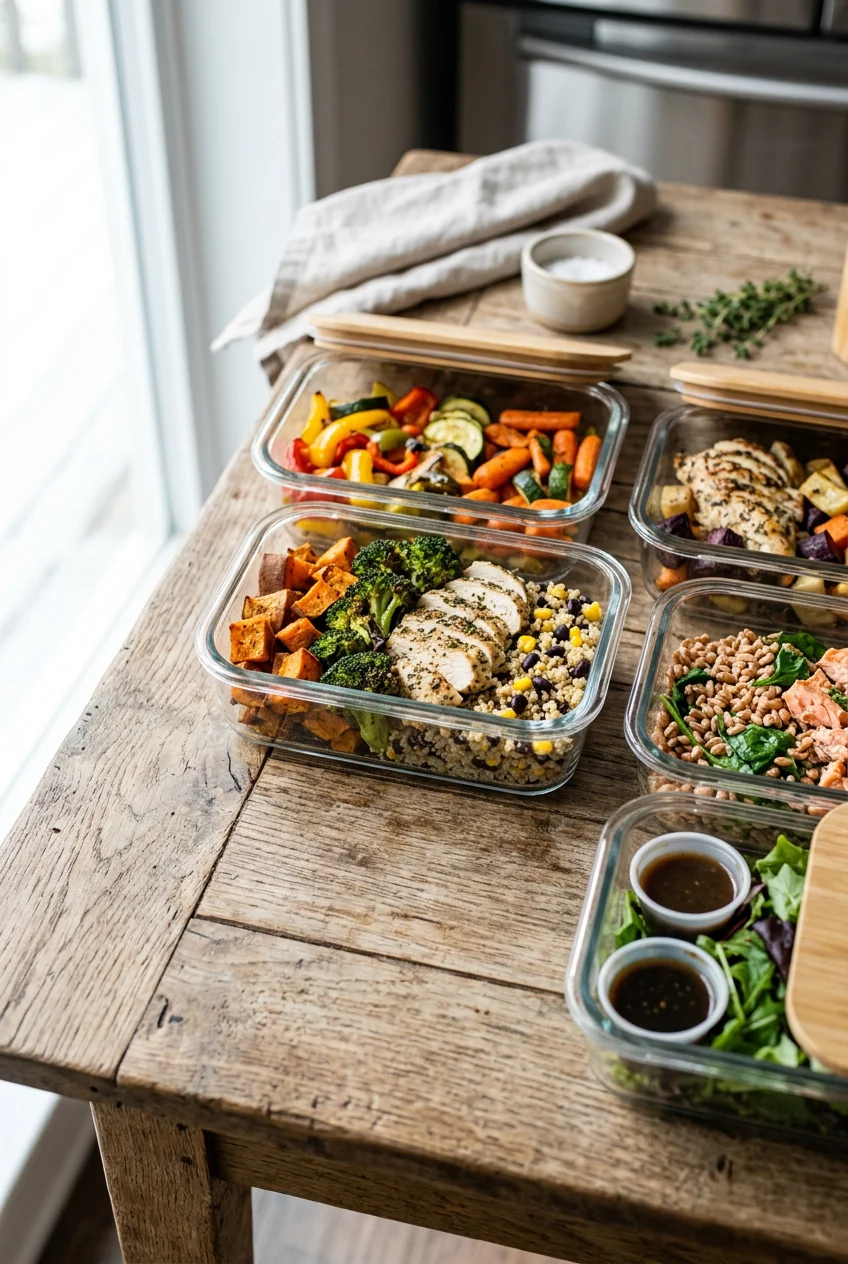
Last Tuesday at Whole Foods, I stared blankly at a $12.99 pre-made salad while hunting for meal prep inspiration. The lettuce looked like wet tissue paper, and I knew my current routine was failing. It smelled faintly like sour vinegar. I bought it anyway because I was desperate. That soggy, depressing lunch was my breaking point. Most articles show you perfect rows of identical broccoli florets. I’m here to tell you reality is much messier. I’ve ruined expensive chicken, melted cheap plastic containers, and cried over spilled quinoa more times than I can count. Let’s skip the Instagram perfection. I want to share what actually works in my tiny kitchen. I’m talking real food, exact prices, and the ugly mistakes I made so you don’t have to. Trust me on this.
1. Invest in Quality Glass for Your Ideas Meal Prep

I learned this the hard way. I used to buy flimsy plastic tubs from the dollar store to save money. Last year, I packed a rich, spicy tomato chili into one for Tuesday lunch. By the time I washed it that night, the plastic had permanently stained a gross rusty orange. It left a greasy, slick film on my tongue that dish soap couldn’t fix. Skip the cheap plastic. It makes your food taste like wet cardboard after a few uses. I’m a huge advocate for durable glass. You need heavy-duty, leakproof containers like the Pyrex Simply Store line. A 9-piece set costs exactly $27.99 at Target. They hold up in the oven and microwave, and they never absorb awful odors. If you’re against glass because it’s heavy, you aren’t out of luck. Grab high-quality, BPA-free plastic options like the Rubbermaid Brilliance line. A 10-piece set usually runs $28.50 at Walmart. They’re lightweight, crystal clear, and won’t shatter if you drop them. I’ve dropped my Rubbermaid containers twice this month without a single crack. Good containers make your food last longer and taste fresher. It’s a small upfront cost that saves you from eating food that tastes like a chemical factory.
2. Adhere Strictly to the 3-4 Day Refrigeration Rule

Food poisoning isn’t a joke. I tried pushing the limits of my fridge for months before figuring this out. I thought a cooked chicken breast would stay fresh for seven days if I kept it sealed. I was wrong. I took a massive bite of five-day-old chicken and noticed a slimy texture and sharp, sour smell that made my stomach turn. I spent the next 24 hours regretting my life choices. You must adhere strictly to the 3-4 day refrigeration rule for cooked proteins. To prevent bacteria and stay safe, cooked meats and poultry must be eaten within 3-4 days. You also need to verify your fridge runs at 40°F (4°C) or below. If you grill 2 lbs of chicken breast on a Sunday, you’ve got to eat it by Wednesday or Thursday. Don’t risk it. If you won’t eat it in time, freeze it. I keep a black dry-erase marker on my fridge door. I write the date I cooked the food right on the Pyrex glass lid. It takes two seconds. It removes the dangerous guessing game when I’m staring into the fridge on a Thursday night trying to remember when I roasted that pork tenderloin.
3. Use Multi-Cookers for Hands-Off Efficiency

I don’t have the time to babysit four different pots. You probably don’t either. I used to stand over a boiling pot of rice, stirring constantly so it wouldn’t burn. I’d almost always end up with scorched grains and a ruined, crusty pan to scrub. Now, I rely on my 6-quart Instant Pot. I bought mine for exactly $99.99 at Target, and it changed my Sunday routine. I toss in 3 cups of dry quinoa and 4.5 cups of chicken broth, push a button, and walk away. It cooks in about 15 minutes. The quinoa comes out fluffy, with a rich, nutty aroma. While the machine does the hard work, I use my stovetop and oven for roasting vegetables or searing a flank steak. You can also use a Ninja Foodi for batch cooking steel-cut oats or shredding piles of chicken. This frees up physical space in my cramped kitchen. It also cuts my active cooking time by at least an hour. If you aren’t using a multi-cooker, you’re working too hard and making a mess you don’t need to clean.
![[10-Pack] Glass Meal Prep Containers with Lids](https://media.tidykitchenhub.com/simpleprepsunday.com/2026/04/regen-inline3-ideas-meal-prep-ddfcc9b1.webp)
[10-Pack] Glass Meal Prep Containers with Lids
[10-Pack] Glass Meal Prep Containers with Lids has been one of the most consistently praised picks in this category. 146 reviewers averaged 4.5/5.
4. Embrace Ingredient Prep for 2026 Flexibility

I hate eating the exact same meal four days in a row. By Wednesday, a pre-mixed bowl of chicken, rice, and broccoli feels like a punishment. I used to force myself to eat it, but it made me hate cooking and crave fast food. Ingredient prep solves this completely. Instead of building identical meals, you cook large batches of single components. I’ll roast two sheet pans of diced sweet potatoes and zucchini with olive oil. Then I’ll cook 4-6 cups of brown rice separately. Finally, I’ll bake a few pounds of lean protein. I store these in their own large Pyrex containers. On Tuesday, I mix the rice and veggies with soy sauce for a quick stir-fry. On Wednesday, I toss the same chicken into a wrap with spinach and hummus. This method combats meal fatigue perfectly. It gives you the freedom to crave different flavors throughout the week while keeping your kitchen clean. I started doing this last month after reading about 2026 food trends, and it’s the only reason I haven’t ordered takeout this week. You might also like: 15 Stunning Aesthetic Batch Cooking You Need to See
5. Rapid Cooling is Crucial to Avoid the Danger Zone

Most people get this wrong. I did for a long time. I used to pull a bubbling pot of chili off the stove and shove it into the fridge. I thought I was being efficient. Instead, I raised the internal temperature of my entire refrigerator. I ruined a $5 gallon of organic milk and wilted my lettuce because the fridge got too warm. A massive food safety mistake is placing hot food directly into the refrigerator. You need to cool your food to room temperature within two hours. If you leave it out longer, you enter the dangerous bacterial growth zone. To speed things up, I divide large quantities into smaller, shallow glass containers. A two-inch deep Rubbermaid container will cool down a boiling beef stew in about 45 minutes. You can feel the heat dissipating into the air. Once cool, I snap the lids on and stack them. It protects your other groceries and keeps your meal prep safe all week. You might also like: 15 Lovely Kids School Lunch Ideas That Changed Everything
6. Freeze Portions for Long-Term Ideas Meal Prep

Sometimes you cook too much. I used to throw away three portions of vegetable soup every week because I couldn’t eat it before the 4-day mark. Pouring your hard work and money down the drain feels terrible. Now, I use my freezer for any meals intended to last beyond that 3-4 day window. You can freeze meals in single-serving portions so they’re easy to reheat. I swear by Souper Cubes for this. I bought a two-pack of the 1-cup silicone trays for $19.95 on Amazon. They’re incredible for freezing thick stews, bone broths, or pasta sauces. The flexible silicone lets you pop out a frozen cube of soup without running it under hot water. I transfer the frozen cubes into a freezer bag to save space. Cooked meals maintain their quality in the freezer for up to 2-3 months. Just label the bag. I once thawed what I thought was marinara, only to discover it was pureed spicy red peppers. My pasta was inedible. It took me years to figure out that labeling is key. You might also like: 15 Cozy Easy Dinner Ideas for Every Budget

Vtopmart 5Pack 22oz Glass Storage Containers with Lids
If you want something that just works, Vtopmart 5Pack 22oz Glass Storage Containers with Lids is a safe bet (32 reviews, 4.5 stars).
7. Combat Monotony with Versatile Spice Blends

Plain boiled chicken is a crime. I tried the strict clean eating trend where you only use salt and pepper. It tastes like wet cardboard. You won’t stick to your routine if your food doesn’t excite you. I keep meals flavorful by using high-quality spice blends. I love the Mrs. Dash salt-free options for roasted vegetables. When I want something special, I buy gourmet blends from Gustus Vitae. Their Everything But The Chicken Seasoning costs about $8.99 at Sprouts Farmers Market. It has a savory, garlicky smell that blooms when it hits a hot cast iron skillet. I also buy huge containers of smoked paprika and cumin from Trader Joe’s for $1.99 each. A sprinkle of smoked paprika turns basic sweet potatoes into a smoky, savory dish. Don’t be shy with your spices. Measure with your heart. The right blend makes a cheap cut of meat taste like a fancy restaurant meal. It’s the easiest way to trick your brain into loving leftovers.
8. Portion Precisely for Your Nutritional Goals

Eyeballing your portions is a bad idea if you have health goals. I used to dump a random amount of pasta and turkey into a bowl. I wondered why I felt bloated every afternoon. I was accidentally eating three servings of carbs in one sitting. My dietitian tells me to portion my meals into containers immediately after cooking. If you leave the food in a giant pot, you’ll over-serve yourself. For muscle gain, target 7-9 ounces of lean protein per meal. I pair that with 1-2 cups of whole grains and 1 cup of roasted vegetables. This aligns with a daily intake of 1.6-2.2 grams of protein per kilogram of body weight. I use a sleek silver OXO 5lb digital food scale. It costs $32.99 at Kroger. Watching the numbers tick up to exactly 8 ounces gives me peace of mind. It takes five minutes on Sunday, but it guarantees my nutrition is locked in for the week.
9. Prevent Soggy Salads with Separate Dressings

There’s nothing sadder than a soggy side salad. Last Tuesday, I opened my lunch container and found a mushy pile of brown lettuce. The vinaigrette I poured on it the night before had destroyed the greens. It smelled like a compost bin. A tip for crisp salads is to store your dressings separate from your greens. You also need to isolate high-moisture ingredients like tomatoes or cucumbers. I use tiny, leakproof dressing containers from the Sistema To Go line. A 4-pack costs just $6.49 at Target. I pack my romaine, carrots, and chicken in my main glass container. I keep the wet ingredients in their own compartments until I’m ready to eat. When you finally pour the dressing over the dry greens, you get a satisfying crunch. It prevents wilting and maintains the perfect texture. I learned this the hard way, and now I refuse to pack a salad without my dressing cups. Don’t pre-dress a salad unless you enjoy eating slimy vegetables.

8 Pack 36oz Large Glass Meal Prep Containers with lids
8 Pack 36oz Large Glass Meal Prep Containers with lids punches above its price — 859 buyers rated it 4.5 stars. I would buy it again.
10. Start Small and Gradually Scale Up
I see beginners try to prep 21 meals on their first Sunday. I did this once, and it was a nightmare. I spent six hours chopping, cooking, and washing piles of dishes. By 9 PM, my kitchen looked like a disaster, my feet throbbed, and I was crying over a burnt pan of broccoli. I threw away half the food by Friday. As advised by dietitians, beginners should start by prepping for only 2-3 days a week. Don’t attempt seven days right out of the gate. This gentle approach prevents stress and builds confidence. It also reduces food waste. I recommend starting with just your work lunches. Prep three portions of a simple chicken and rice dish. See how that feels. Once you master a small batch, you can scale up to dinners and breakfasts. You won’t stick to a habit if it makes you miserable. Keep it small, keep it simple, and protect your Sunday afternoons.
11. Integrate Plant-Based Staples for Sustainable Prep

Meat is expensive. I was spending $60 a week on chicken and beef. I needed a cheaper solution that still gave me enough protein. I started incorporating plant-based staples, and it cut my grocery bill in half. You should try adding dried lentils, black beans, or extra-firm tofu to your rotation. A 16-ounce bag of dried brown lentils costs $2.49 at Trader Joe’s. That cheap bag yields multiple filling servings. When you simmer those lentils in vegetable broth with a bay leaf, they release a deep, earthy smell that makes the house feel cozy. They’re budget-friendly and align with 2026 sustainability trends. I like to mash canned black beans with taco seasoning for a cheap burrito bowl base. Even if you aren’t a strict vegetarian, swapping out meat for a plant-based protein two days a week will save you a ton of cash and introduce new textures to your diet.
12. Never Undercook Proteins for Your Ideas Meal Prep

This is a food safety mistake that terrifies me. I used to read blogs that told you to undercook chicken on Sunday so it wouldn’t dry out when you microwaved it on Wednesday. I tried it once. I bit into a piece of chicken and saw a fleshy pink center. I had to frantically spit it out. Never undercook proteins with the intention of finishing them later. You must ensure all proteins, especially poultry, are cooked thoroughly to their safe internal temperature during the initial preparation. For chicken, that’s exactly 165°F (74°C). This eliminates dangerous pathogens that can make you ill. I use a ThermoPro digital meat thermometer to be sure. I bought it for $14.99 at Walmart. I poke the thickest part of the meat to guarantee it’s safe. If you’re worried about dry meat, store it with a little chicken broth or a sauce. To keep side dishes fresh, use vented containers like the OXO Good Grips GreenSaver ($15.99 at The Container Store) for your produce. And use bulk buying at Costco for grains and spices to offset the cost of good, safe meat.
I hope these tips help you navigate your kitchen a little better. Meal prep doesn’t have to be an exhausting chore that ruins your weekend. If you start small, invest in decent glass containers, and stop forcing yourself to eat plain boiled chicken, you’ll actually look forward to your lunches. I’ve made every mistake in the book so you don’t have to. Pin this article for later when you’re standing in the grocery store aisle feeling overwhelmed. You’ve got this, and your future self will thank you on Wednesday when lunch is already done.

HOMBERKING 10 Pack Borosilicate Glass Meal Prep Containers
HOMBERKING 10 Pack Borosilicate Glass Meal Prep Containers with Lockin has been one of the most consistently praised picks in this category. 23 reviewers averaged 4.5/5.