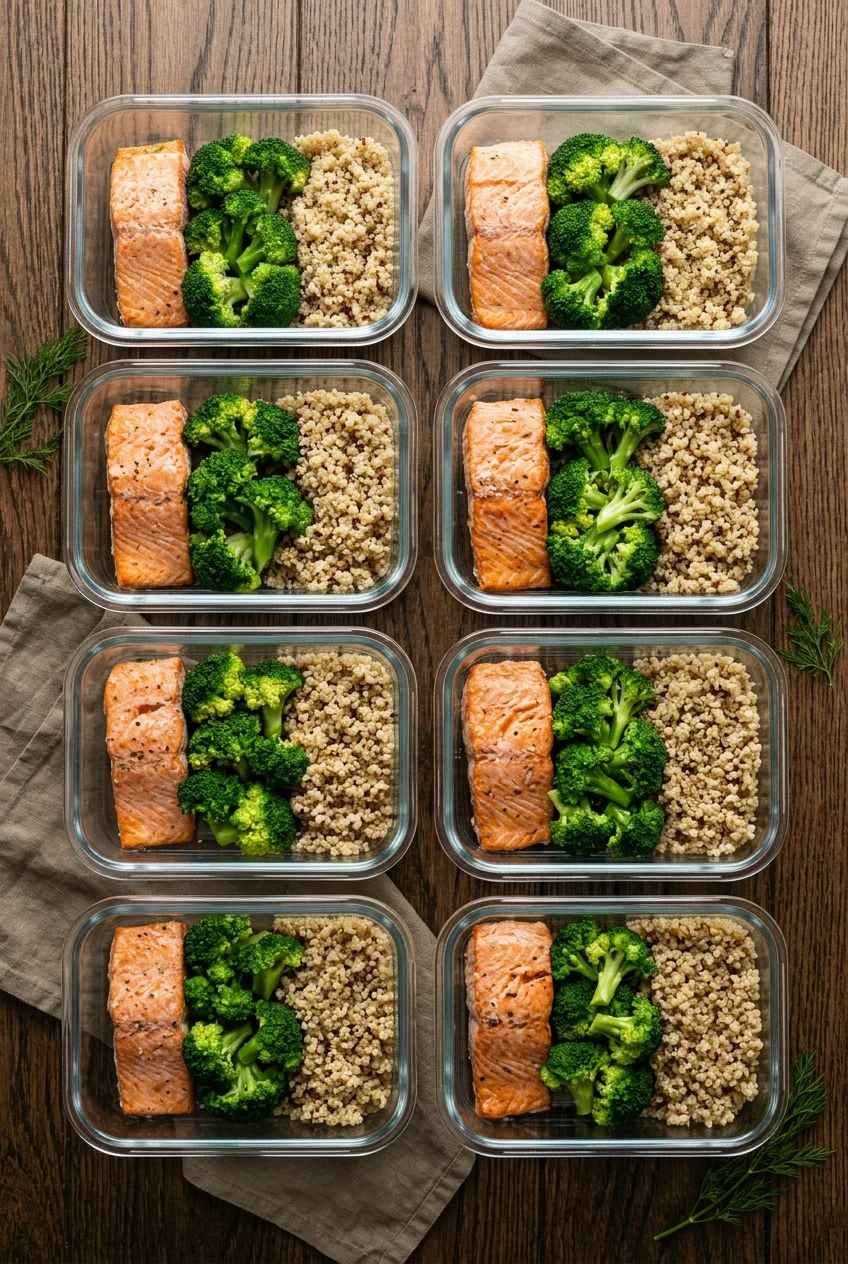
What’s Inside
- Start Small with Just 3 Days of Dinner Meal Prep Ideas
- Master the 50/25/25 Macro Split for Every Container
- Batch Cook Your Base Grains in an Instant Pot
- Roast 2 Pounds of Seasonal Veggies at Once
- Use Stasher Bags for Sustainable Component Storage
- Smart Convenience Foods Aren’t Cheating
- Prioritize 30 Grams of Protein Per Container
- The Clean-As-You-Go Method Saves Your Sanity
- Stop Eating the Exact Same Dinner Every Night
- Use the FIFO Method and Label Your Dinner Meal Prep Ideas
- Build Mason Jar Salads Bottom-Up
- Freeze Flat to Double Your Prep Power
I threw away a batch of slimy, foul-smelling spinach last Tuesday at 8 PM. That was the moment I realized I needed a new approach to dinner meal prep. You spend three hours on a Sunday cooking, only to end up with food that tastes like a damp sponge by Thursday. I’m Esperanza, and I’ve ruined more chicken breasts than I care to admit. Let’s fix your weeknight dinners with strategies that work. I’ve spent three years testing storage methods and batch-cooking tricks to figure out what keeps food fresh, flavorful, and safe all week. You don’t need a culinary degree. You just need a better system.
1. Start Small with Just 3 Days of Dinner Meal Prep Ideas

You see people on Instagram with 21 identical black plastic containers in their fridge. I tried that in 2022. By Wednesday, the thought of eating another rubbery piece of broccoli made me want to order a pizza. Stop prepping for the whole week at once. Most cooked food is only safe and appetizing for 3 to 5 days anyway. Day six chicken smells like a wet dog. Instead, prep for Monday through Wednesday. I buy the 6-piece Pyrex Simply Store Glass Rectangular Container Set for $24.99 at Target. Glass doesn’t hold onto the ghost of last week’s garlic salmon like plastic does. You cook two portions for Monday, two for Tuesday, and two for Wednesday. I’ll make a batch of turkey meatballs and portion them out for just those first few days. It takes exactly one hour on Sunday afternoon. You aren’t exhausted. Your fridge isn’t crammed with identical, boring meals. When Thursday rolls around, you can cook a fresh 15-minute meal or use components you froze earlier. This shift stopped me from wasting $40 of groceries every week. I can’t stress enough how much better a fresh-tasting Wednesday dinner is compared to a Friday meal that’s been degrading in the back of the fridge since Sunday.
2. Master the 50/25/25 Macro Split for Every Container

You’re probably eyeballing your portions, which is how you end up hungry at 9 PM digging through the pantry. Dietitians use the 50/25/25 rule for a reason. Half your container needs to be vegetables, a quarter lean protein, and a quarter complex carbs. I didn’t get this until I bought the OXO Good Grips Stainless Steel Food Scale. It costs $55.99 at Whole Foods, and the pull-out display is the only reason I bought it. When I put a massive mixing bowl on top, I can actually read the numbers. I turn it on, place my glass container on the platform, and hit the tare button. Here is what that macro split looks like in practice. I weigh out 4 ounces of cooked chicken breast. I measure 1/2 cup of cooked brown rice. Then I pack in 1.5 to 2 cups of roasted broccoli or leafy greens. If you guess, you’ll naturally give yourself a mountain of rice and exactly three florets of broccoli. I’ve done it. It spikes your blood sugar and leaves you crashing an hour later. Skip the fat-free dressings. They taste like wet cardboard. Add 1 tablespoon of real olive oil. Your body needs the fat to absorb the vitamins from the spinach. Trust me.
3. Batch Cook Your Base Grains in an Instant Pot

Standing over a bubbling pot of rice is a waste of your Sunday. I used to burn the bottom layer of quinoa every time I tried to multitask. I bought the Instant Pot Duo 7-in-1 for $99.95 at Target, and it changed my routine. I don’t use it for complicated stews. I use it as a hands-off grain factory. I dump in 2 cups of dry quinoa, 3 cups of water, and 1 teaspoon of kosher salt. I lock the lid, press a button, and walk away. The steam valve hisses, the kitchen fills with that nutty, earthy smell, and 15 minutes later I have 6 cups of fluffy quinoa. No burnt bits. I scoop the grains into a large glass bowl and let them cool completely. If you snap the lid on while it’s still steaming, the condensation turns your quinoa into a soggy paste. Having a bowl of a neutral grain means I can build different meals in five minutes. I’ll throw 1/2 cup into a salad on Tuesday, and stir another cup into a quick curry on Wednesday. You’re prepping versatile components, not rigid meals.

Etekcity Food Kitchen Scale
Honestly, Etekcity Food Kitchen Scale surprised me — sturdier than it looks in the photos, and over 1,736 buyers gave it 4.5 stars.
4. Roast 2 Pounds of Seasonal Veggies at Once

I spent months eating soggy, steamed vegetables because I didn’t know how to roast them. Last October, I bought 2 pounds of sweet potatoes from Sprouts Farmers Market for $1.49 a pound. I used a heavy chef’s knife to get uniform 1-inch cubes. I tossed them with 2 tablespoons of olive oil and dumped them onto a single baking sheet. They were crammed together. When I pulled them out, they were pale, mushy, and sad. Vegetables need space. If they touch, they steam. Now, I divide my vegetables across two large aluminum half-sheet pans. I roast them at 425 degrees for 25 minutes. The edges get caramelized, and the centers stay soft. I do this with broccoli, zucchini in the summer, and butternut squash in the fall. Buying whatever is in season at Sprouts saves me about $15 a week. Once they cool, I portion them out. The key is letting them cool completely on the pan before you put the lid on. If you trap the heat, you ruin the texture.
5. Use Stasher Bags for Sustainable Component Storage

My kitchen drawer used to look like a plastic bag explosion. I was throwing away five or six plastic zip-top bags every day. I finally bought a multi-pack of Stasher bags at Costco for about $45. If you buy them individually, the stand-up mid-size bag is $24.99. They are thick, heavy food-grade silicone. The pinch-loc seal snaps shut with a satisfying click. I use them for storing the dry components of my prep. I’ll chop 3 cups of raw carrots and celery, drop them into a Stasher bag, and they stay crisp for five days. I won’t lie, they are annoying to dry. You have to prop them open over a glass or a wooden spoon handle, or the inside stays damp. I flip them inside out and scrub the corners with a bristle brush before sticking them in the top rack of the dishwasher. But the durability is worth it. I can throw them in the dishwasher, the microwave, and even boiling water. When I’m prepping fajita vegetables, I slice 2 bell peppers and 1 red onion, toss them in the bag with 1 tablespoon of taco seasoning, and shake it up. It sits in the fridge marinating until I’m ready to dump it in a skillet on Thursday night.
6. Smart Convenience Foods Aren’t Cheating

There is a weird guilt in the meal prep community about buying pre-chopped food. I used to stand at my counter for forty minutes dicing onions and carrots until my back ached. It’s exhausting. You aren’t cheating if you buy a shortcut. I buy the pre-chopped mirepoix at Trader Joe’s for $3.49 for a 14-ounce container. Yes, it costs slightly more than whole vegetables. I gladly pay the extra dollar to get my Sunday afternoon back. I dump the container into a pot with 1 tablespoon of olive oil, and my soup base is done in five minutes. I also rely on frozen produce. People think frozen vegetables lack nutrients, but they are flash-frozen at peak ripeness. I keep three bags of frozen broccoli florets in my freezer. If I run out of fresh veggies by Thursday, I grab a handful straight from the freezer, throw them in a hot skillet with a splash of water, and cover it to steam. Canned black beans are another staple. I buy the low-sodium ones, but I rinse them in a mesh strainer for a minute to wash off the slimy canning liquid before adding them to my containers. You might also like: 20 Inspiring Meal Prep Ideas for Any Style

Rubbermaid Brilliance Tritan Plastic Food Storage
Honestly, Rubbermaid Brilliance Tritan Plastic Food Storage Containers BPA Free surprised me — sturdier than it looks in the photos, and over 583 buyers gave it 4.5 stars.
7. Prioritize 30 Grams of Protein Per Container

If you find yourself staring into the pantry at 8:30 PM looking for chips, your dinner didn’t have enough protein. I used to pack a bowl of pasta with a tiny sprinkle of chicken and wonder why I was starving two hours later. You need 20 to 40 grams of protein per meal to feel full. I use my Escali Primo Digital Food Scale, a budget option at $24.95 from Kroger, to weigh my proteins. I aim for 4 ounces of cooked chicken, fish, or extra firm tofu. Tofu is cheap, usually around $2.99 a block. I wrap the block in a clean dish towel, put my heavy cast iron skillet on top for 20 minutes, and let the water drain out. Then I cut it into half-inch cubes and bake it until crispy. 4 ounces of that tofu gives me the protein hit I need. I’ll pack it alongside 1 cup of edamame for an extra boost. When you accurately weigh your protein, you realize how small a standard restaurant portion actually is. Don’t eyeball this. A palm-sized portion is a good visual guide, but the scale is the only way to know you’re hitting that 30-gram target. You might also like: 12 Meal Prep Snacks You Need to See
8. The Clean-As-You-Go Method Saves Your Sanity

My biggest meal prep failure happened in 2020. I spent three hours cooking an elaborate menu. When I finished, I turned around to a sink overflowing with greasy pans, cutting boards covered in chicken juice, and a pot with crusted oatmeal. I had sauce splattered on the backsplash and flour dusting the floor. I sat on the floor and cried. I didn’t meal prep again for a month. Learned that the hard way. Now, I follow a strict clean-as-you-go policy. While the sweet potatoes are roasting for 25 minutes, I don’t look at my phone. I wash the cutting board. I wipe down the counters. I load the dishwasher. I use Dawn Platinum Powerwash Dish Spray ($4.99 at Target). You spray it on a greasy pan, let it sit for two minutes, and wipe the grease away. It cuts my dishwashing time in half. By the time the oven timer beeps, my kitchen is clean. The food goes into the glass containers, the containers go into the fridge, and I’m done. If you leave the mess for the end, your brain associates meal prep with a miserable chore. Cleaning in those tiny three-minute pockets of downtime shifts the energy of your Sunday. You might also like: 20 Lovely Work Lunch Ideas to Inspire Your Next Project
9. Stop Eating the Exact Same Dinner Every Night

Eating lemon pepper chicken with plain brown rice four days in a row is self-sabotage. By Wednesday, your brain will reject it. This is the most common mistake I see. You don’t need to cook four different elaborate meals, just different sauces. I prep a giant batch of plain shredded chicken. On Monday, I toss 4 ounces of that chicken with 2 tablespoons of Primal Kitchen Buffalo Sauce. I buy the 8.5-ounce bottle for $6.99 at Walmart. I look for options that have less than 3 grams of added sugar per serving so I’m not accidentally drinking a candy bar’s worth of sugar. I put it over a salad with some blue cheese. On Tuesday, I take the same plain chicken, mix it with 2 tablespoons of teriyaki sauce, and serve it over my prepped quinoa with roasted broccoli. The base ingredients are identical, but the flavor is different. Your palate won’t get bored. I keep four distinct condiments in my fridge: a spicy buffalo, a sweet teriyaki, a tangy Greek vinaigrette, and a rich peanut sauce. I just rotate them. It takes five seconds to pour a sauce over a container, but it tricks your brain into thinking you cooked a brand new meal.

buluker 4 Pack Bento Lunch Box Set 3 Compartment Food
Honestly, buluker 4 Pack Bento Lunch Box Set 3 Compartment Food Storage Containe surprised me — sturdier than it looks in the photos, and over 23 buyers gave it 4.5 stars.
10. Use the FIFO Method and Label Your Dinner Meal Prep Ideas

Last March, I found a mysterious opaque Tupperware container shoved into the back of my fridge. I opened it, smelled something horrific, and realized it was a turkey chili I’d made three weeks prior. It was a fuzzy, gray nightmare. After that, I implemented the FIFO method: First In, First Out. Restaurants use this to prevent food waste, and you should too. The oldest meals sit at the front. The fresh meals go in the back. You grab whatever is in front. I also label everything. I keep a roll of Scotch Blue Painter’s Tape ($4.48) and a black Sharpie ($1.99) in my drawer. I rip off a piece of tape, fold one corner under to create a pull tab, and write “Chili – Prepped 10/12”. That way, when I’m washing dishes on Friday night, I can rip the label off in half a second. Painter’s tape is crucial because it peels off before you wash the lid. If you use regular masking tape, it leaves a sticky residue that ruins your containers. When you label the date, you remove the guesswork. You know exactly what needs to be eaten tonight and what can survive until tomorrow.
11. Build Mason Jar Salads Bottom-Up

Prepping a salad on Sunday and eating it on Wednesday usually results in a slimy, wilted disaster. The dressing soaks into the greens and ruins the texture. I figured out the Mason jar trick two years ago, and it works flawlessly. You have to build it bottom-up. I use Ball Wide Mouth 32-ounce Mason Jars. I buy a 12-pack at Walmart for $14.99. The wide mouth is non-negotiable. If you buy the regular jars, you can’t get a fork in there. Step one: pour 2 tablespoons of dressing into the bottom. Step two: add hard vegetables that won’t absorb liquid, like 1/2 cup of cherry tomatoes, cucumbers, or carrots. Step three: pack in 1/2 cup of heavy items like chickpeas or quinoa. Step four: add your 4 ounces of protein. Step five: stuff the top half with dry leafy greens like spinach or arugula. The greens never touch the dressing until you dump the jar into a bowl on Wednesday night. When you’re ready to eat, unscrew the lid and invert the jar into a large pasta bowl. The dressing pours out last, coating the greens.
12. Freeze Flat to Double Your Prep Power

Your freezer is the safety net for days when you just can’t cook. I don’t freeze whole composed meals because the textures get weird. I freeze individual components flat. I buy the gallon-size Ziploc Freezer Bags for $6.49 a box at Walmart. When I make a batch of brown rice, I let it cool completely. I scoop 4 cups into the bag, press the air out, and flatten the rice into a thin sheet. I stack these flat bags in the freezer like books. Because the rice is spread thin, it thaws in the microwave in about two minutes. I run the frozen bag under warm water for ten seconds to loosen the plastic, then crack the sheet of rice in half. If you freeze it in a giant block, the outside turns to mush while the center stays an ice cube. I do this flat-freezing trick with leftover soups, black beans, and shredded chicken. When a Thursday rolls around and my fridge is empty, I can pull a flat bag of rice and a flat bag of chili from the freezer. Dinner is ready in five minutes, and I didn’t have to chop a single onion. Took me years to figure out.
I’d rather spend one focused hour on Sunday than scramble every night at 6 PM. These dinner meal prep ideas aren’t about perfection. They’re about giving your future self a break. If you found this helpful, save this post or pin it to your meal prep boards so you can reference these exact measurements and times next Sunday. Let’s make weeknight cooking easy again.

Food Scale -33lb Digital Kitchen Scale for Food Ounces
A dependable everyday pick — Food Scale -33lb Digital Kitchen Scale for Food Ounces Grams Rechargea pulls in 78 ratings at 4.5 stars. Not flashy, just solid.
Frequently Asked Questions
How long do meal prepped dinners last in the fridge?
Most cooked meals stay fresh and safe to eat for 3 to 5 days in an airtight glass container. I recommend prepping just three days at a time to avoid food waste and flavor degradation.
What is the best way to reheat dinner meal prep?
Microwave your food in a glass container with a damp paper towel draped over the top. The moisture prevents chicken and rice from drying out. Never reheat food in sealed plastic containers.
Can I freeze my prepped dinners?
Yes, but freeze components flat in silicone or freezer bags rather than fully assembled meals. Flat freezing allows grains and meats to thaw quickly and evenly without turning the outside to mush.
How do I stop my prepped salads from getting soggy?
Build them in wide-mouth glass jars. Put your dressing at the very bottom, followed by hard vegetables like carrots. Keep delicate leafy greens at the very top so they never touch the liquid until you eat.
