What’s Inside
- Start Component Prepping for Easy Meal Prep Ideas Healthy Eaters Love
- Upgrade Your Storage So Your Food Actually Lasts
- Master the 41-Minute Rule for Daily Efficiency
- Sheet Pan Roasting Yields Easy Meal Prep Ideas Healthy and Quick
- Build a Diverse Spice Toolkit to Fight Flavor Fatigue
- Lean on Budget-Friendly Proteins That Still Taste Good
- Pre-Portion Your Snacks to Avoid the Afternoon Crash
- Use Acid and Fresh Herbs to Wake Up Dead Leftovers
I spent three years crying over generic plastic tubs of gray, rubbery chicken on Sunday nights. I needed easy meal prep ideas healthy enough to fit my macros, but I was failing miserably at making food I actually wanted to eat on a Thursday. Last Tuesday at Whole Foods, I watched a woman buy forty dollars worth of pre-made salads because she threw out her own soggy leftovers, and I realized most people get this wrong. We try to cook five identical, boring meals, and we end up hating our food by Wednesday. I tried this wrong for months before figuring it out. You don’t need to eat wet cardboard to hit your nutrition goals, and you don’t need to spend six hours in the kitchen chopping carrots until your hands cramp. You just need a better system. I’m going to show you exactly how I stock my fridge, down to the exact prices, measurements, and grocery stores, so your food actually survives the week and tastes like a real meal instead of a diet punishment.
1. Start Component Prepping for Easy Meal Prep Ideas Healthy Eaters Love

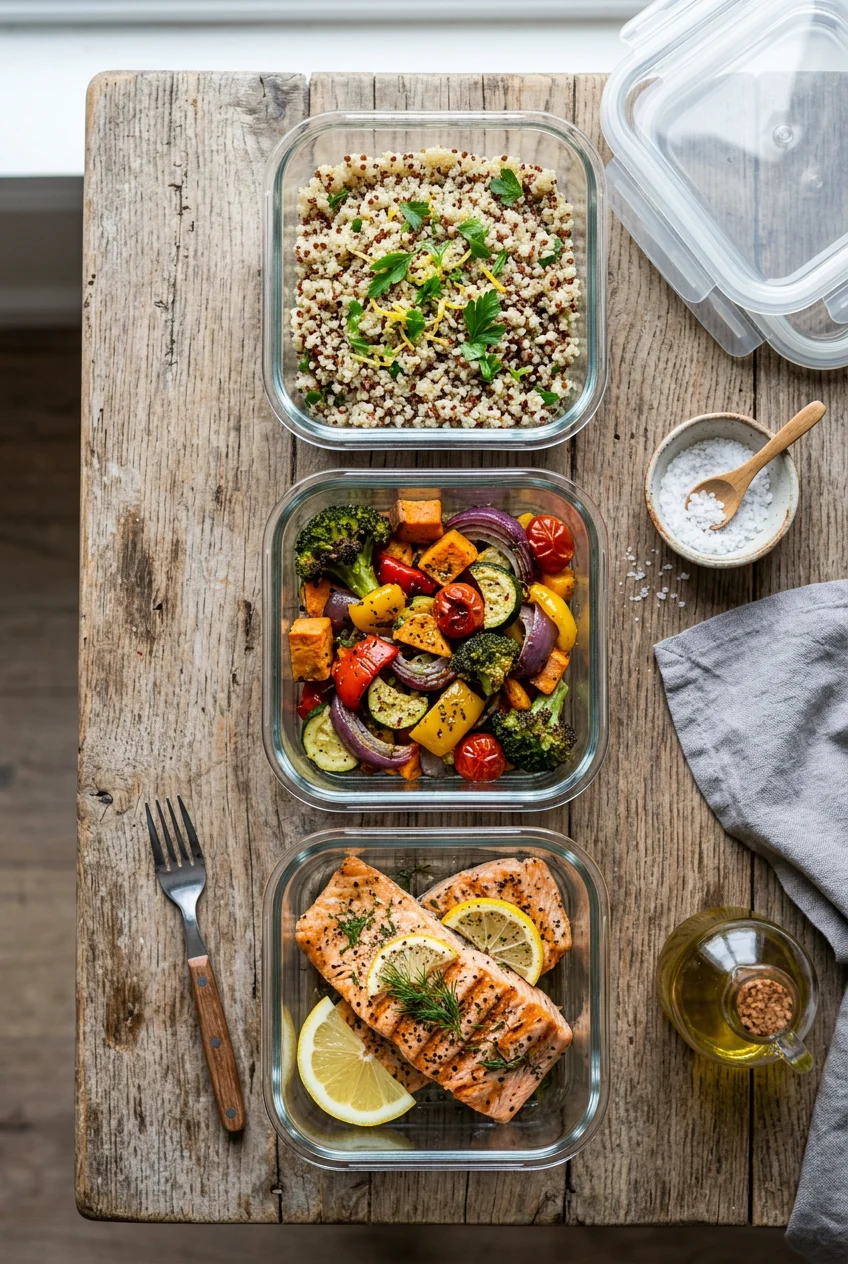
I tried prepping full meals for months before figuring this out. I’d cook five identical containers of chicken, brown rice, and steamed broccoli. By Wednesday, the broccoli smelled like sulfur when I opened the lid in the office microwave. By Thursday, I’d throw the last two containers in the trash and buy a fifteen-dollar salad from the cafe downstairs. It was a massive waste of money. Instead of full meals, I switched to component prepping. This is a popular method in 2026, and it’s the only way I avoid meal fatigue. I focus on cooking large batches of versatile bases. Every Sunday, I rinse a 16 oz bag of Nature’s Promise Organic Quinoa ($3.99 at Stop & Shop) in a fine mesh strainer to remove the bitter coating. I boil it with exactly 4 cups of water and store it in a massive glass bowl. Then, I chop 4 cups of raw vegetables. Usually, it’s 2 cups of broccoli florets and 2 cups of bell peppers. I toss them with exactly 2 tablespoons of Kirkland Signature Organic Extra Virgin Olive Oil. I buy the 2-liter bottle at Costco for $18.99 because it lasts me three months, and the heavy green bottle blocks out light so the oil won’t go rancid. I roast the vegetables at 400 degrees Fahrenheit for 25 minutes until the edges turn black and crispy. I store the roasted vegetables in a separate container from the quinoa. On Tuesday, I can mix the quinoa with vegetables and a fried egg. On Wednesday, I can throw the quinoa into a spinach salad. Keeping the ingredients separate means the textures don’t turn to mush. The quinoa stays fluffy, and the vegetables keep their roasted bite. It takes the exact same amount of time to cook, but you aren’t forced to eat the exact same flavor profile five days in a row. Took me years to figure out.
2. Upgrade Your Storage So Your Food Actually Lasts

If you’re still using the cheap, flimsy plastic containers that come free with your takeout orders, you’re setting yourself up for failure. I used those for a year, and the moment I tried to reheat tomato sauce, the plastic stained bright orange and warped in the microwave. The lids never fit right, and the food dried out by day three. I finally listened to Consumer Reports, which noted that glass lasts five to ten times longer than plastic. I bought the OXO Smart Seal Glass Container Sets. A 5-piece set costs $32.99 at Target. The glass is incredibly thick. I dropped one on my kitchen tile floor last Tuesday, and it didn’t even chip. The lids have a thick silicone seal and four locking tabs that snap down with a loud click, so you know it’s completely airtight. This stops your roasted sweet potatoes from absorbing the smell of the raw onions sitting on the shelf below them. If you commute on the subway and can’t carry heavy glass in your tote bag, you need a reliable plastic alternative. I use the Rubbermaid Brilliance containers for my office days. A 10-piece set runs $28.49 at Walmart. They are made of a crystal-clear, BPA-free plastic that actually looks like glass, and the latches pull tight enough to hold soup. I learned this the hard way in 2021 when a cheap container popped open and spilled chicken broth all over my laptop. Spending thirty dollars on proper storage containers saves you hundreds of dollars in spoiled food and ruined bags.
3. Master the 41-Minute Rule for Daily Efficiency

A 2026 study by Destatis indicates that Germans spend an average of 41 minutes daily on meal preparation. When I first read that, I laughed, because I was spending two hours every night destroying my kitchen just to make dinner. The trick isn’t cooking faster; it’s overlapping your tasks. I call this the 41-Minute Rule. You have to optimize the dead time while you’re waiting for water to boil or an oven to preheat. For instance, on a Tuesday night, I’ll put a pot of water on the stove for a 16 oz box of Barilla Whole Grain Penne ($1.99 at Kroger). It takes about ten minutes for that water to come to a rolling boil. Instead of staring at the pot or scrolling on my phone, I pull out my cutting board and spend those ten minutes chopping 2 cups of carrots and 1 cup of red onions for the next day’s lunch. The sound of the knife hitting the wooden board becomes a rhythm. By the time the pasta goes into the water, my vegetables are already in a container in the fridge. To speed things up even more, I rely on pre-washed greens. I buy Trader Joe’s Pre-Washed Spinach ($2.99 for a 9 oz bag). I don’t have to waste five minutes rinsing dirt out of leaves and drying them in a salad spinner. I just grab a handful and throw it right into the hot pasta to wilt. You aren’t adding extra time to your day; you’re just using the minutes you were already standing in the kitchen. You might also like: 15 Brilliant Good Meal Prep Ideas That Changed Everything

Food Scale, 11lb Digital Kitchen Scale with 6 Units LCD
Food Scale punches above its price — 21 buyers rated it 4.5 stars. I would buy it again.
4. Sheet Pan Roasting Yields Easy Meal Prep Ideas Healthy and Quick

I absolutely hate doing dishes. There was a point in my life where I’d leave three dirty frying pans in the sink overnight because I was too exhausted to scrub them. That’s when I started relying heavily on sheet pan meals. You get maximum flavor with exactly one pan to wash. I line a large aluminum baking sheet with parchment paper to make cleanup even faster. I take 1.5 lbs of Perdue Farms Harvestland Organic Chicken Breast ($8.99 per pound at Kroger) and cut it into exactly 1-inch pieces. The texture of raw chicken is gross, but cutting it uniformly ensures it all cooks at the exact same rate so you don’t end up with dry edges and raw centers. I add 2 cups of peeled, chopped sweet potatoes and 1 cup of Brussels sprouts with the hard stems trimmed off. I toss everything right on the pan with 2 tablespoons of olive oil. For flavor, I use McCormick Smoked Paprika ($4.29 for a 1.62 oz bottle) and a heavy shake of garlic powder. The red dust coats the chicken and the potatoes. I roast the entire tray at 400 degrees Fahrenheit for 20 to 25 minutes. When you pull the pan out of the oven, you can hear the oil sizzling, and the caramel-butter smell of the smoked paprika fills the whole kitchen. The Brussels sprouts get these dark, charred, crispy edges that taste incredible. You get a completely balanced meal of protein, complex carbohydrates, and fiber, and when you’re done, you just throw the parchment paper in the trash and wipe down the pan. You might also like: 11 Meal Prep For The Week For Beginners for Every Budget
5. Build a Diverse Spice Toolkit to Fight Flavor Fatigue

The biggest mistake people make when trying to eat better is relying on plain salt and black pepper. I did this for a whole month. I ate plain grilled chicken breasts and steamed zucchini until I was literally losing my mind. The psychological toll of eating bland, colorless food will make you abandon your goals faster than anything else. You need a dedicated spice toolkit to fight flavor fatigue. Spices don’t add calories, but they completely change the profile of your food. I buy Frontier Co-op Organic Taco Seasoning ($5.49 for a 2.3 oz jar at Whole Foods). Instead of making a boring ground turkey bowl, I brown 1 lb of turkey and mix in 2 tablespoons of the taco seasoning and 1/4 cup of water. The cumin and chili powder smell amazing, and it instantly tastes like takeout. On a different day, I’ll take 2 cups of plain chickpeas and toss them with 1 tablespoon of Simply Organic Curry Powder ($6.29 for a 3 oz jar). The bright yellow powder stains my wooden spoon, but it gives the chickpeas a deep, earthy warmth that pairs perfectly with roasted cauliflower. You can take the exact same base ingredients—chicken, rice, and beans—and make them taste Mexican, Indian, or Mediterranean just by changing the powder you sprinkle on top. Skip the fat-free, chemical-laden bottled sauces. They taste like artificial sugar. Real, high-quality dried spices are the only way to make healthy food taste good consistently. You might also like: 10 Healthy Breakfast Meal Prep That Actually Work
6. Lean on Budget-Friendly Proteins That Still Taste Good

There’s a massive myth that eating well requires you to spend two hundred dollars a week on wild-caught salmon and grass-fed steaks. Healthy meal prep doesn’t require expensive ingredients. If you know how to prepare them, you can lean heavily on cost-effective proteins. I always keep a stack of StarKist Chunk Light Tuna in Water in my pantry. They cost about $1.14 per 5 oz can at Walmart. I drain the water completely so it isn’t mushy, and instead of using heavy mayonnaise, I mix the tuna with 2 tablespoons of plain Greek yogurt, a squeeze of lemon, and diced celery. It’s incredibly cheap, packed with protein, and doesn’t smell terrible in the breakroom if you eat it cold. I also buy Pete and Gerry’s Organic Eggs ($5.79 for a dozen at Sprouts). I boil six eggs on Sunday for exactly 8 minutes, then immediately plunge them into ice water. Peeling them under a cold running faucet makes the shells slide right off, and the 8-minute mark leaves the yolks slightly jammy instead of chalky and gray. For plant-based days, I buy bulk green lentils. They cost under $1.89 per pound at my local store. I used to make a lentil stew that looked like gray mud, but I learned to add 1 tablespoon of tomato paste and a splash of vinegar at the end of cooking. It completely brightens the dish. You can build a hearty, filling meal for under three dollars a portion if you stop relying on premium cuts of meat for every single lunch.

buluker 4 Pack Bento Lunch Box Set 3 Compartment Food
buluker 4 Pack Bento Lunch Box Set 3 Compartment Food Storage Containe punches above its price — 23 buyers rated it 4.5 stars. I would buy it again.
7. Pre-Portion Your Snacks to Avoid the Afternoon Crash

If you don’t prep your snacks, you’re going to fail at 3 PM. I know this because I spent years hitting that afternoon energy crash and walking to the corner cafe to buy a four-dollar chocolate chip muffin. You can’t rely on willpower when your blood sugar drops. You have to have the food ready and visible. On Sunday afternoons, I line up five small glass jars on my counter. I buy a large bag of Blue Diamond Lightly Salted Almonds ($7.98 for 16 oz at Target). I measure exactly 1/4 cup, which is about one ounce, into each jar. The salt dust gets on my fingers, but measuring it out stops me from eating half the bag while watching television. In another set of jars, I measure out 6 oz portions of Fage Total 2% Greek Yogurt ($6.49 for a 32 oz tub at Kroger). I specifically choose the 2% fat version because the fat-free stuff tastes like wet chalk and leaves you hungry twenty minutes later. The thick texture of the 2% yogurt actually keeps you full. I’ll drop 1/2 cup of frozen blueberries right on top of the yogurt. As the berries thaw in the fridge over the next few days, their juices bleed into the yogurt and naturally sweeten it. When 3 PM rolls around, I don’t have to think. I just open the fridge, grab a jar of yogurt and a jar of almonds, and I get the crunch and the protein I need to make it to dinner without ordering takeout.
8. Use Acid and Fresh Herbs to Wake Up Dead Leftovers

The worst part of meal prepping is eating day-three chicken. When you microwave cooked chicken, it develops a specific, stale, warmed-over flavor that makes you want to throw it directly into the trash. I used to just microwave dry chicken on a paper plate and force myself to chew it. It was miserable. The secret to fixing dead leftovers is adding acid and moisture right before you eat. I keep a bottle of ReaLemon 100% Lemon Juice ($3.19 for 15 oz at Walmart) in my fridge door. Just before I reheat a container of chicken and quinoa, I sprinkle a few drops of water and a quick splash of lemon juice over the food. The steam from the water keeps the meat from drying out, and the chemical reaction of the citrus acid completely masks that stale fridge flavor. If I’m eating a cold salad, I make a quick vinaigrette using Bragg Organic Apple Cider Vinegar ($6.49 for a 16 oz bottle at Whole Foods). The bottle has the cloudy ‘mother’ floating at the bottom, so you have to shake it well. I whisk 1 tablespoon of the sharp vinegar with 3 tablespoons of olive oil and a pinch of salt. Pouring a bright, acidic dressing over a bowl of prepped vegetables brings the flavors back to life. You can’t expect food cooked on Sunday to taste freshly made on Thursday without giving it a little help. A three-dollar bottle of lemon juice or vinegar is the cheapest insurance policy against throwing away your hard work. Trust me on this.
I spent years making this harder than it needed to be. You don’t need to spend your entire weekend trapped in the kitchen to eat well during the week. You just need a solid plan, a few reliable glass containers, and a willingness to stop eating plain boiled chicken. If you start with just one of these habits this week, start with the component prepping. Cooking a big batch of quinoa and roasting a tray of vegetables takes thirty minutes, but it saves you from eating a sad, expensive desk lunch on Wednesday. I’d love to hear how you handle your weekly cooking schedule and what specific ingredients you lean on when you’re short on time. Pin this post to your favorite recipe board so you can find these exact measurements and grocery prices the next time you’re standing in the middle of Target trying to remember which glass containers actually work.
Frequently Asked Questions
How long do healthy meal prep containers last in the fridge?
Most cooked proteins and roasted vegetables last three to four days in airtight glass containers. If you use high-quality containers with silicone seals, you prevent air exposure, which stops your food from drying out or absorbing strange fridge smells.
What are the best containers for meal prepping?
Glass containers with snap-lock lids are the most durable option. They don’t stain when you store tomato sauce, and they won’t warp in the microwave. BPA-free plastic containers with leak-proof latches work best if you need a lightweight option for commuting.
How do I stop my prepped meals from getting soggy?
Store your ingredients separately instead of mixing them together on Sunday. Keep your roasted vegetables in a different container from your grains or sauces. Only combine the components and add dressings right before you eat.
Is meal prepping actually cheaper than buying lunch?
Yes, if you rely on budget-friendly staples. Using canned tuna, bulk lentils, and organic eggs keeps your cost under three dollars per meal. Buying lunch at a cafe usually costs between ten and fifteen dollars, which drains your budget quickly.
