What’s Inside
- Embrace the Building Block Method for Vegan Meal Prep for the Week
- Batch Cook Brown Lentils and Quinoa in Bulk
- Skip the Fake Meats and Focus on Whole Foods
- Invest in Proper Glass Storage Containers
- Pre-Chop Vegetables and Massage Your Kale
- Buy Frozen Produce for Cheaper Vegan Meal Prep for the Week
- Master One-Pot Lentil Stews for Efficiency
- Prep Versatile Dressings and Umami Boosts
- Mix in Clean Pea Protein Powders
- Add Not-Recipe Boosts to Finish Your Bowls
I threw away $42 worth of slimy spinach and graying broccoli last Sunday afternoon. I stood over my kitchen trash can, scraping wet, foul-smelling vegetables out of plastic grocery bags. The pungent, earthy smell of rotting greens filled the entire kitchen. That was the exact moment I realized my approach to vegan meal prep for the week was completely broken. I used to buy random fresh vegetables at Whole Foods without a solid plan. I’d stuff them into the crisper drawer, assuming I’d figure it out later. By Wednesday, everything was mushy and inedible. If you want to actually eat clean without wasting half your grocery budget on spoiled food, vegan meal prep for the week requires a strict, methodical system. You can’t just wing it with plant-based ingredients. They degrade too quickly. I’ll walk through the exact steps I use now to keep my fridge organized and my meals fresh. I learned these specific techniques the hard way after months of eating soggy tofu and throwing away expensive organic produce. Trust me on this.
1. Embrace the Building Block Method for Vegan Meal Prep for the Week

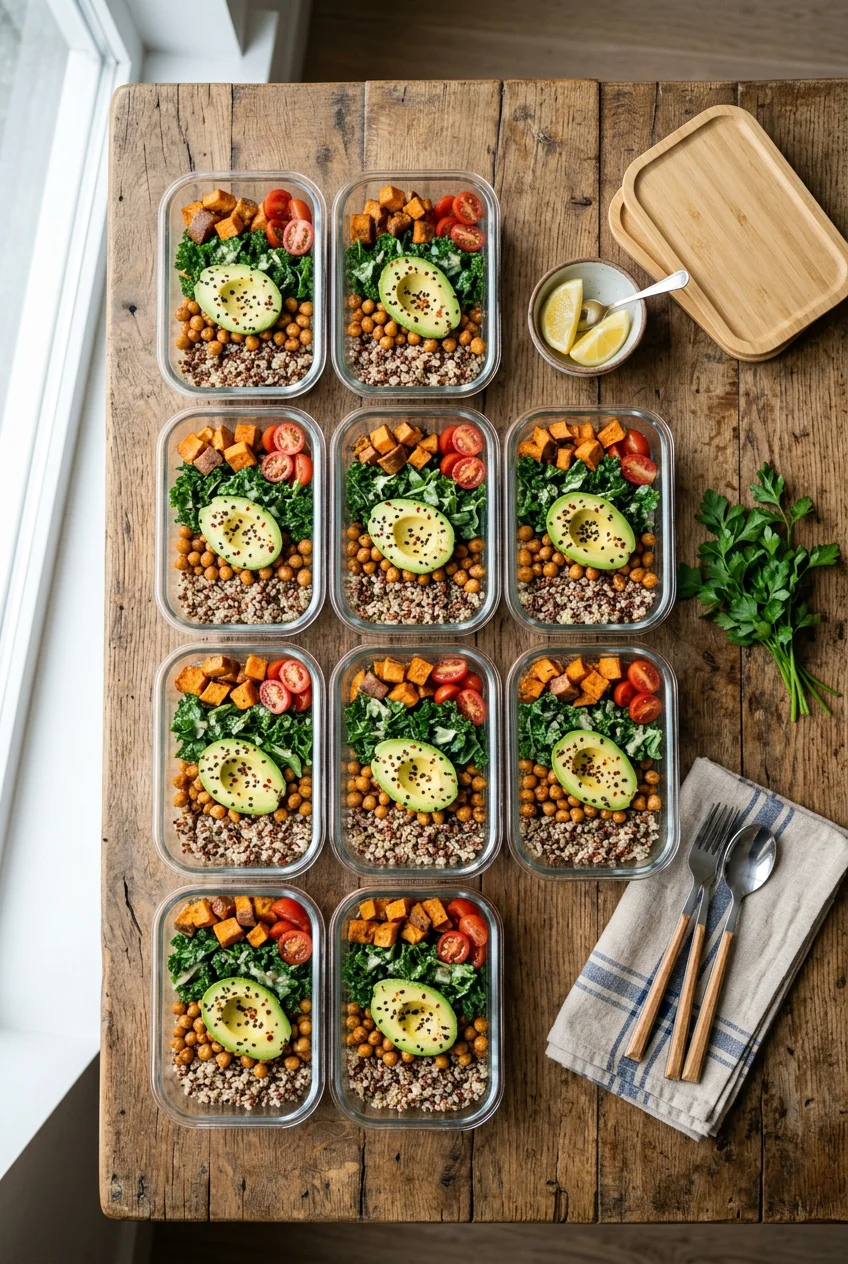
Instead of cooking five identical containers of rice and beans on Sunday, I use a modular system. Vegan chefs David and Stephen Flynn from The Happy Pear highly recommend this building block method. You prepare base ingredients entirely separately. I roast 2 pounds of diced sweet potatoes, bake 14 ounces of extra firm tofu, and cook 2 cups of dry quinoa. I store these in their own individual glass containers. On Monday, I mix the baked tofu with quinoa and fresh broccoli. On Tuesday, I put the roasted sweet potatoes over a bed of raw spinach with black beans. This modular approach stops that dreaded Thursday flavor fatigue. I tried prepping full, composed meals for months. By day three, the sauce made the grains mushy, and the roasted vegetables tasted like wet cardboard. The texture was awful. Keeping components separate means your food actually tastes fresh on Friday. I buy a 14-ounce block of Nasoya Extra Firm Tofu for $2.99 at Kroger. I press it for twenty minutes with a heavy cast iron skillet, toss it with 1 tablespoon of olive oil and 1 teaspoon of smoked paprika, and bake at 400 degrees for 25 minutes. It stays crispy in its own container. You just grab a handful of each block when you pack your lunch for the office.
2. Batch Cook Brown Lentils and Quinoa in Bulk

Cooking grains and legumes from scratch every single night takes way too long. I cook large batches on Sunday afternoon while I listen to a podcast. A 1-pound bag of dry brown lentils costs about $1.49 at Walmart. That single bag yields six to eight large servings. It breaks down to under $0.30 per serving. You get a massive amount of clean, dense protein for almost nothing. I boil 1 cup of dry lentils with 3 cups of low-sodium vegetable broth for twenty minutes. They hold their shape perfectly for grain bowls or salads. Red lentils turn into a soft mush, which is fine for soup, but brown or green lentils are exactly what you want for meal prep texture. Cooked grains and legumes last up to 5 days in the refrigerator. I used to make the mistake of leaving them on the counter in a deep pot to cool for hours. They get a weird, sour smell if you do that. No exaggeration. Now, I spread the cooked quinoa or hot lentils on a wide, flat metal baking sheet. The steam rolls off immediately, and they cool quickly in twenty minutes before I transfer them to the fridge. I usually prep 2 cups of dry Lundberg Family Farms organic brown rice, which runs $4.99 a bag at Sprouts. It gives me a dense, chewy base for the entire week.
3. Skip the Fake Meats and Focus on Whole Foods

I bought a $7.99 pack of frozen vegan sausages at Whole Foods last month. I microwaved one for lunch, and it tasted exactly like salty rubber. The texture was bouncy in the worst way possible, and the artificial smoke flavor lingered in my mouth all afternoon. Dietitian Kramer specifically advises against relying heavily on highly processed vegan meats and cheeses for clean eating. They are packed with sodium, refined oils, and weird protein isolates. Instead, build your foundation on whole foods. I focus on whole grains, black beans, raw walnuts, and hemp seeds. You get better dietary fiber, necessary minerals, and actual phytonutrients. If I want a meaty, dense texture, I use an 8-ounce package of Upton’s Naturals Traditional Seitan. It costs $5.49 at Target. It has just a few basic ingredients and provides a dense, chewy bite without the chemical aftertaste. I tear it into 1-inch chunks, pan-fry it with 1 tablespoon of avocado oil until the edges crisp up, and store it for wraps. When I relied on the frozen fake chicken nuggets, I felt sluggish and bloated by 2 PM every day. The sodium crash is real. Sticking to whole foods keeps your energy stable. You just have to season your beans and tofu aggressively. I use 2 tablespoons of low-sodium soy sauce and 1 teaspoon of garlic powder on black beans to get that deep, savory flavor. You might also like: 9 Cheap High Protein Meal Prep Worth Trying
![[8-Pack,30 oz]Glass Meal Prep Containers](https://m.media-amazon.com/images/I/713Zfdsgi4L._AC_UL320_.jpg)
[8-Pack,30 oz]Glass Meal Prep Containers
Honestly, [8-Pack surprised me — sturdier than it looks in the photos, and over 7 buyers gave it 4.5 stars.
4. Invest in Proper Glass Storage Containers

You can’t put clean, fresh food in cheap, warping plastic containers. I tried using those flimsy black plastic takeout containers for a year. The thin lids cracked in the dishwasher, the tomato sauce stained the plastic permanently orange, and my fridge constantly smelled like old garlic. To maximize freshness and food safety, you need heavy glass or stainless steel airtight containers. I bought the Pyrex 18-Piece Glass Storage Set for $34.99 at Target. The thick glass doesn’t hold odors. The heavy plastic lids snap shut completely tight, creating a real seal. This makes a noticeable difference in maintaining the quality of your meals for the strict 3-5 day window. A common mistake is over-prepping for too many days. Most refrigerated meals are only safe and tasty for up to 5 days. If you prep on Sunday, Friday’s lunch is pushing it. I learned this when I ate a six-day-old lentil salad and spent Saturday with a terrible stomach ache. It took me years to figure out that lesson. Now, I freeze anything I plan to eat after Thursday. I leave about 1 inch of space at the top of the glass container for expansion as the food freezes. Properly sealed dishes maintain peak quality for about three months in the freezer. Glass containers handle the transition from the freezing cold directly to the microwave without melting chemicals into your lunch.
5. Pre-Chop Vegetables and Massage Your Kale

Chopping a raw onion on a Tuesday night after working eight hours is the fastest way to ruin my mood. I do all my washing, peeling, and chopping on Sunday afternoon. I cut 2 large yellow onions and 3 red bell peppers into 1/2-inch dice. Cut vegetables like onions and peppers will keep for two to three days in the refrigerator when stored in airtight containers. If you leave them longer, the peppers get wet, slimy edges. I store them in a 4-cup Pyrex glass bowl. For leafy greens, I use a very specific trick. I wash 1 bunch of organic lacinato kale, dry it completely with a salad spinner, and wrap it in a damp cotton kitchen towel before putting it in a plastic bag in the fridge. This extends the crispness for days. If you find raw kale too tough to eat, you need to massage it. I chop the kale into thin ribbons. I add 1 tablespoon of extra virgin olive oil and 1 teaspoon of fresh lemon juice. I physically rub the leaves with my bare hands for two solid minutes. The volume shrinks by half. The leaves turn from a dull, dusty green to a bright, vibrant emerald and become incredibly tender. This surprising technique breaks down the fibrous cell walls. It makes the kale easier to digest and completely removes that bitter, dry texture. I buy organic kale for $2.49 a bunch at Trader Joe’s. You might also like: 12 Low Carb Meal Prep Worth Trying
6. Buy Frozen Produce for Cheaper Vegan Meal Prep for the Week

Fresh berries go bad in forty-eight hours in my humid fridge. I got tired of throwing away fuzzy, molding strawberries every Wednesday. Frozen fruits and vegetables are much cheaper and last for months without degrading. I buy a heavy 4-pound bag of Kirkland Signature Organic Mixed Berries for $11.99 at Costco. I use 1/2 cup every single morning in my hot oatmeal. The icy berries melt directly into the steaming oats and create a thick, natural purple syrup. You don’t have to wash, stem, or chop anything. This saves at least ten minutes of prep time every morning. I also keep a 16-ounce bag of frozen shelled edamame in the freezer. It costs $2.29 at Trader Joe’s. I run 1 cup of the frozen edamame under hot tap water in a colander for two minutes, and it’s completely thawed and ready to add to a grain bowl. Frozen vegetables are picked at peak ripeness and flash-frozen immediately. They often have more nutrients than the limp, sad fresh broccoli sitting on the grocery store shelf for a week. I tried roasting frozen broccoli once on a sheet pan, and it was a soggy, wet disaster. The internal water content is simply too high for dry heat. Instead, I steam frozen broccoli in the microwave or throw frozen spinach directly into boiling soups. It works perfectly for wet cooking methods. You might also like: 8 Vegetarian Meal Prep for Every Budget

M MCIRCO 10-Pack,30 Oz Glass Meal Prep Containers 2
Honestly, M MCIRCO 10-Pack surprised me — sturdier than it looks in the photos, and over 23 buyers gave it 4.5 stars.
7. Master One-Pot Lentil Stews for Efficiency

Soups, thick stews, and heavy curries are the most efficient items for plant-based eating. You chop the raw ingredients exactly once, throw them in a heavy pot, and walk away. I make a huge batch of sweet potato and peanut curry every other week. I use 2 large peeled sweet potatoes, 1 can of full-fat coconut milk, and 1/2 cup of creamy, unsweetened peanut butter. These heavy dishes actually taste better on Tuesday than they do on Sunday. The dry spices have time to absorb deeply into the starchy potatoes. They also freeze exceptionally well for up to 6 months. I ladle 2 cups of the cooled curry into a Souper Cubes silicone freezing tray. I bought the 2-cup tray for $19.95 on Amazon. Once the blocks freeze solid overnight, I pop them out and store them in a large gallon freezer bag. When I’m too tired to cook, I just microwave a frozen curry block in a glass bowl for four minutes. The creamy texture remains identical to the day I cooked it. I used to freeze soup in cheap plastic containers, and the brittle plastic would crack when I tried to pry the frozen block out with a butter knife. Silicone trays solve that problem completely. One-pot meals mean I only have to wash my large 6-quart Lodge enameled Dutch Oven, which cost me $79.90 at Walmart.
8. Prep Versatile Dressings and Umami Boosts

Plain boiled quinoa and plain steamed broccoli is a miserable, dry lunch. You need heavy fats and sharp acids to make clean eating enjoyable. I make a fresh batch of homemade tahini dressing every Sunday morning. I whisk 1/4 cup of sesame tahini, 2 tablespoons of fresh lemon juice, 1 tablespoon of maple syrup, and 3 tablespoons of warm water. When the water hits the tahini, it seizes up into a stiff paste, but if you keep whisking, it smooths out into a creamy sauce. It takes three minutes. If I don’t feel like making it, I use a store-bought vegan simmer sauce. Haven’s Kitchen Golden Turmeric Tahini is a great option. It costs $6.99 for a 5-ounce pouch at Whole Foods. I store the dressing in a tiny 2-ounce glass jar and pour it on my bowl right before I sit down to eat. If you dress the bowl on Sunday, the delicate greens will wilt into a dark green slime by Monday afternoon. I learned that the hard way. For 2026, the biggest trend in plant-based eating is using umami-rich fermented foods. Plant-based meals can taste flat and thin without meat. I fix this by adding 1 tablespoon of white miso paste to my soup broths. I buy a 14-ounce tub of Miso Master Organic Mellow White Miso for $6.49 at Sprouts. I also use concentrated mushroom broth or marinated tempeh to boost the savory depth. It makes the food feel heavy, rich, and deeply satisfying.
9. Mix in Clean Pea Protein Powders

Getting enough protein on a strict plant-based diet requires actual planning. Sometimes I just don’t have the stomach capacity to eat another dense cup of black beans. For a quick protein boost, I rely on clean vegan protein powders. I use them mostly for breakfast smoothies or thick post-workout shakes. Orgain Organic Plant-Based Protein Powder in Vanilla Bean offers 21 grams of protein per serving. A heavy 2.03-pound tub costs $29.99 at Costco. It mixes easily with 1 cup of unsweetened almond milk and half a frozen banana. It does have a slight stevia aftertaste, which bothers some people. For those seeking a clean, single-ingredient option, Naked Pea Protein Powder is much better. It provides 27 grams of protein per serving. A massive 5-pound tub is $54.99 on their website. It literally only contains yellow pea protein. There are no artificial sweeteners, gums, or fillers. I will warn you, the unflavored Naked Pea tastes like dry dirt if you mix it just with plain water in a shaker bottle. I made that mistake exactly once, and I couldn’t finish it. You have to blend it with strong, masking flavors. I blend 2 scoops of Naked Pea with 1 cup of frozen blueberries, 1 tablespoon of peanut butter, and 1 cup of soy milk. The dark purple berries and heavy peanut butter mask the earthy pea flavor completely.

Vtopmart 5Pack 22oz Glass Storage Containers with Lids
Vtopmart 5Pack 22oz Glass Storage Containers with Lids has been one of the most consistently praised picks in this category. 34 reviewers averaged 4.5/5.
10. Add Not-Recipe Boosts to Finish Your Bowls

A bowl of soft rice and soft tofu desperately needs crunchy texture. I keep a specific shelf in my fridge dedicated entirely to “not-recipe” boosts. These are ready-to-eat items that require zero cooking or prep time. I keep a 10-ounce jar of Cleveland Kitchen Vegan Kimchi on hand. It costs $5.99 at Target. I add 2 tablespoons of the cold kimchi to my warm rice bowls. It provides a sharp, spicy crunch, a strong garlic smell, and adds beneficial probiotics to the meal. I also keep a bag of raw pumpkin seeds in the pantry. I buy a 16-ounce bag for $5.99 at Trader Joe’s. I toast 1/2 cup of the green pumpkin seeds in a dry cast iron skillet for three minutes until they physically pop and smell nutty. I sprinkle 1 tablespoon over my salads for a loud crunch. Half a sliced avocado or 1/4 cup of marinated Kalamata olives also works perfectly. These additions provide heavy, healthy fats and sharp briny notes. When I first started prepping, I skipped these garnishes to save money at the grocery store. My meals felt incredibly boring and flat. Adding just 1 tablespoon of toasted seeds or a scoop of pickled red onions completely changes the eating experience. It takes ten seconds to open a glass jar of olives. You don’t need a complex recipe for this part. You just need to keep your pantry stocked with high-flavor, ready-to-eat condiments.
Figuring out a routine takes time, but once you get the hang of batching your grains and storing your greens in glass, the entire process takes about two hours on a Sunday. I don’t stress about lunch anymore, and my fridge doesn’t smell like rotting produce. If you found this breakdown helpful, pin this article to your meal prep boards so you can reference the exact measurements and storage times next weekend when you’re making your grocery list.
Frequently Asked Questions
How long does vegan meal prep last in the fridge?
Most cooked vegan meals, like grains, beans, and roasted vegetables, will last 3 to 5 days in airtight glass containers. If you plan to eat a meal past Thursday, it’s best to freeze it on Sunday to prevent spoilage.
What is the cheapest vegan protein for meal prep?
Dry brown or green lentils are incredibly budget-friendly, often costing under $0.30 per serving. A 1-pound bag yields multiple servings, and they hold their shape perfectly for grain bowls and salads throughout the week.
How do I keep my prepped vegetables from getting soggy?
Store components separately using the building block method. Keep wet sauces and dressings in small jars, and only add them right before eating. Store chopped peppers and onions in airtight glass containers to maintain their crispness.
Can I freeze vegan soups and stews?
Yes, vegan soups, stews, and curries freeze exceptionally well for up to 6 months. Use silicone freezing trays to freeze individual portions, then transfer the solid blocks to a large freezer bag for easy, grab-and-go meals.
