What’s Inside
- Embrace Batch Cooking for Core Components
- Invest in Quality Storage for Toddler Meal Prep
- Understand Realistic Portion Sizes
- Leverage Your Freezer Beyond Leftovers
- Prep Grab-and-Go Snacks and Breakfasts
- Sneak in Hidden Veggies Strategically
- Involve Your Toddler in the Process
- The Magic of Deconstructed Toddler Meal Prep
- Make Meals Visually Appealing with Fun Shapes
- Rotate Foods to Prevent Picky Eating
- Avoid the Short-Order Cook Trap
Last Tuesday at Target, I stood in the snack aisle nearly crying while my two-year-old hurled a $4.99 box of organic cheddar bunnies at my head. That public meltdown was my rock bottom before I finally figured out toddler meal prep. I spent months winging my kid’s lunches, and let’s just say, scraping dried, crusty macaroni off the kitchen floor at 8 PM isn’t my idea of a relaxing evening. You’re probably reading this because you’re worn out by the constant cycle of cooking, cleaning, and negotiating with a tiny dictator. I get it. I’m going to show you how I feed my picky eater without losing my mind or spending my entire weekend in the kitchen.
Skip the fat-free, flavorless diet stuff for your kids. It tastes like wet cardboard, and they won’t touch it anyway. I’ve learned the hard way that feeding toddlers takes strategy, specific tools, and a lot of patience. If you’re tired of tossing out uneaten food, I’m sharing my methods, the gear I buy, and the honest mistakes I’ve made. Let’s get your fridge organized and your sanity back.
1. Embrace Batch Cooking for Core Components

I swear by batch cooking, but I used to do it all wrong. Last month after a massive Costco haul, I bought way too much produce and tried to prep complex meals. By Wednesday, the pre-assembled casseroles were soggy, and I threw out a $6.99 bag of organic broccoli because it rotted in the crisper drawer. Now, I only batch cook plain, versatile items. I’ll spend two hours on Sunday roasting 3 pounds of Kirkland organic chicken thighs ($14.99) with just olive oil and salt. The smell of roasting chicken fills the house, and the crispy skin is irresistible. Trust me.
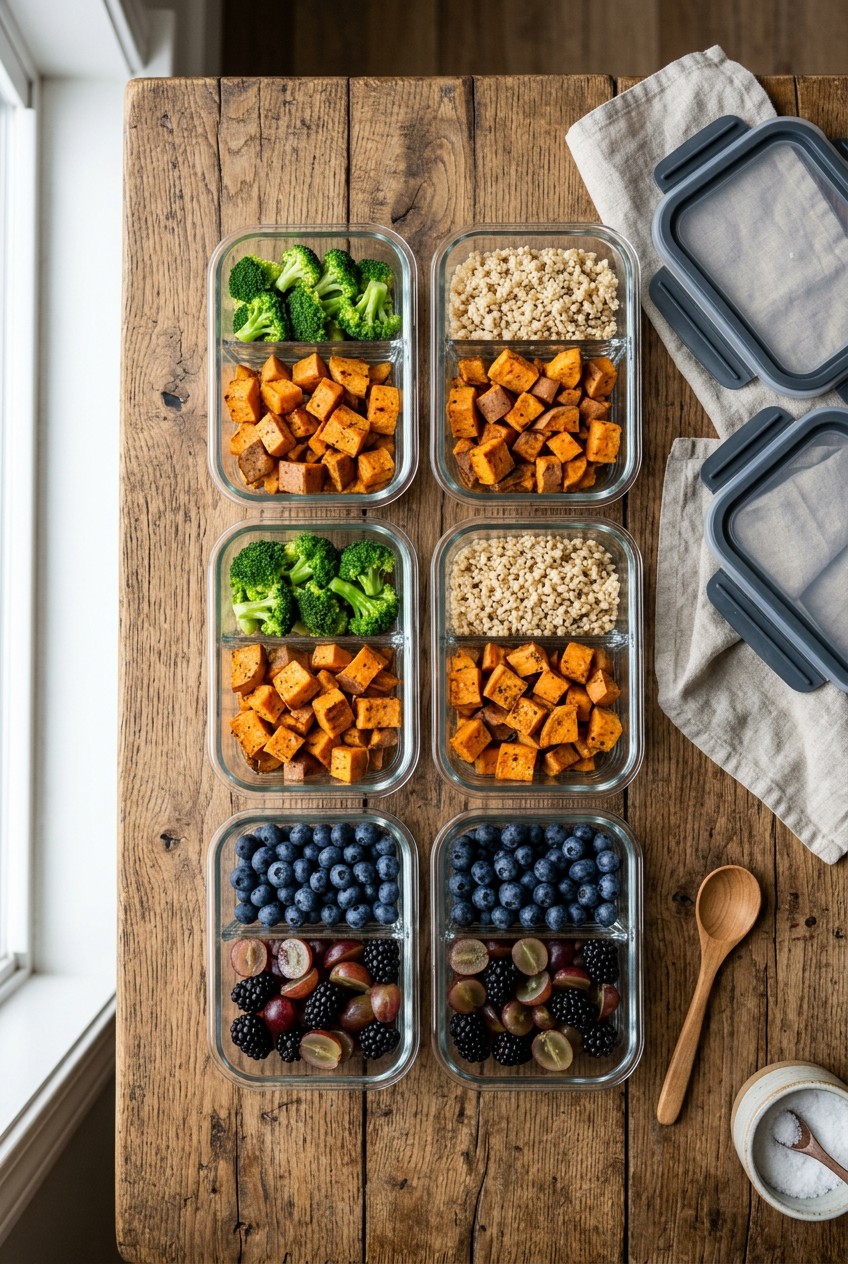
Alongside the chicken, I cook 4 cups of brown rice and steam a tray of sweet potato cubes. Having these plain ingredients in the fridge means I can throw together a quick quesadilla, a rice bowl, or a simple chicken plate in under five minutes. The texture of fresh roasted sweet potatoes is soft and caramelized, which toddlers usually love. I store everything in separate glass containers. If you’re trying to cook seven intricate recipes on a Sunday, you’ll burn out. Stick to simple, adaptable proteins and grains. It’s the only way I survive the week.
2. Invest in Quality Storage for Toddler Meal Prep

If you’re using flimsy, cheap plastic containers from the dollar store, stop. I did this for months. I bought a cheap pack of plastic bins, and after one trip through the dishwasher, they warped so badly the lids wouldn’t snap shut. The next day, tomato soup leaked all over my faux-leather diaper bag, leaving a sticky, sour-smelling red stain I still can’t get out. You need proper gear.
I finally went to Target and bought the Bentgo Kids bento box for $27.99. It has five compartments and a rubberized seal that clicks shut with a heavy snap. It’s leak-proof. For storing my batch-cooked purees and smaller portions at home, I bought a 12-pack of WeeSprout Glass Storage Jars (4 oz size) for $32.99 on Amazon. Glass doesn’t hold onto weird, garlicky smells, and you can see exactly what’s inside. The heavy glass feels durable in your hand. Skip the cheap stuff. You won’t regret spending a little extra upfront to save your bags from sticky disasters.
3. Understand Realistic Portion Sizes

Most people get this wrong, and I was definitely one of them. I vividly remember standing in my kitchen last year, piling a massive, adult-sized mound of spaghetti onto my toddler’s plate. I spent an hour making the sauce from scratch. He looked at the steaming red mountain of pasta, started crying, and pushed the plate off the highchair. The wet, slapping sound of spaghetti hitting the linoleum still haunts me. I learned that over-serving is a major trigger for toddlers. It took me years to figure it out.
Pediatricians suggest offering about 1 tablespoon of each food per year of your toddler’s age. It sounds tiny, but it works. For my two-year-old, a proper plate looks like this: 2 tablespoons of cooked peas, 1/4 cup of cooked quinoa, and 2 tablespoons of shredded chicken. I buy a bag of organic frozen peas from Whole Foods for $4.99, and since I’m serving small amounts, that single bag lasts for weeks. By serving manageable portions, your kid won’t feel overwhelmed. If they’re hungry, they’ll ask for more. This simple shift cured my anxiety about how much food was hitting the trash can. You might also like: 15 Brilliant Simple Meal Prep Ideas for a Fresh New Look

Skroam 10 Pack Glass Meal Prep Containers
Honestly, Skroam 10 Pack Glass Meal Prep Containers surprised me — sturdier than it looks in the photos, and over 56 buyers gave it 4.5 stars.
4. Leverage Your Freezer Beyond Leftovers

Your freezer is your best friend, but only if you use it right. I used to freeze giant, solid blocks of leftover pasta sauce in old yogurt containers. When I needed a quick dinner, I’d find myself hacking at a frozen red iceberg with a butter knife while my kid screamed at my ankles. It was dangerous and stupid. Now, I freeze everything in micro-portions. You might also like: 20 Brilliant Quick Dinner Ideas You’ll Want to Bookmark
I bought a set of OXO Tot Baby Blocks (2 oz size, $10.99 at Walmart) and a box of gallon-sized Ziploc Freezer Bags ($5.49). Whenever I make a batch of thick, garlic-heavy marinara or a spinach puree, I pour it into regular ice cube trays. Once frozen, I pop the cubes out. They make a loud, satisfying clatter when I dump them into the Ziploc bags. When I need a quick lunch, I grab two cubes (1/4 cup) and microwave them for 60 seconds. I even freeze leftover breastmilk or formula in 1 oz cubes to throw into morning fruit smoothies. It makes the smoothie cold and creamy, and nothing goes to waste. You might also like: 15 Clever Family Dinner Ideas for a Fresh New Look
5. Prep Grab-and-Go Snacks and Breakfasts

Mornings in my house are chaos. If I don’t have breakfast ready the second my kid wakes up, the whining escalates into a tantrum. I can’t handle cooking eggs at 6:30 AM while trying to drink my coffee. My solution is batch-baking mini egg muffins every Sunday. I grab a carton of organic free-range eggs from Sprouts ($5.99) and get to work.
The recipe is simple: I whisk 6 large eggs, 1/2 cup of finely chopped spinach, and 1/4 cup of sharp shredded cheddar. I pour the mixture into a silicone mini muffin tin. Here’s my honest negative: the first time I did this, I forgot to grease the pan. The eggs baked into a concrete-like crust, and I spent an hour scrubbing until my fingers were raw. Always use a generous spray of avocado oil. They bake for 15 minutes, filling the kitchen with a warm, buttery smell. I store them in the fridge, and in the morning, I just microwave two muffins for 20 seconds. They’re soft, spongy, and packed with protein.
6. Sneak in Hidden Veggies Strategically

I have strong opinions about hiding vegetables. Some experts say you shouldn’t trick your kids, but if blending spinach into a pancake is the only way my kid gets iron, I’m doing it. However, you have to be smart about textures. I once tried to hide diced zucchini in macaroni and cheese. My kid instantly spotted the tiny green squares, picked every single one out with his sticky fingers, and lined them up on his tray in protest.
Now, I rely on smooth purees. I bought the Nutribullet Baby blender for $69.99 at Kroger, and it’s a workhorse. Its motor has a high-pitched whir that pulverizes anything. I take 1/2 cup of Kroger brand frozen butternut squash ($2.49), steam it until it’s mushy, and blend it into a silky, bright orange puree. I fold this directly into my cheese sauce. The color matches the cheddar perfectly, and the squash adds a subtle sweetness that makes the mac and cheese taste better. The texture is velvety, and my toddler has no idea he’s eating squash.
![[8-Pack,30 oz]Glass Meal Prep Containers](https://m.media-amazon.com/images/I/713Zfdsgi4L._AC_UL320_.jpg)
[8-Pack,30 oz]Glass Meal Prep Containers
If you want something that just works, [8-Pack is a safe bet (7 reviews, 4.5 stars).
7. Involve Your Toddler in the Process

I know what you’re thinking. Letting a toddler help in the kitchen sounds like a recipe for a massive mess. And you aren’t wrong. Last Tuesday, I let my son help me wash a 16 oz container of organic strawberries from Trader Joe’s ($4.99). He splashed freezing cold water all over my shirt, the counter, and the floor. The kitchen looked like a water park. But here’s the thing: he actually ate three whole strawberries while we were doing it.
The American Academy of Pediatrics talks about how involving kids in prep reduces mealtime battles, and I’ve found it’s true. I give him 1 cup of strawberries in a plastic colander and let him run his hands through the cold water, feeling the bumpy, seeded texture. I also let him dump pre-measured ingredients, like 1/2 cup of dry oats, into a mixing bowl. Yes, I have to sweep up spilled oats. Yes, it takes twice as long. But giving him that tiny bit of control makes him so much more willing to sit down and eat the food we ‘cooked’ together.
8. The Magic of Deconstructed Toddler Meal Prep

If there’s one thing I’ve learned about toddlers, it’s that they despise their food touching. I spent an entire Sunday afternoon making a beautiful chicken and rice casserole. It had a creamy sauce, diced carrots, and a crispy breadcrumb topping. I set the fragrant bowl in front of my son. He took one look at the mixed-up ingredients, screamed ‘NO!’, and pushed the bowl so hard it flipped upside down onto the rug. I was furious. No exaggeration.
Now, I practice deconstructed meal prep. I take those same ingredients and serve them separated on a divided plate. I portion out 2 oz of plain shredded chicken in one section, 1/4 cup of plain white rice in another, and 2 tablespoons of steamed carrots in the third. The visual separation calms him down. He can clearly see the distinct textures: the stringy chicken, the sticky grains of rice, and the soft carrots. Giving them the power to choose which component to eat first eliminates the power struggle. Stop mixing everything into a mushy stew. Keep it separate, and watch their anxiety disappear.
9. Make Meals Visually Appealing with Fun Shapes

This sounds like a Pinterest-mom cliché, but cutting food into fun shapes works. I used to think it was a waste of time until my kid refused to eat sandwiches. I was buying expensive, hearty whole wheat bread, and he wouldn’t touch it. I bought cheap plastic cookie cutters first, but they were so dull they just crushed the bread into a gummy mess. Don’t buy the plastic ones.
I upgraded to a Wilton metal cookie cutter set for $9.99 at Michaels. The sharp metal edges slice cleanly through the crusts. Now, I take 1 slice of whole wheat bread and 1 slice of sharp cheddar, and I press a metal star cutter into them. The sharp crunch of the cutter going through the crust is satisfying. Suddenly, a boring cheese sandwich becomes a plate of tiny, perfect stars. The visual appeal changes his attitude. I also use tiny cutters for cucumber slices and melon. It takes thirty extra seconds during prep, but it guarantees he won’t throw his lunch on the floor.

Vtopmart 5Pack 22oz Glass Storage Containers with Lids
A dependable everyday pick — Vtopmart 5Pack 22oz Glass Storage Containers with Lids pulls in 32 ratings at 4.5 stars. Not flashy, just solid.
10. Rotate Foods to Prevent Picky Eating

It’s tempting to just serve the same three foods your kid likes. For a month, my son would only eat frozen chicken nuggets and blueberries. I gave in because I was exhausted, but I accidentally created a monster who refused to look at a vegetable. The experts at Lalo suggest rotating foods to keep things predictable but not boring, and I’ve adopted this religiously.
I now prep a strict rotation. If I serve 1/4 cup of roasted sweet potatoes on Monday, I won’t serve them again until Thursday. On Tuesday, I’ll offer 2 tablespoons of steamed green beans. Even if he ignores the green beans and leaves them shriveling on his plate, I don’t stop offering them. The visual exposure is half the battle. I pair a tiny portion of a new or ‘scary’ food with a familiar favorite. Seeing a scary piece of broccoli next to a safe, beloved strawberry makes him less defensive. It takes patience, and you will throw away a lot of uneaten 1-tablespoon portions, but rotating textures and colors is the only way to expand their palate.
11. Avoid the Short-Order Cook Trap

The worst mistake I made was becoming a short-order cook for my toddler. We’d sit down for dinner, I’d serve him a piece of baked salmon, he’d cry, and I’d immediately jump up to microwave a hot dog. My own dinner would sit on the table getting cold and rubbery while I catered to his whims. It was exhausting. Pediatric feeding specialists are clear: you decide what’s on the menu, and they decide if and how much they eat.
To make this easier, I started using Zwilling USA Vacuum-Seal Containers (the glass starter set is $99.99). The handheld vacuum pump makes a mechanical humming sound as it sucks all the air out of the dish. This keeps my prepped family meals fresh for days. I serve him what we’re eating, just chopped into smaller pieces. If he refuses it, I calmly say, ‘That’s what’s for dinner.’ We stick to a rigid schedule: 3 meals and 2 snacks a day, with no grazing in between. If he skips dinner, he knows breakfast is his next chance. It was a tough transition, but it saved my sanity.
Honestly, mastering meal prep for a toddler isn’t about creating Instagram-perfect bento boxes; it’s about survival. By batch-cooking simple components, investing in decent glass storage, and refusing to be a short-order cook, you’ll reclaim hours of your week. I’d love to hear what works for your picky eaters, so definitely pin this article for your next Sunday prep session and let me know which tip saved your kitchen floor from another spaghetti disaster!
Frequently Asked Questions
How long does toddler meal prep last in the fridge?
Most batch-cooked proteins and grains will last 3 to 4 days in an airtight container. I highly recommend using high-quality glass jars with rubber seals to keep purees and chopped veggies fresh and prevent weird fridge smells from ruining the food.
What is the best container for toddler meal prep?
For daycare lunches, the Bentgo Kids leak-proof bento box is incredibly durable and perfectly portioned. For storing purees and batch-cooked ingredients at home, 4 oz glass jars from WeeSprout or OXO Tot Baby Blocks are fantastic choices.
How do I meal prep for a picky toddler?
Focus on deconstructed meals where ingredients don’t touch. Prep plain, versatile components like roasted chicken and rice separately. Always pair a tiny portion of a new, ‘scary’ food with a familiar favorite to reduce mealtime anxiety.
What are realistic portion sizes for toddlers?
A great rule of thumb is offering 1 tablespoon of each food type per year of age. Serving massive, adult-sized portions often overwhelms toddlers and leads to food refusal. Start small; they can always ask for more if they’re still hungry.
