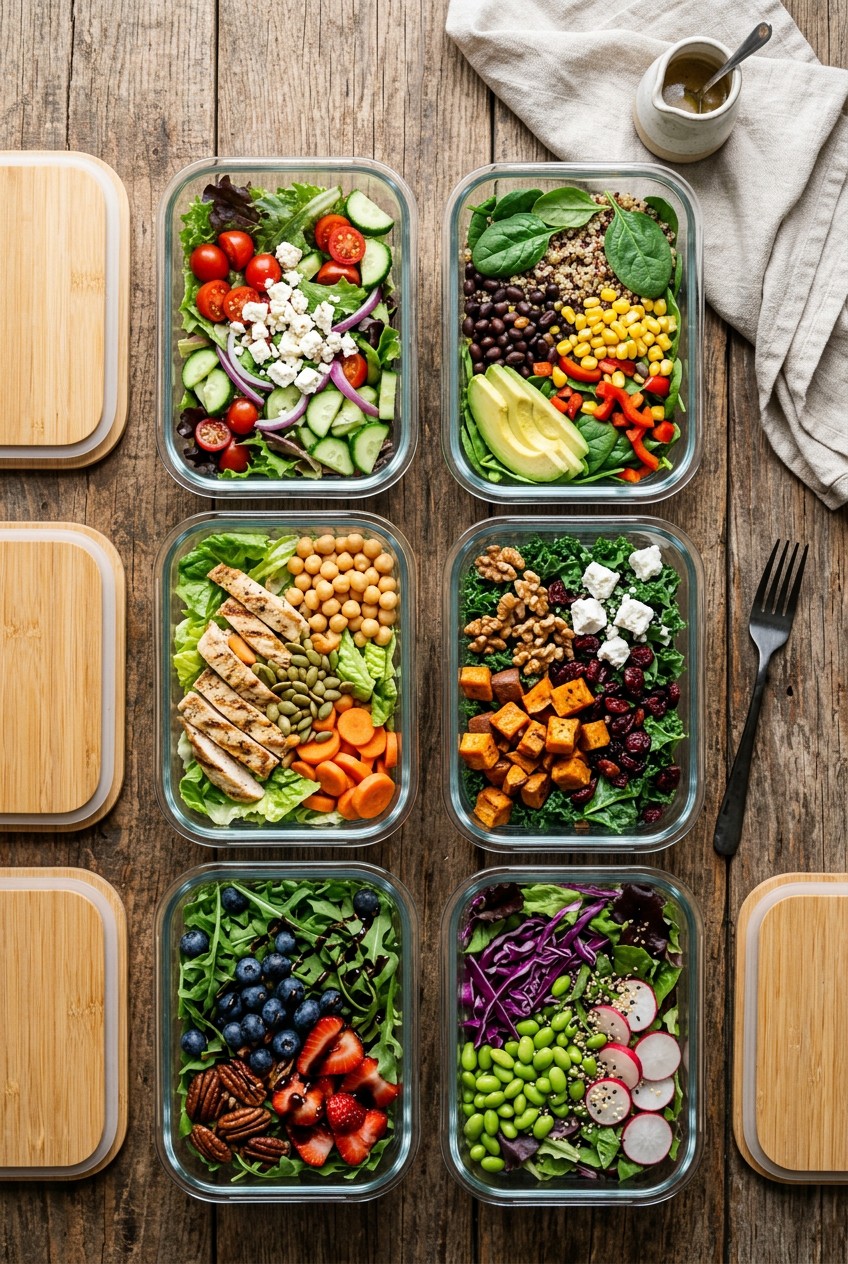
What’s Inside
- The Mason Jar Layering Method for Salad Meal Prep
- Ditch Flimsy Plastic for Compartment Containers
- Why Hearty Greens Are Mandatory for Salad Meal Prep
- The Secret to Dry Greens (And Why It Matters)
- Stop Adding Hot Protein to Cold Greens
- The Dense Bean Salad Trend
- Pre-Chop Strategy and Nearly Ripened Produce
- Avoiding the Cold Goo (Cooking Proteins Right)
- Microgreens as the Main Event
- Experimental Fermentation for Gut Health
Last Tuesday at Whole Foods, I watched a woman buy five bags of delicate spring mix for her weekly lunches. I physically winced. I knew exactly how her salad prep was going to end because I’ve lived that nightmare. Three years ago, I packed a giant bowl of spring mix, hot chicken, and balsamic vinaigrette into a cheap plastic tub. By Wednesday, I opened my lunch at my desk to find a foul-smelling, swampy sludge that actually leaked onto my favorite jeans. The smell of rotting lettuce is something you can’t un-smell. It’s a rite of passage for beginners. But you don’t have to suffer through the sad, soggy desk lunch phase. I’ve ruined enough produce to figure out what actually works. Let’s talk about the hard rules of keeping your greens crisp, your proteins safe, and your sanity intact for a full five days. You won’t need to spend hours in the kitchen, either. Once you get these specific systems down, you can knock out a whole week of lunches in under thirty minutes. Skip the fat-free dressings and the flimsy containers. We’re doing this the right way. Learned that the hard way.
1. The Mason Jar Layering Method for Salad Meal Prep

If you aren’t layering your ingredients correctly, you’re setting yourself up for failure. I tried this wrong for months before figuring it out. I used to just throw everything into a bowl, pour the dressing on top, and hope for the best. The result was always a mushy disaster by day two. Now, I swear by the strict bottom-up layering technique recommended by registered dietitians. You absolutely need a wide-mouth quart-sized jar. I personally use the Ball Wide Mouth Quart Jars, which I grab for $14.99 for a 12-pack at Target. Start with exactly 2 to 3 tablespoons of your dressing at the very bottom. Next, you drop in your sturdy, non-absorbent vegetables. I’m talking about 1/2 cup of chopped carrots, cucumbers, or thick bell peppers. These act as a physical barricade against the liquid. After that, you add 1/2 cup of grains like quinoa or 4 oz of your chosen protein. Finally, you pack the delicate greens at the very top, as far away from the dressing as possible. When you’re ready to eat, you just shake the jar upside down into a bowl. The dressing coats everything perfectly. It’s wildly satisfying to watch the dressing cascade over the crisp greens. This specific order guarantees your salads stay fresh for up to five days. Skip the narrow-mouth jars. Trying to dig a fork into a narrow jar is infuriating and usually ends with dressing all over your hands.
2. Ditch Flimsy Plastic for Compartment Containers

I can’t stress this enough. Stop using those flimsy takeout containers you washed and saved. Last year, one of those cheap plastic lids popped off in my tote bag on the subway. I spent an hour scrubbing olive oil and vinegar out of my laptop keyboard. It’s a mistake you only make once. You need durable, airtight containers that keep components strictly separate. If you aren’t doing the mason jar method, you need compartments. I’m obsessed with the OXO Good Grips Prep & Go Salad Container. I bought mine for exactly $14.99 at Target. It has a massive main bowl for your greens, a separate tray for wet toppings like tomatoes, and a tiny leak-proof cup for the dressing that sits right in the middle. Keeping the dressing separate is the golden rule of prep. If you pour it on on Sunday, your lettuce will be literal mush by Monday afternoon. Add your dressing just before eating. Rubbermaid Brilliance sets are also fantastic for this. They snap shut with an audible click that makes you feel incredibly secure. If you prefer glass, Pyrex or Weck jars are incredibly durable. Glass is heavy, but it won’t hold onto the garlic smell from last week’s vinaigrette like cheap plastic does. The peace of mind is worth the extra weight in your bag. Plus, seeing the bright layers through the clear glass makes you want to eat your lunch.
3. Why Hearty Greens Are Mandatory for Salad Meal Prep

Spring mix and butter lettuce have no business in a meal prep container. They wilt if you just look at them wrong. If you want your lunch to survive until Friday, you must prioritize hearty greens. I’m talking about sturdy options like romaine, kale, arugula, or shredded green cabbage. These greens have the structural integrity to sit in a fridge for four days without turning into a slimy mess. I personally buy the Trader Joe’s Organic Lacinato Kale for $2.29 per 10 oz bag. Here is a surprising tip for kale. You actually need to massage it. I used to just chop raw kale and force myself to chew through the tough, bitter leaves. It felt like eating tree bark. Now, I put 4 cups of chopped kale in a bowl with 1 teaspoon of olive oil and literally rub the leaves with my hands for two minutes. You will feel the tough fibers break down under your fingers. The volume shrinks by half, and the color turns a vibrant, glossy dark green. Unlike other lettuces, kale actually benefits from being slightly dressed in advance. It gets more tender and flavorful as it sits in the fridge. Just don’t use too much oil. I once poured a whole 1/4 cup of oil in and ended up with a greasy, inedible lump that I had to throw away. Stick to a tiny drizzle. Trust me on this.
![[8-Pack,30 oz]Glass Meal Prep Containers](https://m.media-amazon.com/images/I/713Zfdsgi4L._AC_UL320_.jpg)
[8-Pack,30 oz]Glass Meal Prep Containers
A dependable everyday pick — [8-Pack pulls in 7 ratings at 4.5 stars. Not flashy, just solid.
4. The Secret to Dry Greens (And Why It Matters)

Excess moisture is the absolute enemy of a fresh salad. If you wash your lettuce and just shake it off over the sink, you’re ruining your prep before you even start. That leftover tap water pools at the bottom of your container and breeds bacteria, turning your crisp romaine into a translucent, soggy nightmare. I learned this the hard way when I threw out three days’ worth of lunches because they smelled like a damp basement. You need a salad spinner. I use the OXO Good Grips Salad Spinner, which I picked up for $29.99 at Whole Foods. It’s bulky and takes up too much cabinet space, but I won’t prep without it. After spinning the greens until no more water comes out, I lay them out on a clean kitchen towel and pat them completely dry. Here is my absolute favorite trick. When you pack your greens into your container, fold a dry paper towel and place it right on top of the lettuce before sealing the lid. That paper towel acts as a moisture trap. It absorbs any residual humidity inside the box. When you open it three days later, the paper towel will be slightly damp, but your greens will be perfectly crisp and dry. It’s a tiny step that makes a massive difference in texture. You won’t believe how crunchy your lettuce stays. You might also like: 15 Lovely Kids School Lunch Ideas That Changed Everything
5. Stop Adding Hot Protein to Cold Greens

This is the most common mistake I see beginners make. You just finished cooking up some beautiful grilled chicken. You chop it up while it’s steaming hot and toss it right onto your bed of crisp romaine, then snap the lid shut. You just created a miniature sauna in your Tupperware. The residual heat creates condensation on the lid, which drips down and essentially steams your lettuce. I did this with roasted sweet potatoes once. I opened my container the next day and my spinach looked like it had been boiled. It was entirely ruined. You must cool your cooked ingredients completely to room temperature before they go anywhere near your raw vegetables. I usually prep a huge batch of protein on Sunday. I grab the Kirkland Signature Chicken Breast for $19.99 for a 6 lb pack at Costco. I bake 4 chicken breasts, let them sit on the counter for 30 minutes, and then put them in the fridge in a completely separate glass container. Cooked proteins generally last 3 to 4 days in the fridge. By storing your 4 oz portions of chicken, tofu, or hard-boiled eggs separately, you prevent them from ruining the texture of your raw ingredients. You can just toss the cold protein onto your greens right before you head out the door. It takes ten extra seconds and saves your entire meal. You might also like: 15 Creative Cold Lunch Ideas to Transform Your Space
6. The Dense Bean Salad Trend

If you haven’t heard of the dense bean salad trend, you’re missing out on the best lunch hack of 2026. This trend completely skips the leafy greens. Instead, you combine multiple types of beans with finely chopped vegetables and a heavy vinegar-based dressing. Because there is no fragile lettuce involved, these salads are practically indestructible. They stay fresh and actually taste better after 3 to 5 days in the fridge because the beans marinate in the dressing. I make a massive batch every Sunday. I buy S&W Premium Black Beans and Garbanzo Beans for $1.29 per 15 oz can at Walmart. I rinse two cans thoroughly to get rid of that salty, metallic can sludge. Then I mix them with 1 cup of diced red onions, 1 cup of chopped bell peppers, and 1/2 cup of a sharp apple cider vinaigrette. The texture is incredibly satisfying. It’s crunchy, filling, and packs a massive protein and fiber boost. The best part is you don’t have to worry about anything wilting. You can throw the container in your bag, let it sit on your desk for hours, and it’s still perfect. I honestly rely on these when I know I’m going to have a chaotic week and won’t have time to carefully assemble delicate ingredients. It’s the laziest, most effective prep method I’ve found. You might also like: 15 Creative Healthy Meal Prep Ideas That Make a Real Difference

KOMUEE 10 Packs 30 oz Glass Meal Prep Containers
KOMUEE 10 Packs 30 oz Glass Meal Prep Containers punches above its price — 45 buyers rated it 4.5 stars. I would buy it again.
7. Pre-Chop Strategy and Nearly Ripened Produce

Pre-chopping all your vegetables on Sunday sounds incredibly efficient until you open your fridge on Wednesday to find brown avocados and mushy tomatoes. Chopping ahead saves time, but you have to be strategic about softer produce. I used to slice my avocados on Sunday. By Tuesday, they looked like gray paste. It was disgusting. Now, I leave softer elements completely whole until the exact moment I’m going to eat them. Cherry tomatoes are another culprit. If you cut them in half, they bleed their juices everywhere and ruin the crunch of your other vegetables. Keep them whole. When you’re grocery shopping for your prep, you need to buy nearly ripened produce. I always buy Kroger Hass Avocados in a 4-pack for $4.99. I make sure they are rock hard when I buy them on Sunday. By Wednesday, when I actually need to slice one for my lunch, it’s perfectly soft and bright green. The same goes for tomatoes and peaches. If you buy them perfectly ripe at the store, they will be rotting in your crisper drawer before you get a chance to use them. Plan your produce ripening schedule around your eating schedule. It sounds a bit intense, but it completely eliminates food waste and ensures your textures are always perfect.
8. Avoiding the Cold Goo (Cooking Proteins Right)

We need to talk about what happens to cooking oils when they get cold. If you roast your vegetables or pan-fry your chicken in a heavy pour of olive oil, it tastes amazing when it’s hot. But when you put those oily ingredients in the fridge, the fat solidifies. It turns into a cold, gelatinous goo that coats the roof of your mouth. It’s incredibly unappetizing. I ruined a beautiful batch of roasted eggplant this way. I pulled it out of the fridge on a Tuesday, and it was covered in white, waxy lumps of congealed fat. I couldn’t even force myself to eat it. When you’re cooking components specifically for cold salads, you must use oil sparingly. I rely heavily on my air fryer for this exact reason. I use the Chosen Foods Avocado Oil Spray, which is $6.99 for a 4.7 oz bottle at Sprouts. A quick two-second spritz is all you need to get your chicken or sweet potatoes crispy without drowning them in fat. If I’m cooking on the stove, I’ll use alternative methods like steaming with 1/4 cup of chicken broth or a splash of white wine to keep things moist without adding heavy fats. Your cold lunches will taste significantly cleaner, and you won’t have to scrape congealed grease off your fork.
9. Microgreens as the Main Event

Lettuce is starting to feel a bit boring. One of the biggest innovations I’ve seen moving into 2026 is using microgreens as the primary base for salads, rather than just a fancy garnish you sprinkle on top. Microgreens pack a massive nutritional punch and offer incredibly intense, diverse flavors. A tiny handful of radish microgreens tastes exactly like a spicy, crunchy radish. I started swapping out my boring romaine for a thick bed of microgreens last month, and I’m never going back. I buy the AeroFarms Micro Spicy Mix for $3.99 for a 2 oz clamshell at Whole Foods. It takes about two clamshells to make a proper salad base, so it’s definitely pricier than a head of iceberg. But the flavor is unbelievable. You barely even need dressing because the greens themselves are so flavorful. Just toss 4 oz of microgreens with 1/2 cup of sliced cucumbers and 3 oz of smoked salmon. Because microgreens are harvested so young, their stems are tender but remarkably crisp, and they hold up surprisingly well in a dry, airtight container for a few days. Just make sure you don’t crush them when packing your container. They need a little breathing room to stay fluffy and fresh. It’s a fun way to shake up your routine.

Vtopmart 5Pack 22oz Glass Storage Containers with Lids
A dependable everyday pick — Vtopmart 5Pack 22oz Glass Storage Containers with Lids pulls in 32 ratings at 4.5 stars. Not flashy, just solid.
10. Experimental Fermentation for Gut Health

If you want to add massive flavor to your prep without adding heavy, calorie-dense dressings, you need to start experimenting with fermentation. This is a huge 2026 trend that I’m fully obsessed with. Adding a scoop of fermented vegetables gives your salad an intense, tangy bite and provides incredible gut health benefits. I used to think sauerkraut was only for hot dogs, but it completely transforms a basic kale salad. I usually buy the Cleveland Kitchen Classic Kimchi for $5.99 for a 16 oz pouch at Target. I’ll take 2 tablespoons of kimchi, chop it up finely, and mix it directly into my hearty greens. The spicy, garlicky funk of the kimchi acts as a secondary dressing. For a surprising twist, I’ve also started playing around with koji-cultured vegetables. They add this deep, savory umami note that makes a simple bowl of raw vegetables taste like a restaurant-quality meal. Just a warning though. Fermented foods have a very strong smell. I once opened a container of garlic kimchi at my office desk, and three people complained about the odor. Now, I strictly eat my fermented salads when I’m working from home. It’s a small price to pay for how good it tastes, but definitely keep your coworkers in mind. Took me years to figure out.
Prepping your lunches doesn’t have to result in sad, wilted vegetables. Once you master the mason jar layers and learn to keep your dressing far away from your greens, your entire week gets easier. I personally swear by the dense bean salads when I’m too busy to deal with fragile lettuce. It’s all about controlling moisture and temperature. If you found these tips helpful, definitely pin this article for your next Sunday prep session. You’re going to want to remember that paper towel trick. Let’s make soggy desk lunches a thing of the past.
Frequently Asked Questions
How do I keep my salad meal prep from getting soggy?
Store your dressing in a completely separate container and add it right before eating. Also, ensure your greens are completely dry using a salad spinner, and place a folded paper towel inside your container to absorb excess moisture.
What are the best greens for meal prep?
Avoid delicate greens like spring mix. Instead, choose sturdy options like romaine, arugula, shredded cabbage, or lacinato kale. These hearty greens maintain their crisp texture for up to five days in the fridge.
Can I put hot chicken on my prepped salad?
No. Adding hot proteins to raw greens creates condensation inside the container, which steams your lettuce and makes it mushy. Always cool your cooked proteins to room temperature before packing them.
What is the mason jar layering method?
It’s a technique to keep salads fresh. Pour 2-3 tablespoons of dressing at the bottom of a wide-mouth jar. Add hard vegetables next, followed by grains or proteins, and pack the delicate greens at the very top.
