What’s Inside
- The $4.99 Kirkland Rotisserie Chicken Strategy
- Portioning Bulk Kirkland Signature 90/10 Ground Beef
- Sourcing 40 Lbs of Chicken Breasts from Business Centers
- Batch Cooking Kirkland Signature Organic Quinoa
- Upgrading to the Ello 10-Piece Glass Container Set
- Embracing PuraVida Fire Roasted Vegetables and Frozen Berries
- Ultra-Lazy Pre-Prepped Proteins for Exhausted Sundays
- Component Prep Over Full Composed Meals
- Stop the Cook-Once-Eat-All-Week Mistake
Last Tuesday at Whole Foods, I dropped a $14 bottle of cold-pressed green juice on the floor. It shattered into a sticky green puddle smelling of kale and regret. That was the moment I realized my grocery budget was out of control. My first attempt at Costco meal prep happened the next day, and I failed miserably. I bought three massive bags of fresh spinach, thinking I’d eat healthy salads every day. By Friday, that spinach was a dark, slimy swamp in my crisper. It smelled like a dirty fish tank. I threw it out and ordered a $25 pepperoni pizza. I’m not proud of it. But I learned from that expensive mistake. Now, I stick to a routine that saves me hundreds of dollars a month. I used to wander Target and Trader Joe’s, picking up random ingredients without a plan. I’d grab a $5 box of crackers here, a $7 bag of almonds there. It adds up fast. The warehouse model forces you to think in bulk. You can’t just wing it when you’re buying ten pounds of raw meat. It forces discipline. If you’re tired of throwing away rotten produce and wasting your Sunday afternoons, I’m sharing the system I use for clean eating. Let’s get into the details.
1. The $4.99 Kirkland Rotisserie Chicken Strategy

I’ve bought the $4.99 Kirkland Signature Rotisserie Chicken hundreds of times. It’s a massive bird, usually yielding 2.25 to 2.62 pounds of meat. Most people grab one for dinner. I buy two to dismantle them for the week. I learned a hard lesson a few months ago. I put the hot chicken in the fridge, thinking I’d shred it the next day. Don’t do this. When it’s cold, the fat solidifies. Pulling the meat off the bones feels like wrestling with cold rubber. Your fingers get coated in a greasy film. Always shred it while it’s warm. I pull the breast meat apart for salads and shred the dark meat for tacos. Here is the real secret. Don’t throw away the bag. Look at the bottom of the container. You’ll see a pool of savory juices and a gelatinous brown blob. That is pure chicken aspic. I scrape every drop of that liquid gold into a jar. I mix two tablespoons into my rice cooking water. It makes plain rice taste rich. After shredding, I toss the carcass into a pot with 8 cups of water, half an onion, and celery scraps. I simmer it for two hours for bone broth. It smells like Thanksgiving. I strain it and store it in 16 oz mason jars. You won’t find a cheaper base for soups. Trust me.
2. Portioning Bulk Kirkland Signature 90/10 Ground Beef

Buying meat in bulk is intimidating. I used to buy 1-pound packages at Walmart for almost $6 a pound. Then I discovered the 10 lb logs of Kirkland Signature 90/10 Ground Beef. They price out around $3.29 to $4.78 per pound. That difference is staggering over a year. But you can’t just shove a 10-pound tube into your freezer. I tried that once. It took three days to thaw. The center was an icy block while the outside looked gray. Terrible idea. Now, I treat the log like a project. I cover my kitchen island with parchment paper. I slice the casing open and weigh out 1-pound and 1.5-pound mounds using my digital scale. I press each mound into a gallon freezer bag. Here is the crucial step. I flatten the meat with a rolling pin until it’s a thin rectangle. I push the air out before sealing. These thin sheets stack like books. Because they’re thin, they thaw in cold water in under twenty minutes. I use this beef for chili, taco bowls, and pasta sauces. The texture is lean, so it won’t leave a greasy pool in your skillet.
3. Sourcing 40 Lbs of Chicken Breasts from Business Centers

If you have a membership, you’re allowed to shop at the Business Centers. I didn’t know this for years. I thought they were for restaurant owners. Last month, I walked into the Business Center and found the best value on protein. They sell 40-pound cases of boneless, skinless chicken breasts for as low as $2.75 per pound. I used to buy chicken at Sprouts for $5.99 a pound, so this was a victory. Carrying a 40-pound dripping box to my car was a sweaty nightmare. The box smelled like raw poultry and wet cardboard. Bring a friend to help. Once home, I spent an hour portioning it. I cut 10 pounds into cubes for stir-fries. I sliced 10 pounds into cutlets for grilling. I left the rest whole. I packed everything into vacuum-sealed bags with 1 tablespoon of olive oil and a pinch of salt. The sealer prevents that white freezer burn that ruins the texture. When you cook these, they stay juicy. Skip the fat-free stuff. It tastes like wet cardboard. Just use olive oil, lemon juice, and real garlic. I pull two bags out every Sunday to thaw. These bulk sizes aren’t just for big families. They work for anyone willing to prep. You might also like: 20 Cozy High Protein Lunch Ideas for Any Style

Skroam 10 Pack Glass Meal Prep Containers
Skroam 10 Pack Glass Meal Prep Containers has been one of the most consistently praised picks in this category. 56 reviewers averaged 4.5/5.
4. Batch Cooking Kirkland Signature Organic Quinoa

Rice is cheap, but quinoa packs more protein and fiber. I buy the Kirkland Signature Organic Quinoa in the 4.5 lb bag. It costs between $10.49 and $12.49. That bag lasts me three months. I used to hate quinoa. I thought it tasted like dirt. I’d force myself to eat it, chewing through gritty bowls of sadness. Then I learned I was cooking it wrong. You must rinse it. I put 2 cups of dry quinoa into a strainer and run it under cold water for two minutes. You’ll see a soapy film wash away. That is the saponin coating. It’s what makes unrinsed quinoa bitter. Once rinsed, I cook a batch in my rice cooker using 4 cups of chicken broth. The broth makes them plump and savory. The texture becomes fluffy with a satisfying pop. After it cools, I divide the quinoa into 1-cup servings. I store them in glass containers. I toss a cold cup over greens for lunch, or heat it with a fried egg for breakfast. It’s a blank canvas. Buying bulk is the only way to go. You might also like: 20 Clever Aesthetic Food Prep That Actually Work
5. Upgrading to the Ello 10-Piece Glass Container Set

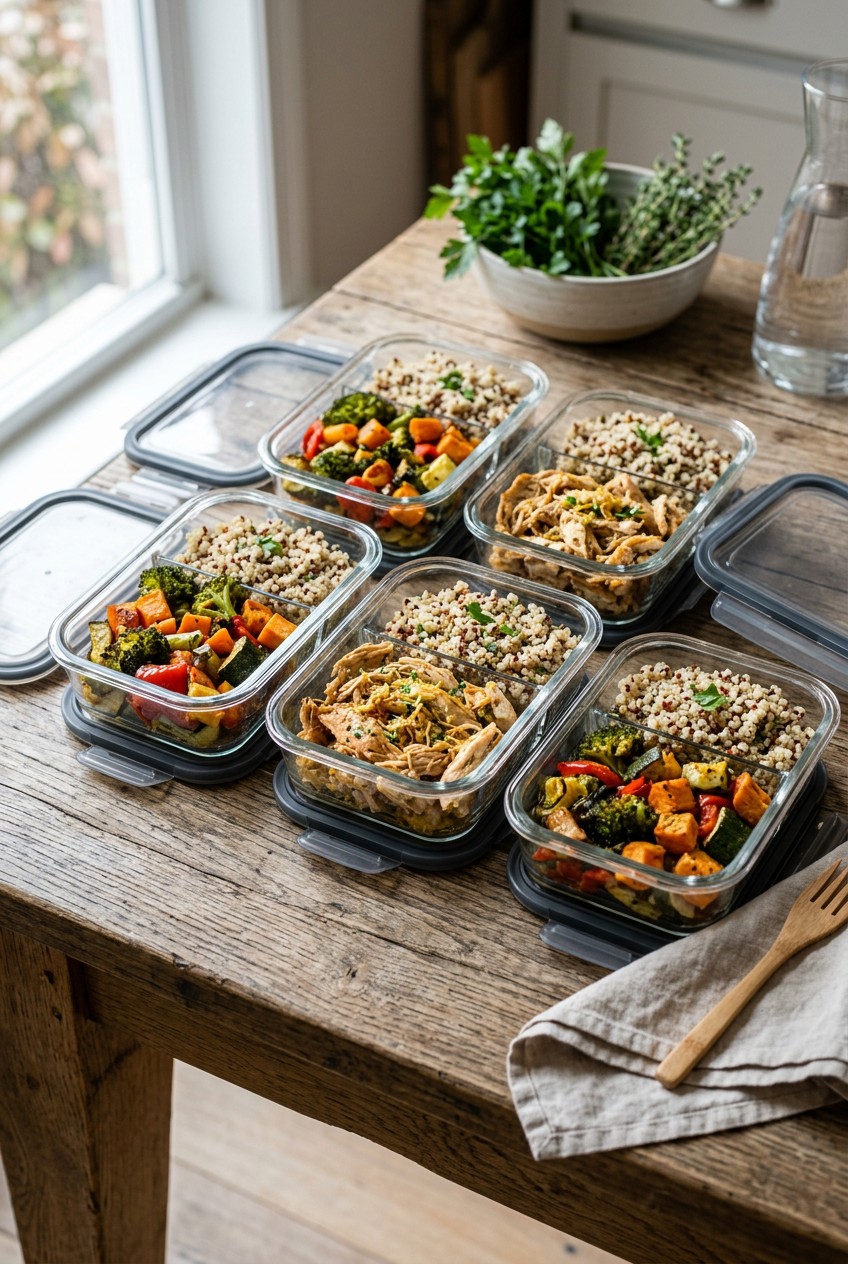
Let’s talk about the worst mistake you can make. Using cheap, mismatched plastic containers. For a year, I used a chaotic pile of flimsy tubs. They were a nightmare. The lids never fit. One Tuesday, I microwaved spaghetti. The plastic warped, melting into my food. The tomato sauce permanently stained the plastic a toxic-looking orange. I threw the whole thing out. You can’t put hot food in cheap plastic. I upgraded to the Ello 10-piece Glass Meal Prep Container Set. These feature 3.4-cup glass bases with silicone sleeves and locking lids. The glass is durable. When you snap the tabs, you hear a secure click. Nothing leaks. I’ve turned a container of soup upside down in my bag, and not a drop escaped. Because they’re glass, I can bake casseroles in them, snap the lid on, and put them in the fridge. They don’t absorb smells. If you store garlic chicken in them for four days, a run through the dishwasher leaves them smelling like nothing. The uniform size means they stack perfectly, creating an organized visual that makes me want to eat my food. Investing in proper storage is mandatory. You might also like: 15 Gorgeous Chicken Breast Dinner Ideas That Make a Real Difference
6. Embracing PuraVida Fire Roasted Vegetables and Frozen Berries

I’m a recovering fresh produce hoarder. I used to buy bags of broccoli and peppers, intending to roast them. Life would get busy. By Thursday, my crisper was full of limp vegetables. I’d throw them away and feel guilty. Now, I rely on the frozen aisle. The PuraVida Fire Roasted Vegetable Melange is a staple. It’s a blend of Brussels sprouts, onions, mushrooms, and peppers. Because they’re fire-roasted before freezing, they have a smoky char you can’t get from steaming. I dump 2 cups of the mix onto a hot sheet pan with avocado oil and roast at 425 degrees for twenty minutes. They crisp up beautifully. For breakfast, I buy the 4-pound bag of the Kirkland Signature berry blend. It’s packed with raspberries, blueberries, and blackberries. I made the mistake of leaving a bag on my counter to thaw once. The icy purple juice leaked and stained my quartz countertops. Now, I scoop 1/2 cup of frozen berries into my overnight oats. As they sit, they thaw, releasing their sweet juices. It turns the jar a vibrant purple by morning.

M MCIRCO 10-Pack,30 Oz Glass Meal Prep Containers 2
M MCIRCO 10-Pack punches above its price — 23 buyers rated it 4.5 stars. I would buy it again.
7. Ultra-Lazy Pre-Prepped Proteins for Exhausted Sundays

Some Sundays, I’m too exhausted to cook. I won’t pretend I’m ready to grill ten pounds of chicken. For lazy weekends, I lean on pre-prepped proteins. I always grab a pack of the Kirkland Signature Organic Cage Free Peeled Hard-Boiled Eggs. They come in a 32-pack for around $8 to $10. I used to boil and peel my own. I’d stand over the sink for twenty minutes, picking shards of shell off, tearing chunks of the white flesh away. It looked like a dog chewed on them. The sulphur smell would linger all day. Buying them pre-peeled is worth every penny. I slice two eggs over spinach, sprinkle them with Everything But The Bagel seasoning, and call it a meal. Another staple is the Kirkland Signature Solid White Albacore Tuna. It comes in an 8-pack of 7 oz cans for roughly $15.99. When you pull the tab, it makes a loud pop. The tuna is packed in water, dense and flaky, not mushy like cheaper brands. Each can packs 42 grams of protein. I drain the water, mix the tuna with 1 tablespoon of Greek yogurt, a squeeze of lemon, and diced celery. I scoop it up with cucumber slices for a high-protein, zero-cooking lunch.
8. Component Prep Over Full Composed Meals

The trend I’m seeing is component prepping, and I’m on board. I used to prep full meals. I’d pack five identical plastic containers with 4 oz of chicken, 1/2 cup of rice, and 1 cup of broccoli. By Wednesday, I’d stare at that container with dread. The broccoli would be soggy. The chicken would be dry. I couldn’t stomach eating the same flavor five days in a row. It felt like punishment. Now, I prep individual components. I roast a sheet pan of sweet potatoes with smoked paprika. I grill plain chicken breasts. I cook a pot of the Kirkland Signature Organic Quinoa. I chop raw red peppers and cucumbers. I store these in separate glass containers. On Monday, I might throw chicken, quinoa, and peppers into a bowl with peanut dressing. On Tuesday, I’ll take the chicken, mix it with roasted sweet potatoes, and add salsa for a Mexican-inspired bowl. On Wednesday, I’ll slice the chicken over cold greens with cucumbers. This modular approach keeps my palate entertained. I’m eating the same base ingredients, but the varied textures make it feel like a different meal every day. It eliminates flavor fatigue.
9. Stop the Cook-Once-Eat-All-Week Mistake

This is the most critical lesson. Do not cook all your food on Sunday and expect to eat it on Friday. I tried this for months. I’d make a batch of turkey chili on Sunday. By Friday, the chili had developed a sour smell. I ate it anyway because I didn’t want to waste food. I spent the weekend hunched over my toilet with food poisoning. It was a miserable nightmare. Experts agree that most cooked food only lasts 3 to 5 days in the refrigerator. After day four, the quality degrades, and bacteria multiply. To fix this, I changed my schedule. Now, I do a larger prep session on Sunday, making enough food for Monday, Tuesday, and Wednesday. Then, I do a mini prep session on Wednesday night while I’m already making dinner. I’ll roast another pan of vegetables or boil pasta. It takes twenty minutes. Alternatively, I utilize my freezer. If I make soup on Sunday, I freeze half in silicone cubes. I pop the blocks out, store them in a freezer bag, and thaw them on Thursday. This ensures my late-week meals are fresh. Don’t gamble with your stomach just to save twenty minutes.
Finding a routine takes trial and error, but buying in bulk is the smartest financial move I’ve made. I’ve cut my grocery bill, and I rarely order takeout on a Tuesday night. The warehouse model forces you to be intentional. If you grab that $4.99 rotisserie chicken, invest in glass containers, and stop eating day-six leftovers, you’re going to see a shift in your routine. I swear by the component prep method. It keeps things fresh, crunchy, and interesting. Don’t be afraid to make mistakes. You might melt a container or ruin quinoa. It happens to all of us. Just learn from it and keep going. If you found these strategies helpful, I’d love it if you pinned this article to your favorite healthy eating board on Pinterest. Save it for your next warehouse run so you know what to look for. Let’s make this week your most organized week yet.

M MCIRCO 10-Pack,22 Oz Glass Meal Prep Containers
Honestly, M MCIRCO 10-Pack surprised me — sturdier than it looks in the photos, and over 86 buyers gave it 4.5 stars.
Frequently Asked Questions
How long does Costco meal prep food last in the fridge?
Most cooked food safely lasts 3 to 5 days in the refrigerator. I highly recommend splitting your prep into two smaller sessions per week to avoid spoilage and flavor fatigue.
What is the best way to freeze bulk Costco ground beef?
Portion the 10-pound log into 1-pound freezer bags. Flatten the meat completely with a rolling pin before sealing. These thin sheets freeze flat, save space, and thaw in cold water in under twenty minutes.
Are Costco Business Centers open to regular members?
Yes. Any standard member can shop at the Business Centers. They are fantastic for buying massive 40-pound cases of raw chicken breasts at significantly lower prices per pound.
How do I stop Kirkland quinoa from tasting bitter?
You must rinse it thoroughly before cooking. Run the dry quinoa under cold water in a fine-mesh strainer for two minutes to wash away the bitter saponin coating.
