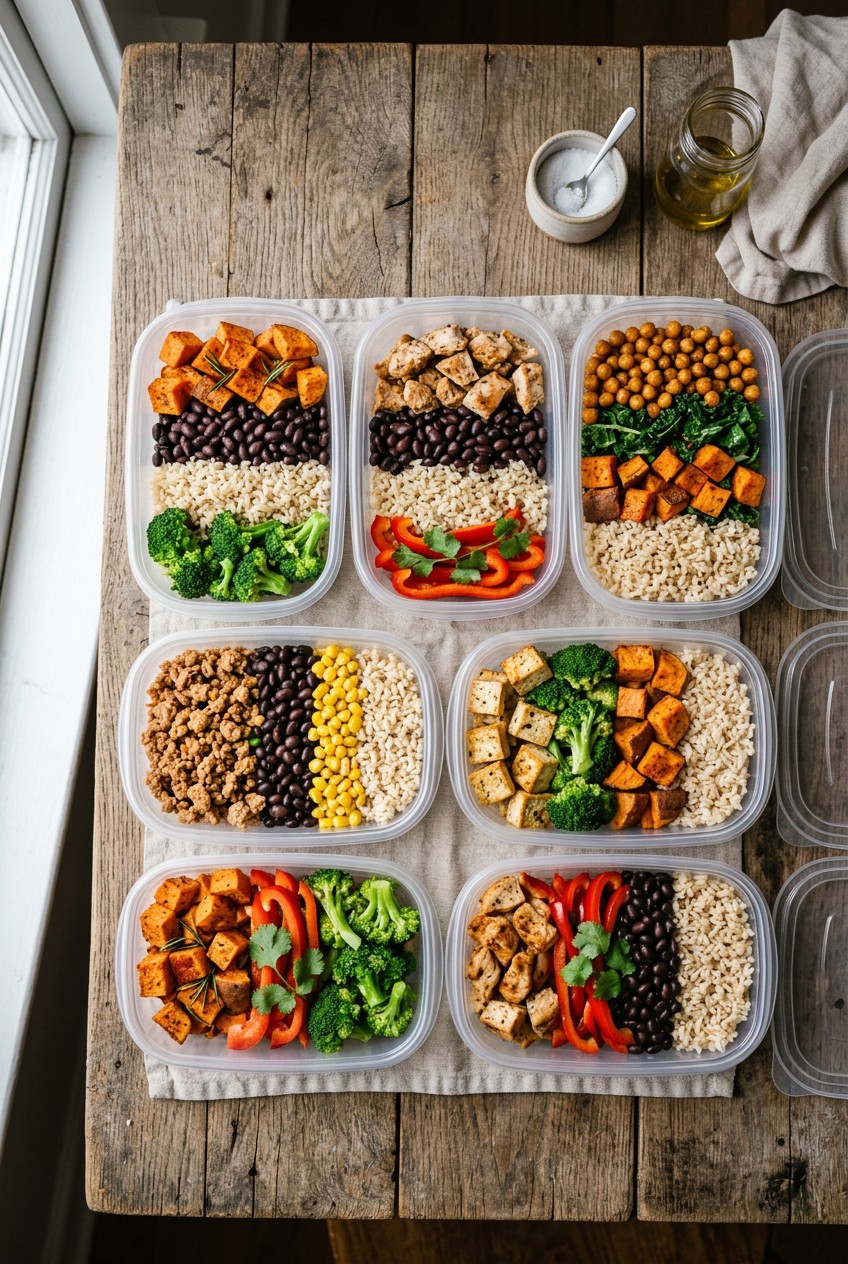
What’s Inside
- Build Your Cheap Meal Prep Around Protein Powerhouses
- Master Batch Cooking Grains And The Frozen Rice Trick
- Use Frozen Vegetables For Peak Nutrition And Savings
- Shop Store Brands Like Kirkland For Cheap Meal Prep
- Stretch Meals With Root Vegetables And Rolled Oats
- Freeze Sauces And Cool Food Properly Before Storing
- Avoid Over-Prepping Variety And Separate Wet Ingredients
- Try Lazy Prep With Pre-Made Items And Plant-Based Proteins
- Conclusion
Last Tuesday at Whole Foods, I stood frozen in the produce aisle staring at a tiny plastic box of pre-cut melon priced at $14.99. My jaw actually dropped. I realized right then that mastering cheap meal prep isn’t just a fun hobby anymore. It’s a survival skill for feeding my family without going broke. When I first started prepping food for the week, I failed miserably. I bought expensive ingredients, cooked them wrong, and ended up throwing away containers of slimy spinach. The smell of rotting greens in my fridge was awful. I tried this wrong for months before figuring it out—took me years to figure out, no exaggeration. Now, I’ve got a system that actually works. I’m going to share exactly how I feed my family delicious food on a tight budget. Let’s get into the messy, honest truth about prepping food without spending your whole paycheck.
I remember looking at my bank statement last year and feeling physically sick about how much we spent on takeout. We were dropping $65 on average just for Tuesday night Thai food because we were too tired to cook. That stops now. I’ve broken down my exact methods for keeping the grocery bill low while keeping the flavor incredibly high. You won’t find any boring boiled chicken and plain broccoli here. We’re talking about rich, seasoned, satisfying food that actually reheats well. If you’re ready to stop wasting money on sad desk lunches and overpriced dinners, grab a notepad. I’m laying out every single trick I use to keep my family fed and happy.
1. Build Your Cheap Meal Prep Around Protein Powerhouses

Most people get this wrong right out of the gate by buying the most expensive cuts of meat. Last month at Sprouts, I bought 2 lbs of organic chicken breasts for $8.99 a pound. I baked them, and they came out tasting like dry erasers. I tried this wrong for months before figuring it out. Skip the fat-free stuff. It tastes like wet cardboard. Now, I buy bone-in, skin-on chicken thighs. They’re typically 30 to 40 percent cheaper than breasts, offering similar protein content at about $0.035 to $0.055 per gram. I grab a family pack for roughly $5.49 at my local grocery store. I rub them with 1 tablespoon of olive oil, 1 teaspoon of smoked paprika, and a heavy pinch of kosher salt. The caramel-butter smell of the roasting chicken fat filling my kitchen is incredible.
Eggs are another absolute powerhouse. They cost around $2 to $4 per dozen, which translates to approximately $0.015 to $0.025 per gram of protein. I personally swear by hard-boiling a full dozen eggs at the start of the week. I use a cheap $12.99 Dash egg cooker from Amazon, and it peels perfectly every time. I throw 2 peeled eggs into my lunch bag with 1/4 cup of almonds for a fast, cheap protein hit. You can’t beat that kind of value.
If you’re struggling with grocery bills, switching your protein sources is the fastest way to save cash. Canned tuna is another staple I always keep on hand. At around $0.75 per serving, it’s a ridiculously cheap way to add 20 grams of protein to a salad. I mix 1 can of chunk light tuna with 2 tablespoons of Greek yogurt, 1 teaspoon of Dijon mustard, and a squeeze of fresh lemon juice. I’d rather eat this flavorful tuna salad over a $15 deli sandwich any day of the week. Dried lentils are also fantastic. At around $0.15 per serving, they soak up whatever broth you cook them in. I boil 1 cup of dried brown lentils in 3 cups of vegetable broth with half a diced onion. The earthy aroma is so comforting.
2. Master Batch Cooking Grains And The Frozen Rice Trick

I used to buy those tiny microwave rice pouches. Then I realized I was spending $2.49 for barely 1 cup of rice. Now I go to Kroger and buy a massive 5 lb bag of jasmine rice for $6.49. That bag lasts me weeks. Mastering batch cooking grains is essential, but you have to do it right. I used to make soggy rice all the time. I’d add way too much water, and it would turn into a sticky, unappetizing paste. The golden rule for basic brown rice or quinoa is simple. Cook 2 cups of grains with exactly 4 cups of water. I rinse the rice first until the water runs clear to remove the excess starch. This keeps the grains fluffy and separate. Trust me on this.
Honestly this changed how I handle busy weeks. I discovered a surprising trick for fresh-tasting rice without the daily hassle. Instead of cooking all your rice at once and eating leftovers that dry out, try freezing uncooked seasoned rice. I take 1 cup of raw rice, mix it with 1 teaspoon of garlic powder, 1/2 teaspoon of onion powder, and 1 tablespoon of butter, then freeze it in a bag. When I’m ready for a fresh batch, I simply dump the frozen block into 2 cups of boiling water and cook as usual. It tastes completely fresh.
I also portion and freeze extra cooked grains to save significant time on busy weekdays. I scoop 1/2 cup portions of cooked quinoa into silicone muffin liners, freeze them solid, and pop them into a freezer bag. When I need a quick base for a grain bowl, I just microwave one frozen puck for 60 seconds. The steam trapped inside makes it incredibly fluffy. You won’t believe how much time this saves when you’re rushing to pack lunches at 7 AM. It’s a total lifesaver.
3. Use Frozen Vegetables For Peak Nutrition And Savings

There is a weird stigma against frozen vegetables, and it makes no sense. Frozen vegetables are often flash-frozen shortly after harvest. This preserves more vitamins, like Vitamin C and beta-carotene in peas, than the sad, wilted fresh produce sitting on grocery store shelves. I used to buy fresh broccoli, forget about it in the crisper drawer, and throw it away when it turned yellow and smelled like sulfur. It was a massive waste of money. Now, I rely heavily on frozen options.
My go-to is the Birds Eye mixed vegetables or the generic store brands. Last weekend at Target, I bought three 16 oz bags of Good & Gather frozen broccoli florets for $1.99 each. The trick to making frozen vegetables taste amazing is high heat. Don’t microwave them if you want good texture. They turn to mush. Instead, I preheat my oven to 450°F. I toss the frozen broccoli straight from the bag with 2 tablespoons of avocado oil, 1 teaspoon of garlic powder, and a heavy pinch of sea salt. I roast them on a dark metal baking sheet for 20 minutes. They get these beautifully charred, crispy edges that taste like candy. You might also like: 15 Inspiring Chicken Meal Prep Ideas You Haven’t Thought Of
I also throw frozen peas and carrots directly into my simmering soups during the last 5 minutes of cooking. They stay bright and slightly crunchy. If you aren’t utilizing the freezer aisle, you’re leaving money on the table. Frozen spinach is another incredible value. A 10 oz block of frozen chopped spinach costs about $1.49 and packs down the equivalent of an entire mountain of fresh greens. I squeeze the water out and mix it into my morning eggs or a cheap pasta bake. It’s an effortless way to sneak in greens. You might also like: 15 Stunning Easy Lunch Ideas You Need to See

M MCIRCO 10-Pack,30 Oz Glass Meal Prep Containers 2
M MCIRCO 10-Pack has been one of the most consistently praised picks in this category. 23 reviewers averaged 4.5/5.
4. Shop Store Brands Like Kirkland For Cheap Meal Prep

Brand loyalty is destroying your grocery budget. I used to refuse to buy anything but name-brand peanut butter and pasta. I thought the generic stuff was lower quality. I was completely wrong. Opting for store brands like Aldi’s various product lines or Kirkland Signature at Costco results in massive savings on pantry staples and fresh produce. I did a Costco run last month and bought a massive 2-pack of Kirkland Signature creamy peanut butter for $11.99. It has exactly two ingredients: peanuts and salt. It tastes incredibly rich and roasty. You might also like: 15 Creative Cold Lunch Ideas to Transform Your Space
An example Aldi meal plan I followed recently demonstrated how to create 24 servings of high-protein food for approximately $55. That blew my mind. I bought their generic black beans for $0.79 a can, their store-brand diced tomatoes for $0.89, and a massive bag of their generic shredded cheddar cheese. I made a huge batch of black bean and cheese burritos. I wrapped them in foil and froze them. Now, when I’m starving after work, I have a hot, cheesy burrito ready in 2 minutes.
You can’t ignore the savings at discount grocers. I buy my olive oil, spices, and baking supplies exclusively from Aldi now. Their generic extra virgin olive oil is about $5.49 for a 16 oz bottle, and it has a bright, peppery finish that tastes just as good as the $15 bottles at fancy supermarkets. If you’re still buying name-brand oats, canned beans, or frozen fruit, stop immediately. The store brands are literally produced in the exact same factories with different labels slapped on them. Switch to generic, and watch your grocery bill drop by 20 percent overnight.
5. Stretch Meals With Root Vegetables And Rolled Oats

Root vegetables are the unsung heroes of cheap meal prep. They are incredibly affordable, they last forever in a cool dark pantry, and they hold up exceptionally well when cooked. I incorporate sweet potatoes, carrots, and parsnips into almost everything. Last week at Trader Joe’s, I bought a 3 lb bag of sweet potatoes for $4.49. I scrubbed them, chopped them into thick wedges, and tossed them with 1 tablespoon of coconut oil and a sprinkle of cinnamon. Roasting them at 400°F makes the edges caramelize and turn sticky-sweet.
They can be transformed into various dishes, from roasted sides like a simple herb roast chicken and root vegetables meal prep, to blended soups or hearty grain bowls. I also use rolled oats to stretch my meat budgets. Oats are an incredibly versatile and inexpensive pantry staple. Beyond traditional overnight oats or oatmeal, I use them as a cost-effective binder in meatballs. I buy a 32 oz bag of Bob’s Red Mill rolled oats for $5.49.
Instead of using expensive breadcrumbs, I pulse 1/2 cup of oats in my blender until they look like coarse flour. I mix that into 1 lb of ground turkey along with 1 egg and a handful of chopped parsley. The oats soak up the juices from the meat as it cooks, keeping the meatballs incredibly moist and tender. You don’t even taste them, but they stretch 1 lb of meat into 20 decent-sized meatballs instead of 12. I also use a handful of whole rolled oats as a healthy thickener for watery soups and stews. Just toss 1/4 cup directly into the simmering broth, and 10 minutes later, you have a thick, velvety texture.
6. Freeze Sauces And Cool Food Properly Before Storing

If you’re going to spend Sunday cooking, you need to store the food correctly so it doesn’t rot by Wednesday. I learned this the hard way. I once made a massive pot of spicy turkey chili. I ladled it into plastic containers while it was still boiling hot and snapped the lids on, then shoved them straight into the fridge. Two days later, I opened a container at work and the smell of sour, fermented tomatoes hit my nose. It was completely spoiled. Always allow cooked food to cool to room temperature, which takes approximately 20 to 30 minutes, before refrigerating.
This prevents moisture buildup inside the container, which can accelerate bacterial growth and spoilage. Once it’s cool, I rely on freezing. I double or triple recipes for freezer-friendly items like pasta sauce, chili, or lentil stew. I freeze individual portions in Souper Cubes. These are silicone freezing trays that let you freeze perfect 1-cup blocks of soup. A set of 1-cup Souper Cubes costs about $19.95 on Amazon, and they are worth every single penny. I pop the frozen cubes out and store them in a gallon-sized freezer bag.
This ensures quick, homemade meals are always on hand, preventing costly takeout. When I’m too exhausted to cook, I just drop a frozen cube of marinara sauce into a saucepan. Investing in quality airtight glass containers is also crucial. Glass doesn’t stain, hold odors, or warp in the microwave. I bought a 10-piece set of Pyrex glass containers for $29.99, and they keep my roasted vegetables fresh for a full five days. Plastic containers hold onto the smell of old garlic, and I won’t use them anymore.

M MCIRCO 10-Pack,22 Oz Glass Meal Prep Containers
If you want something that just works, M MCIRCO 10-Pack is a safe bet (86 reviews, 4.5 stars).
7. Avoid Over-Prepping Variety And Separate Wet Ingredients

When I first started prepping, I thought I needed a different meal for every day of the week. I would spend six hours on Sunday cooking a chicken dish, a beef dish, a fish dish, and three different sides. I was exhausted, my kitchen looked like a disaster zone, and half the food went bad before we could eat it. As food blogger Eleanor Henry advises, trying to prepare 5 or 6 different meals can lead to severe burnout and wasted food. Most people get this wrong.
Instead, focus on 2 to 3 core recipes for the week. This simplifies grocery lists, allows for bulk purchasing, and significantly reduces food waste. I usually make one large batch of a grain bowl component, like roasted sweet potatoes and quinoa, and one large pot of soup or chili. We eat the bowls for lunch and the soup for dinner. It’s perfectly fine to eat the same thing a few days in a row if it tastes good.
To keep those repeated meals tasting fresh, you must separate wet and dry ingredients. To prevent meals from becoming soggy, store dressings, sauces, and juicy components like diced tomatoes or fresh salsa in separate small containers. I bought a pack of tiny 2 oz plastic condiment cups with lids from Walmart for $3.48. I put my vinaigrette in those little cups and tuck them inside my main salad container. Add them to your leafy greens, grains, or roasted vegetables just before eating to maintain optimal texture and flavor. Eating a salad with wilted, dressing-soaked lettuce is depressing. Keep the dressing separate, and your Friday salad will be just as crisp as it was on Monday.
8. Try Lazy Prep With Pre-Made Items And Plant-Based Proteins

For weeks with extremely tight schedules, I completely abandon cooking from scratch. A trending approach involves leveraging pre-cooked or partially cooked items from warehouse clubs or even local restaurants. This lazy meal prep saves my sanity. For example, a TikTok creator purchased grilled chicken breasts, Brussels sprouts, and potatoes au gratin from Sam’s Club for $26.44, yielding five balanced 460-calorie meals. I tried this exact hack last month when I was working overtime. I bought a massive rotisserie chicken for $4.98, a huge bag of pre-washed salad greens, and a tub of pre-made macaroni and cheese.
I shredded the chicken, portioned out the mac and cheese, and threw a handful of greens in each container. It took me exactly 15 minutes to prep lunches for the entire week. It’s not perfectly made-from-scratch, but it keeps me out of the drive-thru line. Another way I keep costs incredibly low is by embracing plant-based meals regularly. Incorporating plant-based meals using legumes, tofu, and seasonal vegetables is often significantly more budget-friendly and equally nutrient-dense.
Tofu is a complete protein and tends to be price-stable compared to meat. Last week at Whole Foods, I bought a 14 oz block of 365 brand extra firm tofu for $1.79. I pressed the water out, chopped it into cubes, tossed it with 1 tablespoon of soy sauce and 1 teaspoon of cornstarch, and baked it until crispy. The edges get this wonderful chewy texture. I also conduct a pantry audit before I shop. I always take inventory of my pantry, fridge, and freezer to utilize existing ingredients and avoid unnecessary duplicate purchases. Finding a forgotten bag of black beans in the back of the cupboard feels like finding free money.
Conclusion
Feeding your family well doesn’t require a massive grocery budget or a culinary degree. It just requires a little bit of strategy and the willingness to learn from a few soggy rice mistakes. I’ve ruined my fair share of dinners trying to figure this out, but sticking to these rules completely changed my weekly routine. You don’t have to implement all of these ideas at once. Start by swapping your expensive chicken breasts for thighs, or pick up a bag of frozen broccoli instead of fresh.
I personally swear by starting small. Buy some glass containers, grab a rotisserie chicken, and see how much easier your Tuesday night feels when dinner is already waiting in the fridge. If you found these tips helpful, please save and pin this post so you can reference it before your next grocery run. Let’s make this the year we all stop stressing over the grocery bill and start enjoying our food again.
Frequently Asked Questions
What is the cheapest protein for meal prep?
Eggs are typically the cheapest protein source, costing around $0.015 to $0.025 per gram of protein. Dried lentils, canned tuna, and chicken thighs are also highly cost-effective options for cheap meal prep.
How do I keep meal prep rice from getting soggy?
Always cook basic grains with the proper ratio, like 2 cups of rice to 4 cups of water. Rinse the rice first to remove starch. You can also freeze uncooked seasoned rice and boil it fresh when needed.
Are frozen vegetables healthy for meal prep?
Yes. Frozen vegetables are flash-frozen shortly after harvest, often preserving more vitamins than fresh produce that sits on shelves. Roast them directly from frozen at 450°F for the best texture.
How long should I let food cool before putting it in the fridge?
Always allow cooked food to cool at room temperature for 20 to 30 minutes before refrigerating. This prevents moisture buildup inside the container, which can cause food to spoil faster.
