What’s Inside
- Batch Cook Lean Animal Proteins (Meal Prep Protein Ideas For Bulk Cooking)
- Master Portion Control With A Digital Kitchen Scale
- Use Affordable Fish Like Tilapia And Mackerel
- Stock Up On High-Protein Dairy Staples
- Pre-Cook Versatile Protein Fillings Instead Of Full Meals
- Embrace Whole-Food Plant Proteins And Legumes
- Distribute Your Protein Evenly Across All Meals
- Hard-Boiled Eggs Are Cheap Meal Prep Protein Ideas
- Hide Protein Powder In Savory And Sweet Dishes
- Pair Protein With Fiber For Better Satiety
- Store Everything In Proper Glass Containers
Last Tuesday at Whole Foods, I stood staring at a $14 pre-made chicken salad in a flimsy plastic clamshell. The chicken looked gray, the lettuce was limp, and I realized right then that relying on grocery store deli sections is a fast track to wasting money. Figuring out reliable meal prep protein ideas is the only way I hit my daily macro targets without going broke. Most people get this wrong because they try to cook seven different, complex meals on a single Sunday afternoon. You end up exhausted with a sink full of dirty dishes and food you don’t even want by Wednesday. Instead, I focus strictly on prepping versatile, bulk proteins I can assemble into different meals in under five minutes. These 11 meal prep protein ideas fixed my Sunday routine. They save time, keep my weekly grocery bill under control, and actually taste good when I pull them out of the fridge on a Thursday night. Learned that the hard way.
1. Batch Cook Lean Animal Proteins (Meal Prep Protein Ideas For Bulk Cooking)

If you’re trying to hit 130 grams of protein a day, you need volume. I buy 3-pound family packs of Perdue Farms Boneless Skinless Chicken Breasts at Walmart for about $4.99 a pound. I used to cook one breast at a time every single night. It’s inefficient and makes a greasy mess of the stove daily. Now, I roast the entire 3 pounds on a single hot aluminum sheet pan at 400 degrees for 25 minutes. I season them aggressively with smoked paprika, kosher salt, and coarse black pepper. The kitchen smells like deep, savory garlic powder for an hour, but it’s worth it.
Another staple sitting in my fridge is 93/7 lean ground turkey. I pick up 2-pound packs at Target for $5.99 a pound. I brown it in a large, hot cast-iron skillet with diced yellow onions and a packet of low-sodium taco seasoning. Having these two proteins in glass containers means I’m never more than three minutes away from a high-protein meal. You can throw the cold chicken over mixed greens or microwave the ground turkey to mix into a bowl of rice and black beans. Nutritionist Kristy Del Coro, MS, RDN, LDN, emphasizes varying your protein sources to prevent meal fatigue. Alternating between chicken and turkey keeps my lunches from feeling like a chore. Plus, cooking in bulk means I only wash my large wooden cutting board and chef’s knife once a week.
2. Master Portion Control With A Digital Kitchen Scale

Eyeballing your meat portions is a massive mistake. I tried doing this for months before figuring it out. I thought I was eating 30 grams of protein per meal, but I was actually closer to 15 because my visual estimation was skewed. If you’re serious about your nutrition, you need a digital kitchen scale. I bought an OXO Good Grips Food Scale for $32.99 on Amazon two years ago, and it sits permanently on my counter.
Dietitians consistently recommend aiming for 20 to 40 grams of protein in each meal to stimulate muscle protein synthesis and keep your stomach full. To hit that exact target, I weigh out 3 to 4-ounce portions (about 85 to 113 grams) of my cooked chicken or turkey. That cooked weight usually yields 20 to 30 grams of actual dietary protein. I place my empty glass container on the scale, hit the tare button to zero it out, and add the meat until the screen reads exactly 4 ounces. It takes ten extra seconds. When I skip this step, I inevitably under-eat my protein and end up digging through my pantry for salty snacks at 3 PM. Measuring ensures you’re getting what you planned for. It’s a mechanical, necessary step in my Sunday routine. Trust me on this.
3. Use Affordable Fish Like Tilapia And Mackerel

Meat prices are climbing, so integrating budget-friendly fish is a practical financial adjustment. I buy 2-pound bags of frozen tilapia fillets at Trader Joe’s. They run about $4.50 a pound. A standard 4 to 6-ounce serving of tilapia gives you roughly 20 to 30 grams of protein. I thaw four fillets overnight in the fridge, pat them dry with paper towels so they don’t steam in the pan, and pan-fry them in a teaspoon of olive oil. They take about three minutes per side and flake apart perfectly.
A lot of people avoid prepping fish because they think it’ll smell up the office microwave. The trick is eating it cold in a citrus salad or gently reheating it at 50 percent power. I also keep tins of Bumble Bee Solid White Albacore in Water in my pantry. They cost $1.99 a can at Kroger. Tinned fish is having a massive moment as part of an “analog dining” trend for 2026, focusing on fewer, higher-quality ingredients at home. I mix the drained tuna with a little Dijon mustard and cracked pepper for a fast 29 grams of protein. Mackerel is another cheap option rich in healthy fats. Relying strictly on chicken gets boring, and having frozen or tinned fish acts as a reliable backup when I’ve forgotten to thaw any meat.
![[8-Pack,30 oz]Glass Meal Prep Containers](https://m.media-amazon.com/images/I/713Zfdsgi4L._AC_UL320_.jpg)
[8-Pack,30 oz]Glass Meal Prep Containers
If you want something that just works, [8-Pack is a safe bet (7 reviews, 4.5 stars).
4. Stock Up On High-Protein Dairy Staples

Dairy is the easiest way to add 20 grams of protein to a meal without turning on the stove. I buy the large 32-ounce tubs of Fage Total 0% Milkfat Plain Greek Yogurt at Whole Foods for $6.99. A single one-cup serving delivers 21 to 24 grams of protein. Skip the generic store-brand fat-free stuff. It tastes like wet cardboard and separates into a watery, unappetizing mess after just two days in the fridge. Fage actually maintains a thick, strained texture that holds up all week. You might also like: 8 Low Calorie Meal Prep You Need to See
I also buy Good Culture 2% Cottage Cheese at Sprouts for $5.49 a tub. One cup gives you 24 grams of protein. I used to hate cottage cheese until I realized I was buying the watery, large-curd varieties that feel slimy. The 2 percent milkfat provides enough richness to make it palatable without adding unnecessary calories. On Sunday nights, I measure out a cup into small containers and top it with exactly 50 grams of frozen blueberries. By the time I eat it at my desk the next day, the berries have thawed and created a natural, sweet syrup. These dairy staples require zero cooking time, making them the most efficient items in my entire meal prep rotation. You might also like: 15 Stunning Lunch Weekly Meal Prep Ideas You Haven’t Thought Of
5. Pre-Cook Versatile Protein Fillings Instead Of Full Meals

Prepping complete meals with a meat, a carbohydrate, and a vegetable in a single container often results in soggy, depressing food. The roasted vegetables release water, turning the brown rice to mush. Instead, I prep versatile protein fillings. I make a large batch of shredded chicken salad using about 80 grams of cooked, shredded chicken breast per serving. I mix it with a quarter cup of my Fage Greek yogurt, 30 grams of diced English cucumber, and 15 grams of crumbled feta cheese. You might also like: 12 Meal Prep Snacks You Need to See
I keep this thick filling in a single large container in the fridge. When it’s time to eat, I can stuff it into a Joseph’s Flax, Oat Bran and Whole Wheat Pita ($3.49 at Walmart), scoop it over a bowl of leftover brown rice, or eat it straight out of a bowl with crunchy celery sticks. This modular approach prevents the texture degradation that always happens when you assemble wet ingredients too far in advance. It also gives me the flexibility to choose my carbohydrate source on the fly depending on how hungry I’m feeling that afternoon. The thick Greek yogurt acts as a high-protein binder, replacing oily mayonnaise entirely while keeping the shredded chicken moist.
6. Embrace Whole-Food Plant Proteins And Legumes

Traditional, highly processed plant-based meats are plateauing in popularity. The upcoming 2026 trend is shifting heavily back toward simple, whole-food plant proteins. I buy 16-ounce bags of dry green lentils at Target for $1.59. I boil two cups of dry lentils in low-sodium vegetable broth on Sunday afternoon. A half-cup of cooked lentils provides about 9 grams of protein. They cost literal pennies per serving and bulk up any soup or salad.
I also prep Nasoya Organic Firm Tofu, which costs $2.99 a block at Kroger. A 100-gram serving offers about 8 grams of protein. I drain the block, press it under a heavy cast-iron skillet for twenty minutes to squeeze out the excess water, and cut it into half-inch cubes. I bake the cubes at 400 degrees until they get crispy, golden edges. Emerging research even points to marigold flowers as a future sustainable plant-based protein source, though I’ve yet to see them on grocery shelves. For now, lentils, chickpeas, and firm tofu are my default plant proteins. They absorb whatever soy sauce or marinade you use and provide variety when I want to take a break from animal products.

Skroam 10 Pack Glass Meal Prep Containers
Honestly, Skroam 10 Pack Glass Meal Prep Containers surprised me — sturdier than it looks in the photos, and over 57 buyers gave it 4.5 stars.
7. Distribute Your Protein Evenly Across All Meals

A common mistake I see people make is eating a plain bagel for breakfast, a sad garden salad for lunch, and then trying to cram 60 grams of dry chicken breast into their dinner. I did this during my first year of tracking macros. You end up feeling sluggish all day and uncomfortably stuffed at night. Spreading your intake evenly is more effective for muscle synthesis, recovery, and maintaining steady energy levels throughout a busy workday.
I aim for 25 to 30 grams of protein across three to four meals. If my goal is 120 grams a day, I need 30 grams at breakfast, lunch, dinner, and a snack. This requires deliberate, mathematical planning during Sunday prep. I make sure my breakfast containers hold two hard-boiled eggs and a cup of Greek yogurt. My lunch containers get 4 ounces of ground turkey. My dinner plan includes 4 ounces of pan-fried tilapia. By distributing the protein, I avoid the 3 PM desk slump completely. My blood sugar stays stable, and I’m not ravenous when I walk through the front door at 6 PM. It requires basic division, but it changes how you feel.
8. Hard-Boiled Eggs Are Cheap Meal Prep Protein Ideas

Eggs are a mechanical, functional protein source. One large egg contains exactly 6 grams of protein. I buy the 24-count cartons of Kirkland Signature Large Grade AA Eggs at Costco for about $4.99. I boil a dozen at a time on Sunday morning. I place them in a single layer in a stainless steel saucepan, cover them with an inch of cold tap water, bring it to a rolling boil, turn off the heat, and let them sit covered for exactly ten minutes. Then they go straight into a bowl filled with ice cubes and water.
The ice bath is non-negotiable. If you skip it, the shells fuse to the egg whites and you lose half the egg trying to peel it. I store the boiled eggs unpeeled in a cardboard egg carton in the fridge. They last all week without absorbing weird fridge smells. I grab two on my way out the door for a quick 12 grams of protein. I also chop them up and throw them into my lunchtime salads to bump up the macro count. They’re the cheapest, most portable whole-food protein available, and boiling a dozen takes less than twenty minutes of mostly passive waiting time. No exaggeration.
9. Hide Protein Powder In Savory And Sweet Dishes

Drinking a watery, chalky protein shake every single afternoon gets depressing fast. I stopped drinking my protein and started eating it. I use Optimum Nutrition Gold Standard Whey Protein in the Extreme Milk Chocolate flavor. I buy the 2-pound tub on Amazon for $34.99. One scoop provides 24 grams of highly bioavailable protein.
Instead of mixing it with water in a plastic shaker bottle, I stir half a scoop into my morning oatmeal. You must mix the powder with a tablespoon of cold milk to form a thick paste before stirring it into the hot oats. If you skip the paste step, the powder clumps into rubbery, unchewable balls. I also use unflavored whey protein to fortify savory dishes. I’ll whisk a scoop into a batch of homemade macaroni and cheese or blend it into a creamy tomato pasta sauce. It dissolves completely without altering the texture and adds 24 grams of invisible protein to a carb-heavy meal. This tactic is especially useful on days when I’ve run out of prepped meat or I’m just tired of chewing chicken breast. It’s a functional supplement that works better as a hidden ingredient.

M MCIRCO 10-Pack,30 Oz Glass Meal Prep Containers 2
M MCIRCO 10-Pack has been one of the most consistently praised picks in this category. 23 reviewers averaged 4.5/5.
10. Pair Protein With Fiber For Better Satiety

Eating a plain chicken breast out of a plastic Tupperware container will leave you hungry an hour later. A major nutritional trend for 2026 is “fibermaxxing”—intentionally increasing fiber intake for gut health and satiety. I pair every single protein I prep with a high-fiber carbohydrate. I buy 16-ounce bags of Simple Truth Organic Quinoa at Kroger for $3.99. Quinoa is a complete protein on its own, but more importantly, it provides 5 grams of dietary fiber per cooked cup.
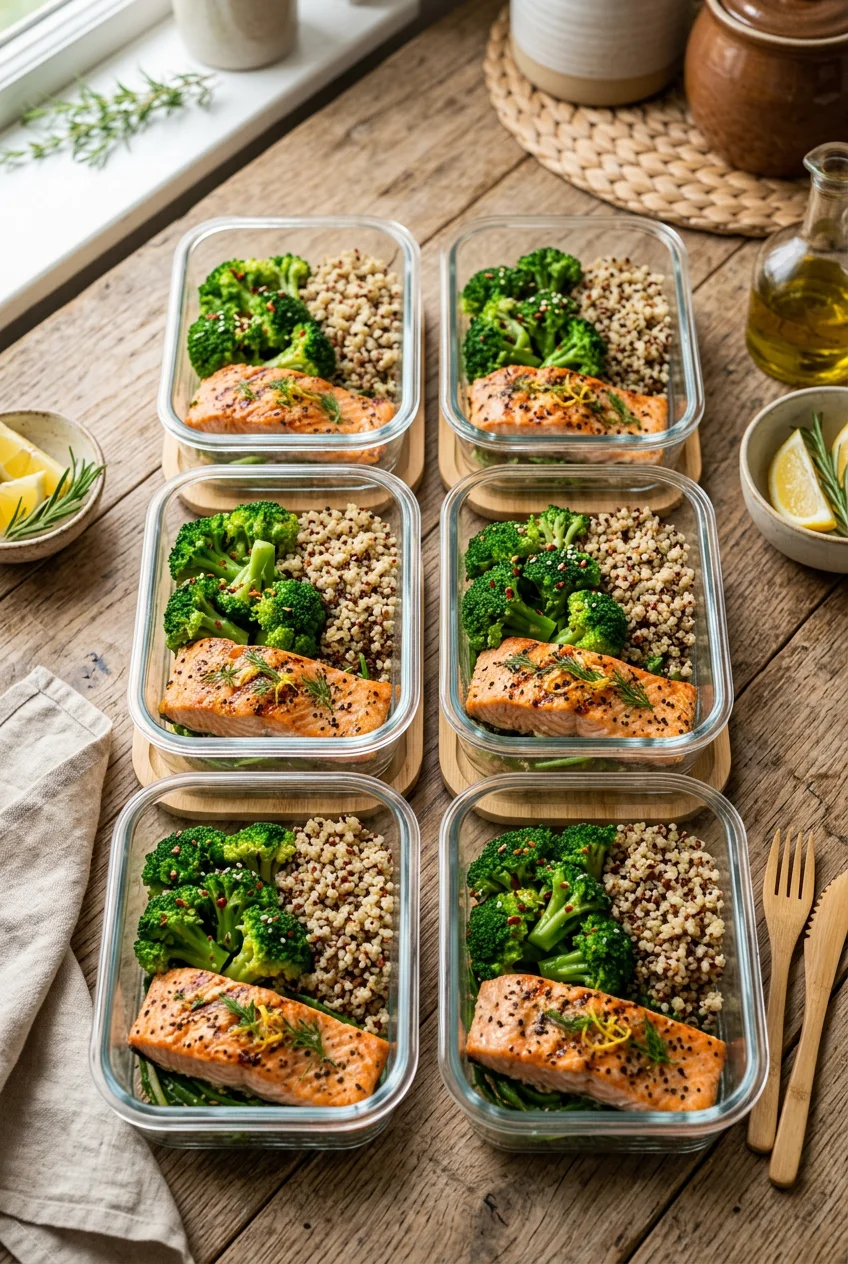
I cook a large pot of quinoa in chicken bone broth instead of plain water to squeeze in a few extra grams of protein. When I pack my glass lunches, I put half a cup of quinoa on the bottom, 4 ounces of seasoned ground turkey on top, and fill the rest of the container with roasted broccoli florets. The combination of 30 grams of protein and 10 grams of fiber means I’m actually full until dinner time. Protein builds the muscle, but fiber physically slows down digestion. If you’re eating high-protein meals but still feeling hungry all afternoon, you’re likely neglecting your fiber intake. Roasting a massive tray of non-starchy vegetables alongside your meat is a mandatory prep step.
11. Store Everything In Proper Glass Containers

A frequent error I made early on was storing my cooked chicken in cheap, thin plastic takeout containers. The plastic absorbed the strong smell of the taco seasoning, warped terribly in the dishwasher, and eventually made my fresh food taste like a chemical factory. Improper storage leads to rapid spoilage and wasted grocery money. I finally threw out all my mismatched plastic lids and bought an 18-piece set of Pyrex Glass Storage Containers at Target for $29.99.
Glass is non-porous. It doesn’t stain when I store turmeric-spiced lentils, and it won’t melt or release toxins in the microwave at work. I pack my weighed portions directly into the glass containers, snap the airtight lids on, and stack them neatly in the fridge. Cooked proteins generally remain fresh for up to 4 days when stored correctly in an airtight environment. If I prep on Sunday, Thursday is the absolute last day I’ll eat that specific batch. Anything I plan to eat on Friday goes straight into the freezer on Sunday afternoon. The clear Pyrex containers stack perfectly, so I can see exactly how many meals I’ve left for the week just by glancing in the fridge. Proper hardware is just as important as the food itself.
Meal prep doesn’t have to consume your entire weekend. By focusing on bulk cooking lean meats, utilizing cheap dairy and fish, and measuring your portions accurately with a digital scale, you can hit your macro targets without the daily stress of cooking from scratch. I rely on these exact methods every single week because they work in the real world. If you’re tired of overpaying for mediocre deli lunches, buy a food scale, pick up some heavy glass containers, and start batching your proteins. Save this guide to your meal prep board for your next Sunday grocery run, and let me know which protein you’re prepping first.
Frequently Asked Questions
How many grams of protein should I prep per meal?
Dietitians recommend aiming for 20 to 40 grams of protein per meal. To achieve this, weigh out 3 to 4-ounce portions of cooked lean meats like chicken or turkey using a digital kitchen scale.
How long do meal prep protein ideas last in the fridge?
Cooked proteins remain fresh for up to four days when stored in airtight glass containers. If you prep on Sunday, Thursday is the last day you should eat that batch. Freeze anything else.
Can I meal prep fish without it smelling?
Yes. Use mild, affordable fish like tilapia or tinned mackerel. Eat it cold in a salad or reheat it gently at 50% power in the microwave to prevent strong odors from filling the room.
What is the best way to prep eggs for the week?
Boil a dozen eggs on Sunday, then transfer them immediately to an ice bath so they peel easily. Store them unpeeled in their carton in the fridge for a quick 6-gram protein snack.
