What’s Inside
- Start With Glass Containers For Meal Prep For The Week Vegetarian
- Master The 50/25/25 Portion Rule For Balanced Plates
- Batch Cook Dried Legumes To Save Your Grocery Budget
- Build Strategic Spice Blends To Avoid Bland Food
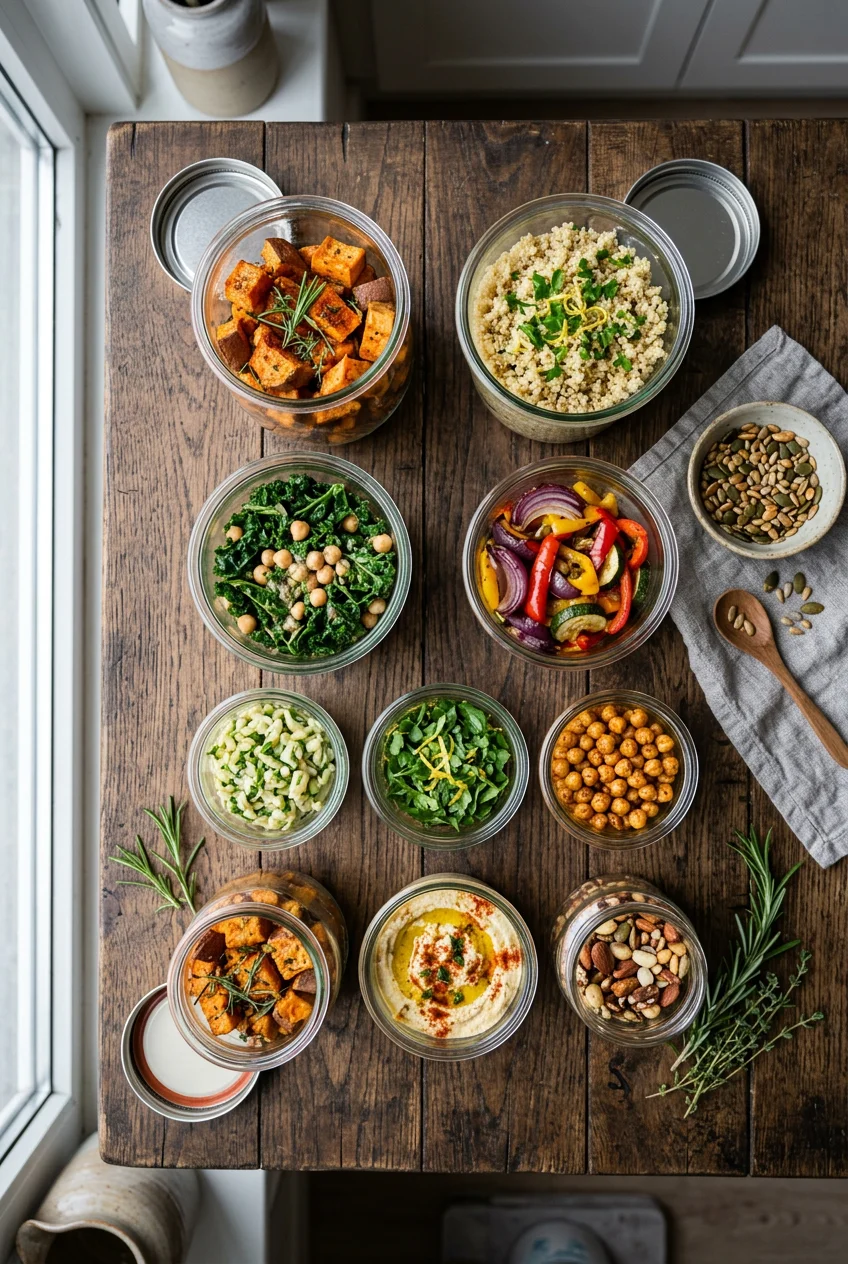
- Component Meal Prep For The Week Vegetarian Beats Full Meals
- Rely On Frozen Vegetables For Quick Additions
- Cook Paneer Or Halloumi For A Hearty Protein
- Prep Versatile Sauces And Dressings In Advance
- Use The FIFO Storage System And Sanitize Properly
- Use Your Air Fryer For Fast Tofu And Veggies
- Add Nutritional Yeast And Miso Paste For Umami
- Try Sous Vide For Consistent Textures And Use Dried Herbs
Three years ago, I stared at a puddle of leaked lentil soup soaking into my car’s passenger seat. That sticky, cumin-scented mess forced me to rethink my vegetarian meal prep. I used to pack lunches in flimsy plastic bins that warped in the dishwasher and popped open at the slightest nudge. If you’re trying to figure out vegetarian meal prep, you’ve likely hit similar walls. Soggy vegetables. Tofu that tastes like a wet sponge. Rice that turns into concrete. I’m writing this because I spent months doing clean eating prep all wrong. I’d cook five identical, sad quinoa bowls on Sunday and refuse to touch them by Wednesday. It’s a waste of time and a massive waste of grocery money. I’m sharing the exact methods, products, and hard-learned lessons that work. These aren’t vague tips. I’m giving you the measurements, the real prices, and the specific brands I buy at Trader Joe’s or Target. Let’s fix your Sunday routine so your Thursday lunch actually tastes good.
1. Start With Glass Containers For Meal Prep For The Week Vegetarian

I learned the hard way that cheap plastic ruins your food. Last October, I pulled a plastic tub of vegetable curry from the freezer, microwaved it, and watched a massive crack form. The plastic melted into my chickpeas. I immediately drove to Target and bought the OXO Smart Seal 8-piece glass container set for $32.99. The borosilicate glass handles temperature shock from the freezer to the microwave without shattering. The silicone gaskets on the snap-lock lids make them truly leak-proof, which matters when I’m carrying saucy curries to work in my canvas tote.
Proper containers also help with the most critical, yet ignored, food safety step: cooling food rapidly. A massive mistake I used to make was stacking hot containers of rice directly in the fridge. The food in the middle stayed warm for hours, creating a breeding ground for bacteria, and my broccoli turned sour by Tuesday. Cooked food needs to drop from 140 degrees Fahrenheit to 70 degrees within two hours. To do this, I divide my batches into shallow containers that are two inches deep or less. I leave them unstacked on the counter for about 45 minutes to maximize air circulation before snapping the lids on. A starter set of quality glass might cost between $25 and $50, but they last five to ten years. Trust me.
2. Master The 50/25/25 Portion Rule For Balanced Plates

When I first started plant-based eating, my lunches were a disaster. I’d pack a bowl of pasta with sad spinach and wonder why I was sluggish by 2 PM. I fixed this by following the 50/25/25 portion rule. To keep energy stable, your containers should be 50 percent fruits and non-starchy vegetables, 25 percent plant-based protein, and 25 percent whole grains or starchy vegetables.
You can’t just eyeball this if you’re serious. I bought an Escali Primo Digital Scale at Walmart for $24.95, and I use it every Sunday. I weigh out exactly 3.5 ounces of cooked extra-firm tofu for my protein. For grains, I use measuring cups to scoop exactly 1/2 cup of quinoa or brown rice. The remaining half of the glass container gets stuffed with roasted zucchini, peppers, or greens. Getting the protein ratio right is where most people fail. Beans and lentils are great, but they’re carb-heavy. If I use black beans as my protein, I scale back the quinoa to keep the balance. This formula prevents that heavy, bloated feeling that comes from eating a massive container of dense carbs while sitting at a desk.
3. Batch Cook Dried Legumes To Save Your Grocery Budget

I used to buy canned beans because I thought boiling them was too much work. Then I checked my receipts. I was spending nearly ten dollars a week on canned chickpeas and lentils. I switched to dried legumes at Sprouts, and the cost difference is ridiculous. A one-pound bag of dried chickpeas costs about $1.00, and a pound of lentils is around $2.00.
Cooking from scratch isn’t just cheaper; the texture is better. Canned chickpeas are often too mushy to roast properly. When I boil them myself, I cook them until they’re just tender but have a firm bite. This makes them perfect for roasting into crispy salad toppers. I buy the Palouse Brand Dried Green Lentils in a 3-pound bag for $14.99 on Amazon. On Sunday mornings, I boil 2 cups of dried lentils in veggie broth. That yields about 6 cups. I drain them and store them in a large glass container. Throughout the week, I scoop out 1/2 cup portions for salads, marinara sauce, or quick lunches. It takes about forty minutes of passive simmering, and it gives me control over the sodium.

M MCIRCO 10-Pack,22 Oz Glass Meal Prep Containers
M MCIRCO 10-Pack has been one of the most consistently praised picks in this category. 86 reviewers averaged 4.5/5.
4. Build Strategic Spice Blends To Avoid Bland Food

Bland vegetables are the number one reason people quit clean eating. If you’re just steaming broccoli and plain tofu, you’ll order pizza by Wednesday night. I suffered through plain roasted cauliflower for months before realizing that strategic spice blends are mandatory. Your pantry needs a baseline of cumin, coriander, turmeric, garlic powder, onion powder, and smoked paprika.
Instead of measuring spices every night, I make my own curry powder in a small jar. I mix 1 tablespoon of ground cumin, 2 teaspoons of coriander, 1 teaspoon of turmeric, and 1 teaspoon of ground ginger. When I’m roasting sweet potatoes or chickpeas, I toss them in olive oil and add a heavy tablespoon of this blend. It coats everything evenly. I also rely on pre-made blends. Last month, I picked up Trader Joe’s Cheesy Seasoning Blend for $2.99. It adds an incredible savory, umami note to roasted potatoes without dairy. Spices lose potency after six months, so I buy smaller quantities. Stale cumin tastes like dust, and it’ll ruin a good batch of lentil soup. You might also like: 15 Brilliant Good Meal Prep Ideas That Changed Everything
5. Component Meal Prep For The Week Vegetarian Beats Full Meals

Prepping entire, fully assembled meals is a rookie mistake. I tried the “five identical lunches” method early on. By Thursday, the thought of eating the same teriyaki tofu bowl made me nauseous. Now, I use component prep. I cook large batches of individual ingredients and store them separately, mixing and matching each morning. You might also like: 11 Meal Prep Ideas High Protein for Every Budget
I use two Nordic Ware Natural Aluminum Commercial Baker’s Half Sheets that I bought at Costco for $17.98. On one, I roast two heads of broccoli and three bell peppers. On the other, I bake two blocks of marinated, cubed tempeh. While those are in the oven, I boil a large pot of farro. I store the veggies, farro, and tempeh in separate glass containers. On Monday, I might combine the farro and veggies with a lemon dressing. On Tuesday, I’ll stuff the tempeh and peppers into a wrap. On Wednesday, I’ll heat the farro with broth for a quick soup. Component prep gives you flexibility. If I’m craving something spicy on Thursday, I just add hot sauce to the components instead of being stuck with a flavor profile I chose on Sunday. You might also like: 12 Low Carb Meal Prep Worth Trying
6. Rely On Frozen Vegetables For Quick Additions

There’s a myth that fresh vegetables are nutritionally superior to frozen ones. It’s false. Frozen vegetables are picked at peak ripeness and flash-frozen, locking in nutrients. I rely on frozen produce because it’s affordable, pre-cut, and prevents waste. I used to buy fresh spinach, forget it in the crisper drawer, and toss a slimy bag a week later. Now, I keep my freezer stocked.
I regularly buy the Kroger Brand Frozen Broccoli Florets. A 16-ounce bag costs $1.99. I also keep bags of mixed stir-fry vegetables and edamame on hand. When I’m assembling a curry or soup, I dump a cup of frozen vegetables directly into the simmering pot. You don’t even need to thaw them. A common mistake is trying to roast frozen veggies slowly. If you want to roast frozen broccoli, preheat your oven and the baking sheet to 425 degrees Fahrenheit. Toss the florets in oil and dump them onto the screaming hot pan. This evaporates the ice crystals immediately, preventing a soggy mess. Frozen veggies save me thirty minutes of chopping on Sunday.

KOMUEE 10 Packs 30 oz Glass Meal Prep Containers
A dependable everyday pick — KOMUEE 10 Packs 30 oz Glass Meal Prep Containers pulls in 46 ratings at 4.5 stars. Not flashy, just solid.
7. Cook Paneer Or Halloumi For A Hearty Protein

Tofu and beans are great, but sometimes you need a different texture. I started incorporating paneer and halloumi into my prep last year, and they changed my grain bowls. These are firm, non-melting cheeses that hold their shape under high heat. You can grill them, pan-fry them, or toss them into a curry without them turning into a puddle of grease.
I usually buy Mt. Vikos Halloumi at Whole Foods. A 7-ounce block costs about $6.99. It’s pricier than tofu, so I look for sales and freeze a few blocks because they hold up perfectly. Halloumi has a salty, savory bite and a squeaky texture that contrasts with soft grains like quinoa. To prep it, I slice the block into 1/4-inch slabs and sear them in a dry, non-stick skillet for two minutes per side until they develop a deep brown crust. Let the slices cool on a wire rack before packing. If you pack them hot, condensation ruins the crust. Adding seared halloumi to a basic salad makes it feel like a cafe meal rather than a sad desk lunch.
8. Prep Versatile Sauces And Dressings In Advance

Flavor makes or breaks your week. A bowl of plain brown rice, broccoli, and tofu is depressing on its own. The secret to component prep is having two or three flavorful sauces ready in the fridge. I spend fifteen minutes on Sunday whisking together a lemon-tahini dressing and a soy-ginger marinade.
I store my sauces in Weck 742 Mold Jars. I bought a 6-pack of the 16.9-ounce size at Target for $28.50. The glass lids and rubber gaskets keep the sauces airtight. For my go-to tahini dressing, I whisk 1/4 cup of tahini, 2 tablespoons of lemon juice, 1 tablespoon of maple syrup, a pinch of salt, and enough warm water to thin it. Tahini thickens significantly in the cold fridge. A pro tip: pull your sauce jar out twenty minutes before you eat. Letting it sit at room temperature allows the oils to loosen up, making it easier to drizzle. If you try to pour cold tahini, it just falls out in one clump.
9. Use The FIFO Storage System And Sanitize Properly

Food safety isn’t glamorous, but getting sick from your own prep is a nightmare. I use a First In, First Out (FIFO) system in my fridge. I use blue painter’s tape and a sharpie to label every container with the date I cooked the food. I stick to the 3-to-4 day rule for refrigerated meals. If I make a batch of chili on Sunday and I know I won’t finish it by Thursday, I portion the leftovers into freezer-safe containers and freeze them on Monday. Don’t wait until Wednesday to decide you won’t eat it.
Diligent cleaning is vital. I learned this after eating an apple that tasted like raw red onion because I used the same cutting board. I bought the OXO Good Grips 3-Piece Plastic Cutting Board Set at Target for $27.99, and I color-code them. The green board is for fruits and vegetables. The red board is for pungent items like garlic and onions. I wash my hands for 20 seconds before and after handling ingredients. After my Sunday prep, I wipe down my quartz countertops with a solution of 1 tablespoon of unscented bleach mixed into one gallon of water.
![C CREST [10 Pack] Glass Meal Prep Containers](https://m.media-amazon.com/images/I/81HfSfzlqUL._AC_UL320_.jpg)
C CREST [10 Pack] Glass Meal Prep Containers
C CREST [10 Pack] Glass Meal Prep Containers punches above its price — 349 buyers rated it 4.5 stars. I would buy it again.
10. Use Your Air Fryer For Fast Tofu And Veggies

I resisted buying an air fryer for years, thinking it was just an overpriced convection oven. I finally caved and bought a Ninja AF101 4-Quart Air Fryer at Target for $89.99. It cut my active cooking time in half. The air fryer is the most efficient way to prep crispy tofu and roasted vegetables without heating up my entire kitchen.
My standard tofu prep used to require pressing the block for thirty minutes, pan-frying it, and flipping pieces so they wouldn’t burn. Now, I press the water out quickly with a towel and cut the tofu into 1-inch cubes. I toss the cubes in a bowl with 1 tablespoon of olive oil, 1 tablespoon of cornstarch, and a teaspoon of garlic powder. The cornstarch is the secret for a crunchy exterior. I drop the cubes into the air fryer basket at 400 degrees Fahrenheit for 15 to 20 minutes, shaking halfway through. The tofu comes out crispy with a soft, hot center. I also use the air fryer for asparagus or green beans. They blister beautifully in about eight minutes with barely any oil.
11. Add Nutritional Yeast And Miso Paste For Umami

Plant-based meals often lack the savory umami flavor found in meat and dairy. I fix this by keeping two ingredients in my pantry: nutritional yeast and white miso paste. They’re non-negotiable for my weekly prep.
I buy Bragg Nutritional Yeast in the 4.5-ounce shaker for $6.49 at Sprouts. It has a rich, nutty, cheesy flavor. I sprinkle a tablespoon over hot roasted broccoli or whisk it into cashew cream for a dairy-free cheese sauce. For broths and dressings, I use Hikari Organic White Miso, which costs $7.49 for a 17.6-ounce tub. Miso is a fermented soybean paste that adds salty depth to everything. I mix 1 teaspoon of white miso with 2 tablespoons of rice vinegar and sesame oil for a quick dressing for soba noodles. A common mistake with miso is boiling it. High heat destroys the probiotics. Always whisk miso into your soups or sauces right at the end, off the heat, to preserve the flavor and nutrition.
12. Try Sous Vide For Consistent Textures And Use Dried Herbs

If you struggle with mushy carrots or rubbery potatoes, look into sous vide cooking. It sounds fancy, but it’s just cooking vacuum-sealed food in a temperature-controlled water bath. I bought an Anova Culinary Sous Vide Precision Cooker Nano for $129.00 at Walmart. I use it to cook root vegetables to the same perfect texture every time. I seal sliced carrots with a bit of butter and cook them at 183 degrees Fahrenheit for an hour. They come out tender but never turn to mush. I keep them in the fridge and give them a two-minute sear in a hot pan right before eating.
To flavor these, I rely on dried herbs. Fresh herbs look pretty, but they wilt in the fridge after two days. I buy McCormick Italian Seasoning for $3.48 at Walmart. It’s packed with oregano, thyme, basil, and marjoram. The trick with dried herbs is that you have to wake them up. I rub the herbs between my fingers to release the oils before sprinkling them on. I also add a squeeze of fresh lemon juice or zest to my meals right after reheating. That hit of acidity brightens the heavy flavors and makes a four-day-old meal taste fresh.
Figuring out a routine takes trial and error. I ate a lot of soggy zucchini and flavorless rice before I nailed these methods. If you start with quality glass containers, stick to component prep, and use your air fryer for the heavy lifting, your Sunday afternoons will get significantly less stressful. I recommend picking just two or three of these habits to start this weekend. Buy the digital scale, grab a bag of dried lentils, and mix up that tahini dressing. You’ll be amazed at how much better your lunches taste on Thursday. Save this guide so you can reference these temperatures and measurements next time you’re writing your grocery list.
![[8-Pack,30 oz]Glass Meal Prep Containers](https://m.media-amazon.com/images/I/713Zfdsgi4L._AC_UL320_.jpg)
[8-Pack,30 oz]Glass Meal Prep Containers
If you want something that just works, [8-Pack is a safe bet (7 reviews, 4.5 stars).
Frequently Asked Questions
How long does vegetarian meal prep last in the fridge?
Most cooked vegetarian meal prep lasts 3 to 4 days in the refrigerator. Store components in airtight glass containers and use a First In, First Out labeling system to ensure you eat older meals first before they spoil.
Can I freeze vegetarian meal prep?
Yes, you can freeze many vegetarian meals. Soups, curries, and cooked grains freeze beautifully. Avoid freezing fresh greens or water-heavy vegetables like cucumbers, as their texture turns to mush when thawed. Use freezer-safe borosilicate glass containers.
How do I keep vegetarian meals from getting soggy?
Keep your sauces and dressings in separate small containers and only add them right before eating. Also, ensure you cool your hot food completely on the counter before putting the lids on to prevent condensation from forming inside the container.
What is the cheapest vegetarian protein for meal prep?
Dried legumes are the most cost-effective protein. A one-pound bag of dried lentils or chickpeas often costs under two dollars and yields multiple servings. Buying blocks of extra-firm tofu or tempeh is also highly budget-friendly compared to processed meat substitutes.
