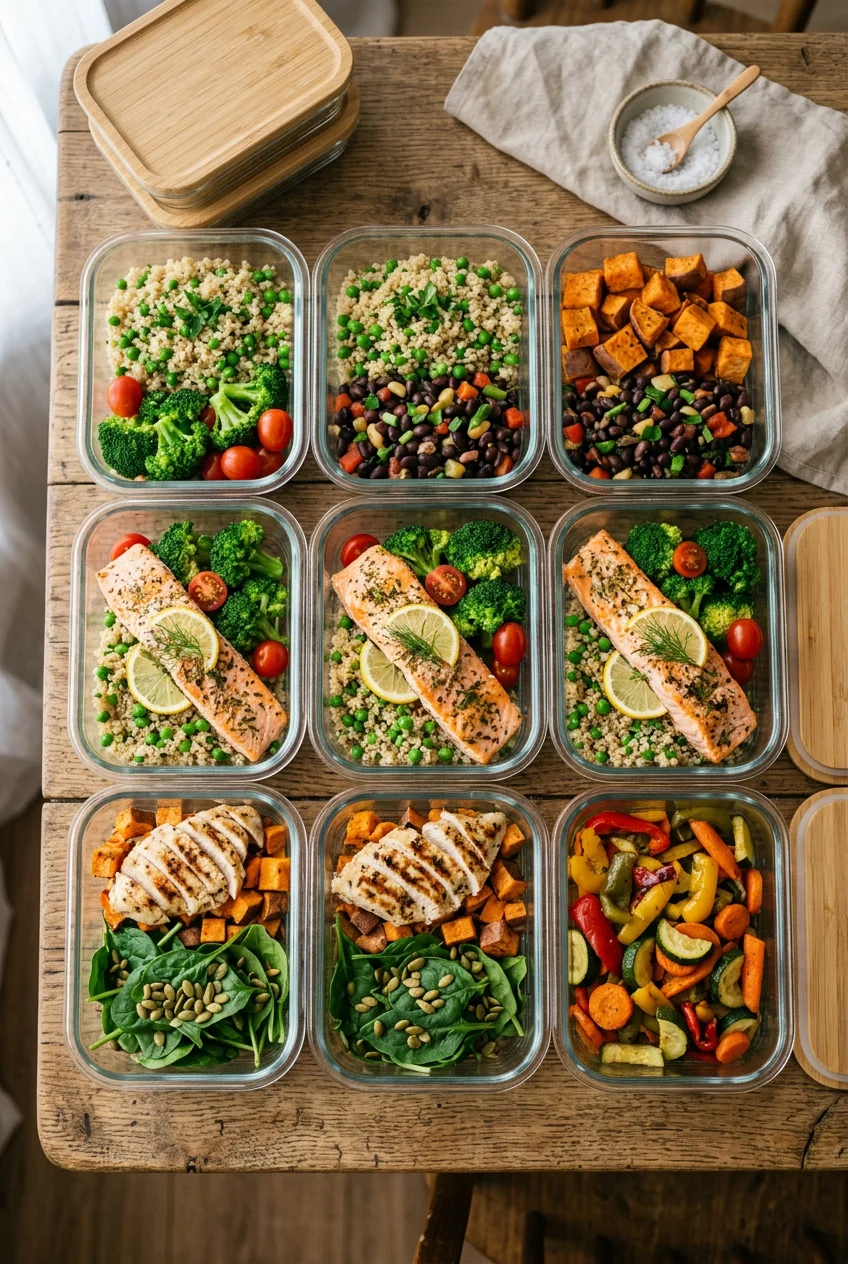
What’s Inside
- Use AI Apps To Make Meal Prep For The Week Easy
- Ditch Plastic For Heavy-Duty Glass Containers
- Master Sous Vide For Meat That Actually Tastes Good
- Choose Recipes That Survive The Reheat Process
- Cool Your Food Rapidly To Stop Bacteria
- Portion Using The 50/25/25 Rule Every Time
- Weigh Your Ingredients With A Digital Kitchen Scale
- Buy Your Proteins In Bulk And Vacuum Seal Them
- Keep Wet And Dry Ingredients Far Away From Each Other
- Freeze Soups In Silicone Trays For Easy Portions
- Label Every Single Container With Tape And Sharpie
- Stop Trying To Prep Twenty Meals On Sunday
Last Tuesday at Whole Foods, I stood over a cart filled with wilted spinach and three random jars of salsa, realizing I had zero actual meals planned. Figuring out meal prep for the week used to feel like solving a math equation while blindfolded. I’d spend six hours on Sundays chopping 4 lbs of carrots until my hands cramped, only to end up with soggy salads by Wednesday. It was a disaster. The smell of rotting cilantro in my crisper drawer still haunts me. You’re probably here because you’re tired of throwing away fuzzy leftovers. I’m going to show you exactly how I fixed my routine. Let’s skip the complicated chef routines. I’m sharing the exact tools, prices, and mistakes I made so you don’t have to repeat them. I tried copying those pristine Instagram fridges using cheap plastic tubs from Target, which warped in the microwave and leaked teriyaki sauce all over my car seats. Never again. I’ve ruined enough meals to know what actually works. If you aren’t doing this efficiently, you won’t stick with it. I can’t stand wasting food. Let’s fix your Sunday routine.
1. Use AI Apps To Make Meal Prep For The Week Easy

I resisted using apps for a long time because I thought a pen and paper were fine. I was wrong. I spent months buying 16 oz jars of tahini for a single recipe, letting the rest turn into concrete in the back of my fridge. Now I use SummitPlate. It costs $7.99 a month, and it builds grocery lists that actually use up every single ingredient. If I buy a 10 oz bag of kale for Monday’s soup, the app forces me to use the remaining 5 oz in Wednesday’s grain bowl. It stops the food waste completely. Fitia is another solid choice if you track macros. It generates recipes based on what you already bought. Last month I inputted 2 lbs of ground turkey and 1 cup of quinoa, and it gave me three distinct flavor profiles so I wasn’t eating the same boring chili four days in a row. The recipes are actually reviewed by nutrition professionals, so the calorie counts aren’t wildly inaccurate like some free blogs. The interface takes about twenty minutes to learn. It’s a bit clunky at first. But the $8 investment saves me at least $40 a week in unused produce from Kroger. Don’t try to wing your grocery list. Let the software do the math for you.
2. Ditch Plastic For Heavy-Duty Glass Containers

I ruined so many cheap plastic containers from Walmart. I’d microwave tomato soup, and the plastic would permanently stain orange and smell like garlic for eternity. Plus, the lids would warp after three trips through the dishwasher. I finally threw them all out and bought the 18-piece Glasslock set for $39.99 on Amazon. Glass is heavy. Carrying three of these in my tote bag to work feels like a workout. But they don’t hold smells, and they don’t leach weird chemicals into my food when I heat them up. According to Consumer Reports, these glass sets last 5 to 10 years. My plastic ones barely survived six months. If you’re on a tight budget, head to Aldi. Their Crofton 12-Piece Glass Bowls with Snapping Lids cost $14.99. I bought a set for my sister last year. The silicone seals on the Aldi brand are slightly thinner than Glasslock, so you have to press firmly to snap them shut, but they don’t leak. Stop eating out of warped plastic. The glass keeps your 4 oz chicken breast and 1/2 cup of rice tasting fresh, not like the ghost of last week’s salmon. Trust me on this.
3. Master Sous Vide For Meat That Actually Tastes Good

Meal prepped chicken breast usually tastes like wet cardboard by Thursday. I used to bake 3 lbs of chicken on a sheet pan, dry it out completely, and force myself to chew through it all week. Then I bought a sous vide circulator at Target for $99. You vacuum-seal your protein in a bag and cook it in a water bath at a precise temperature. I set my water to 145 degrees Fahrenheit for chicken. It cooks in its own juices for two hours. The texture is completely different from baked or grilled meat. It stays incredibly juicy, almost like it was poached but with much more flavor. I prep 4 lbs of chicken breasts on Sunday, leave them sealed in their pouches, and put them in the fridge. The vacuum seal blocks oxygen, so the meat stays fresh for up to five days. When I want a hot meal, I just sear the chicken in a hot cast iron pan with 1 tablespoon of olive oil for exactly two minutes per side to get a crust. It takes extra time on Sunday to set up the water bath. The machine is also bulky to store. But eating juicy meat on a Wednesday makes the hassle completely worth it. You might also like: 20 Brilliant Quick Dinner Ideas You’ll Want to Bookmark

buluker 4 Pack Bento Lunch Box Set 3 Compartment Food
buluker 4 Pack Bento Lunch Box Set 3 Compartment Food Storage Containe punches above its price — 23 buyers rated it 4.5 stars. I would buy it again.
4. Choose Recipes That Survive The Reheat Process

My biggest meal prep failure happened when I tried to prep crispy tofu stir-fry for four days. By Tuesday, the tofu was a spongy, soggy mess. By Wednesday, it smelled like sad gym socks. I learned the hard way that not everything reheats well. If you want to make meal prep for the week easy, you have to cook foods that actually improve sitting in the fridge. Chili, beef stew, and heavy curries are your best friends. The spices meld together over time, making the flavor deeper and richer by the time you eat it. I regularly make a massive batch of lentil soup using 2 cups of dry brown lentils, 4 cups of vegetable broth, and 1 can of crushed tomatoes. It tastes twice as good on day three. Skip anything breaded, fried, or delicate. Zucchini noodles turn into a watery puddle after 24 hours. Keep your crispy cravings for dinners you cook fresh. For prep, stick to wet, heavily sauced dishes. I store my curries in 2-cup portions. When I microwave them for two minutes, the texture is identical to the day I cooked it. It prevents the mid-week disappointment of biting into rubbery food. You might also like: 20 Clever School Lunch Ideas You Can Try Today
5. Cool Your Food Rapidly To Stop Bacteria

I used to leave my massive pots of soup sitting on the stove for five hours to cool down before putting them in the fridge. I thought putting hot food in the fridge would break the appliance. I was basically running a bacteria farm in my kitchen. Food safety experts are very strict about the two-hour rule. You have to get your cooked food out of the danger zone (between 40 and 140 degrees Fahrenheit) within two hours. If you leave a 3 lb pork roast sitting on the counter all afternoon, it’s going to spoil faster and taste sour by Wednesday. Now, I portion my hot meals directly into my glass containers immediately after cooking. I leave the lids off and let them sit on the counter for exactly 45 minutes. Once the steam stops rising, I snap the lids on and stack them in the fridge. The smaller 2-cup portions cool down significantly faster than a giant Dutch oven full of chili. This one habit completely stopped my food from going bad prematurely. It’s a boring technical detail, but nobody wants food poisoning on a Thursday afternoon. You might also like: 15 Cozy Easy Dinner Ideas for Every Budget
6. Portion Using The 50/25/25 Rule Every Time

I used to just dump whatever I cooked into containers until they looked full. I’d end up with containers that were 80 percent pasta and maybe three pieces of broccoli. I’d feel sluggish and bloated by 2 PM every day at work. Now I strictly use the 50/25/25 rule. Half the container is vegetables, a quarter is lean protein, and a quarter is complex carbs. You don’t even need measuring cups if you use your hands. I measure a palm-sized piece of baked salmon (usually about 4 oz), a cupped hand of brown rice (about 1/2 cup), and two fist-sized portions of roasted Brussels sprouts. It forces me to eat enough vegetables. I buy the massive 2 lb bags of broccoli florets from Sprouts for $4.99 to make sure I always have enough green stuff to fill that fifty percent quota. I also grab their 1 lb bags of baby carrots for $1.49 to add crunch. The downside is that vegetables take up a lot of physical space. You need larger containers to fit two fists of spinach compared to a dense block of lasagna. But eating this way keeps my energy stable. I don’t crash at my desk anymore.

Food Scale -33lb Digital Kitchen Scale for Food Ounces
If you want something that just works, Food Scale -33lb Digital Kitchen Scale for Food Ounces Grams Rechargea is a safe bet (78 reviews, 4.5 stars).
7. Weigh Your Ingredients With A Digital Kitchen Scale

Eyeballing portions is a lie we tell ourselves. I thought I was eating 2 tablespoons of peanut butter with my morning oats. I finally weighed it and realized I was scooping closer to 5 tablespoons. That’s a massive difference if you’re tracking your intake. I bought the Vitafit 15kg Digital Kitchen Scale for $13.99 on Amazon, and I use it every single Sunday. It handles up to 33 lbs, which is great because I can put my heaviest glass bowl on it, hit the tare button to zero it out, and dump my ingredients right in. I measure exactly 150 grams of sweet potatoes and 112 grams of chicken for my lunches. It takes an extra five minutes during prep, but it guarantees every single container has the exact same amount of food. No more fighting over the big portion on Thursday. The scale is super thin and slides right into my drawer next to my silverware. The buttons are a little sensitive, so I sometimes accidentally switch it from grams to ounces if my finger brushes it. Just pay attention to the digital screen before you start pouring.
8. Buy Your Proteins In Bulk And Vacuum Seal Them

Buying a single pound of chicken breast at my local grocery store costs almost $8 now. It’s ridiculous. I completely changed my strategy and started driving to the Costco Business Center once a month. They sell 40 lb cartons of boneless, skinless chicken breast for $1.59 per pound. If you don’t have a Business Center near you, regular Costco warehouses sell the Kirkland Signature Organic Boneless Skinless Chicken Breasts in 5 lb packages for about $5.99 per pound. I bring it all home, portion it into 1 lb batches, and use my FoodSaver PowerVac Compact Vacuum Sealer. The FoodSaver costs around $80, but it pays for itself in two months. I seal the bags and throw them in the deep freezer. Standard ziplock bags let air in, and the meat gets covered in ice crystals and tastes like a freezer drawer after a month. Vacuum sealing prevents freezer burn completely. It takes me about forty-five minutes to process 20 lbs of chicken. My hands get freezing cold handling all that raw meat. But pulling a perfectly preserved 1 lb block of chicken out of the freezer on Sunday morning makes my routine stress-free.
9. Keep Wet And Dry Ingredients Far Away From Each Other

Nothing ruins a Monday lunch faster than a salad that has been marinating in vinaigrette since Sunday. The lettuce turns dark green, slimy, and translucent. It’s repulsive. I used to pack my salads in one big bowl and just hope for the best. Now, I refuse to let wet and dry ingredients touch until I’m holding a fork. I use the OXO Good Grips Prep & Go Squeeze Bottles for all my dressings. They cost about $10 for a two-pack. They hold exactly 2 oz of liquid, which is the perfect amount for a large salad, and the leak-proof caps actually work. I toss them right into my lunch bag, and they’ve never spilled olive oil on my laptop. I do the same thing with pasta. I boil 8 oz of penne and keep it in a separate container from my marinara sauce. If you mix them on Sunday, the pasta acts like a sponge and sucks up all the moisture. By Wednesday, you have dry, bloated noodles and zero sauce. You have to wash an extra container this way. It’s annoying. But eating crisp romaine lettuce instead of green slime is worth the extra dish soap.

Etekcity Food Kitchen Scale
A dependable everyday pick — Etekcity Food Kitchen Scale pulls in 1,736 ratings at 4.5 stars. Not flashy, just solid.
10. Freeze Soups In Silicone Trays For Easy Portions

I make massive batches of butternut squash soup in the winter. I used to freeze it in giant plastic tubs. When I wanted a bowl, I had to hack at the frozen block with a butter knife or thaw the entire 64 oz block just to eat one serving. It was incredibly stupid. Then I found Souper Cubes Silicone Freezer Trays. They are heavy-duty silicone molds with steel rims. You pour your soup into the 1-cup or 2-cup compartments, snap the lid on, and freeze it. The next day, you pop out perfect rectangular blocks of frozen soup and transfer them to a freezer bag. They cost around $30. That feels steep for an ice cube tray, but the thick silicone doesn’t crack under pressure. Aldi sells a knockoff version called Crofton Freezer Portion Cubes for much less during their seasonal sales. The Aldi ones are a bit flimsier, so you have to support the bottom when moving them to the freezer, but they work. Now I can grab exactly two 1-cup blocks of chili, drop them in a bowl, and microwave them. No more thawing a gallon of soup for a single Tuesday lunch.
11. Label Every Single Container With Tape And Sharpie

We’ve all played the game where you stare at a frosted container in the back of the freezer and wonder if it’s pulled pork or chocolate frosting. I’ve lost so much food to the mystery meal dilemma. I’d find a container of cooked quinoa, have no idea if it was three days old or three weeks old, and throw it in the trash out of fear. Now, I use a roll of blue painter’s tape and a black Sharpie. Every container gets a label with the exact contents and the date I cooked it. Food safety experts are strict about the first in, first out rule. Cooked proteins are only safe in the fridge for 3 to 4 days. Most grains last 3 to 5 days. Having the date staring me in the face removes all the guesswork and stops me from taking unnecessary risks with my digestion. I don’t buy fancy dissolving labels because they cost $15 a roll and sometimes leave a sticky residue anyway. A $4 roll of painter’s tape from Home Depot lasts me an entire year. It peels off glass easily before I throw the containers in the dishwasher.
12. Stop Trying To Prep Twenty Meals On Sunday

The fastest way to hate cooking is trying to prep twenty-one meals in a single afternoon. When I first started, I tried to make breakfast, lunch, and dinner for all seven days. I spent eight hours in the kitchen, destroyed every pot I owned, and ended up crying on the kitchen floor while chopping onions. I learned that the hard way. I was so burnt out that I ordered a $30 pizza on Wednesday anyway. Don’t overcommit. If you want to succeed, start by prepping just 2 to 3 meals for your most chaotic days. I usually just prep lunches for Monday through Wednesday. That’s it. Three containers. It takes me one hour on Sunday afternoon. I’ll roast 1 lb of chicken thighs, boil 1 cup of rice, and steam a bag of green beans. Once you master that small batch, you can add breakfast overnight oats to the routine. Overnight oats are foolproof. I mix 1/2 cup rolled oats, 1 cup almond milk, and 1/4 cup Greek yogurt in a Ball Mason jar. Building the habit slowly prevents burnout. You don’t have to be a machine. You just need enough food to survive your busiest workdays without hitting the drive-thru.
Figuring out how to meal prep doesn’t require a culinary degree or a pristine white kitchen. It’s just about having the right tools, like sturdy glass containers and a digital scale, and avoiding the trap of prepping too much too soon. I still mess up sometimes. Just last week I dropped a full container of black bean chili on my kitchen floor because I didn’t snap the lid correctly. No exaggeration. But having even three solid lunches ready to go makes my work week infinitely better. Skip the soggy salads and start freezing your soups in cubes. Your future self on a chaotic Tuesday will be so grateful. Save this guide or pin it to your favorite Pinterest board so you can reference these exact container brands and temperatures next Sunday.

Food Scale, 11lb Digital Kitchen Scale with 6 Units LCD
Food Scale has been one of the most consistently praised picks in this category. 21 reviewers averaged 4.5/5.
Frequently Asked Questions
How long do prepped meals actually last in the fridge?
Most cooked proteins and grains are safe in the fridge for 3 to 4 days. If you prep on Sunday, plan to eat those meals by Thursday. Always cool your food rapidly before storing to maximize freshness.
What is the best way to prevent salads from getting soggy?
Never mix wet and dry ingredients in advance. Store your dressings in separate small containers, like OXO squeeze bottles, and only pour them over your greens right before you eat.
Are glass containers better than plastic for meal prep?
Yes. Glass containers don’t absorb food odors or stains, and they won’t warp in the dishwasher or microwave. They also prevent chemical leaching when heating up your food, making them a safer long-term investment.
How many meals should a beginner prep at once?
Start small to avoid burnout. Prep just 2 to 3 meals for your busiest workdays, like Monday through Wednesday lunches. Once you master a small batch, you can gradually add breakfasts or dinners.
