What’s Inside
- Calculate Your Personalized Calorie Deficit
- Prioritize Protein for Satiety and Muscle Preservation
- Embrace the Volume Eating Strategy
- Invest in Quality Portion Control Containers
- Master the Buffet Method for a Meal Prep for the Week Calorie Deficit
- Utilize a Food Scale for Accuracy
- Batch Cook Budget-Friendly Proteins and Grains
- Don’t Forget High-Protein, Low-Calorie Snacks
- Try the Plant-Based Power Prep Trend
- Avoid the Common Mistake of Overcomplicating Recipes
- Label and Date Everything for Your Meal Prep for the Week Calorie Deficit
I stood in the Whole Foods prepared foods aisle last Tuesday, blinking back tears over a $14.99 wilted kale salad. That was the moment I realized my meal prep for the week was a disaster. The fluorescent lights buzzed while I stared at the sad, brown edges of the lettuce. I’m a huge advocate for prepping, but I spent months eating soggy, flavorless chicken breasts from leaky plastic tubs before I figured this out. You don’t have to suffer through rubbery broccoli to lose weight. Let’s fix your Sunday routine right now.
1. Calculate Your Personalized Calorie Deficit

I’m not a math person, but you can’t guess your way into a smaller jeans size. I tried eyeballing my portions for a year and wondered why my weight wouldn’t budge. Before you chop an onion, you need a daily target. A deficit of 400 to 500 calories per day is the sweet spot for fat loss while keeping your muscle. This usually means aiming for 0.8 to 1.0 pounds of fat loss per week. Use a free online TDEE calculator. Plug in your age, height, weight, and activity level. Be honest. If you work a desk job, you’re sedentary, even if you walk your dog for twenty minutes. For most active adults, the target lands between 1,600 and 2,200 calories. I write my weekly numbers in a Moleskine Classic Notebook ($22.99 for the 5-inch by 8.25-inch size) because writing it down keeps me accountable. When I started, I cut my calories to 1,200, and it was a mistake. I’d wake up dizzy, and my stomach would rumble during morning meetings. Don’t do that. Stick to the 400-calorie deficit. It’s enough to see progress but not so low that you’re miserable. You won’t stick to a plan if you’re constantly fighting off dizzy spells and cravings. I sit at my kitchen island with black coffee and my notebook every Saturday morning. It’s a quiet ritual that sets the tone for my week.
2. Prioritize Protein for Satiety and Muscle Preservation

I used to pack a sad little spinach salad with four cherry tomatoes and a drizzle of balsamic. By 2 PM, I was starving, and my stomach would growl during Zoom calls. I’d inevitably sprint to the vending machine for a candy bar. I learned that the hard way. Dietitian Samantha Nimmons says protein helps you feel full and preserves muscle during a deficit. Aim for 0.8 to 1.0 grams of protein per pound of body weight daily. Skip the fat-free stuff. It tastes like wet cardboard. I swear by ground meats and poultry. A standard 6 oz portion of cooked chicken breast gives you about 187 calories and 35 grams of protein. If you’re sick of chicken, grab some Jennie-O 93% Lean Ground Turkey ($5.49 for a 16 oz package) at Target. A 4 oz serving is roughly 218 calories and 30 grams of protein. I brown the turkey in a skillet with 1 tablespoon of olive oil and a heavy pinch of taco seasoning. I love the way the turkey gets crispy edges in a hot cast-iron pan. It’s savory, salty, and satisfies that craving for comfort food. If you aren’t prioritizing protein, your plan will fail because you’ll just end up snacking on empty carbs by mid-afternoon.
3. Embrace the Volume Eating Strategy

I tried eating 100 percent plain cauliflower rice for a month. It was a mistake. My kitchen smelled like sulfur, the texture was mushy, and I was miserable. But you can’t ignore the math of volume eating. You need to swap calorie-dense foods for high-volume, lower-calorie alternatives so your stomach feels full. Instead of suffering through plain cauliflower, I use a 50/50 blend. Regular jasmine rice is about 200 calories per 1 cup serving. Cauliflower rice is only 25 calories per 1 cup serving. If you mix 1/2 cup of regular rice with 1/2 cup of cauliflower rice, you get a massive portion that tastes normal but cuts the carbohydrate calories in half. I buy Trader Joe’s Organic Riced Cauliflower ($2.99 for a 12 oz frozen bag). I microwave it for four minutes, squeeze out the excess water with a paper towel, and toss it with my hot jasmine rice. I add 1 teaspoon of soy sauce and a pinch of garlic powder. The starch from the real rice masks the watery texture of the cauliflower. It’s a cheap trick, but it’s incredibly effective when you’re hungry but out of calories for the day. You can also do this with zucchini noodles and regular pasta. I’ll boil 2 oz of real spaghetti and mix it with a huge handful of spiralized zucchini. The real pasta provides the chew, while the zucchini provides the bulk. You might also like: 15 Creative Cold Lunch Ideas to Transform Your Space

KOMUEE 10 Packs 30 oz Glass Meal Prep Containers
KOMUEE 10 Packs 30 oz Glass Meal Prep Containers has been one of the most consistently praised picks in this category. 46 reviewers averaged 4.5/5.
4. Invest in Quality Portion Control Containers

Most people get this wrong right out of the gate. I definitely did. I used to buy those flimsy plastic takeout containers from the grocery store. After two weeks, they warped in the microwave, leaked dressing all over my bag, and smelled like old garlic. It was disgusting. If you’re serious, you need quality containers. You need ones with pre-set sections so you don’t accidentally overeat. I recommend the OXO Prep & Go Divided Container ($17.99 for the 3.3 cup size). It features three distinct compartments for your protein, carbs, and vegetables. It simplifies portioning because you visually fill the sections without measuring every bite. If you prefer glass, the Pyrex Simply Store Glass Meal Prep Containers ($24.99 for a 6-piece set) are fantastic. They are heavy, durable, and won’t stain when you store tomato sauce in them. They’re microwave, freezer, and dishwasher safe. I love the solid clinking sound the glass makes when I stack them in my fridge. It makes my refrigerator look like a professional kitchen. I also love that the glass doesn’t hold onto smells. There’s nothing worse than eating fresh strawberries out of a container that smells like last week’s salmon. Don’t skimp here. Good containers are the foundation of your prep. You might also like: 20 Beautiful High Protein Meal Prep Ideas That Are Totally Worth It
5. Master the Buffet Method for a Meal Prep for the Week Calorie Deficit

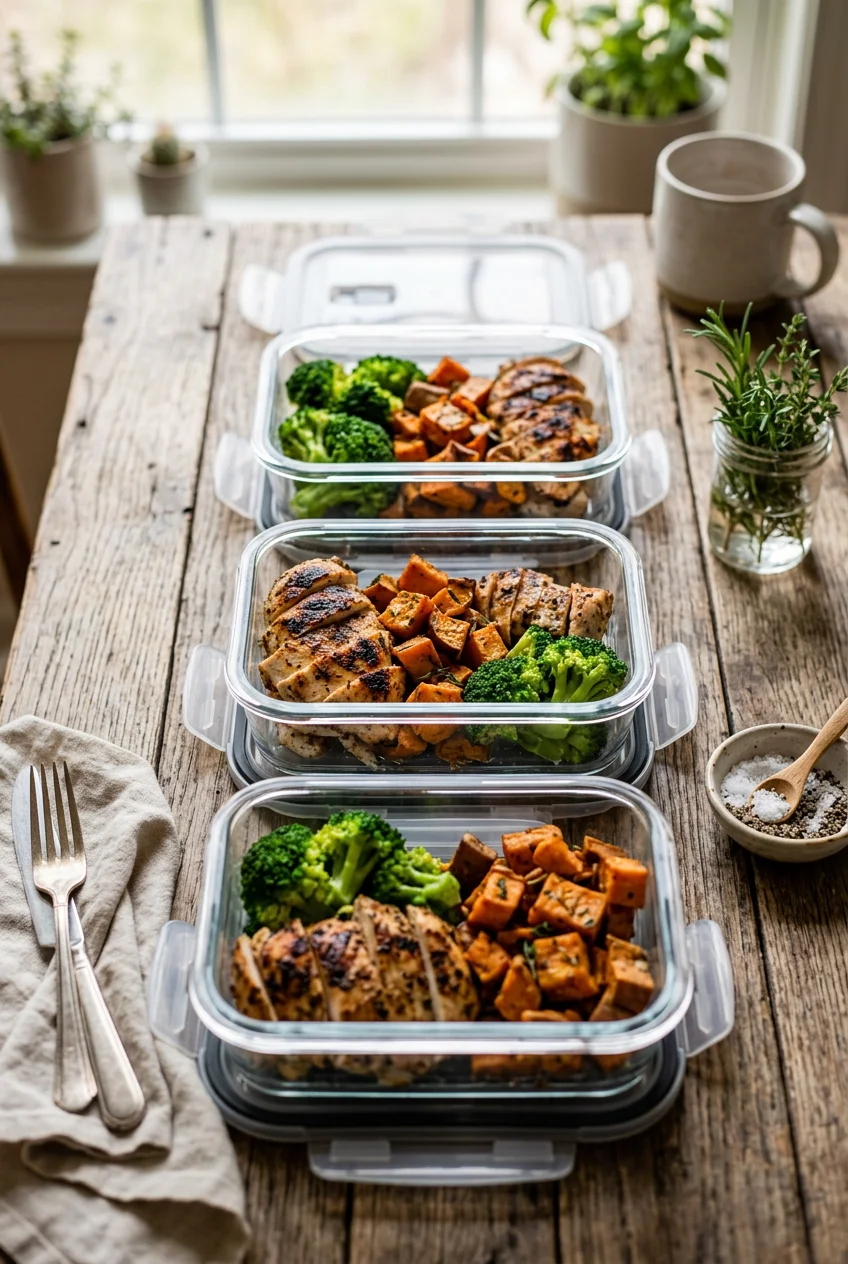
If you prep five identical containers of chicken, broccoli, and rice on Sunday, you will hate your life by Wednesday. I tried that for months before figuring out the buffet method. Dietitians often recommend preparing individual components rather than full meals to prevent boredom. This is the best way to handle a meal prep for the week. Instead of making composed boxes, you cook two types of protein, two complex carbs, and a massive pile of vegetables. For example, I’ll grill 16 oz of chicken breast and boil six large eggs. Then I’ll cook 2 cups of quinoa and roast a sheet pan of sweet potatoes. I buy my organic sweet potatoes at Sprouts ($1.29 per pound). I chop them into 1-inch cubes, toss them with 1 tablespoon of avocado oil, and roast them at 400 degrees until the edges are caramelized. The sweet, earthy smell fills the house. I store all these components in large, separate glass bowls in the fridge. Every morning, I just open the fridge and mix and match whatever sounds good. Sometimes I’ll take the sweet potatoes, quinoa, and eggs and toss them over a bed of fresh spinach with a little hot sauce. The next day, I’ll take the chicken, quinoa, and roasted broccoli, and mix it with soy sauce. Same base ingredients, different flavor profiles. It takes three minutes to assemble a fresh bowl. You might also like: 15 Brilliant Batch Cooking Ideas That Actually Work
6. Utilize a Food Scale for Accuracy

Refusing to buy a food scale was my biggest mistake. I thought I was good at eyeballing portions. One morning, I decided to actually measure my “one tablespoon” of peanut butter. It turned out I was scooping closer to three tablespoons, which meant I was accidentally eating an extra 200 calories before 8 AM. No wonder my weight was stuck. While portion control containers help with the layout, a digital food scale provides undeniable measurements. You need the OXO Good Grips Food Scale with Pull-Out Display ($55.99). The pull-out display is brilliant because you can still read the numbers even when a giant mixing bowl is sitting on the scale. It’s crucial for tracking your macros. I weigh everything now, down to the gram. I weigh my 4 oz portions of turkey, my 1/2 cup of oats, and even my almonds. It sounds tedious, but it gives you freedom. You aren’t guessing anymore. You know exactly what you’re putting in your body, which eliminates the anxiety around whether you’re in a deficit. You just place your empty bowl on the scale, hit the tare button, and pour. It’s faster than dirtying a bunch of measuring cups. Plus, you don’t have to wash five spoons when you’re done.
![[8-Pack,30 oz]Glass Meal Prep Containers](https://m.media-amazon.com/images/I/713Zfdsgi4L._AC_UL320_.jpg)
[8-Pack,30 oz]Glass Meal Prep Containers
If you want something that just works, [8-Pack is a safe bet (7 reviews, 4.5 stars).
7. Batch Cook Budget-Friendly Proteins and Grains

You don’t have to spend a fortune to eat healthy. I used to buy pre-cooked chicken strips, and they cost a fortune and tasted like rubber. Now, I batch cook budget-friendly proteins and grains every Sunday. Save your money and time by cooking staples in bulk. I buy the Kirkland Signature Boneless Skinless Chicken Thighs at Costco ($14.99 for a 6-pound pack). That breaks down to roughly $1.25 per serving. Chicken thighs are superior to chicken breasts for prepping because they contain more fat, meaning they won’t dry out when you microwave them on Wednesday. Nobody wants to chew on dry chicken. I also cook 4 cups of uncooked brown rice in my rice cooker, which yields enough carbs for the entire week. Another huge budget trick is shopping seasonally to reduce costs and boost flavor. Seasonal produce is always cheaper and fresher. In the fall, I load up on butternut squash. In the summer, I buy pounds of fresh zucchini. Roasting a huge tray of seasonal vegetables costs maybe four dollars and provides massive volume. The sizzle of chicken fat rendering in the oven while the rice cooker bubbles in the background is my favorite Sunday soundtrack. It makes the house feel productive.
8. Don’t Forget High-Protein, Low-Calorie Snacks

If I don’t have snacks ready, I will eat a whole bag of tortilla chips while standing over the sink at 4 PM. Pre-portioned snacks are the only way to prevent impulsive choices when your blood sugar drops. You can’t just rely on your main meals. I keep my fridge stocked with high-protein options I can grab in three seconds. I’m obsessed with Good Culture Low Fat Classic Cottage Cheese ($1.49 for the 5.3 oz cup). It provides 15 grams of protein and only 100 calories. It’s thick, creamy, and tart. If you hate cottage cheese, get the Chobani Zero Sugar Mixed Berry Greek Yogurt ($1.29 for a 5.3 oz cup). It packs 12 grams of protein for just 60 calories. I also keep a stash of Chomps Original Beef Jerky Sticks ($2.25 for a 1.15 oz stick) in my purse and car. They don’t need refrigeration, and they offer 10 grams of protein. Having these items on hand stops me from hitting the drive-thru when I’m running errands. When you’re in a deficit, hunger is going to happen. You need to be ready for it with protein. I also keep a bowl of washed honeycrisp apples on my counter. An apple is about 95 calories, and the loud, crisp crunch is satisfying when you just want to blindly chew on something out of stress.
9. Try the Plant-Based Power Prep Trend

You don’t have to eat meat for every meal to hit your protein goals. Plant-based meal prepping is trending for its health and sustainability benefits. I do at least two plant-based days a week because it saves money and makes my digestion feel amazing. I use a four-component formula: one grain, one legume, two trays of roasted vegetables, and one sauce. For the grain, I buy Great Value Organic Quinoa at Walmart ($3.98 for a 16 oz bag). I cook 1 cup of dry quinoa with vegetable broth for flavor. For the legume, I rinse a can of simple green lentils. Then I roast a huge tray of broccoli and bell peppers. The key to making plant-based food taste incredible is the sauce. I make a quick tahini dressing using 2 tablespoons of tahini, lemon juice, and warm water. I whisk it until it’s perfectly smooth. Pouring that nutty, garlicky dressing over a warm bowl of quinoa and lentils is satisfying. The fiber in the lentils expands in your stomach, keeping you full for hours. I also sprinkle a tablespoon of hemp hearts on top for crunch and healthy fats. It feels like a fancy, expensive grain bowl from a trendy cafe, but it costs pennies.

M MCIRCO 10-Pack,22 Oz Glass Meal Prep Containers
A dependable everyday pick — M MCIRCO 10-Pack pulls in 86 ratings at 4.5 stars. Not flashy, just solid.
10. Avoid the Common Mistake of Overcomplicating Recipes

I spent a Sunday last year trying to make a complicated keto lasagna with homemade zucchini noodles and four types of cheese. At 10 PM, I was crying in my kitchen, covered in tomato sauce, with a sink full of dirty dishes. It took me years to figure out that simple is better. Many people get burned out by trying elaborate recipes they see on social media. Dietitian Samantha Nimmons advises choosing easy-to-prepare bulk recipes. Stop overcomplicating things. Stick to recipes with fewer than five ingredients and short cook times. I rely heavily on my Crockpot. I’ll throw 2 pounds of chicken breast and a jar of salsa into the slow cooker for four hours. That’s it. Shred it with a fork, and you get taco meat for days. If you try to make five different complex Pinterest recipes on a Sunday, you’ll destroy your kitchen and give up by week two. Keep it simple. You can always add hot sauce or a sprinkle of feta cheese later if you need more flavor. For extremely busy weeks when I know I won’t have time to cook, I use meal delivery services for my flexibility days. I order from Factor ($11.49 per serving). They send chef-prepared, ready-to-eat meals with the exact nutritional information printed right on the sleeve. I pop a tray in the microwave for two minutes, and I get a perfect, macro-friendly meal. It prevents burnout.
11. Label and Date Everything for Your Meal Prep for the Week Calorie Deficit

My fridge used to be a graveyard of mysterious, unmarked Tupperware. I’d pull out a container of chicken on Thursday, stare at it, and wonder if I cooked it on Sunday or the previous Tuesday. It’s a food safety hazard. A common mistake is forgetting what’s in your containers or how old the food is. You must label and date everything. This is non-negotiable. It prevents food waste and ensures you consume your food within safe timeframes. Cooked chicken only lasts three to four days in the fridge. Cooked grains like rice and quinoa last four to five days. I buy a pack of Sharpie Extreme Permanent Markers ($6.49 for a 4-pack) at Kroger and a roll of blue painter’s tape. I tear off a piece of tape, stick it to the glass lid, and write “Chicken – Sun 10/12” in bold letters. It takes five seconds, but it gives me peace of mind. The blue painter’s tape peels off effortlessly before you throw the containers in the dishwasher. No sticky residue left behind. Another pro tip: I always store my sauces and dressings separately in tiny 2 oz plastic ramekins. Keeping the dressings in those little ramekins ensures your greens stay crisp and your rice doesn’t turn into mush. Texture is everything when you’re eating leftovers.
I’ve learned that meal prepping doesn’t have to be a miserable chore. It’s just a tool to make your weekdays a little less chaotic. If you set aside just one hour this Sunday to try the buffet method and weigh your proteins, I promise you’ll feel completely in control of your goals. Pin this guide to your favorite healthy eating board on Pinterest so you can reference the cooking times and container brands later. You’ve got this, and your future self will thank you on Wednesday afternoon. No exaggeration.
Frequently Asked Questions
How many calories should I cut for a healthy deficit?
A deficit of 400 to 500 calories per day is generally considered the sweet spot for safe, sustainable fat loss. This allows you to lose about 0.8 to 1.0 pounds per week without feeling completely starved or losing muscle.
How long does meal prep for the week calorie deficit food last in the fridge?
Most cooked proteins like chicken and ground turkey last three to four days in the refrigerator. Cooked grains like rice and quinoa can last up to five days. Always label your containers with the date to ensure food safety.
What is the buffet method for meal prepping?
Instead of building full identical meals, you cook large batches of individual ingredients (like roasted sweet potatoes, grilled chicken, and plain quinoa) and store them separately. You mix and match these components daily to prevent flavor fatigue.
Do I really need a food scale to lose weight?
While not strictly mandatory, a digital food scale is highly recommended. Measuring cups can be inaccurate, leading you to accidentally eat hundreds of extra calories. A scale ensures you are actually staying within your required calorie deficit.
