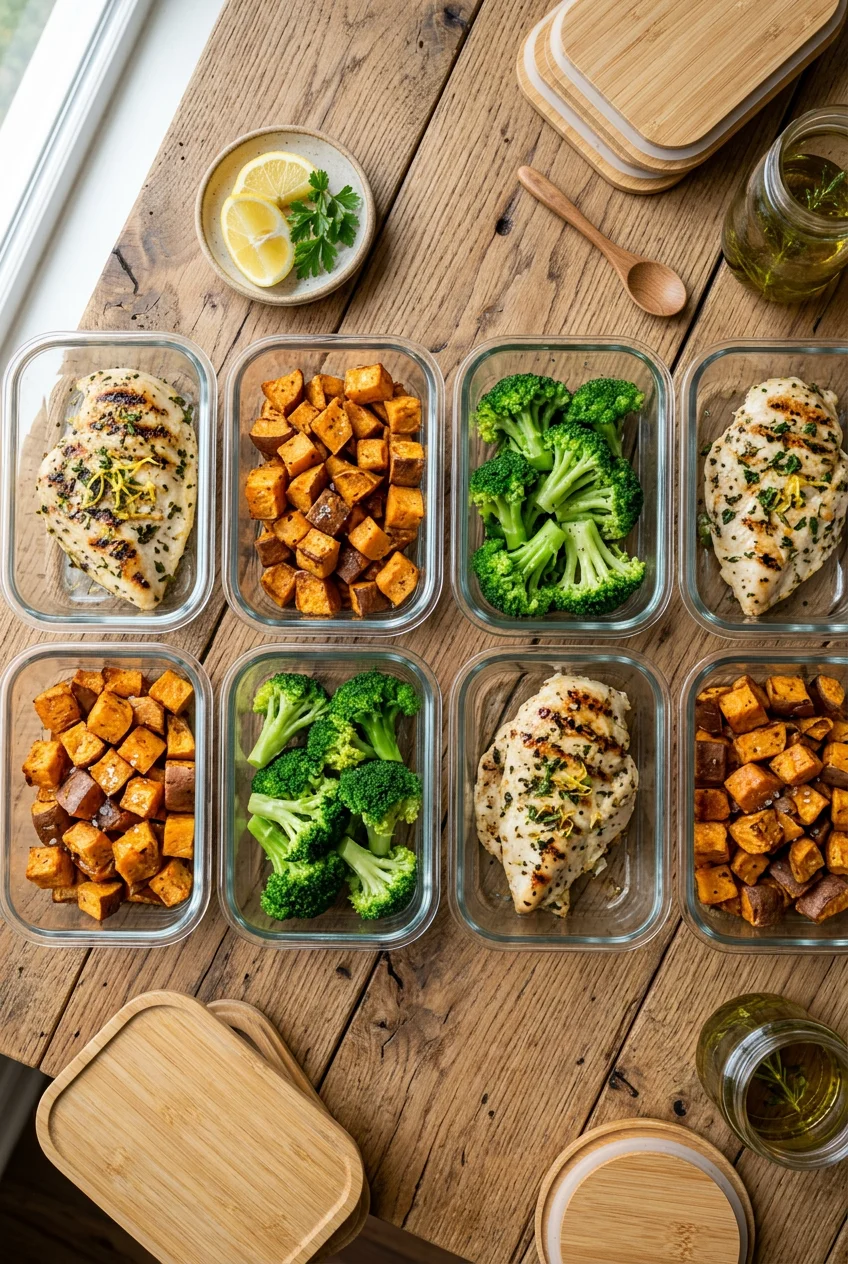
Last Tuesday at Whole Foods, I dropped a flimsy plastic container of plain, boiled chicken breast right in the parking lot. Honestly, I wasn’t even mad. I’m always looking for high protein meal prep ideas that don’t taste like wet cardboard, and that rubbery chicken was my absolute lowest point. I tried eating plain chicken and steamed broccoli for months before figuring it out. It’s miserable. The smell of day-four boiled poultry is enough to make anyone gag. If you’re tired of choking down dry meat just to hit your macros, I’ve got you. Let’s fix your fridge.
Most people fail at meal prep because they cook food they hate eating. You spend three hours on a Sunday making a mountain of identical, flavorless meals. By Wednesday, you’re ordering a twenty-dollar burger on DoorDash because you can’t stomach another bite of dry turkey. I’ve been there. I’ve wasted so much money throwing away spoiled food. But once I learned how to properly batch cook, season my food, and use the right containers, everything changed. I’m going to share exactly how I keep my meals exciting, cheap, and packed with protein. Skip the fat-free stuff. It tastes like wet cardboard. Let’s get into the actual methods that work.
1. The Best High Protein Meal Prep Ideas Start With Chicken Thighs

I’m going to be completely honest with you. I used to buy massive packs of boneless, skinless chicken breasts, boil them in unseasoned water, and pack them into five identical plastic tubs. By Thursday, I’d rather starve than eat that same, stringy meat again. It tasted like sawdust. You need to optimize your protein intake per meal, aiming for 20 to 40 grams of protein across three or four daily meals. A standard 6-ounce serving of cooked chicken breast provides about 35 grams of protein. But breasts get incredibly dry when reheated in a microwave. You’re much better off switching to chicken thighs. Trust me on this.
Chicken thighs are typically 30 to 40 percent cheaper than breasts, offering similar protein content at just $0.035 to $0.055 per gram of protein. I buy a 3.5-pound family pack of thighs at Kroger for about $9.49. Instead of making full, identical meals, I master batch cooking for versatility. I roast the entire 3.5 pounds of chicken on a hot sheet pan at 400 degrees for 25 minutes. I toss them with 1 tablespoon of olive oil, 1 teaspoon of smoked paprika, and 1 teaspoon of garlic powder. The sizzle of the chicken fat and the caramel-butter smell of the roasted spices fills the whole kitchen. The crispy golden edges are the best part.
This single batch yields about five 6-ounce servings, each packing 35 grams of protein. I store the cooked meat in a large Pyrex 4-cup glass dish ($8.99 at Target). Then, I assemble my meals differently each day. Monday is a taco bowl with 1/2 cup of black beans and 2 tablespoons of salsa. Tuesday is a wrap with spinach and hot sauce. This completely prevents flavor fatigue. If you’re focused on muscle growth, you need to hit 1.6 to 2.2 grams of protein per kilogram of body weight daily. Hitting that goal is impossible if your food tastes terrible.
2. Build A Dense Bean And Tofu Salad

Plant-based proteins are ridiculously cheap, and most people completely ignore them. Dried beans and lentils are exceptionally affordable, ranging from $0.008 to $0.025 per gram of protein. I’m obsessed with the “Dense Bean Salad” trend right now. Dietitian Maya Feller recommends bean salad with tofu as a delicious, budget-friendly option rich in fiber and complete protein. It’s a massive win for your grocery bill.
I buy Nasoya Extra Firm Tofu for $2.99 at Sprouts. I press the water out for ten minutes, then cube it into 1/2-inch pieces. I toss the cubes with 1 tablespoon of olive oil, 1 teaspoon of garlic powder, and a pinch of salt. I air fry them at 400 degrees for 15 minutes until they’re deeply golden and crunchy. The texture is incredible. It doesn’t feel like eating a block of wet sponge. I mix the crispy tofu with 1 can (15 oz) of rinsed chickpeas and 1 can (15 oz) of cannellini beans. Then I add 1/4 cup of diced red onions for a sharp, spicy crunch, and 1/4 cup of fresh chopped parsley.
Here is a huge common mistake. I’ve made the error of dressing the entire salad on Sunday afternoon. Don’t do this. The beans get incredibly mushy and the whole container smells like a wet dog by Wednesday. Learned that the hard way. Keep the dressing separate. I use a small 2 oz OXO Good Grips dressing container ($4.99 at Target) for my olive oil and lemon juice mixture. I pour the dressing over the salad right before I eat it. This simple meal easily hits 25 grams of protein and keeps you full for hours because of the heavy fiber content.
3. Don’t Skip Breakfast: Greek Yogurt Power Bowls

Skipping protein at breakfast is a massive error that leads directly to sugar cravings later in the day. I used to skip breakfast entirely, and by 2 PM I’d find myself eating a whole bag of stale tortilla chips in the breakroom. You need to start strong with 20 to 30 grams of protein in the morning. I personally swear by Fage Total 0% Milkfat Plain Greek Yogurt. It costs $6.99 for a 32 oz tub at Whole Foods. A standard 6-ounce serving gives you 18 grams of protein right out of the gate. You might also like: 15 Cozy Freezer Meals Ideas to Transform Your Space
I build a massive power bowl that hits up to 52 grams of protein total. I add 1 scoop (about 30g) of Optimum Nutrition Gold Standard Whey ($34.99 at Target) and mix it right into the yogurt. It makes the yogurt incredibly thick, almost like vanilla pudding. Then I top it with 1/4 cup of frozen raspberries and 2 tablespoons of chia seeds. I tried prepping these in advance with granola sprinkled on top. It was a total disaster. The granola absorbed the yogurt moisture and turned into a spongy, soggy mess. Always keep your dry toppings in a separate Ziploc bag. You might also like: 15 Brilliant Salmon Dinner Ideas for Any Style
If you prefer a savory route, I prep high-protein egg cups. I use a silicone muffin tin and bake 2 whole eggs, 1 ounce of smoked salmon, and 1/4 cup of peppery arugula per cup. Eggs are a top contender for budget prep, costing around $0.015 to $0.025 per gram of protein. On weekends, I’ll even bake protein waffles using a Dash mini waffle maker ($9.99 at Target). A good protein waffle recipe yields 33 grams of protein and makes your kitchen smell like warm vanilla extract. You might also like: 20 Clever Aesthetic Food Prep That Actually Work

8 Pack 36oz Large Glass Meal Prep Containers with lids
If you want something that just works, 8 Pack 36oz Large Glass Meal Prep Containers with lids is a safe bet (859 reviews, 4.5 stars).
4. Split Your Prep Days To Avoid Gross Leftovers

Most people get this completely wrong. They cook a massive mountain of food on Sunday afternoon, filling fifteen plastic tubs. By Thursday, that food is highly questionable. Cooked proteins generally remain fresh and safe in the refrigerator for up to four days. I’ve definitely eaten five-day-old ground turkey and regretted it instantly. The sour, funky smell hits you the second you open the lid. Don’t over-prep. I split my prep into two shorter sessions per week to ensure optimal taste and freshness.
Sunday is my big cooking day, and Wednesday is a quick 30-minute refresh. I store absolutely everything in glass. Using inappropriate containers leads to spills and uneven heating in the microwave. I use Glasslock 3-cup rectangular containers. I bought an 18-piece set for $39.99 at Costco. They are airtight, BPA-free, and the lids snap shut with a satisfying click. Proper containers prevent leaks. I once spilled fishy salmon juice all over my car seats because I used a cheap, warped plastic tub. My car smelled like a fish market for a month. Never again.
When packing your glass containers, use a visual dividing method. Aim for 50 percent vegetables, 25 percent protein, and 25 percent grains. This keeps your meals balanced without obsessing over every calorie. I love adding 4 ounces of baked Atlantic salmon ($11.99 per pound at Trader Joe’s) to the protein section. It gives you fantastic omega-3 fatty acids and breaks up the monotony of eating chicken every single day. Diversify your protein sources beyond just chicken breast. Mix in ground turkey or lean cuts of beef to keep things interesting.
5. Lean On AI Meal Planning Apps Like FoodiePrep

I’m terrible at math. Trying to calculate 1.6 to 2.2 grams of protein per kilogram of body weight gives me a headache. That’s exactly why I started using AI meal planning apps. Apps like FoodiePrep and Fitia are trending heavily for 2026, and they actually work. I downloaded FoodiePrep ($4.99 per month), and it completely changed my Sunday routine. You literally just type in what’s sitting in your fridge, and the AI does the heavy lifting.
Last week, I had half a head of green cabbage, 1 pound of 93/7 lean ground beef ($6.99 at Walmart), and a bottle of low-sodium soy sauce. I typed those ingredients into the app. It generated a high-protein egg roll in a bowl recipe in three seconds. The app also builds smart shopping lists based on your custom high-protein meal plans. I take that digital list straight to Walmart and buy exactly what I need. No more wandering the aisles aimlessly, throwing random five-dollar protein bars into my cart out of panic.
These apps are incredible for preventing flavor fatigue. A common meal prep mistake is eating the same bland food daily. The AI suggests diverse seasonings and cooking methods. One week it builds a Mediterranean profile with oregano and feta, the next week it’s an Asian-inspired ginger soy glaze, or a Mexican profile with cumin and lime. It also suggests experimenting with different cooking methods. I’ve used the app’s guides to start air frying and even sous-vide cooking my meats. Altering the textures keeps the meals exciting so you actually look forward to eating them.
6. Stock Up On High-Protein Grab-And-Go Snacks

You need strategic snacks. If you’re starving between meals, your meal prep plan will fail. You’ll end up hitting the vending machine at work and ruining your macros. I always keep innovative protein products in my pantry and fridge to keep hunger at bay and maintain my energy levels. I’m always looking for “new” protein products hitting the market. Have you seen the Nurri Protein Coffee Shake at Costco?
It costs about $18.99 for a 12-pack. Each can delivers 30 grams of protein and 80mg of caffeine. The cold condensation on the can feels great on a hot afternoon, and it tastes exactly like a creamy iced latte. It isn’t chalky or gritty at all. I drink one at 3 PM when I’m crashing at my desk. I also love Built Sour Puff Protein Snacks. They cost $2.50 each and pack 14 grams of plant-based protein. The tart green apple flavor is intense, and the chewy texture satisfies my candy cravings.
If you want real whole foods, I highly recommend Daisy Brand 4% Cottage Cheese ($2.99 at Kroger). A 1/2 cup serving gives you 13 grams of protein. The creamy texture is amazing when you mix it with 1 teaspoon of raw honey and a pinch of cinnamon. Another fantastic savory option is the Genova Mediterranean Tuna Bowls ($4.49 at Target). They offer up to 25 grams of protein and 5 grams of fiber. I keep three of these tuna bowls in my desk drawer at work. Hard-boiled eggs and beef jerky are also perfect, cheap staples to keep in your bag.

Skroam 10 Pack Glass Meal Prep Containers
Skroam 10 Pack Glass Meal Prep Containers has been one of the most consistently praised picks in this category. 56 reviewers averaged 4.5/5.
7. Weigh Your Portions With A Kitchen Scale

Eyeballing your food simply doesn’t work. I used to think I was eating 30 grams of protein per meal, but when I finally measured it, I was barely hitting 15 grams. I ruined my macros for a whole year because I was too stubborn to weigh my food. I couldn’t figure out why I wasn’t seeing any muscle growth despite working out four days a week. You absolutely need a digital kitchen scale to eliminate the guesswork.
I bought a simple Ozeri digital food scale for $13.99 on Amazon, but I’ve seen similar ones at Walmart for the same price. The bright digital display makes it foolproof. Weighing 3 to 4 ounces of cooked protein ensures you’re hitting your target of 20 to 30 grams per serving. Place your glass container on the scale, hit the tare button to zero it out, and add your meat. It literally takes five extra seconds. I do this religiously with my 93/7 lean ground turkey ($5.99 at Target). Remember to weigh your meat after it’s cooked, as raw meat loses a lot of water weight in the hot cast iron pan.
Once you weigh your food consistently for a few weeks, you’ll develop an intuitive eye for portion sizes. You’ll learn the “palm method” naturally. A palm-sized portion of cooked meat visually approximates 3 to 4 ounces. But you can’t trust the palm method until you’ve trained your brain with a real scale first. Spending fourteen bucks on a scale is the cheapest way to guarantee your meal prep is actually working for your body.
8. Keep Emergency High Protein Meal Prep Ideas In Your Freezer
Let’s be completely realistic. Some Sundays, you’re exhausted. You won’t prep anything. Life happens. If you don’t have a backup plan, you’ll end up ordering a twenty-five-dollar greasy pizza on Tuesday night when you’re too tired to cook. I keep high-protein meal delivery services in my freezer for these exact moments. Having a safety net is crucial for long-term consistency.
Clean Eatz Kitchen is my absolute favorite for convenience. Their meals have 35+ grams of protein and cost around $8.99 per serving. The best part is there’s no subscription required. I order a box of six meals and toss them directly in the freezer. They have a 12-month freezer life. Their sweet chili chicken is amazing. The chicken is tender, and the sauce is sticky, sweet, and spicy. Hearing the beep of the microwave on a busy Tuesday evening and knowing I have a perfect macro-friendly meal ready is a huge relief. No exaggeration.
Factor is another great option if you prefer fresh, never-frozen meals. They provide options with 50+ grams of protein, though they are pricier at about $13.49 per meal. The food arrives in insulated cardboard boxes packed with dry ice. Icon Meals also caters specifically to budget-conscious fitness enthusiasts with great bulk protein options. Having just three or four of these emergency meals stashed away will save your diet when your Sunday prep inevitably fails.
Make Your Sunday Prep Work For You

Meal prep doesn’t have to be a miserable chore. You don’t have to eat plain chicken and soggy broccoli every day. By switching to cheaper, juicier cuts of meat like chicken thighs, utilizing plant-based proteins, and keeping emergency meals in your freezer, you’ll actually stick to your goals. Remember to split your prep days so you aren’t eating funky, five-day-old leftovers. Freshness matters just as much as the macros.
I hope these tips help you fix your fridge and hit your protein goals without going broke. I’ve made all the mistakes so you don’t have to. If you found this helpful, I’d love it if you saved this post or pinned it for your next Sunday prep session. Let’s make healthy eating actually taste good.

Vtopmart 5Pack 22oz Glass Storage Containers with Lids
Honestly, Vtopmart 5Pack 22oz Glass Storage Containers with Lids surprised me — sturdier than it looks in the photos, and over 32 buyers gave it 4.5 stars.
1 thought on “8 High Protein Meal Prep Ideas That Actually Work”