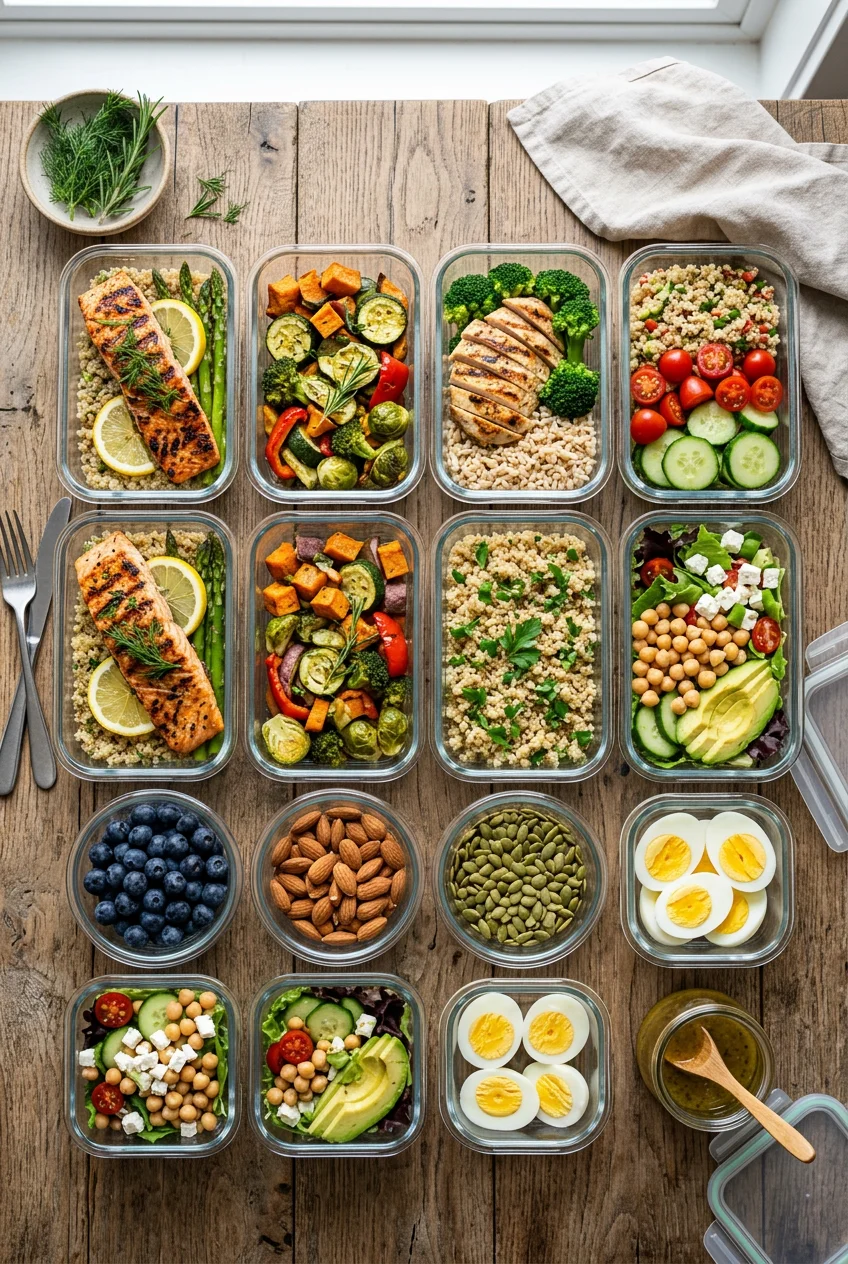
What’s Inside
- Adopt the 333 Method for Healthy Food Meal Prep
- Stop Guessing and Buy a Digital Kitchen Scale
- Ditch the Plastic for Stackable Glass Containers
- Batch Cook Cost-Effective Proteins Like Chicken Thighs
- Master Component Prep Instead of Full Meals
- Use the Fullstar Chopper for Your Prep
- Flavor Everything With Salt-Free Seasoning Blends
- Cool Rapidly and Use a Dedicated Meal Prep Bag
I’m standing in the produce section at Whole Foods last Tuesday, staring down at a $14.99 pre-packaged salad that looked like sad, wilted lawn clippings. The lettuce was bruised, the tiny 2-ounce portion of chicken looked gray, and the dressing smelled faintly of old vinegar. I realized right then that my approach to healthy food meal prep was totally broken. I’d spent months trying to survive on soggy spinach and dry, unseasoned chicken breasts because I thought that was the only way to eat well. It’s a miserable way to live. Skip the fat-free stuff. It tastes like wet cardboard. I’m Esperanza Eliza, and I’ve spent the last three years figuring out how to actually look forward to my lunches. Let’s fix the way you prep your food.
Most people get this wrong. They try to cook seven identical meals on a Sunday afternoon, and by Wednesday, they’re tossing sour-smelling rice into the trash and ordering a $20 burger on DoorDash. I’ve done it. I tried this wrong for months before figuring it out—took me years, no exaggeration. You need a system that actually works for your real life, not a fantasy version of yourself. We’re going to focus on high-protein, deeply satisfying ingredients that hold their texture in the fridge. Forget the complicated recipes with thirty ingredients. We need simple, heavy-hitting meals that keep you full until dinner. Here are the exact methods, specific products, and hard lessons I’ve learned along the way.
1. Adopt the 333 Method for Healthy Food Meal Prep

To prevent absolute meal fatigue, you need to adopt the 333 Meal Prep Method. This trending approach for 2026 involves selecting exactly 3 proteins, 3 carbohydrates, and 3 vegetables to rotate throughout your weekly meals. Honestly, this changed how I view my Sunday afternoons. Instead of making five identical containers of chicken and rice, I prep components that I can mix and match. Last month at Trader Joe’s, I bought their Trader Joe’s Organic Quinoa (16 oz bag for $3.99), 2 lbs of ground turkey, and 3 large sweet potatoes. I’d been making the mistake of cooking one giant casserole, which turned into a mushy, unappetizing brick by Thursday.
Now, I cook 4 oz portions of ground turkey, bake 4 oz portions of salmon fillets, and boil 4 oz portions of hard-boiled eggs. For my carbs, I make 1/2 cup servings of quinoa, 1/2 cup servings of brown rice, and 1/2 cup servings of roasted sweet potatoes. Then I roast 1 cup of broccoli, 1 cup of zucchini, and 1 cup of bell peppers. By keeping these items separate, I can assemble a completely different bowl every single morning. Monday might be salmon, quinoa, and broccoli. Tuesday is ground turkey, sweet potatoes, and zucchini. It’s brilliant.
I personally swear by this because it keeps your palate engaged. The Harvard Nutrition Source emphasizes that fresh preparation trumps frozen alternatives for maximum vitamin and mineral content, superior taste, and better digestive benefits. When you use the 333 method, your fresh ingredients don’t sit in a pool of mixed sauces for five days. They stay crisp, vibrant, and actually taste like real food. You won’t get bored, and you won’t throw away half your groceries on Friday.
2. Stop Guessing and Buy a Digital Kitchen Scale

For precise portion control, especially if you’re tracking macros for high-protein goals, a digital kitchen scale is a must. I used to eyeball my food. Last October in my kitchen, I scooped what I thought was 2 tablespoons of peanut butter into my oatmeal. Out of curiosity, I weighed it. It was actually 6 tablespoons. I was accidentally eating an extra 400 calories of fat before 8 AM. That small negative lesson—learned that the hard way—forced me to drive straight to Target.
I bought the Vitafit 15kg Digital Kitchen Scale for exactly $15.99. It’s sleek, wipes clean easily, and handles heavy glass bowls without an error message. When you’re dealing with healthy food meal prep, you need to adhere to guidelines like the 50/25/25 rule. This means your container should be 50% fruits and vegetables, 25% lean protein, and 25% grains or starchy vegetables per meal. You can’t eyeball that accurately. I weigh out exactly 3.5 ounces of chicken thighs to ensure I’m hitting roughly 26 grams of protein per serving. I weigh exactly 1/2 cup (about 85 grams) of cooked rice.
Most people get this wrong by using measuring cups for solid foods. Measuring cups are for liquids. If you pack spinach into a 1 cup measuring cup, you might get 30 grams or 60 grams depending on how hard you push. The scale doesn’t lie. It takes exactly three extra seconds to place your container on the Vitafit scale, hit the tare button to zero it out, and add your food. It’s the only way to ensure your high-protein meals are actually hitting the macros you need to stay full and build muscle.
3. Ditch the Plastic for Stackable Glass Containers

Opt for durable, oven-safe glass containers to ensure food safety and longevity. I used to buy those cheap black plastic meal prep containers. Last July, I was standing in a hot Walmart parking lot, opening my lunch bag, and a wave of old, stale garlic smell hit my face. The plastic had absorbed the odor of a chili I made three weeks prior. It was disgusting. Plastic stains, it warps in the microwave, and it retains ghost smells that ruin your fresh food. You might also like: 20 Gorgeous Meal Planning Ideas for Any Style
I immediately upgraded to the Rubbermaid Brilliance Glass Food Storage Containers. A 12-piece set costs around $29.98 at Walmart. I also use Pyrex Glass Storage Containers, specifically the 3-cup and 4-cup sizes, which usually run about $19.99 for a pack of four. Glass doesn’t stain. When I pack 1/2 cup of tomato sauce with 4 oz of turkey meatballs, the glass washes completely clean with a quick scrub. The Rubbermaid Brilliance lids have a tight silicone seal that makes a satisfying snapping sound when you lock them down. They’re 100% leak-proof. You might also like: 20 Lovely Work Lunch Ideas to Inspire Your Next Project
Another pro tip is that glass holds temperature much better than plastic. When you heat up 1 cup of roasted vegetables and 4 oz of chicken in a glass container, the heat distributes evenly. You don’t get those weird cold pockets in the middle of your rice while the edges are boiling hot. Yes, glass is heavier to carry. It’s a small price to pay to avoid eating microplastics and tasting last month’s garlic chicken in today’s fresh salmon bowl. Throw away your cloudy plastic containers today. You might also like: 15 Brilliant Good Meal Prep Ideas That Changed Everything
![[8-Pack,30 oz]Glass Meal Prep Containers](https://m.media-amazon.com/images/I/713Zfdsgi4L._AC_UL320_.jpg)
[8-Pack,30 oz]Glass Meal Prep Containers
Honestly, [8-Pack surprised me — sturdier than it looks in the photos, and over 7 buyers gave it 4.5 stars.
4. Batch Cook Cost-Effective Proteins Like Chicken Thighs

Save money and time by cooking proteins in bulk. You don’t need to buy expensive cuts of meat to hit your protein goals. Last winter at the Sprouts meat counter, I bought a package of pre-cooked, sliced chicken breasts for $12.99. It was incredibly dry and tasted like salty sawdust. I forced myself to eat it, but I realized I was paying a massive premium for terrible quality. Now, I focus strictly on raw, budget-friendly proteins that I can batch cook myself.
Eggs are a prime example. I buy Sprouts Large Brown Eggs for approximately $3.49 per dozen. They provide 6 grams of protein per large egg. I’ll hard-boil six of them at a time, peel them, and store them in a glass container for quick snacks. Chicken thighs are another massive money-saver. I buy Kirkland Signature Boneless Skinless Chicken Thighs at Costco for $8.99 for a 3 lb pack. They’re often 30-40% cheaper than chicken breasts, and they pack a solid 26 grams of protein per 3.5-ounce serving.
Samantha Nimmons, a registered dietitian, advises starting with just two or three days of meal prep to build a sustainable routine. Don’t overcommit. I usually roast 1.5 lbs of chicken thighs at 400 degrees on a Sunday. The fat sizzles, the edges get crispy, and the dark meat stays incredibly juicy in the fridge for up to four days. Breasts dry out by Tuesday. Thighs stay tender. I chop them into 1-inch cubes and portion out exactly 4 oz into my containers. It’s cheap, it’s high protein, and it actually tastes good when reheated.
5. Master Component Prep Instead of Full Meals

Instead of preparing entire composed meals, focus on cooking individual components like grains, proteins, and roasted vegetables. I mentioned this briefly with the 333 method, but component prep goes deeper. Two weeks ago in the Costco freezer aisle, I had a flashback to throwing away three identical, fully assembled chicken and rice bowls because the rice had turned into mush under the chicken juices. When you assemble everything on Sunday, the textures bleed together.
Here is my exact component prep routine. I cook a large batch (usually 2 cups dry) of brown rice or quinoa. A lesser-known hack for efficiency is to freeze cooked grains in flat, zip-top freezer bags. I scoop 1 cup of cooked rice into a quart-sized Ziploc, press all the air out, flatten it into a thin square, and freeze it. Once frozen, they can be easily stored vertically like books on a shelf. When I need a carb, I snap off a 1/2 cup chunk and microwave it. It reheats beautifully and tastes freshly steamed.
To avoid soggy salads, always store dressings in a separate, small 2-ounce container. A surprising tip is to assemble salads with the 2 tablespoons of dressing at the very bottom of your 4-cup Pyrex container. Then add hardier vegetables like 1/2 cup of cherry tomatoes and 1/2 cup of cucumbers, followed by 4 oz of protein, and finally put your delicate greens on top. The greens never touch the dressing until you shake the container right before eating. This keeps everything crisp and fresh for days.
6. Use the Fullstar Chopper for Your Prep

Speed up your prep with time-saving kitchen gadgets. I used to spend an hour just chopping vegetables on Sundays. Last Sunday in the Kroger produce section, I looked at a mountain of bell peppers and onions and almost walked out. I remembered a time I was trying to dice a bell pepper too fast with a dull knife and sliced the tip of my finger. Blood everywhere, prep ruined. Manual chopping is the biggest bottleneck in healthy food meal prep.
I finally bought the Fullstar 4-in-1 Vegetable Chopper for $29.99 on Amazon. It’s aggressively loud when you slam the lid down, but it perfectly dices a whole onion in two seconds flat. I use it to chop 2 cups of bell peppers, 2 cups of zucchini, and 2 cups of red onions in under five minutes. The uniform 1/2-inch pieces mean everything roasts evenly on the sheet pan. No more burnt tiny pieces and raw massive chunks.
Don’t shy away from smart convenience foods to speed things up even more. Pre-cut, frozen, and canned foods can be nutrient-dense and huge time-savers. Frozen vegetables are often picked at peak ripeness, retaining more nutrients than some fresh produce that travels long distances. I regularly use 1 cup of frozen edamame for a quick protein boost. I also use 1/2 cup of canned black beans, but I always rinse them thoroughly in a mesh strainer to reduce the sodium content. Combine the Fullstar chopper with smart canned goods, and your prep time drops by half.
![C CREST [10 Pack] Glass Meal Prep Containers](https://m.media-amazon.com/images/I/81HfSfzlqUL._AC_UL320_.jpg)
C CREST [10 Pack] Glass Meal Prep Containers
C CREST [10 Pack] Glass Meal Prep Containers has been one of the most consistently praised picks in this category. 349 reviewers averaged 4.5/5.
7. Flavor Everything With Salt-Free Seasoning Blends

Upgrade your meals without added sodium by using salt-free seasoning blends. I spent my first year of meal prep eating aggressively bland food. I’d boil 1 lb of chicken, sprinkle a tiny pinch of salt on it, and force it down. It tasted like wet cardboard. Last month at Whole Foods, I was wandering the spice aisle looking for a miracle because I was so sick of my own cooking. If your food doesn’t taste good, you won’t eat it. You’ll throw it away and buy a pizza.
I discovered Mrs. Dash Original. It’s a widely available option with 20 different blends, and a 2.5 oz bottle costs about $3.79. It’s perfect for chicken, fish, potatoes, and vegetables. I use exactly 1 tablespoon of Mrs. Dash Original per 1 lb of roasted sweet potatoes. The herbs toast in the oven and smell incredible. For a zesty kick, I heavily coat my chicken thighs in Mrs. Dash Fiesta Lime (also $3.79). The citrus notes completely cut through the rich fat of the dark meat.
If you want something with a bit more heat, try Tastefully Simple Cha Cha! Chile Lime. A 4.4 oz bottle is $9.99, but it lasts for months. I toss 8 oz of raw shrimp with 1 tablespoon of olive oil and 1 tablespoon of the Chile Lime seasoning before searing them in a hot pan. The smell of the toasted chili powder is intoxicating. Stop being afraid of spices. You need to aggressively season your food if you want your healthy food meal prep to satisfy your cravings. Salt-free blends let you coat the food generously without bloating from excess sodium.
8. Cool Rapidly and Use a Dedicated Meal Prep Bag

Food safety is paramount when you’re cooking days in advance. After cooking, portion hot food into smaller containers to facilitate rapid cooling. Ensure food is refrigerated within two hours to prevent bacterial growth. I learned this the hard way. Two years ago, I left a massive 9×13 glass dish of baked chicken sitting on my counter for four hours to cool down. I packed it up, ate it on Tuesday, and got violent food poisoning. The dense center of the chicken stayed warm too long and bred bacteria.
Now, I immediately transfer my 4 oz protein portions into my shallow Pyrex containers and leave the lids off in the fridge for 30 minutes so the steam escapes. Once cold, I snap the lids on. To minimize food waste and ensure freshness, label all prepped meals with a piece of masking tape and a sharpie. Practice First In, First Out (FIFO) for fridge organization. This means consuming older prepped meals first. If I made turkey on Sunday and salmon on Monday, the turkey gets eaten first. Period.
For those on the go, a dedicated meal prep bag is essential. I bought the ThinkFit Insulated Lunch Meal Prep Bag for $39.99 online. It holds six containers perfectly. Another great option is the RitFit Meal Prep Lunch Bag for $24.99. Both offer thick insulated compartments that keep my glass containers ice cold with a freezer pack. They also include dedicated pockets for my 32 oz water bottle, preventing leaks from ruining my car seats. Don’t throw your beautiful, carefully weighed glass containers into a flimsy plastic grocery sack. Protect your investment.
Listen, healthy food meal prep doesn’t have to be a miserable chore that ruins your Sunday. By using the 333 method, investing in real glass containers, and aggressively seasoning your food, you’ll actually look forward to opening your lunch bag. I’ve made all the mistakes so you don’t have to. Start small, prep just two or three days at first, and build the habit. If you found this helpful, please pin this article to your favorite recipe board so you can reference these exact measurements and brands next time you’re stuck at the grocery store.
Frequently Asked Questions
What is the 333 method for healthy food meal prep?
The 333 method involves picking 3 proteins, 3 carbohydrates, and 3 vegetables to cook in batches. You store these components separately in glass containers and mix them daily to prevent meal fatigue and ensure balanced nutrition.
Why should I use glass containers instead of plastic?
Glass containers, like Pyrex or Rubbermaid Brilliance, don’t absorb odors, stain from acidic foods, or warp in the microwave. They keep your healthy food meal prep tasting fresh and are much safer for reheating.
How long can I leave prepped food on the counter?
You must refrigerate cooked food within two hours to prevent bacterial growth. For safe healthy food meal prep, portion hot food into shallow glass containers immediately to help it cool rapidly before sealing.
What are the best cheap proteins for meal prep?
Eggs and chicken thighs are incredibly cost-effective. Eggs cost around $3 a dozen and offer 6g of protein each, while chicken thighs are 30-40% cheaper than breasts and reheat much better without drying out.
