What’s Inside
- Start Small to Avoid Burnout (Meal Prep For The Week For Beginners)
- Invest in Quality, Segmented Containers
- Master Portion Control with the 50/25/25 Rule
- Choose Recipes That Reheat Well
- Batch Cook Components, Not Just Full Meals
- Use Your Freezer As A Meal Prep MVP
- Embrace Trending AI Apps (Meal Prep For The Week For Beginners)
- Practice Strategic Shopping and Pantry Management
- Don’t Forget About Flavor Variety
- Pre-Chop and Pre-Wash Produce
- Cool Foods Properly Before Storing
I’m standing in my tiny apartment kitchen at 11 PM on a Sunday, staring at a mountain of soggy, gray chicken breast and weeping openly into a $4.99 bag of Trader Joe’s organic spinach. That was my very first attempt at meal prep for the week for beginners, and it was a complete disaster. I tried doing way too much, way too fast, and ended up throwing away half of the food by Wednesday because it smelled like a wet dog. If you’re tackling meal prep for the week for beginners, you don’t have to cry over ruined greens or waste your hard-earned grocery money. I tried this wrong for months before figuring it out. Took me years to figure out. Honestly, most people get this wrong right out of the gate. They try to cook twenty-one perfect meals in a single afternoon. You’ll just end up with a backache and a kitchen that looks like a bomb went off. I’m here to show you exactly how I do it now, step by step, without losing my mind. Let’s fix your Sunday routine.
1. Start Small to Avoid Burnout (Meal Prep For The Week For Beginners)

A common beginner mistake is overcommitting by trying to prep every single meal for the entire week. This always leads to burnout or wasted food. Instead, begin by prepping just one or two meals, like your lunches or a versatile protein and grain, for just three or four days. Last Tuesday at Whole Foods, I saw a girl loading up her cart with 15 packs of chicken and 10 bunches of asparagus. I wanted to gently warn her. I’ve been in her shoes, and it’s a recipe for exhaustion.
For your first week, grab two 15 oz cans of Whole Foods 365 Organic Garbanzo Beans ($1.29 per can). Rinse them, toss them with 2 tablespoons of olive oil and 1 teaspoon of smoked paprika, and roast them in the hot oven until they’re golden and crisp. While those bake, simmer 1 cup of dry quinoa in 2 cups of vegetable broth. This takes about 45 minutes of active cooking time. You’re left with a massive base for eight to ten meals. You can’t force yourself into a massive routine overnight. If you start small, you won’t hate the process. I’d highly recommend just making your workday lunches first. Once you master that, you can add breakfasts. I’m telling you, keeping it simple is the only way to survive.
2. Invest in Quality, Segmented Containers

Having the right storage is crucial for food safety and longevity. If you’re using stained, mismatched plastic tubs from takeout restaurants, your food will taste terrible. Opt for durable, airtight, microwave-safe, and freezer-safe containers. Glass options like the Pyrex Glass Storage Containers (around $5.99 for a 4-cup round container at Target) or OXO Smart Seal Glass Container Sets are excellent for their durability. They handle temperature changes beautifully.
For plastic, the Rubbermaid Brilliance line (a 12-piece set is exactly $22.99 at Walmart) or Bentgo Prep 2-compartment containers are highly rated and BPA-free. I personally swear by containers with dividers to keep components separate until serving. This prevents sogginess. Last month, I packed a beautiful tomato salad next to my roasted potatoes in a cheap, unsegmented container. By lunchtime, the potatoes were a mushy, acidic paste. It’s a mistake I won’t make again. Spend the extra twenty bucks on good containers. You won’t regret it. Also, make sure the lids actually snap tight. I’ve spilled 16 oz of lentil soup inside my canvas tote bag on the subway because a cheap lid popped off. I’d rather pay for the Rubbermaid Brilliance than pay for dry cleaning again.
3. Master Portion Control with the 50/25/25 Rule

To build balanced meals, follow the 50/25/25 rule. Fill your container with 50 percent fruits and vegetables, 25 percent lean protein, and 25 percent grains or starchy vegetables. A simple hand guide can also help. Use a palm-sized serving for your protein, a fist-sized portion for your carbs, a cupped hand for your vegetables, and a thumb-sized portion for healthy fats.
Aim for 20 to 40 grams of protein per meal for optimal satiety. For example, I’ll buy Applegate Naturals Oven Roasted Turkey Breast ($5.99 for 7 oz at Sprouts). I use exactly 3.5 oz of turkey (about 18 grams of protein), add 1/2 cup of roasted sweet potatoes, and stuff the rest of the container with 2 cups of raw spinach. Skip the fat-free stuff for your dressings. It tastes like wet cardboard. Instead, use 1 tablespoon of full-fat olive oil dressing. I’m a firm believer that if your food doesn’t taste rich and satisfying, you’re going to end up ordering a pizza by Wednesday night. You can’t outsmart your own cravings. Give your body the healthy fats and adequate protein it actually needs. Let’s make meals that actually keep us full.

Vtopmart 5Pack 22oz Glass Storage Containers with Lids
If you want something that just works, Vtopmart 5Pack 22oz Glass Storage Containers with Lids is a safe bet (32 reviews, 4.5 stars).
4. Choose Recipes That Reheat Well

Avoid meals that become soggy or unappetizing after a few days in the fridge. Delicate stir-fries or rubbery, overcooked chicken breasts are terrible leftovers. Instead, focus on dishes that improve with time or reheat beautifully. Soups, stews, casseroles, curries, and roasted vegetables are your best options. You might also like: 15 Clever Family Dinner Ideas for a Fresh New Look
Hearty vegetables like broccoli, potatoes, and carrots are much better suited for meal prep than delicate ones like tomatoes and cucumbers. I buy the Kroger Brand Frozen Broccoli Florets ($2.49 for 12 oz). I toss 2 cups of the frozen florets directly onto a baking sheet with 1 tablespoon of avocado oil. They roast up perfectly and hold their texture for four days in the fridge. I learned this the hard way at an old office job. I tried to reheat a delicate zucchini and yellow squash saute in the breakroom microwave. It turned to literal mush and smelled vaguely like dirty feet. My coworkers aren’t letting me live that down. You can’t expect watery vegetables to survive a microwave. Stick to the dense, starchy vegetables. If you’re making a salad, keep the dressing in a tiny 2 oz plastic ramekin until the exact moment you’re ready to eat. You might also like: 15 Cozy Easy Dinner Ideas for Every Budget
5. Batch Cook Components, Not Just Full Meals

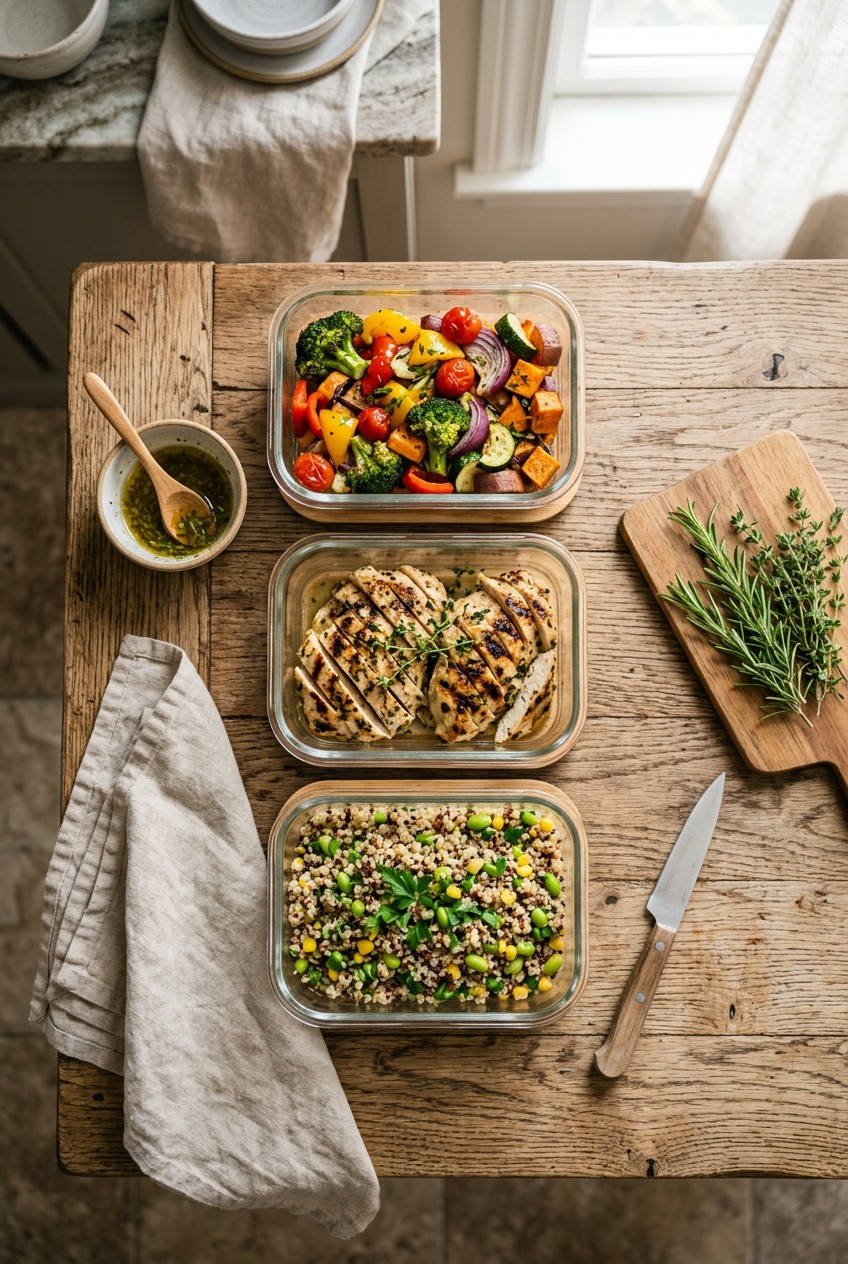
Instead of preparing five identical, boring full meals, cook individual components in bulk. You can mix and match these throughout the week. For example, roast 3 pounds of chicken breast or bake a massive tray of sweet potatoes. This allows for variety, preventing meal fatigue. You can use cooked chicken in salads, wraps, or grain bowls. You might also like: 15 Stunning Easy Lunch Ideas You Need to See
I go to Costco and buy the Kirkland Signature Organic Chicken Breasts ($5.99 per pound). I’ll bake 2 pounds of it on Sunday with just salt, pepper, and 1 teaspoon of garlic powder. Then, on Monday, I’ll chop up 4 oz of that chicken and toss it in a wrap with 1 tablespoon of Caesar dressing. On Tuesday, I’ll shred another 4 oz and throw it into a bowl with 1/2 cup of black beans and salsa. I’m telling you, eating the exact same meal five days in a row is psychological torture. You’ll get so sick of it. If you batch cook plain components, you’re giving your future self choices. Let’s keep the base ingredients simple so you can dress them up differently every single day.
6. Use Your Freezer As A Meal Prep MVP

Your freezer is invaluable for extending the shelf life of prepped foods. Cook double batches of soups, stews, or casseroles and freeze half for later. Cooked grains like rice or quinoa can be frozen in flat zip-top bags and they reheat beautifully. Cooked chicken and ground beef also freeze incredibly well for future meals.
You absolutely must use airtight containers to prevent freezer burn. I buy Ziploc Freezer Bags Quart Size ($5.48 for a 38-count box at Walmart). I’ll put 2 cups of cooked brown rice into a bag, flatten it completely so it stacks neatly, and freeze it. When I’m ready to eat, I microwave it for 90 seconds. Honestly, this changed how I handle my carb sources. I used to throw away so much moldy rice from my fridge. One major warning: if you freeze soup in a glass jar, you must leave at least two inches of space at the top. I filled a mason jar to the brim with lentil soup last winter, shoved it in the freezer, and woke up to a shattered glass explosion. I’m still finding tiny shards of glass under my ice maker. Don’t make that mistake.

Skroam 10 Pack Glass Meal Prep Containers
A dependable everyday pick — Skroam 10 Pack Glass Meal Prep Containers pulls in 56 ratings at 4.5 stars. Not flashy, just solid.
7. Embrace Trending AI Apps (Meal Prep For The Week For Beginners)

AI-powered meal planning apps are completely changing how people prep their food. Apps like FoodiePrep, ChefGPT, and Honeydew Recipe Manager can generate personalized meal plans based on your dietary needs, preferences, and even your current pantry inventory. They often create highly organized grocery lists and can sync directly with delivery services.
I use the Instacart app ($9.99 per month for Instacart+) combined with an AI recipe generator. I just type in that I’ve got 1 pound of ground turkey, 2 cups of rice, and a bag of spinach. The app spits out three different recipe ideas and automatically adds the missing ingredients to my digital grocery cart. It saves me hours of staring blankly into my fridge. I know some people hesitate to use apps for food, but it’s a massive time saver. Some of these apps even track your calories by just snapping a photo of your meal. You can’t beat the convenience. If you’re doing meal prep for the week for beginners, decision fatigue is your biggest enemy. Let an app tell you what to do. I’ve found that removing the mental load of planning is half the battle won.
8. Practice Strategic Shopping and Pantry Management

Plan your meals around ingredients you already own sitting in your cabinets to reduce waste and save money. When grocery shopping, buy staple ingredients like quinoa, brown rice, farro, and dried beans in bulk. It’s almost always more cost-effective. Utilize ready-to-use products to cut down on your active prep time without sacrificing any flavor.
I absolutely refuse to chop raw garlic anymore. I buy the Spice World Minced Garlic ($3.98 for an 8 oz jar at Walmart) and use 1 tablespoon of it in almost every marinade. I also buy pre-chopped onions when I’m having a particularly lazy Sunday. I’m not ashamed to admit that taking shortcuts is how I survive the week. Last month, I tried to be a purist and bought whole heads of garlic and massive bags of unwashed greens. It took me three hours just to prep the vegetables. By the time I actually started cooking the meat, I was exhausted and cranky. You aren’t competing on a cooking show. You’re just trying to feed yourself on a Tuesday afternoon. Buy the pre-minced garlic. Buy the canned beans. It’s totally fine to take the easy route if it keeps you consistent.
9. Don’t Forget About Flavor Variety

Eating the exact same bland meals can quickly lead to meal prep abandonment. Combat this boredom by aggressively rotating your seasonings, marinades, and sauces. Cook your proteins with very simple base seasonings, then add different flavor profiles when you assemble the actual meals. Fresh herbs added just before serving can also significantly boost the flavor.
I keep a massive stash of Trader Joe’s Everything But The Bagel Seasoning ($1.99 for a 2.3 oz bottle). I’ll sprinkle 1 teaspoon of it over hard-boiled eggs or roasted avocado. On Monday, I might use 2 tablespoons of a spicy taco seasoning on my ground beef. On Wednesday, I’ll take that same plain ground beef and mix it with 2 tablespoons of a tangy lemon-herb Greek vinaigrette. You can’t expect to enjoy plain, unsalted chicken and rice. It’s depressing. I tried the whole bro-diet thing a few years ago, eating plain steamed tilapia and unseasoned asparagus. I lasted exactly four days before I drove to a drive-thru and ordered two cheeseburgers. If your prepped food isn’t delicious, you won’t eat it. Let’s make sure we’re using enough salt, acid, and spice to make the food craveable.

KOMUEE 10 Packs 30 oz Glass Meal Prep Containers
KOMUEE 10 Packs 30 oz Glass Meal Prep Containers has been one of the most consistently praised picks in this category. 45 reviewers averaged 4.5/5.
10. Pre-Chop and Pre-Wash Produce

Dedicate a specific block of time to washing and chopping all your fruits and vegetables at once. Store them in airtight containers lined with a dry paper towel. This mise en place approach makes assembling meals incredibly quick and easy during busy weekdays. For example, I’ll chop 2 whole yellow onions and 3 red bell peppers on Sunday afternoon.
I use the OXO Good Grips Salad Spinner ($29.99 at Target) to aggressively dry my washed greens. If you put wet lettuce into a plastic container, it turns into a slimy, brown mess within twenty-four hours. I’ve ruined so many expensive bags of arugula by skipping the salad spinner. It’s an annoying extra step, but it’s mandatory. Once everything is washed and spun completely dry, I put 4 cups of greens into a large glass bowl with a paper towel on top to absorb any lingering moisture. When I’m rushing out the door at 7:30 AM on a Wednesday, I just grab a handful of crisp greens, a scoop of my pre-chopped peppers, and my cooked protein. Preparation is everything.
11. Cool Foods Properly Before Storing

A lesser-known but incredibly crucial tip for food safety and freshness is to allow your hot foods to cool completely before covering and refrigerating them. Covering hot food creates condensation on the inside of the lid. That moisture drips back down into your food, which can lead to rapid bacterial growth and cause your food to spoil much faster.
Spreading cooked items on large sheet pans can help them cool quickly. I use the Nordic Ware Natural Aluminum Commercial Baker’s Half Sheet ($15.99 at Target). I’ll spread 4 cups of freshly cooked brown rice across the cold metal pan. It cools down to room temperature in about fifteen minutes. I learned this lesson after I completely ruined a whole batch of turkey chili. I poured 8 cups of boiling hot chili into a deep plastic tub, slapped the lid on, and shoved it in the fridge. By Wednesday, the entire tub was bubbling and smelled sour. The middle of the chili had stayed warm for hours in the fridge, creating a perfect breeding ground for bacteria. I’m begging you, let your food cool down. It won’t take that long.
Meal prep doesn’t have to be a miserable Sunday chore. I’m so glad I stopped trying to be perfect and just focused on what actually works for my schedule. If you stick to these basics, you’ll save so much time and money. I’d love to hear what recipes you’re trying first! Pin this guide to your favorite recipe board so you can reference these tips next time you’re standing in the grocery aisle feeling overwhelmed. Let’s conquer the week together!
Frequently Asked Questions
How long does prepped food last in the fridge?
Most cooked proteins and roasted vegetables will last three to four days in airtight containers. I’d strongly recommend freezing anything you won’t eat by Thursday to prevent spoiling.
Do I have to eat the same thing every day?
Absolutely not. You can batch cook plain base ingredients like roasted chicken and quinoa, then mix them with different sauces, dressings, and fresh herbs each day to keep things interesting.
What are the best containers for meal prep for the week for beginners?
I highly recommend glass containers like Pyrex or BPA-free plastic options like Rubbermaid Brilliance. Segmented containers are best because they keep your wet and dry ingredients completely separate.
Can I freeze my prepped meals?
Yes, your freezer is incredibly helpful. Soups, stews, and cooked grains like brown rice freeze beautifully in flat zip-top bags. Just make sure you leave room at the top of jars so they don’t shatter.
2 thoughts on “11 Meal Prep For The Week For Beginners for Every Budget”