What’s Inside
- Master the Low Carb Meal Prep Lunch “Pasta” Swap
- Batch Cook Versatile Proteins and Repurpose Leftovers
- Ditch Plastic Containers and Pre-Chill Your Lunch Bag
- Avoid Hidden Carbs and Pack Your Dressings Separately
- Make Cauliflower Rice Your Low Carb Meal Prep Lunch Base
- Stop Overeating Nuts and Bake Cottage Cheese Muffins
- Upgrade Your Sandwiches With Lettuce Wraps and Cauliflower Thins
- Load Up on Fiber-Rich Vegetables to Stay Full
Last Tuesday at Whole Foods, I caught my reflection in the deli glass while holding three different plastic containers of soggy, wilted zucchini noodles. My canvas tote bag was leaking oily Italian dressing down my leg onto my favorite sneakers. That was my absolute rock bottom for packing a low carb lunch. I spent my entire Sunday morning chopping expensive vegetables, only to end up with a watery, unappetizing mess that smelled like a wet dog by Tuesday. You don’t have to eat sad, leaking desk salads just because you’re watching your carbs. I tried doing this the hard way for months before figuring out the formulas that actually hold up in a cold office fridge for four days. Preparing a low carb lunch shouldn’t require a culinary degree or a high tolerance for rubbery, unseasoned chicken breasts. Let’s break down how to pack food that tastes fresh, stays cold, and doesn’t leak all over your car seats. I’m sharing the exact products, measurements, and grocery store prices I use every week to keep my midday meals interesting and stress-free. Trust me on this.
1. Master the Low Carb Meal Prep Lunch “Pasta” Swap

Instead of traditional wheat pasta, I strictly use Palmini Hearts of Palm noodles or Carbe Diem pasta. I tried zucchini noodles for a year, but they release too much water and turn your sauce into soup by Wednesday. Palmini noodles cost about $3.99 a can at Sprouts. You get exactly 4g of carbohydrates per 6oz serving. The texture is slightly crunchy, which is perfect for cold pasta salads. You must rinse them well, though. If you don’t rinse them under cold running water for a full sixty seconds, they smell like the tin can. I learned that the hard way when a coworker asked what smelled like metal in the breakroom. I’ve tried every brand, and these two are the only ones worth your money. Don’t bother with generic store brands. They turn to mush.
For a warm dish, Carbe Diem pasta is my go-to. It runs $6.99 a package at Target and has just 1-2g of net carbs per serving. It holds up incredibly well to being microwaved. I boil a batch on Sunday, toss it with 1 tablespoon of olive oil so it doesn’t stick, and portion it out. I pair this with a simple no-cook protein when I’m feeling lazy. Canned tuna is convenient. I buy the Wild Planet tuna packed in olive oil for $2.49 a can. One can gives you 20g of protein. I mix one can of tuna with 2 tablespoons of avocado mayonnaise and 1/4 cup of diced celery. I scoop this over the cold Palmini noodles. If you prefer seafood, pre-cooked shrimp is another excellent option. You get 17g of protein in just a 3 oz serving. I buy a frozen bag of cooked shrimp from Walmart for $14.98, thaw a handful overnight, and toss them into my Carbe Diem pasta with a heavy garlic parmesan sauce.
2. Batch Cook Versatile Proteins and Repurpose Leftovers

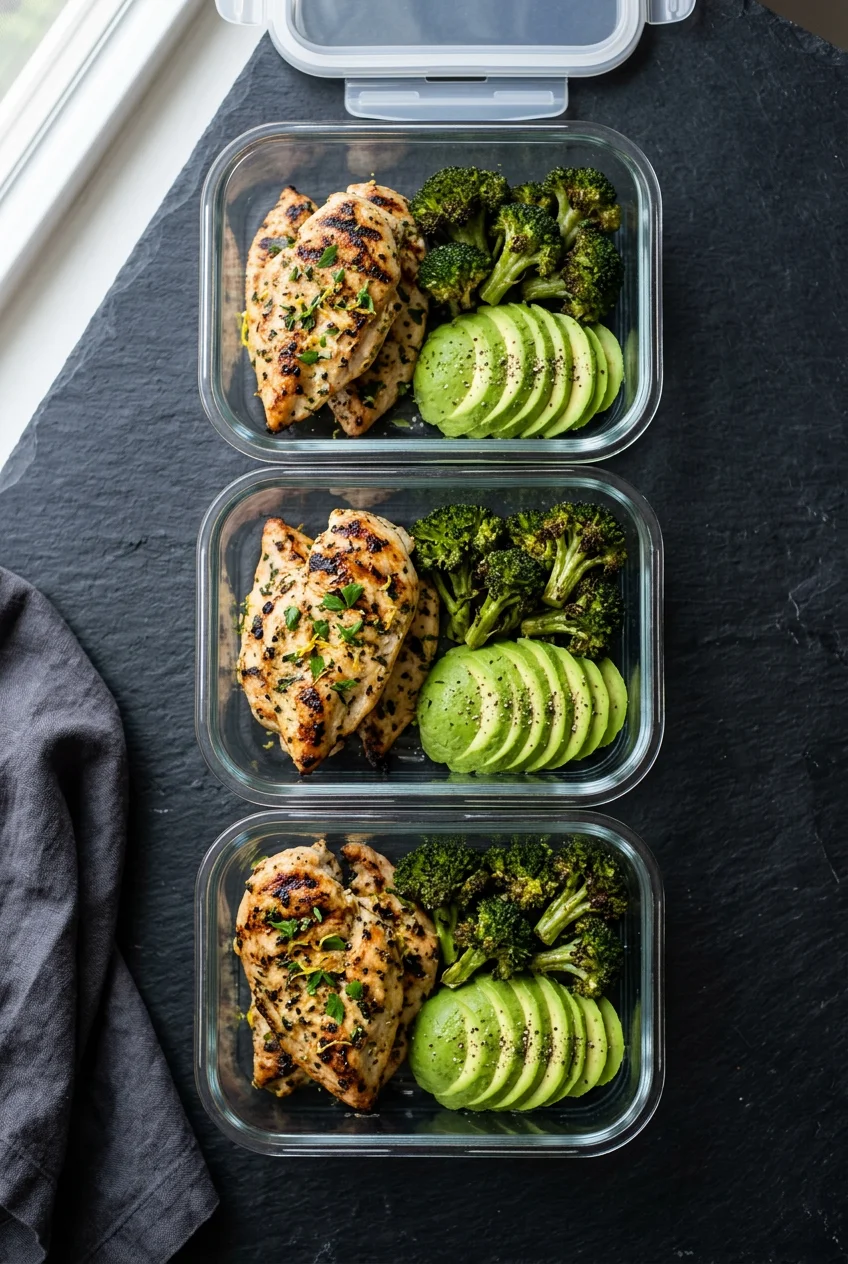
Cooking a fresh protein every night is a quick way to burn out. I tried doing that last year and ended up eating plain deli turkey over the sink by Thursday. Instead, I dedicate one hour on Sunday afternoon to cook 2-3 lbs of a versatile protein. I usually buy a 2 lb family pack of chicken breasts from Kroger for about $11.99. I coat the chicken heavily in McCormick’s Chipotle seasoning, which runs $2.49 a bottle. I’ve found that keeping the seasoning heavy is the secret to masking that leftover fridge taste. If you under-season your meat on Sunday, you’ll be miserable by Wednesday. I grill the chicken for 15-20 minutes until it hits 165 degrees. Once it cools, I portion it into 4-5 oz servings. I leave the breasts whole in the container. Pre-slicing your chicken on Sunday means it’ll be dried out by Tuesday.
You can also save massive amounts of time by intentionally cooking larger dinner portions. I always plan to use my dinner leftovers for lunch the next day. If I make a seared salmon with a creamy dill sauce for dinner on Tuesday, I cook an extra 4-5 oz salmon fillet. I pack that extra fillet with 1 cup of roasted asparagus directly into a glass container while I’m cleaning up dinner. This method eliminates my lunch prep for Wednesday. The heavy cream sauce on the salmon keeps the fish moist when you reheat it in the office microwave. Just be aware of your office rules regarding microwaving fish. I’ve definitely received some glaring looks from my manager after heating up salmon at noon. I always store my leftover seafood in the back of the fridge where it’s coldest to maintain freshness.
3. Ditch Plastic Containers and Pre-Chill Your Lunch Bag

I used cheap plastic containers for two straight years. They permanently smelled like old onions and eventually turned a cloudy orange from storing hot sauce. It’s visually disgusting. You need to invest in high-quality glass meal prep containers. I picked up a Glasslock 5-piece set at Costco for $34.99. You can find these in the home goods aisle near the baking supplies. I’ve bought three sets over the last five years because I refuse to use anything else. Glass is non-toxic and won’t leach microplastics into your food when you heat it up. It resists stains and odors completely. You can safely put glass containers in the oven, microwave, freezer, and dishwasher. The heavy glass feels substantial and keeps your food colder for longer. The only negative is the weight. Carrying three glass containers in a tote bag on the subway gets heavy. I also dropped one on my kitchen tile last month and it shattered. But the freshness makes the weight worth it.
To keep your lunches safe, you must properly chill your bag. I once packed a mayonnaise-heavy chicken Caesar salad in a room-temperature bag with one tiny ice pack. By 1 PM, the lettuce was warm and the chicken smelled questionable. I had to throw it out and buy a sad $15 salad downstairs. Now, I pre-chill my insulated lunch bag. I place the empty bag in the freezer for 30 minutes before I pack it. I use at least two solid reusable gel ice packs. I place one flat pack at the bottom, insert my glass container, and place the second ice pack directly on top of the glass lid. This creates a cold sandwich effect. It keeps things like tuna salad safely chilled below 40 degrees until you’re ready to eat. You might also like: 10 Dinner Meal Prep for Every Budget

buluker 4 Pack Bento Lunch Box Set 3 Compartment Food
Honestly, buluker 4 Pack Bento Lunch Box Set 3 Compartment Food Storage Containe surprised me — sturdier than it looks in the photos, and over 23 buyers gave it 4.5 stars.
4. Avoid Hidden Carbs and Pack Your Dressings Separately

A common mistake is ignoring the sugar content in seemingly healthy condiments. I certainly did this. I bought a “fat-free” raspberry vinaigrette thinking I was making a smart choice, only to read the label and realize it had 12g of sugar per serving. Many brands replace the removed fat with concentrated sugar to make it palatable. Skip the fat-free stuff. It tastes like wet cardboard and will ruin your carb limits. Even sugar-free barbecue sauces are risky. Many contain maltodextrin, a thickener that can spike your blood sugar just as badly as regular sugar. I’ve stood in the condiment aisle for twenty minutes reading labels, and it’s shocking how much sugar is hiding in plain sight. Protect your carb count by doing your research. You might also like: 10 Healthy Lunch Meal Prep Worth Trying
I exclusively buy Primal Kitchen dressings now. Their low carb ranch costs $6.49 a bottle at Whole Foods. The avocado oil base means it’s high in healthy fats but contains zero net carbs. It has a thick, rich texture that coats spinach leaves perfectly. If I don’t want to spend six dollars on dressing, I make a quick homemade lemon-herb vinaigrette. I shake up 2 tablespoons of extra virgin olive oil, 1 tablespoon of fresh lemon juice, and 1 teaspoon of dried oregano in a small jar. You might also like: 11 Vegan Meal Prep That Actually Work
Regardless of what dressing you choose, you can’t pour it over your salad on Sunday. Storing your greens in dressing guarantees a soggy mess by Monday. I buy tiny 2 oz stainless steel condiment containers with silicone lids from Target for $8.99. I portion my Primal Kitchen ranch into these small cups and snap them shut. I throw the stainless steel cups right into the dishwasher when I get home. I keep the dressing separate from my lettuce until the exact moment I’m sitting at my desk ready to eat.
5. Make Cauliflower Rice Your Low Carb Meal Prep Lunch Base

Cauliflower rice gets a bad reputation because most people microwave a frozen bag and try to eat it plain. I did that once, and it smelled like old gym socks and tasted like hot water. You have to treat cauliflower rice as a flavor sponge, not a standalone side dish. I buy the Trader Joe’s frozen organic riced cauliflower for $2.99 a bag. A full 1-cup serving contains only 3-4g of net carbs, making it the ultimate low carb lunch foundation. I like to prep a rich coconut curry over this base. I take 4 oz of my batch-cooked chipotle chicken, place it over 1.5 cups of the frozen cauliflower rice, and pour over a sauce made from 1/4 cup of full-fat canned coconut milk mixed with a teaspoon of yellow curry powder. I pack the cauliflower rice completely frozen. It thaws slowly in the office fridge and steams perfectly when I microwave the whole bowl for two minutes. I’ve converted three coworkers to this method. They couldn’t believe it was actually cauliflower because the coconut milk hides the vegetable flavor.
As personalized nutrition and gut health trends dominate 2026, I suggest adding fermented foods to your prep. I regularly integrate low carb fermented vegetables into my bowls. I add 1/4 cup of raw kimchi or unpasteurized sauerkraut to my lunches. A jar of Cleveland Kitchen classic kimchi costs $5.99 at Target. It provides incredible tanginess, crunch, and natural probiotics. You must read the labels on kimchi, though. Many commercial brands add cane sugar or pear juice to speed up fermentation, which adds unnecessary carbs. I look for brands with zero added sugars. The spicy, acidic bite of the kimchi cuts right through the richness of the coconut milk curry.
6. Stop Overeating Nuts and Bake Cottage Cheese Muffins

While nuts and cheese are technically low in carbs, overeating them is the most common mistake I see. It’s easy to consume 800 calories of almonds while staring at a computer screen. I did this constantly when I first changed my eating habits. I’d bring an entire bag of macadamia nuts to my desk to snack on. A 100-gram serving of macadamia nuts contains over 700 calories. You won’t see any physical progress if you’re snacking like that, regardless of how few carbs you eat. Now, I strictly portion my snacks on Sunday. I buy Blue Diamond lightly salted almonds from Walmart for $6.98 a bag. I use a measuring cup to portion exactly 1/4 cup of almonds, which is roughly 170 calories, into small silicone bags. I also pack one Frigo string cheese stick. Don’t eyeball your nut portions. Your eyes will lie to you when you’re hungry. I’ve weighed my snacks on a digital scale just to prove how small a true serving size is. It’s an eye-opening experience you need to try once.
If you need a savory, high-protein snack, use cottage cheese to bake low carb muffins. This is a brilliant alternative to traditional almond flour muffins, which are often dry. I buy Good Culture whole milk cottage cheese for $4.99 a tub at Sprouts. I blend 1 cup of the cottage cheese with 4 eggs, 1/4 cup of chopped prosciutto, and 2 tablespoons of fresh chives. I pour this batter into a silicone muffin tin and bake at 375 degrees for 25 minutes. The cottage cheese melts into the egg, creating a light, satisfying texture with minimal carbs. I grab two of these savory muffins for a quick grab-and-go component when I’m rushing out the door.

Bento Box Adult Lunch Box – 4 Pack, 5
A dependable everyday pick — Bento Box Adult Lunch Box – 4 Pack pulls in 24 ratings at 4.5 stars. Not flashy, just solid.
7. Upgrade Your Sandwiches With Lettuce Wraps and Cauliflower Thins

Sometimes you just want the sensation of holding a sandwich. Eating everything out of a bowl with a fork gets monotonous. Instead of wheat bread, I use large, crisp lettuce leaves for quick wraps. Butter lettuce or romaine hearts work best. A simple, satisfying option is a roast beef and provolone lettuce wrap. I lay down two large romaine leaves, add 3-4 slices of deli roast beef, 1/4 cup of sliced red bell pepper for crunch, and one slice of sharp provolone. This wrap provides around 3.3g of net carbs per serving. The negative side is their structural integrity. They tear easily, and the juices can make your hands sticky while you’re typing.
When I’m tired of lettuce falling apart, I switch to Outer Aisle Cauliflower Sandwich Thins. They cost $6.99 for a pack of six at Whole Foods. They offer a sturdy, bread-like base with only 2-3g of net carbs per thin. They actually hold together when you bite into them, which is rare for vegetable-based alternatives. I use them for turkey taco wraps or a classic club sandwich. I’ve packed these thins for road trips and long flights. They hold up beautifully in a cooler and don’t get soggy like wheat bread. The only tradeoff is they have a distinct, slightly sulfuric cauliflower smell right out of the package. I fix this by popping them in the office toaster oven for two minutes before assembling my sandwich. The dry heat crisps the edges and neutralizes the odor. It provides that satisfying, chewy bread texture you miss when you’re eating salads every day. No exaggeration.
8. Load Up on Fiber-Rich Vegetables to Stay Full

To ensure proper digestion and satiety, you must prioritize fiber-rich, non-starchy vegetables. Eating just meat and cheese will leave you feeling sluggish and hungry two hours later. I aim to pack at least 2-3 cups of raw or roasted vegetables into every lunch. My standard rotation includes broccoli florets, fresh baby spinach, red bell peppers, and sliced zucchini. These vegetables are nutrient-dense and very low in carbs, helping you stay full without adding excess calories. I buy a massive bag of fresh broccoli florets from Costco for $5.99. I’ve noticed a massive difference in my afternoon energy levels when I pack three cups of vegetables versus just meat and cheese. The fiber is non-negotiable.
The trick to prepping vegetables is managing their moisture. I used to steam my broccoli on Sunday, pack it, and microwave it on Wednesday. It turned into a gray, sulfurous mush. Now, I strictly roast my vegetables. I toss 3 cups of broccoli and 2 cups of chopped zucchini with 2 tablespoons of olive oil, salt, and black pepper. I roast them on a baking sheet at 400 degrees for 20 minutes until the edges are charred and crispy. The roasting process draws out excess water. When you reheat roasted vegetables, they soften slightly but retain a pleasant bite instead of turning to mush. I pack these right next to my chipotle chicken. If I’m using raw spinach as a base, I line the bottom of my glass container with a paper towel before adding the leaves. The paper towel absorbs condensation, keeping the spinach crisp until Thursday.
Packing a lunch doesn’t have to be a miserable, watery experience. I spent years eating sad, unseasoned chicken out of stained plastic tubs before I dialed in these methods. Upgrading your containers, separating your dressings, and utilizing smart swaps like Carbe Diem pasta or Outer Aisle thins will change how you view your midday meal. You won’t feel deprived when you’re eating a rich coconut curry over cauliflower rice or a massive roast beef lettuce wrap. I highly recommend starting with just one batch-cooked protein this Sunday. Grill two pounds of that chipotle chicken and see how much easier your mornings become. If you found these prep strategies helpful, I’d love it if you pinned this article to your favorite meal prep board on Pinterest or saved it to your bookmarks for your next Sunday grocery run. Let’s make your office lunches something you actually look forward to eating.
Frequently Asked Questions
How long does a low carb meal prep lunch last in the fridge?
Most low carb proteins like grilled chicken or ground turkey will safely last 3 to 4 days in airtight glass containers. I recommend batch cooking on Sunday to cover your lunches through Thursday, ensuring maximum freshness.
What’s the best way to keep a low carb meal prep lunch cold at work?
Pre-chill a high-quality insulated bag in the freezer for 30 minutes before packing. Use two solid gel ice packs, placing one underneath your glass container and one directly on top to create a tight cold sandwich effect.
Can I freeze a low carb meal prep lunch?
It depends on the ingredients. Cooked meats and cauliflower rice freeze exceptionally well. However, raw vegetables like spinach, lettuce wraps, and dairy-based dressings will turn to mush or separate if frozen. Pack those fresh.
How do I prevent my low carb meal prep lunch from getting soggy?
Always pack your dressings and sauces in separate, small condiment containers. Additionally, roast your vegetables instead of steaming them to draw out excess moisture, and line your raw greens with a dry paper towel.
