What’s Inside
- Apply the 50/25/25 Rule for Health Meal Prep Ideas
- Batch Cook Anchor Proteins Instead of Full Meals
- Pre-Chop Produce Immediately After Shopping
- Store Sauces Separately to Save Your Health Meal Prep Ideas
- Invest in Glass Containers That Actually Seal
- The Cook Once, Eat Twice Dinner Strategy
- Rotate Global Flavors to Prevent Boredom
- Prep Grab-and-Go Breakfasts for Busy Mornings
- Use Smart Tools and Start Small
I sat in my cubicle last Tuesday, staring at a plastic container of brown, slimy spinach and a rubbery chicken breast. That sad lunch was the exact moment I realized I’ve been doing this wrong. I needed better health meal prep ideas that wouldn’t leave me hungry and miserable by 2 PM. I tried the whole bulk cooking thing wrong for months before figuring it out. My chicken was always dry. My salads always wilted. I’d eat my prepped food on Monday, but by Wednesday, I was ordering a $15 sandwich from the deli downstairs. You can’t just throw cooked food in a plastic tub and expect it to taste good four days later. It requires a specific system. Now, I focus on methods that actually keep the food tasting fresh on Thursday. I’ll walk you through the exact strategies I use to make lunches I actually want to eat. I’ve tested these methods repeatedly, failing plenty of times along the way. If your current routine leaves you exhausted on Sunday and bored by Tuesday, you’re missing a few mechanical steps in your process.
1. Apply the 50/25/25 Rule for Health Meal Prep Ideas

Dietitians say you should structure your meals with 50% fruits and vegetables, 25% lean protein, and 25% grains or starchy vegetables. I used to pack containers filled with 80% pasta and a tiny sprinkle of chicken. I’d eat it at noon and feel completely exhausted by 2 PM. The carbohydrate crash was brutal. Now, a balanced lunch for me consists of exactly 2 cups of mixed greens and chopped red bell peppers, a 4-ounce grilled chicken breast, and 1/2 cup cooked farro. The farro has a chewy, dense texture that holds up beautifully in the fridge for five days, unlike white rice which turns hard and chalky. You also need to incorporate healthy fats for satiety and nutrient absorption. I used to skip fats completely. Learned that the hard way. Skip the fat-free stuff. It tastes like wet cardboard. My fat-free salads left me starving an hour later. Now I measure exactly 1 tablespoon of California Olive Ranch Extra Virgin Olive Oil for roasting my vegetables. I buy the 16.9 oz bottle for $11.99 at Whole Foods Market. The spout pours a bit too fast, which is annoying, but the peppery, grassy taste makes plain spinach edible. I also add 1/4 of an avocado or a small 1-ounce handful of Blue Diamond Growers almonds to my lunch bag. The almonds cost $3.49 for a 6 oz can, and the crunch breaks up the monotony of soft cooked vegetables.
2. Batch Cook Anchor Proteins Instead of Full Meals

Cooking full meals means you’re stuck eating the exact same flavor profile for five days. I did this in 2022. By Thursday, the thought of eating another identical chicken and broccoli bowl made my stomach turn. Instead of cooking entire dishes, focus on preparing individual components. You batch cook a large quantity of a single, lightly seasoned protein that adapts throughout the week. I cook 1.5 to 2 pounds of Perdue Farms boneless, skinless chicken breasts. I buy them for $12.99 at Target. I roast them on a hot sheet pan at 400 degrees for 22 minutes with just 1 teaspoon of kosher salt and 1/2 teaspoon of black pepper. The chicken looks pale and boring in the glass container, but that’s the point. On Monday, I shred 4 oz of it and toss it with 2 tablespoons of barbecue sauce. On Tuesday, I slice it cold over my salad. If I want a plant-based option, I buy a 14-ounce block of Trader Joe’s Organic Firm Tofu for $1.99. I wrap the tofu in three layers of paper towels and put a heavy cast iron skillet on top for 20 minutes to press out the water. Then I dice it into 1/2-inch cubes and bake it until the edges are crispy. I also batch cook 2 cups of dry Bob’s Red Mill Organic Quinoa. It costs $6.49 for a 13 oz bag. The quinoa takes 15 minutes to simmer and fills the kitchen with a warm, earthy smell. Storing these components separately gives you maximum flexibility to combine ingredients differently every single day. You might also like: 20 Gorgeous Meal Planning Ideas for Any Style
3. Pre-Chop Produce Immediately After Shopping

Last Friday, I threw out three rotting zucchini because I shoved them in the bottom crisper drawer and forgot about them. The crisper drawer is where vegetables go to die. To maximize freshness and actually eat what you buy, wash and chop all your vegetables the minute you walk in the door. I stand at my kitchen island as soon as I get home from Walmart. I take 2 heads of broccoli, 3 bell peppers, and 1 lb of whole carrots. I wash them in a bowl with 1 part white vinegar and 3 parts cold water. I chop the peppers into thin strips and slice the carrots into 1/2-inch sticks. I put them in clear acrylic bins right at eye level on the top shelf of the refrigerator. Seeing the bright orange and green colors immediately when I open the door makes healthy snacking effortless. You also need to embrace frozen fruits and vegetables as pantry staples. Fresh produce goes bad quickly. I keep a stock of 1 lb bags of Cascadian Farm Organic Mixed Berries in the freezer for smoothies. They cost $4.99 at Sprouts. I also keep 10.8 oz bags of Birds Eye Steamfresh Broccoli Florets on hand. They cost $3.29 per bag. The frozen broccoli gets a bit mushy and waterlogged if you microwave it for the full 5 minutes, so I stop the microwave at 4 minutes. Having these frozen backups ensures you aren’t forced to order takeout when your fresh spinach wilts on Thursday morning. You might also like: 20 Inspiring Meal Prep Ideas for Any Style

Food Scale, 11lb Digital Kitchen Scale with 6 Units LCD
If you want something that just works, Food Scale is a safe bet (21 reviews, 4.5 stars).
4. Store Sauces Separately to Save Your Health Meal Prep Ideas

I ruined so many lunches by pouring dressing over my greens on Sunday afternoon. By Wednesday, the lettuce was a translucent, slimy mess that smelled faintly of sour vinegar. It’s completely inedible. Trust me. You have to keep the wet ingredients away from the dry ones. A common meal prep mistake is combining components too early in the week. Always store dressings, sauces, or condiments in small, separate containers until the exact moment you sit down to eat. I bought a 4-pack of Rubbermaid Brilliance mini containers in October after my old generic plastic ones leaked olive oil all over the inside of my canvas tote bag. The Rubbermaid containers cost $12.99 at Walmart. The plastic latches snap down tightly with a loud click. They’re a bit tough to pry open if your hands are wet or greasy, but they absolutely won’t leak in your bag. I make a homemade lemon-tahini dressing on Sundays. I whisk 2 tablespoons of tahini, 1 tablespoon of lemon juice, 1 minced garlic clove, and a pinch of salt. The tahini starts out thick and cement-like, but it smooths out when you whisk in 1 tablespoon of warm water. I portion exactly 2 tablespoons of the dressing into a mini container and snap it shut. Pouring the dressing fresh on Wednesday at 12:30 PM keeps the chopped romaine crisp and crunchy, exactly how it tasted on Sunday.
5. Invest in Glass Containers That Actually Seal

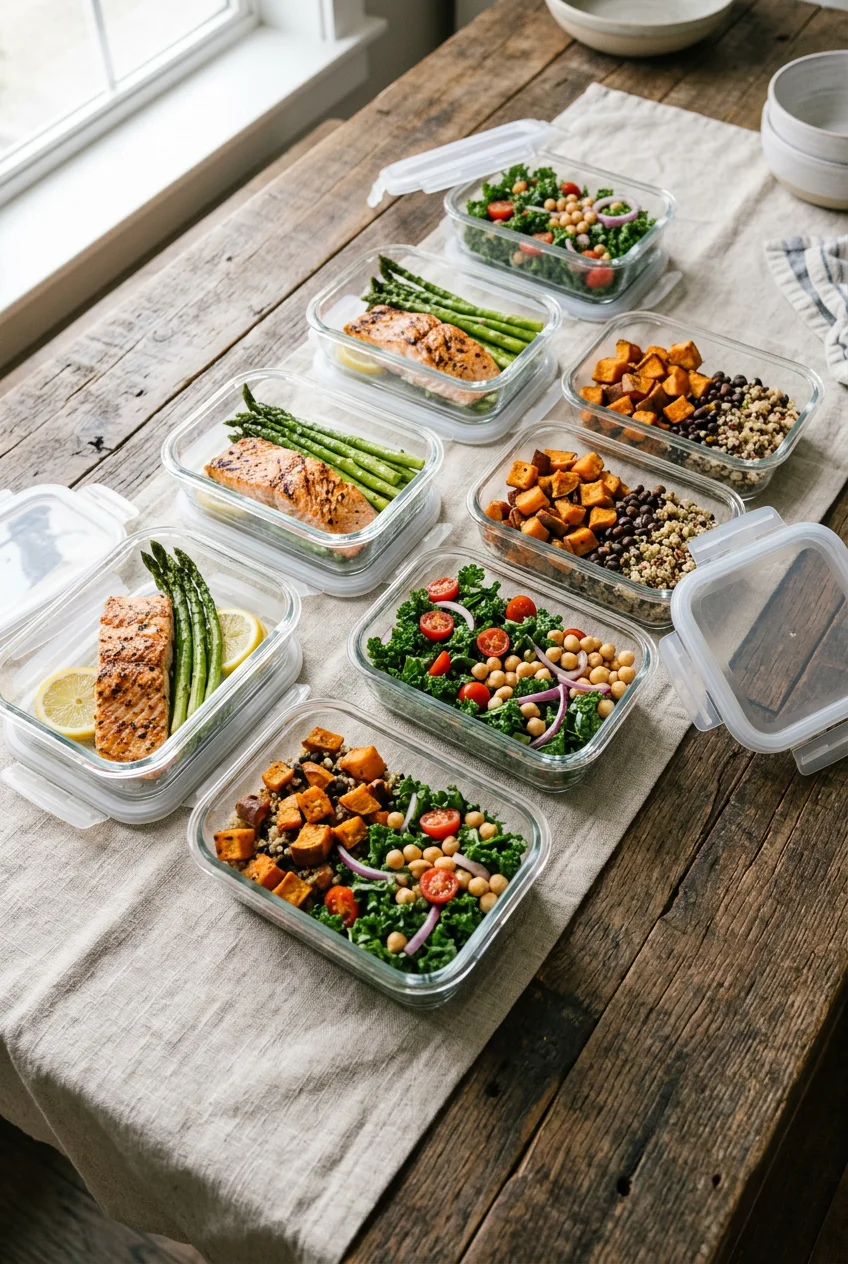
I used cheap plastic takeout containers for two straight years. They stained bright orange from leftover tomato sauce and warped in the microwave until the lids wouldn’t snap on anymore. My fridge looked like a chaotic tower of mismatched plastic that constantly tipped over. You need to ditch flimsy plastic and opt for durable, airtight, microwave-safe glass containers. I finally bought a 10-piece Pyrex glass storage set at Costco for $29.99. The glass is incredibly thick and heavy. Carrying three of these rectangular containers in a backpack is a physical workout, and they clink together loudly on the train commute. But the glass doesn’t hold onto the smell of yesterday’s roasted garlic chicken. The lids have a tight blue silicone rim that seals the air out, keeping cut fruit fresh for two extra days. When I pack my lunches, I put 1/2 cup of rice and 4 oz of protein in the 3-cup rectangular Pyrex dishes. They stack perfectly in the fridge without sliding around. Another good option is Anchor Hocking, which makes similar tempered glass sets. I wash the glass bases on the bottom rack of the dishwasher, but I always hand wash the plastic lids in the sink with warm soapy water. The heat from the dishwasher drying cycle will eventually warp the plastic edges, and once the seal is compromised, air gets in and dries out your perfectly cooked farro.
6. The Cook Once, Eat Twice Dinner Strategy

Making dinner at 6 PM and then cooking a completely separate meal for tomorrow’s lunch takes way too much time. I don’t have the energy for two cooking sessions in one night. A simple tip is to double your dinner recipes. You cook once and eat twice. If I’m roasting sheet-pan chicken fajitas on a Tuesday night, I slice two red onions and four bell peppers instead of half that amount. I toss the vegetables with 1 tablespoon of avocado oil and roast them at 425 degrees for 20 minutes. I use two baking sheets instead of one so the vegetables roast instead of steaming in their own juices. I eat one portion for dinner and immediately scoop the second portion into a glass container for Wednesday’s lunch. If I’m feeling lazy, I rely on pantry staples. I heat up two cans of Amy’s Kitchen Organic Lentil Soup instead of one. The soup costs $3.49 for a 14.5 oz can. The texture’s very thick and heavily salted, so I usually squeeze half a fresh lemon into the pot to brighten the flavor. I pour half into a bowl for dinner and the rest into a thermos for the next day. For those following a low-carb approach, you make strategic substitutions during this dinner prep. I replace regular white rice with Green Giant Riced Cauliflower. I buy the 10 oz frozen bag for $2.99 at Target. The cauliflower smells a bit sulfurous when you first open the microwave bag, but it absorbs fajita seasoning perfectly and bulks up the meal. You might also like: 11 Meal Prep Lunch Ideas That Actually Work

Etekcity Food Kitchen Scale
Etekcity Food Kitchen Scale has been one of the most consistently praised picks in this category. 1,736 reviewers averaged 4.5/5.
7. Rotate Global Flavors to Prevent Boredom

Eating plain grilled chicken and steamed broccoli for five days straight is a guaranteed recipe for ordering a $25 pizza by Thursday night. I did this constantly in 2023. I thought eating healthy meant eating bland, unseasoned food. It doesn’t work. A common mistake is failing to rotate your flavor profiles. You combat this boredom by changing your spices weekly. One week, I create a Mediterranean theme. I coat my 1.5 lbs of raw chicken in 1 tablespoon of McCormick Gourmet Mediterranean Oregano, 1 teaspoon of ground cumin, and 1 tablespoon of olive oil. The McCormick oregano costs $5.49 for a 0.65 oz jar. It has a sharp, earthy bite that smells incredible when it hits a hot skillet. The next week, I switch to an Asian-inspired theme. I marinate the chicken in a gallon plastic bag with 3 tablespoons of Kikkoman Soy Sauce and 1 tablespoon of grated fresh ginger. I buy the 10 oz bottle of Kikkoman for $3.29 at Trader Joe’s. I squeeze all the air out of the bag so the marinade presses into the meat. The soy sauce is high in sodium, which makes me a bit thirsty later in the afternoon, but the salty, umami flavor keeps me from craving greasy takeout. Changing the spices takes exactly two extra minutes on Sunday, but it drastically changes how the food tastes on Wednesday. You introduce new nutrients and keep your palate engaged without having to learn entirely new recipes.
8. Prep Grab-and-Go Breakfasts for Busy Mornings

Mornings in my house are loud and chaotic. If I don’t have breakfast ready to grab, I end up eating a stale granola bar in the car while sitting in traffic. You eliminate morning decision fatigue by preparing breakfasts in advance. On Sunday afternoons, I line up five glass mason jars on the kitchen counter. Each jar gets exactly 1/2 cup of Quaker Oats Old Fashioned Oats. I buy the large 42 oz canister for $5.29 at Walmart. I pour in 1 cup of unsweetened almond milk, drop in 1/4 cup of chopped strawberries, and stir in 1 tablespoon of chia seeds per serving. You have to stir the chia seeds vigorously, or they clump together into a hard gel at the bottom of the jar. The chia seeds expand overnight and make the texture thick and pudding-like by Monday morning. I’ve used this exact ratio for two years now. The oats get slightly mushier by Friday, so I usually microwave the Friday jar for 60 seconds to eat it warm. If I want a savory option, I bake a dozen egg muffins. I whisk 10 eggs with 1 cup of chopped spinach and 1/2 cup of crumbled feta cheese. I pour the mixture into a greased silicone muffin tin and bake at 350 degrees for 18 minutes. The eggs puff up huge in the oven and then deflate when cooling. They store perfectly in a sealed container for up to 5 days, giving you a fast, protein-heavy start to the day.
9. Use Smart Tools and Start Small

The biggest mistake you can make as a beginner is trying to prep 21 meals on your very first Sunday. You will spend six hours in the kitchen, create a massive mountain of dirty pots and pans, and hate the entire process. It took me years to figure out that starting small is the only way. A critical opinion is to start gradually. Instead of attempting a full week’s worth of food, begin by prepping just one specific meal. I started by making lunches for just three days. That builds confidence and consistency, making the routine a sustainable habit instead of a weekend chore. You also use technology to make the planning phase easier. I started using the Portions Master AI app in January. The app costs $8.99 a month, which feels annoying for a digital subscription, but it generates personalized weekly meal plans based on my exact caloric needs and dietary preferences. It even creates a smart grocery list to minimize food waste. The meal prep scene also emphasizes sustainability and fresh ingredients. The app often directs me to buy fresh, locally sourced produce from Whole Foods Market instead of generic bagged lettuce. The local spinach leaves are visibly thicker and darker green. They don’t turn to slime as fast in the fridge, which means my salads actually survive until Thursday. Start small, use the tools available to you, and focus on building a system that fits your actual schedule.
I hope these strategies help you avoid the soggy salads and dry chicken I put up with for way too long. Building a sustainable routine takes time, but measuring your ingredients and storing them correctly changes everything. Save this post to your Pinterest meal prep board for next Sunday, and let me know which protein you decide to batch cook first.

Bento Box Adult Lunch Box – 4 Pack, 5
Bento Box Adult Lunch Box – 4 Pack punches above its price — 24 buyers rated it 4.5 stars. I would buy it again.
Frequently Asked Questions
How long do health meal prep ideas usually last in the fridge?
Most cooked proteins and grains last 3 to 4 days in airtight glass containers. If you prep on Sunday, plan to eat those meals by Thursday. For Friday, rely on frozen backups or a quick cook-once-eat-twice dinner leftover.
What is the best container for meal prep?
Heavy-duty, tempered glass containers like Pyrex or Anchor Hocking are ideal. They don’t absorb food odors or stain like cheap plastic, and they are microwave-safe. Look for lids with silicone seals to lock out air.
How do I keep my prepped salads from getting soggy?
Always store your wet ingredients away from dry ones. Keep dressings, sauces, and wet components like sliced tomatoes in separate, small containers. Pour the dressing over the greens right before you eat.
What is the 50/25/25 rule in meal prepping?
It is a visual plating method where 50% of your container is filled with vegetables or fruits, 25% with lean protein like chicken or tofu, and 25% with complex carbohydrates like quinoa or farro.
