What’s Inside
- Pack 30 Grams of Protein into Your Fat Loss Meal Prep
- Use the Half-Plate Rule for Family Fat Loss Meal Prep
- Switch to Component Prepping Instead of Full Meals
- Ditch the Plastic for Portion-Controlled Glass
- Swap Out High-Calorie Sauces for Better Alternatives
- Pre-Portion Your Snacks to Avoid the Afternoon Crash
- Rely on Frozen Produce to Save Time and Money
- Hack Your Grocery Bill with Budget-Friendly Proteins
- Measure Your Healthy Fats Down to the Teaspoon
- Let AI Handle the Heavy Lifting of Meal Planning
- Schedule a Daily Treat to Prevent Binge Eating
- Start With Just Three Days of Prep to Avoid Burnout
Last October, I stood in my kitchen at 9 PM on a Sunday, staring at twelve identical, soggy chicken and rice bowls I’d just spent four hours making. I threw three of them directly into the trash by Wednesday because the chicken smelled like wet dog. That was my rock bottom with fat loss meal prep. I tried the strict bodybuilder approach for months before figuring out that my husband and kids absolutely won’t eat dry chicken breast. If you want a routine that actually survives contact with a picky family, you’ve got to rethink the entire process. Let’s break down exactly what works.
1. Pack 30 Grams of Protein into Your Fat Loss Meal Prep

Most people get this wrong right out of the gate. I used to eyeball my protein portions until I realized I was barely getting 15 grams per meal. You need 20 to 35 grams of lean protein per meal to maximize satiety. Your body actually burns more calories just digesting protein, which helps preserve lean muscle mass when you’re in a calorie deficit. Last Tuesday at Whole Foods, I bought a 1.5-pound pack of their 365 Everyday Value boneless skinless chicken breasts for $7.99. I weigh out exactly 4 ounces of grilled chicken per container, which hits that 35-gram sweet spot. If we do a plant-based day, I use exactly 1 cup of cooked green lentils, yielding about 18 grams of protein. I tried making lentil pasta for my kids last month, but the texture was too grainy and they refused it. Now, I stick to mixing regular lentils into a rich tomato sauce. My husband didn’t even notice the switch. Hitting this protein target keeps everyone full so they aren’t digging through the pantry for chips at 8 PM. It’s the foundation of any plan that actually works. Prepping this way ensures you aren’t guessing your macros. You know exactly what you’re eating. Trust me on this.
2. Use the Half-Plate Rule for Family Fat Loss Meal Prep

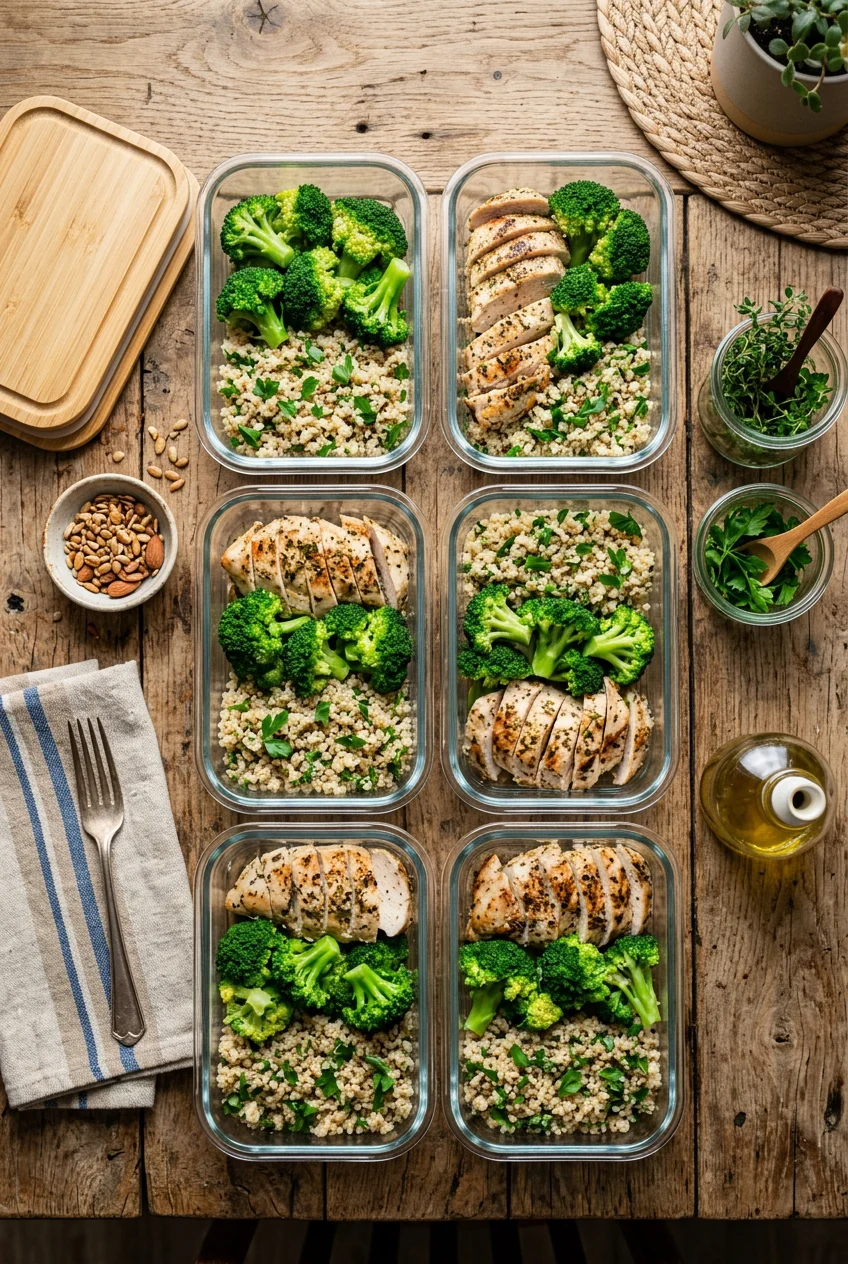
Volume eating is the only way I survive a calorie deficit without feeling completely miserable. The dietitian-recommended half-plate rule simply means filling at least half of your prep containers with non-starchy vegetables. I used to pack my dishes with 70 percent rice and 30 percent meat, leaving zero room for greens. I was constantly hungry two hours later. Now, I buy the 5.5-pound bag of Kirkland Signature Normandy-Style Vegetable Blend at Costco for $10.99. It breaks down to about $2.40 per 12-ounce portion. I roast 4 cups of these frozen vegetables at a time on a large baking sheet. Zucchini, broccoli, and yellow squash add massive physical volume to your stomach for almost zero calories. A negative I learned the hard way is that you can’t roast frozen zucchini at 350 degrees. It turns into absolute mush that my kids will spit into napkins. You have to roast it at 425 degrees so the water evaporates quickly. Filling half the container with these fibrous vegetables ensures you get full on fewer calories, while the kids get a colorful mix they actually tolerate. It’s a simple visual cue that prevents overeating carbohydrates.
3. Switch to Component Prepping Instead of Full Meals

The traditional method of making five identical meals on Sunday is a fast track to burnout. By Wednesday, the food tastes stale and you’re craving takeout. I switched to component prepping last year and it completely fixed my family’s dinner complaints. Instead of building complete meals, I cook bulk ingredients buffet-style. On Sunday afternoon, I bake four 6-ounce salmon fillets and boil a dozen eggs. Then I cook 2 cups of Target Good & Gather organic quinoa (which costs $3.29 for a 16-ounce bag) and roast three large sweet potatoes diced into 1-inch cubes. I store all these components in separate containers in the fridge. On Tuesday night, I can throw together a quinoa bowl with salmon for myself, while my husband makes a sweet potato and egg hash. I used to mix everything together on Sunday, but the quinoa would soak up all the moisture from the vegetables and turn into a soggy brick. Component prepping keeps the textures fresh and gives you flexibility. It’s heavily trending for 2026 because people are finally realizing that eating the exact same meal four days in a row is psychological torture. You get variety without extra cooking. You might also like: 15 Brilliant Good Meal Prep Ideas That Changed Everything

Etekcity Food Kitchen Scale
Honestly, Etekcity Food Kitchen Scale surprised me — sturdier than it looks in the photos, and over 1,736 buyers gave it 4.5 stars.
4. Ditch the Plastic for Portion-Controlled Glass

You can’t eyeball portions when you’re trying to lose fat. Using flimsy, mismatched plastic containers usually leads to overfilling, which silently sabotages your calorie deficit. I used to buy those cheap plastic takeout-style containers from Amazon. After two months in the dishwasher, the lids warped and leaked teriyaki sauce all over my car seat on the way to work. That was a nightmare to clean. I finally invested in a set of Pyrex 3-cup rectangular glass containers from Walmart. A set of six cost me exactly $32.99. The heavy glass forces you to respect the physical boundaries of the container. A 3-cup capacity is perfect because it holds exactly 4 ounces of protein, 1/2 cup of a complex carbohydrate, and 1.5 cups of vegetables. Glass also keeps food significantly fresher than plastic and doesn’t hold onto weird garlic smells from last week’s prep. Plus, you aren’t microwaving your food in degrading plastic. The lids on the Pyrex latch tightly one-handed, which is incredibly helpful when I’m holding a squirming toddler in my other arm. It’s a small upfront cost that pays off in accurate portions and clean car seats.
5. Swap Out High-Calorie Sauces for Better Alternatives

Drowning healthy food in high-calorie sauce is the most common mistake I see people make. You can easily add 300 calories to a perfectly good chicken bowl just by being heavy-handed with regular mayonnaise or sugary teriyaki glaze. I learned this when I realized my favorite honey mustard dressing was packing 140 calories per two tablespoons. Now, I strictly use low-calorie alternatives that actually taste good. I buy G Hughes Sugar-Free Hickory BBQ Sauce at Sprouts for $4.49 a bottle. It only has 10 calories per two-tablespoon serving, and my kids dip their baked chicken tenders in it without complaining. If you like heat, Frank’s Red Hot Original has zero calories. I also use Flying Goose Sriracha. A single tablespoon adds a massive spicy kick for only 6 calories. Skip the fat-free ranch dressings, though. I bought a Walden Farms fat-free ranch once and it tasted like chemically treated wet cardboard. I threw the entire $5 bottle away after one taste. Stick to hot sauces, mustard, or sugar-free BBQ. They deliver the flavor you need to make plain protein palatable without ruining your daily calorie goals. It keeps the meals interesting without the caloric penalty. You might also like: 20 Gorgeous Meal Planning Ideas for Any Style
6. Pre-Portion Your Snacks to Avoid the Afternoon Crash

Neglecting your snacks is a guaranteed way to ruin your meal prep efforts. If you don’t have something ready at 3 PM when your blood sugar drops, you’ll end up eating a stale donut from the office breakroom. I used to bring a whole bag of almonds to my desk, thinking I’d just eat a few. Before I knew it, I’d consumed 800 calories of nuts while answering emails. You have to pre-portion everything. On Sundays, I take 10 small plastic snack bags and measure out exactly 1/4 cup of Trader Joe’s raw almonds, which cost $5.99 for a 16-ounce bag. I also prep small glass jars with exactly 1/2 cup of Fage Total 0% Plain Greek Yogurt. I buy the large 35.3-ounce tub for $6.99 at Target. I add a few frozen blueberries to the yogurt, and by the time I eat it at work, the berries have thawed and created a natural syrup. Having these exact portions ready means I don’t have to think. I just grab a jar or a baggie. It keeps my energy steady and completely eliminates the temptation to hit the vending machine. You might also like: 20 Clever Quick Lunch Ideas You Haven’t Thought Of

Rubbermaid Brilliance Tritan Plastic Food Storage
A dependable everyday pick — Rubbermaid Brilliance Tritan Plastic Food Storage Containers BPA Free pulls in 583 ratings at 4.5 stars. Not flashy, just solid.
7. Rely on Frozen Produce to Save Time and Money

Fresh vegetables are wonderful, but they rot quickly and take forever to chop. I used to buy massive heads of fresh broccoli, but they would invariably turn yellow and smell terrible in my crisper drawer by Thursday. Throwing away expensive organic produce makes me furious. I finally switched to frozen vegetables, and it cut my Sunday prep time in half. Frozen produce is flash-frozen at peak ripeness, meaning it’s often more nutritious than the fresh stuff that’s been sitting on a truck for a week. I buy the 16-ounce bags of Trader Joe’s Organic Broccoli Florets for $2.69 each. I don’t even thaw them. I toss the frozen florets directly onto a baking sheet with 1 tablespoon of olive oil, salt, and garlic powder, then roast them at 425 degrees for 25 minutes. The edges get perfectly crispy. I did try buying cheap frozen green beans from a generic brand once, and they were so stringy and waterlogged that nobody could chew them. Stick to sturdy frozen vegetables like broccoli, cauliflower, or peas. It’s incredibly cost-effective and prevents you from wasting money on fresh food you don’t have time to process.
8. Hack Your Grocery Bill with Budget-Friendly Proteins

Eating 30 grams of protein per meal gets expensive very quickly if you only buy fresh salmon and premium steak. When my grocery bill hit $300 a week last spring, I knew I had to find cheaper alternatives that still fit my fat loss goals. I started mixing budget-friendly proteins into our weekly rotation. I buy 5-ounce cans of Starkist Chunk Light Tuna in Water at Kroger for $1.49 each. I mix one can with 1 tablespoon of light mayonnaise and 1 teaspoon of Dijon mustard for a quick, 20-gram protein lunch that costs under two dollars. Eggs are another massive money saver. I buy the 18-count carton of Kroger large eggs for $3.49. I boil ten of them on Sunday. One hard-boiled egg offers 6 grams of high-quality protein and makes an instant salad topper. I used to try feeding my family cheap canned chicken, but the metallic smell and mushy texture were completely repulsive. We threw the whole batch out. Stick to canned tuna, eggs, and dried beans. They keep your budget low while ensuring you hit those crucial macronutrient targets without sacrificing too much quality. It’s practical for long-term consistency.
9. Measure Your Healthy Fats Down to the Teaspoon

Healthy fats are essential for hormone health, but they are incredibly calorie-dense. Pouring olive oil directly from the bottle over your roasting pan is a massive mistake. I did this for years, assuming that because olive oil is healthy, the calories didn’t matter. I was easily adding 400 extra calories to my vegetables without realizing it, which completely stalled my progress. You have to measure your fats precisely. I use Chosen Foods 100% Pure Avocado Oil, which I buy at Costco in the 25.4-ounce bottle for $14.99. Because of its high smoke point, it’s perfect for roasting. I measure exactly 2 teaspoons of oil into a small bowl, dip a silicone brush in it, and lightly coat my vegetables. This gives them enough fat to roast properly without drowning them. Two teaspoons of avocado oil is roughly 80 calories. If you free-pour a quarter cup, you’re looking at nearly 500 calories. I bought an oil mister pump once to try and use less, but the nozzle clogged after three weeks and it was impossible to clean. Now I just rely on standard measuring spoons. It’s the only way to keep your calories accurate.

Bento Box Adult Lunch Box – 4 Pack, 5
If you want something that just works, Bento Box Adult Lunch Box – 4 Pack is a safe bet (24 reviews, 4.5 stars).
10. Let AI Handle the Heavy Lifting of Meal Planning

Figuring out exactly what to cook every week causes massive decision fatigue. By Friday, I’m usually so tired of thinking about macros that I just want to order a pizza. The biggest trend hitting the fitness space right now is using artificial intelligence to build your menus. I use my $20 monthly subscription to ChatGPT Plus to generate my entire weekly plan. I type in a highly specific prompt: “Create a 5-day meal prep plan for a family of four. Target 1800 calories for the adults, 30 percent protein, 40 percent carbs, and 30 percent fat. Exclude mushrooms and bell peppers.” Within ten seconds, it spits out a detailed menu and a consolidated grocery list. I tried an app called Eatwise previously, but the interface was clunky and it kept suggesting bizarre recipes like baked tilapia with cinnamon. AI chat tools are much more adaptable. You can tell the AI exactly what ingredients you already have in your fridge, and it will build recipes around them to prevent waste. It takes the mental load completely off your shoulders, so you just have to follow the list and chop the vegetables. It’s incredibly efficient.
11. Schedule a Daily Treat to Prevent Binge Eating

Total deprivation is a recipe for disaster. If you cut out every single thing you enjoy, you will inevitably crack and eat a whole sleeve of cookies standing in the pantry at midnight. I know this because I did exactly that last January after trying a ridiculously strict zero-sugar diet. The expert-backed approach is the small treat strategy. You intentionally schedule a tiny, pre-planned treat into your daily calorie allowance. Every single night at 8 PM, I eat one square of Trader Joe’s 72% Cacao Dark Chocolate. A 3-ounce bar costs $1.99, and it breaks into distinct squares. One square is exactly 50 calories. I let it melt slowly on my tongue while I drink a cup of peppermint tea. That small hit of rich, bitter chocolate completely satisfies my sweet tooth and signals to my brain that I’m not starving. I tried substituting this with those chemical-tasting diet brownies from the supplement store, but they cost $3 each and gave me terrible stomach cramps. Real dark chocolate is vastly superior. Planning for a 50-calorie treat keeps you sane and prevents those massive weekend binges that ruin your hard work. Took me years to figure out.
12. Start With Just Three Days of Prep to Avoid Burnout

The fastest way to quit is trying to prep twenty-one meals on your very first Sunday. You will spend six hours in the kitchen, create a mountain of dirty dishes, and hate your life by Monday morning. When I first started, I tried prepping breakfast, lunch, and dinner for the entire week. By Thursday, the food was soggy, and I was so burned out I didn’t step foot in the kitchen for a month. You have to start small. I highly recommend prepping just three days of lunches to begin. Buy a set of Target’s up&up reusable silicone food bags for $12.99 to store your chopped vegetables, which is a huge sustainable trend right now anyway. Prep your lunches for Monday, Tuesday, and Wednesday. That’s it. It takes maybe an hour. Once you master that routine and figure out how long it takes your oven to roast chicken, you can add Thursday and Friday. Then you can eventually add dinners. Incremental progress is the only way this habit actually sticks. If you overwhelm yourself on day one, your expensive glass containers will just end up collecting dust in the back of your cabinets.
Fat loss meal prep doesn’t have to mean eating dry chicken from a plastic tub while your family eats pizza. By component prepping, managing your sauces, and starting small, you can build a routine that actually lasts. I’d love to hear how these strategies work for you. Pin this article for your next Sunday prep session so you have the grocery prices and measurements handy when you hit the store. No exaggeration.

buluker 4 Pack Bento Lunch Box Set 3 Compartment Food
A dependable everyday pick — buluker 4 Pack Bento Lunch Box Set 3 Compartment Food Storage Containe pulls in 23 ratings at 4.5 stars. Not flashy, just solid.
Frequently Asked Questions
How long does fat loss meal prep last in the fridge?
Most prepped meals last three to four days in airtight glass containers. If you prep on Sunday, plan to eat those meals by Wednesday or Thursday to ensure optimal freshness and safety.
Do I have to eat chicken and rice for fat loss?
Absolutely not. You can use any lean protein like salmon, lentils, or canned tuna. Component prepping allows you to mix different proteins and complex carbohydrates so you aren’t stuck eating the same boring meals.
Are frozen vegetables okay for meal prep?
Frozen vegetables are highly recommended. They are flash-frozen at peak ripeness, making them just as nutritious as fresh produce. They also save significant time and money since they require zero chopping and won’t rot in your drawer.
How do I measure healthy fats accurately?
Never pour oil directly from the bottle. Use standard measuring spoons to portion exactly one to two teaspoons of olive or avocado oil per serving. This prevents accidental calorie overload while still providing essential fats.
