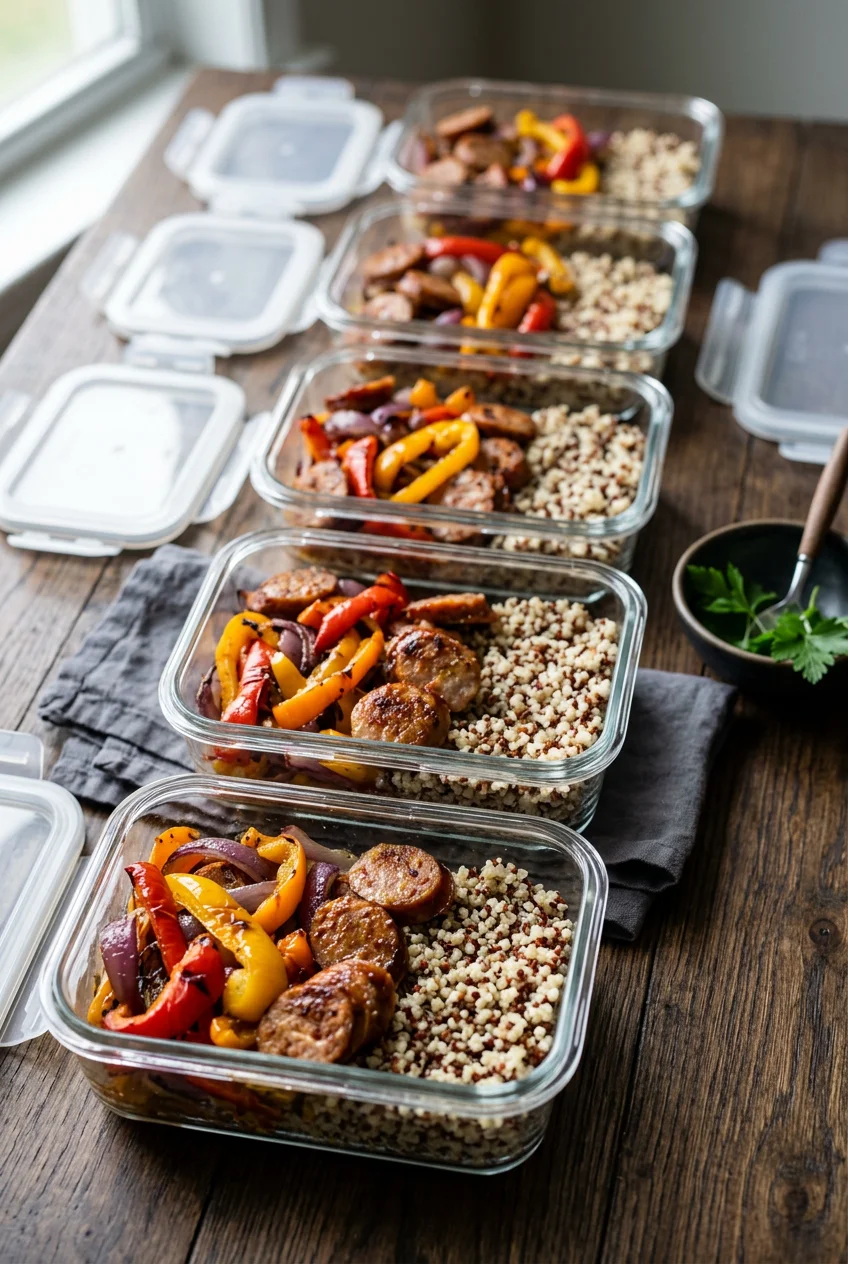
What’s Inside
- Opt for Leaner Sausage Varieties for Health and Versatility
- Master the Sheet Pan Sausage Meal Prep
- Slice Before You Cook for Maximum Caramelization
- Drain the Excess Moisture from Zucchini First
- Choose the Right Glass Storage Containers
- Incorporate Acid to Cut the Richness
- Utilize Pre-Cooked Quinoa for Quick Bulk
- Freeze Your Sausage Meal Prep Strategically
- Reheat Properly Using the Stovetop or Air Fryer
- Rotate Flavor Profiles Weekly to Prevent Boredom
Last Tuesday at 7 PM, I found myself staring at a grey, rubbery pile of microwaved pork links, realizing my entire sausage meal prep strategy was a disaster. I’d packed my lunches in cheap plastic containers on Sunday, and by Wednesday, the fat had congealed into an unappetizing white film across my vegetables. If you want a sausage meal prep routine that actually survives until Thursday without tasting like wet cardboard, you need a different approach. I spent months doing this the lazy way before figuring it out. Learned that the hard way. Throwing random ingredients into a bowl won’t cut it when you’re relying on these meals to get you through a stressful work week. You’ve got to think about moisture control, fat content, and how you reheat your food.
I threw away plenty of batches of soggy zucchini and rubbery meat before I finally nailed the exact ratios and temperatures. Now, I spend about an hour on Sunday afternoon chopping and roasting, and I actually look forward to eating the results on Wednesday. This method relies on specific brands, exact measurements, and a few rigid rules about storage. Skip the fat-free stuff. It tastes like wet cardboard. Let’s break down exactly how to build a lunch that holds up.
1. Opt for Leaner Sausage Varieties for Health and Versatility

When I first started prepping lunches, I bought the cheapest pork sausage rolls I could find. Massive mistake. Pork sausage releases a ton of grease as it sits in the fridge, which pools at the bottom of your container and turns your vegetables into a slimy mess. You’re much better off choosing chicken or turkey sausages. They’re typically lower in saturated fat and higher in protein than traditional pork options, making them far more stable for long-term fridge storage. Brands like Applegate Organics Sweet Italian Chicken Sausage or Wellshire Smoked Fresh Turkey Kielbasa are excellent choices because their casings hold up well to reheating.
Dietitians recommend selecting sausages with less than 600 milligrams of sodium per serving to avoid mid-afternoon bloating. Expect to pay around $6.99 for a 12-ounce package of quality chicken or turkey sausage. Sprouts Farmers Market offers their store-brand chicken sausage for approximately $6.49 per 12-ounce pack, which is what I usually grab on Sunday mornings. The texture of the turkey kielbasa is firm enough to withstand three days in the fridge without getting mealy. I slice the 12-ounce package into uniform pieces, and it provides exactly enough protein for four separate lunches. It’s a simple swap, but it completely fixes the cold grease problem.
2. Master the Sheet Pan Sausage Meal Prep

Simplify your cooking by combining sliced sausage with vegetables on a single baking sheet. For a balanced meal, use 12 ounces of sweet Italian style chicken sausage alongside 1.5 pounds of diced baby red potatoes, bell peppers, broccoli florets, and zucchini. I used to cook everything in separate skillets, which left me scrubbing pans for an hour. Now, I use a Target Good & Gather heavy-duty aluminum baking sheet ($12.00) lined with parchment paper.
The secret here is high heat. Roast everything at 450°F (232°C) for exactly 20 minutes, then flip the ingredients with a metal spatula and continue roasting for another 15 minutes. The high temperature forces the moisture out of the vegetables quickly, preventing them from steaming and getting mushy. You want the edges of the potatoes to blister and brown. If you crowd the pan, the ingredients will steam instead of roast. I learned this the hard way when I tried to double the recipe on a single pan and ended up with a soggy, unappetizing pile. Leave at least a quarter-inch of space between the pieces. The chicken sausage renders just enough fat to coat the broccoli florets, making them crispy on the edges. This sheet pan sausage meal prep method cuts my active cooking time down to about fifteen minutes total.
3. Slice Before You Cook for Maximum Caramelization

Most people roast their sausage links whole and slice them afterward. I did this for a year before realizing I was missing out on the best part of the meat. You need to slice the links into half-inch coins before they ever hit the heat. When you expose the interior of the sausage to the hot baking sheet, it triggers the Maillard reaction. This creates dark, crispy brown bits on both sides of the slice. You might also like: 15 Creative Healthy Meal Prep Ideas That Make a Real Difference
I buy the Trader Joe’s Smoked Apple Chardonnay Chicken Sausage ($4.49 for a 12-ounce pack) specifically because the small chunks of dried apple inside caramelize beautifully when exposed to direct heat. If you leave the links whole, you only get browning on the tough outer casing. I use a sharp chef’s knife to cut the links on a slight diagonal, which increases the surface area even more. You’ll notice a massive difference in texture by day three. Whole sausages tend to turn rubbery in the fridge, but the caramelized edges of the pre-sliced coins maintain a slight chewiness that holds up well in the microwave. Just make sure your slices are uniform. If you cut some a quarter-inch thick and others an inch thick, the thin ones will burn into hard little pucks while the thick ones remain soft in the middle. You might also like: 15 Stunning Aesthetic Batch Cooking You Need to See
![C CREST [10 Pack] Glass Meal Prep Containers](https://m.media-amazon.com/images/I/81HfSfzlqUL._AC_UL320_.jpg)
C CREST [10 Pack] Glass Meal Prep Containers
C CREST [10 Pack] Glass Meal Prep Containers punches above its price — 349 buyers rated it 4.5 stars. I would buy it again.
4. Drain the Excess Moisture from Zucchini First

Zucchini is notorious for ruining meal preps. It’s essentially a sponge filled with water. If you chop it up and throw it straight into your container, it will slowly leak liquid over the next 48 hours, turning your carefully roasted potatoes into a swamp. I threw away countless Tuesday lunches because the bottom of my container was filled with green-tinted water. To fix this, you have to draw the moisture out before cooking. You might also like: 15 Brilliant Good Meal Prep Ideas That Changed Everything
I take two medium zucchinis, slice them into half-moon shapes, and lay them flat on a cutting board. I sprinkle them generously with Kroger brand coarse sea salt ($2.19 for a 17-ounce canister) and let them sit for exactly 15 minutes. You’ll literally see beads of water pooling on the surface of the flesh. After 15 minutes, I take two heavy-duty paper towels and press down hard to absorb all that extracted liquid. You won’t believe how much water comes out. No exaggeration. Once they’re patted dry, toss them with one tablespoon of olive oil and add them to your roasting pan. Because you removed the excess water, the zucchini will actually brown in the oven instead of turning into a translucent, mushy mess. It adds about 15 minutes to your prep time, but it’s a necessary step.
5. Choose the Right Glass Storage Containers

Your storage method matters just as much as your cooking method. I packed my lunches in cheap plastic containers from the grocery store for years. Plastic is porous. It absorbs the smell of garlic, onion, and smoked meat, and it never lets those smells go. Worse, tomato-based sausages will stain the plastic a permanent cloudy orange. I eventually threw my entire plastic collection in the recycling bin and bought Pyrex 3-cup rectangular glass containers.
They cost $22.99 for a 3-pack at Target, and the thick glass prevents the lids from warping in the dishwasher. Glass is completely non-porous. You can store heavily spiced chorizo in a glass container for four days, wash it once, and it won’t smell like anything. The 3-cup size is perfectly portioned for 4 ounces of meat, 1 cup of potatoes, and 1 cup of vegetables. The lids on the Pyrex set latch tightly, which prevents air from circulating and drying out the food. I also appreciate that I can put the glass directly into the microwave without worrying about plastic chemicals leaching into my lunch. The glass does make my work bag heavier on Monday mornings, but the tradeoff for fresh-tasting food is worth it. Don’t waste your time with flimsy plastic tubs if you want your food to actually last.
6. Incorporate Acid to Cut the Richness

Even lean chicken sausage can feel heavy and rich after a few days, especially when paired with roasted potatoes. The fat coats your palate, making the entire meal taste flat by Wednesday. You need a sharp acid to wake the flavors back up. I keep a bottle of Pompeian Red Wine Vinegar ($3.48 for 16 ounces at Walmart) in my pantry specifically for this purpose.
Right before I seal my glass containers on Sunday afternoon, I drizzle exactly one teaspoon of the red wine vinegar over the roasted vegetables and meat in each portion. It seems like a tiny detail, but the vinegar cuts straight through the savory fat of the sausage. If I’m using a lighter profile, like a lemon-herb chicken link, I’ll squeeze the juice of half a fresh lemon over the pan instead of using vinegar. I tried adding the acid before roasting once, and it completely halted the browning process, leaving me with pale, sad potatoes. Always add your acid at the very end, right before storage. The vinegar lightly marinates the vegetables as they sit in the fridge, so by the time you eat them, they have a bright, tangy bite that contrasts perfectly with the smoky meat. It takes ten seconds and completely changes the profile of the dish.

M MCIRCO 10-Pack,30 Oz Glass Meal Prep Containers 2
M MCIRCO 10-Pack punches above its price — 23 buyers rated it 4.5 stars. I would buy it again.
7. Utilize Pre-Cooked Quinoa for Quick Bulk

Sometimes I don’t want to deal with peeling and chopping a pound of potatoes. On those weeks, I rely on pre-cooked quinoa to provide the carbohydrate base for my lunches. Quinoa holds its texture in the fridge much better than white rice, which tends to get hard and chalky after two days. I buy the Seeds of Change Garlic & Herb Quinoa pouches in bulk at Costco ($14.99 for a 6-pack of 8.5-ounce pouches).
Each pouch breaks down to about $2.50. I don’t even microwave the pouch first. I just tear it open and divide the room-temperature grains straight into my four glass containers. I measure out exactly half a cup of quinoa per container. Then, I pile the hot roasted sausage and vegetables directly on top. As the hot ingredients rest on the quinoa, the grains absorb the seasoned pan juices and the residual heat softens them perfectly. It saves me the 20 minutes it takes to boil a pot of dry quinoa on the stove. I’ve tried this with generic brown rice pouches, but the rice always clumps together into a solid brick by Tuesday. The quinoa grains stay distinct and fluffy, mixing easily with the sliced meat when you stir it up at your desk.
8. Freeze Your Sausage Meal Prep Strategically

There are weeks when I know I won’t be in the office every day, so I need my prepped meals to last longer than the standard four days. Freezing is the obvious solution, but you’ve got to be careful about what goes into the freezer. I ruined an entire batch of lunches in 2022 because I tried to freeze roasted red potatoes. When potatoes freeze and thaw, their cellular structure collapses, turning them into a grainy, watery paste. Disgusting.
If I’m freezing a batch, I skip the potatoes entirely and double up on bell peppers and onions. I use Ziploc gallon-sized freezer bags ($5.89 for a 28-count box at Kroger) instead of my glass containers. I lay the bags flat on a baking sheet until they freeze solid, which makes them stackable and saves freezer space. The chicken sausage itself freezes beautifully. When I’m ready to eat one, I transfer the frozen block from the Ziploc bag into a glass bowl and let it thaw in the fridge overnight. You can’t microwave it straight from frozen, or the bell peppers will turn to absolute mush while the center of the meat remains an ice cube. Thaw it slowly, and the texture stays remarkably close to fresh.
9. Reheat Properly Using the Stovetop or Air Fryer

The microwave is the enemy of texture. If you blast your carefully roasted meal in the office microwave for three minutes on high, the meat will seize up and the vegetables will turn limp. If you work from home, you’ve got better options. I use a Ninja 4-Quart Air Fryer ($89.99 at Target) to reheat my lunches.
I dump the contents of my glass container directly into the air fryer basket and set it to 350°F for exactly four minutes. The circulating hot air recrisps the edges of the potatoes and brings the skin of the sausage back to life. It tastes like it just came out of the oven. If I’m forced to use a microwave at an office, I use a specific damp-towel method. I place a wet paper towel flat over the top of the glass container and microwave it on 50% power for two minutes, stir, and then do another minute at 50% power. The damp towel creates a gentle steam environment, and the lower power setting prevents the proteins in the meat from contracting too quickly. I used to just hit the add thirty seconds button until the food was boiling hot, and I always ended up chewing on rubbery meat. Lower power is crucial.

Skroam 10 Pack Glass Meal Prep Containers
If you want something that just works, Skroam 10 Pack Glass Meal Prep Containers is a safe bet (57 reviews, 4.5 stars).
12. Rotate Flavor Profiles Weekly to Prevent Boredom

The fastest way to fail at prepping your lunches is to eat the exact same garlic-herb flavor profile for a month straight. You’ll get bored, and you’ll end up ordering a $15 sandwich on Thursday because you can’t stomach another bite of the same meal. I force myself to rotate the flavor profiles every single week.
One week, I’ll buy the Aidells Pineapple Bacon Chicken Sausage ($5.99 for a 12-ounce pack at Target) and pair it with sweet potatoes and red onions. The next week, I’ll switch to a spicy Jalapeño cheddar link and roast it with black beans, corn, and zucchini. Changing the primary protein alters the entire vibe of the dish without requiring you to learn a new cooking technique. You still slice it into half-inch coins. You still roast it at 450°F for 35 minutes. You’re just swapping the inputs. I made the mistake of buying five packs of the same Italian sausage at Costco once because it was on sale. By week three, the smell of fennel seeds made me nauseous. Took me years to figure out this pattern. Keep the technique identical, but aggressively change the spices and the sausage brands week to week. It tricks your brain into thinking you’re eating a completely different meal, ensuring you actually stick to your routine.
Once you get the hang of these techniques, your Sunday routine becomes entirely automatic. You won’t have to guess if your zucchini is going to ruin your potatoes, and you won’t be chewing on rubbery pork links by Thursday afternoon. The key is respecting the moisture levels and treating your ingredients with a little bit of precision. I’ve relied on these exact steps for two years now, and it completely removed the stress of figuring out my weekday lunches. If you found this breakdown helpful, save this page or pin it to your meal prep boards so you can reference the exact temperatures and measurements next Sunday. Your future self will thank you when you open the fridge on Wednesday and actually want to eat what’s inside.

Vtopmart 5Pack 22oz Glass Storage Containers with Lids
If you want something that just works, Vtopmart 5Pack 22oz Glass Storage Containers with Lids is a safe bet (34 reviews, 4.5 stars).
Frequently Asked Questions
How long does sausage meal prep last in the fridge?
When stored in airtight glass containers, cooked chicken or turkey sausage will stay fresh for up to four days. If you need it to last longer, freeze the portions in Ziploc bags.
Can you freeze roasted potatoes in your meal prep?
No. Freezing roasted potatoes destroys their cellular structure, turning them grainy and watery when thawed. If you plan to freeze your meals, substitute the potatoes with extra bell peppers or onions.
Why do my roasted vegetables get mushy in the fridge?
Vegetables get mushy if they aren’t properly drained before cooking or if you crowd the baking sheet. Salt high-moisture vegetables like zucchini first, and roast everything at 450°F to evaporate excess water.
What is the best way to reheat prepped sausage?
An air fryer set to 350°F for four minutes yields the best texture. If using a microwave, cover the glass container with a damp paper towel and heat on 50% power to prevent rubbery meat.
