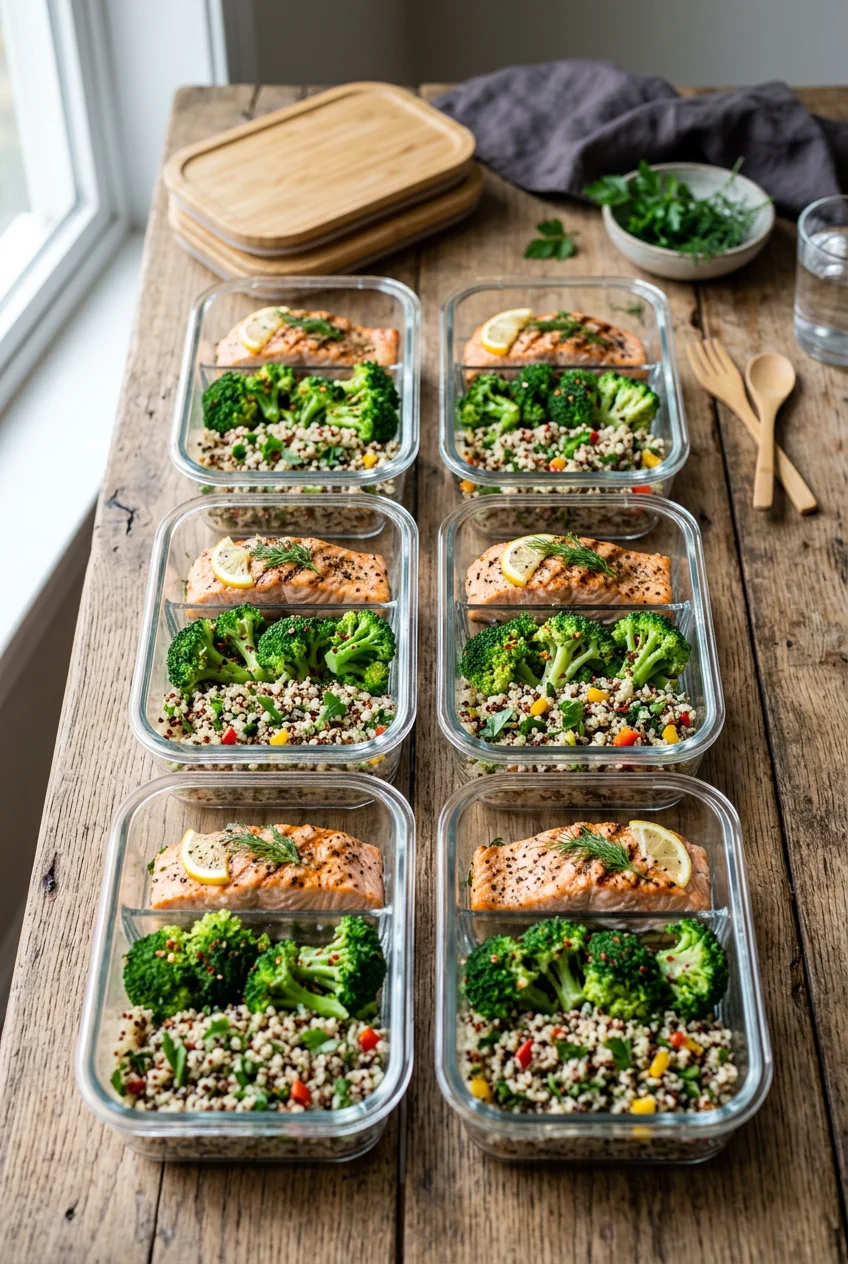
What’s Inside
- The 35-Gram Rule for a Healthy Meal Prep Lunch High Protein
- Greek Yogurt Chicken Salad Bowls
- Edamame and Soba Noodle Jars
- Cottage Cheese and Turkey Pinwheels
- Lentil and Quinoa Power Bowls
- Cold Sheet Pan Salmon and Asparagus
- Black Bean and Ground Turkey Chili
- Tuna Salad Stuffed Bell Peppers
- High Protein Tofu and Broccoli Stir-Fry
- Hard-Boiled Egg and Almond Snack Boxes
- Bison Meatballs for a Healthy Meal Prep Lunch High Protein
Last Tuesday at my desk, I stared at a $9.99 sad salad from the deli downstairs. The spinach was wilted, the single cherry tomato was bruised, and the thin slices of deli chicken looked gray. Finding a high-protein lunch shouldn’t end in wilted lettuce and a 2:30 PM energy crash. I spent years trying to build a reliable routine, but I always ended up hungry an hour later. The problem was simple. I wasn’t eating enough actual food. You don’t need a culinary degree to fix this. You just need a scale and some basic math.
I remember sitting in my car outside Whole Foods back in October, eating a dry, chalky protein bar because my packed lunch was just a pile of raw spinach and a few almonds. My stomach was growling loudly enough to hear over the radio. I realized my approach was entirely wrong. I treated lunch like a snack instead of a meal. That afternoon, I went home, took out my glass containers, and changed my strategy. I stopped relying on guesswork and started tracking my protein intake accurately. Here are the specific meals and methods I use now.
1. The 35-Gram Rule for a Healthy Meal Prep Lunch High Protein

I used to eyeball my chicken portions. I’d grab a handful of shredded meat, toss it in a plastic bowl, and call it good. That method failed me constantly. I felt hungry by mid-afternoon and ended up snacking on stale office donuts left in the breakroom. Now, I prioritize protein quantity for sustained satiety. I aim for exactly 25 to 35 grams of protein per lunch. This amount keeps me full, stabilizes my blood sugar, and prevents that dreaded 2:30 PM energy crash. Dietitians recommend this range for most adults to support satiety and overall health.
For instance, a 4-ounce serving of cooked chicken breast provides about 35 grams of protein. Initially, I bought an Escali digital kitchen scale for $14.99 at Target. I use it every Sunday to measure exactly 4 ounces of cooked protein per container. I stopped guessing entirely. A 4-ounce piece of chicken is roughly the size of a smartphone, but weighing it is the only way to be certain. I tried this wrong for months. It took me years to figure out. The scale takes five extra seconds and kills those afternoon hunger pangs. If you aren’t weighing your protein, you’re likely under-eating it. The visual difference between three ounces and four ounces is minimal, but it makes a massive difference in how you feel at 4:00 PM.
2. Greek Yogurt Chicken Salad Bowls

Skip the fat-free mayonnaise. It tastes like wet cardboard and leaves a strange, metallic chemical aftertaste. Instead, I use Fage 2% Greek Yogurt for my chicken salad base. I buy the 32-ounce tub for $6.49 at Kroger. The 2% fat content provides a thick, creamy texture that coats the chicken perfectly without separating in the cold fridge. I mix 1/2 cup of the yogurt with 4 ounces of canned Swanson premium white chunk chicken breast. I add 1/4 cup of diced celery and 1 tablespoon of finely chopped red onion for a sharp crunch.
The contrast between the smooth, tangy yogurt and the crisp, watery snap of the celery makes this enjoyable even on day four. I learned a hard lesson last year. Don’t mix the chicken salad with your greens until you’re ready to eat. I pre-mixed it on a Sunday, and by Wednesday, the moisture from the yogurt turned my romaine lettuce into a slimy, translucent mess. Now, I pack the chicken salad in a small 4-ounce Pyrex cup and keep the dry greens separate until my lunch break. Eating wet lettuce is a surefire way to ruin your appetite. Taking thirty seconds to separate the ingredients on Sunday saves the entire meal.
3. Edamame and Soba Noodle Jars

Plant-based protein requires a bit more volume to hit that 30-gram target. I rely heavily on Seapoint Farms shelled edamame. I pick up a 12-ounce frozen bag for $2.49 at Sprouts. A full 1-cup serving of this edamame delivers 17 grams of protein. I pair it with 2 ounces of dry Hakubaku organic soba noodles, which add another 8 grams of protein. I boil the noodles for exactly four minutes, rinse them under freezing cold water to stop the cooking, and toss them with 1 tablespoon of Kikkoman less sodium soy sauce and 1 teaspoon of toasted sesame oil.
The smell of the toasted sesame oil is incredibly nutty and rich. The mistake most people make with soba noodles is overcooking them. I left a batch on the stove for seven minutes once, and they dissolved into a sticky, starchy paste that clumped together in my glass jar. The texture was awful. Now I set a strict timer on my phone. I layer the noodles at the bottom of a 32-ounce wide-mouth Mason jar, top them with the thawed green edamame, and add 1/2 cup of shredded carrots for crunch. The cold noodles mixed with the crisp carrots and salty soy sauce make for a refreshing, filling lunch that doesn’t need to be heated up.

KOMUEE 10 Packs 30 oz Glass Meal Prep Containers
If you want something that just works, KOMUEE 10 Packs 30 oz Glass Meal Prep Containers is a safe bet (46 reviews, 4.5 stars).
4. Cottage Cheese and Turkey Pinwheels

Cottage cheese gets a bad reputation because of the lumpy texture, but the brand matters. I buy Good Culture 4% whole milk cottage cheese. A 16-ounce tub costs $4.99 at Whole Foods. The curds are thick, not watery, and it has a slightly salty, rich flavor that works perfectly in wraps. I spread 1/2 cup of this cottage cheese onto a Mission whole wheat tortilla. Then I layer 3 ounces of Applegate Naturals oven-roasted turkey breast on top. I add 1/4 cup of fresh, dry spinach leaves, roll it up tightly, and slice it into one-inch pinwheels. I also sprinkle a pinch of black pepper over the turkey to give it a slight kick. You might also like: 20 Clever Aesthetic Food Prep That Actually Work
The turkey provides 15 grams of protein, and the cottage cheese adds another 14 grams. The combination of the chewy tortilla, the salty meat, and the creamy cheese is incredibly satisfying. I made a critical error with these pinwheels last summer. I packed them touching each other in a cheap plastic container. The moisture from the cottage cheese seeped out, and the edges of the tortillas fused together into a soggy, unappetizing paste. Now, I wrap the whole roll tightly in aluminum foil and only slice it right before I eat at my desk. You might also like: 15 Creative Cold Lunch Ideas to Transform Your Space
5. Lentil and Quinoa Power Bowls

Cooking dried lentils on a Sunday afternoon takes too much time. I buy the Trader Joe’s steamed lentils in the vacuum-sealed package for $3.29. They’re fully cooked, slightly earthy, and hold their shape perfectly without turning to mush in the fridge. I measure out 1/2 cup of these lentils, which gives me 9 grams of protein. I pair them with 1/2 cup of cooked Ancient Harvest tricolor quinoa. The quinoa adds another 4 grams of protein and a distinct nutty flavor with a slight crunch. To reach my protein goal, I add 3 ounces of roasted tofu or a hard-boiled egg. You might also like: 20 Clever Quick Lunch Ideas You Haven’t Thought Of
I dress the bowl with 2 tablespoons of Primal Kitchen lemon turmeric vinaigrette. The bright, acidic dressing cuts through the dense, starchy texture of the grains. I used to dump the dressing over the whole bowl on Sunday. By Tuesday, the quinoa had absorbed all the liquid, leaving the dish dry and flavorless. I bought small 2-ounce Sistema dressing containers for $5.99 on Amazon. Keeping the dressing separate until lunch is mandatory. Pouring it fresh restores the moisture and keeps the quinoa tasting exactly like it did on prep day.
6. Cold Sheet Pan Salmon and Asparagus

Microwaving fish in an office breakroom is entirely unacceptable. The lingering smell of reheated salmon will make your coworkers hate you. I eat my meal prep salmon cold. I buy the Costco Kirkland Signature frozen wild Alaskan sockeye salmon portions. A 3-pound bag costs $34.99. I thaw two 6-ounce portions on Sunday, place them on an aluminum baking sheet, and roast them at 400 degrees for 14 minutes. I season them simply with 1 teaspoon of Morton kosher salt and 1/2 teaspoon of coarse black pepper. On the other side of the pan, I roast 1 cup of fresh asparagus spears tossed in 1 tablespoon of Pompeian olive oil.
The salmon yields about 35 grams of protein per portion. When eaten cold straight from the fridge, the texture of the salmon is firm and flaky, similar to smoked salmon but thicker. The roasted asparagus retains a slight snap and a charred, smoky flavor. I tried reheating this meal once in the microwave at my old job. The fish dried out instantly, the edges turned rubbery, and the asparagus became stringy and limp. Cold is the only way to eat this combination at work. It saves time and prevents you from ruining the delicate texture of the fish.
![C CREST [10 Pack] Glass Meal Prep Containers](https://m.media-amazon.com/images/I/81HfSfzlqUL._AC_UL320_.jpg)
C CREST [10 Pack] Glass Meal Prep Containers
C CREST [10 Pack] Glass Meal Prep Containers punches above its price — 349 buyers rated it 4.5 stars. I would buy it again.
7. Black Bean and Ground Turkey Chili

Chili is the most forgiving meal prep option. It actually tastes better on day three. I use Jennie-O 93/7 lean ground turkey. A 16-ounce package is $5.99 at Walmart. I brown the turkey in a large pot, which provides a savory, rich base. I add one 15-ounce can of Bush’s low sodium black beans, undrained, and one 14.5-ounce can of Hunt’s diced tomatoes. I season it with 2 tablespoons of McCormick chili powder and 1 teaspoon of ground cumin. The smell of the cumin blooming in the hot pan is incredibly aromatic and fills the whole kitchen.
A 1.5-cup serving of this chili delivers around 28 grams of protein. The texture is thick and hearty, not watery like a standard soup. I made a huge mistake storing this in cheap plastic Tupperware. The tomato paste and chili powder permanently stained the plastic a cloudy orange color, and it retained a garlic smell for months. I threw the containers away. I switched to 4-cup Pyrex glass storage bowls. They cost $24.99 for a set of four at Target, but they don’t hold stains or odors, no matter how long the chili sits in them.
8. Tuna Salad Stuffed Bell Peppers

Bread makes me feel sluggish around 3:00 PM. I swap the sandwich bread for bell peppers. I use Wild Planet skipjack wild tuna. A 5-ounce can is $3.19 at Sprouts. The tuna is packed in its own juices, so the flavor is concentrated and slightly briny. I drain the can and mix the fish with 2 tablespoons of Sir Kensington’s classic mayonnaise and 1 tablespoon of sweet pickle relish. I cut a large red bell pepper in half vertically and scoop out the seeds. I pack the tuna salad tightly into the pepper halves.
One can of tuna provides 21 grams of protein. The crisp, watery crunch of the raw bell pepper contrasts sharply with the dense, savory tuna salad. I used green bell peppers for this once because they were cheaper. The bitter, grassy flavor of the green pepper completely overpowered the tuna. It was difficult to finish. I only use red, yellow, or orange peppers now because their natural sweetness balances the salty fish. I wrap the stuffed halves tightly in Glad Press’n Seal wrap to keep the peppers crisp in the fridge until I eat them.
9. High Protein Tofu and Broccoli Stir-Fry

Tofu is cheap, but preparing it correctly takes specific steps. I buy Nasoya extra firm organic tofu for $2.99 at Target. A 14-ounce block contains about 35 grams of protein. I cut the block into one-inch cubes and toss them with 1 tablespoon of Argo cornstarch. The cornstarch is the secret to a crispy exterior. I pan-fry the cubes in 1 tablespoon of avocado oil until they’re golden brown on all sides. I add 1 cup of fresh broccoli florets and 2 tablespoons of San-J tamari sauce. The tamari caramelizes on the hot pan, giving the tofu a sticky, salty coating.
The mistake I made for years was skipping the pressing step. I’d take the wet tofu straight from the package to the pan. The water leached out during cooking, turning the cornstarch into a gummy paste and leaving the tofu spongy and bland. Now, I wrap the block in heavy paper towels and place a heavy cast-iron skillet on top for twenty minutes to press the water out. The texture difference is massive. The pressed tofu absorbs the tamari like a sponge and stays firm all week.

M MCIRCO 10-Pack,30 Oz Glass Meal Prep Containers 2
A dependable everyday pick — M MCIRCO 10-Pack pulls in 23 ratings at 4.5 stars. Not flashy, just solid.
10. Hard-Boiled Egg and Almond Snack Boxes

Sometimes I don’t want a heavy, cooked meal. I build a high-protein snack box instead. I use Vital Farms pasture-raised eggs. A dozen costs $6.99 at Whole Foods. The yolks are a deep, vibrant orange, and they taste much richer than standard eggs. I boil two eggs for exactly nine minutes, then plunge them into ice water. This yields a firm white and a creamy, slightly soft center. Two eggs provide 12 grams of protein. I pair them with 1/4 cup of Blue Diamond lightly salted almonds, which adds another 7 grams of protein and a necessary crunch.
I round out the box with 2 ounces of Tillamook sharp cheddar cheese cubes, adding 14 more grams of protein. The total protein hits 33 grams. The sensory experience of cracking the cold eggshells and peeling them at my desk is satisfying. The main negative with hard-boiled eggs is the faint sulfur smell when you open the container in a small office. I mitigate this by peeling the eggs at home and storing them whole in a glass container with a tight-fitting silicone lid to trap the scent.
11. Bison Meatballs for a Healthy Meal Prep Lunch High Protein

Ground beef can feel too heavy for lunch. I switch to ground bison for a leaner, higher protein option. I buy Force of Nature 100% grass-fed ground bison. A 16-ounce package is $10.99 at Kroger. It’s expensive, but the nutritional profile is excellent. I mix the meat with 1/4 cup of plain breadcrumbs, 1 egg, and 1 teaspoon of garlic powder. I roll the mixture into one-inch meatballs and bake them at 400 degrees for 15 minutes. A serving of four meatballs provides about 28 grams of protein.
The texture of the bison is dense and slightly sweet, lacking the greasy mouthfeel of typical beef meatballs. I pair these with 1/2 cup of Banza chickpea pasta, which adds another 11 grams of protein. I ruined a batch of these meatballs last winter by overbaking them. Because bison is so lean, it dries out incredibly fast. I left them in the oven for 20 minutes, and they turned into hard, unchewable rocks. I strictly monitor the oven timer now. I store them in a glass container with a splash of Rao’s marinara sauce to keep them moist during the week.
Meal prep doesn’t have to mean eating bland, uninspired food out of sad plastic tubs. By focusing on specific protein targets and utilizing proper storage techniques, you’ll actually look forward to opening your lunch bag. I’ve ruined enough meals to know that the details matter. Trust me on this. Weigh your protein, keep your dressings separate, and invest in glass containers that won’t absorb smells. Try a few of these combinations this Sunday. Pin this article for your next grocery run, and let’s get back to eating lunches that actually keep us full until dinner.
Frequently Asked Questions
How long do high-protein meal prep lunches last in the fridge?
Most cooked proteins like chicken, beef, and tofu last four days in airtight glass containers. Seafood like salmon is best eaten within three days. Always store dressings separately to prevent soggy greens.
Can I freeze these meal prep lunches?
You can freeze chili, cooked meatballs, and quinoa for up to three months. Don’t freeze fresh vegetables, boiled eggs, or dairy-based sauces because their textures become grainy and mushy when thawed.
What is the cheapest high-protein lunch option?
Tofu, canned tuna, and steamed lentils are incredibly cost-effective. A block of tofu yields 35 grams of protein for under three dollars. Pair these with cheap bulk grains like rice or quinoa to keep grocery bills low.
How do I stop my meal prep salads from getting soggy?
Moisture ruins prepped greens. Pack your wet ingredients like chicken salad or dressings in small separate containers. Use sturdy greens like kale or cabbage instead of delicate spring mix if you must combine them early.
