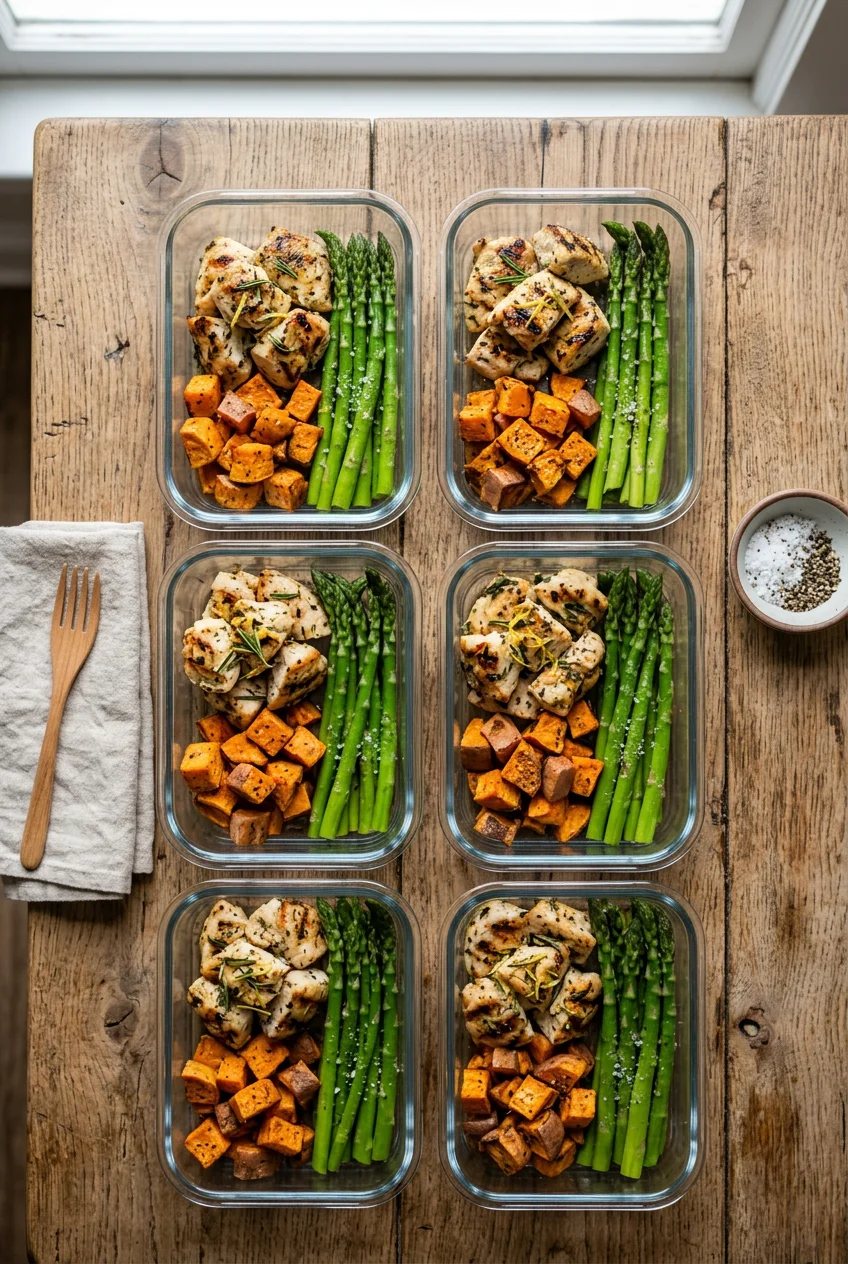
What’s Inside
- Master the Sous Vide for Chicken Protein Meal Prep Recipes
- Batch Cook Lentils for Budget-Friendly Bowls
- Air Fryer Salmon for Quick Protein Meal Prep Recipes
- Stop Making Full Meals and Start Ingredient Separation
- Ditch the Plastic for Heavy Glass Containers
- Use Clear Protein Powder for Lighter Drinks
- Sneak Powder into Your Morning Oatmeal
- Blanch Collard Greens for High-Protein Wraps
- Let the Slow Cooker Handle Turkey Chili
- Roast Chickpeas for Crunchy Protein Snacks
- Stop Prepping for the Entire Week
Last Tuesday at my desk, I opened a plastic container of four-day-old grilled chicken. The smell of cold, oxidized poultry hit me instantly, and the meat looked like a beige pencil eraser. I took one bite of that rubbery mess and tossed the whole thing. That failure is why I’ve completely overhauled my protein meal prep. If you’re tired of choking down sad desk lunches, these recipes actually hold up in the fridge. I spent years doing this wrong, cooking everything on Sunday and forcing myself to eat soggy vegetables by Thursday. Let’s fix your routine with exact temperatures, containers, and methods that keep your food edible. I learned this the hard way.
1. Master the Sous Vide for Chicken Protein Meal Prep Recipes

Chicken breast is notorious for drying out. I used to bake 5 pounds on Sundays, resulting in chalky, gray meat by Wednesday. Now I use an Anova Precision Cooker. I bought mine at Target for $129 last November. You clip the device to a large pot, fill it with tap water, and set it to exactly 160 degrees Fahrenheit. The water bath circulates and cooks the meat perfectly for two hours without losing moisture. Chicken breasts average $4.17 to $4.70 per pound at Walmart right now, so ruining a batch means you’re just throwing money away.
I also started brining the meat for extra flavor. I mix 2 cups of cold water, 4 tablespoons of kosher salt, and 2 tablespoons of raw honey in a Ziploc bag. The raw chicken sits in that mixture for an hour. Afterward, I rinse the breasts and vacuum seal them. The main downside is the plastic waste from the bags; it bugs me every time. But the texture is so tender you can cut it with a plastic fork. You get about 30 grams of protein per 4-ounce serving. Hitting that dietitian-recommended sweet spot helps me avoid the dreaded 2:30 PM energy crash.
2. Batch Cook Lentils for Budget-Friendly Bowls

Lentils are cheap, but they turn into brown mush if you overcook them. I buy 16-ounce bags of organic brown lentils at Sprouts for about $6. Two cups of dry lentils yields enough for three large meals for four people. You cook 2 cups of lentils in 3 cups of water with 1 teaspoon of apple cider vinegar. Simmer them for exactly 20 minutes. If you let them boil for 25, the skins split and the pot turns into unappetizing porridge.
Batch cooking them creates resistant starch when they cool overnight, which feeds good gut bacteria. I portion 1/2 cup servings into glass containers using a slotted spoon to drain excess liquid. The earthy, peppery flavor pairs perfectly with roasted sweet potatoes. I tried pressure cooking them in my Instant Pot for 4 minutes once. The texture was too soft for salads, and they clumped into a solid block. The stovetop method gives you that slight bite you want. It’s a simple plant-based protein that doesn’t cost a fortune. Sort through the dry lentils first, though—I once bit down hard on a tiny pebble. Trust me.
3. Air Fryer Salmon for Quick Protein Meal Prep Recipes

The air fryer cooks salmon so fast the center stays buttery while the edges get crispy. I use a 4-quart Ninja Air Fryer I picked up at Costco for $89.99. I buy frozen Atlantic salmon, thaw it overnight, and pat it dry with a paper towel. If you skip drying, they steam instead of roast, leaving you with mushy fish. I coat a 4-ounce fillet with 1/2 teaspoon of olive oil and a pinch of smoked paprika. It goes in at 400 degrees Fahrenheit for 5 to 7 minutes.
You get roughly 24 grams of protein in that small piece. The smell of fish lingers in the basket, which is a major downside. I have to scrub it with Dawn dish soap immediately, or my kitchen smells like a fish market the next day. But having perfectly cooked salmon ready for Monday and Tuesday makes the cleanup worth it. I pair this with 1 cup of jasmine rice and 1/2 cup of steamed broccoli. The salmon flakes apart perfectly even after sitting in the fridge for two days.

M MCIRCO 10-Pack,30 Oz Glass Meal Prep Containers 2
A dependable everyday pick — M MCIRCO 10-Pack pulls in 23 ratings at 4.5 stars. Not flashy, just solid.
4. Stop Making Full Meals and Start Ingredient Separation

Prepping entire composed meals on Sunday guarantees you’ll be bored by Wednesday. I did this for months. I’d make five identical containers of chicken, rice, and green beans. By Thursday, looking at that container killed my appetite. Now I prep components separately. I keep a large container of baked tofu, a bowl of 2 cups of cooked quinoa, and a bag of chopped bell peppers in the crisper.
This lets me assemble a salad on Monday and a stir-fry on Tuesday using the same ingredients. I buy 14-ounce blocks of extra firm tofu at Trader Joe’s for $2.99. I press it for 20 minutes under a heavy cast iron skillet, cube it, and bake at 400 degrees Fahrenheit for 25 minutes. A 3-ounce serving gives you about 9 grams of protein. Storing components separately keeps textures intact. The quinoa doesn’t get soggy, and the peppers stay crisp. It takes three extra minutes to assemble lunch, but the food tastes fresh instead of congealed. You might also like: 20 Inspiring Sunday Dinner Ideas You Need to See
5. Ditch the Plastic for Heavy Glass Containers

Plastic containers hold smells permanently. I had a set of cheap tubs that always smelled like garlic powder and old soap. It ruined the flavor of my strawberries and made my lunches taste weird. I switched to the 5-pack of Prep Naturals Glass Containers on Amazon for $29.99. They use thick borosilicate glass and have snap-locking lids with removable silicone seals.
They’re heavy. Carrying three in my work tote feels like lugging bricks, which is an annoyance when I’m walking from the parking garage. But they don’t stain when I pack tomato sauce, and they don’t warp in the microwave. Food stays fresher. You can see what’s inside without opening the lid. When I prep 1/2 cup servings of low-fat cottage cheese (14 grams of protein per 113-gram serving), the airtight seal prevents that weird watery separation. I run the glass bases through the dishwasher and hand wash the lids so the silicone seals don’t degrade. You might also like: 12 Low Carb Meal Prep Worth Trying
6. Use Clear Protein Powder for Lighter Drinks

Thick, milky shakes make me feel bloated and sluggish. I tried chugging a heavy chocolate whey shake last summer before a run and ended up with terrible stomach cramps. I switched to Ascent Clear Whey Protein Powder. It costs $39.99 for a 20-serving bag at Whole Foods. It mixes like fruit juice instead of a milkshake. One scoop gives you 26 grams of protein. You might also like: 15 Brilliant Batch Cooking Ideas That Actually Work
The powder is fine and gets everywhere if you aren’t careful. It also foams up a massive amount when shaken with 12 ounces of water. You have to let it sit for a minute so the foam settles before you drink it. But the Pineapple flavor tastes refreshing. I prep three shaker bottles with just the dry powder on Sundays. In the morning, I add cold water and ice. It’s an easy way to hit my protein goals without the chalky dairy texture.
![[8-Pack,30 oz]Glass Meal Prep Containers](https://m.media-amazon.com/images/I/713Zfdsgi4L._AC_UL320_.jpg)
[8-Pack,30 oz]Glass Meal Prep Containers
[8-Pack punches above its price — 7 buyers rated it 4.5 stars. I would buy it again.
7. Sneak Powder into Your Morning Oatmeal

Plain oatmeal digests too quickly, leaving me starving by 10 AM. I need at least 20 grams of protein in the morning to stay focused. I started mixing protein powder into my oats. I use Optimum Nutrition Gold Standard 100% Whey in Double Rich Chocolate. It runs about $1.50 per serving at Kroger. The trick is to cook the 1/2 cup of rolled oats with 1 cup of water in the microwave first.
If you add the whey before microwaving, it cooks into rubbery clumps that taste awful. I learned that the hard way and had to throw out an entire bowl. Once the oats are hot, I stir in 1 scoop of powder and 1 tablespoon of creamy peanut butter. The heat melts everything into a thick, brownie-batter consistency. It adds 24 grams of protein instantly. This keeps me full until my 1 PM lunch. I prep small mason jars with dry oats and salt so they’re ready to grab.
8. Blanch Collard Greens for High-Protein Wraps

Flour tortillas get gummy in the fridge after two days. I started using collard greens as wraps for my egg salad. Raw collard greens are tough and snap in half when you fold them. The fix is blanching. I buy a large bunch at Whole Foods for $3.49. I cut out the thick stem, drop the leaves into boiling water for 30 seconds, and immediately plunge them into a bowl of ice water.
They turn bright emerald and become pliable. I fill them with an egg salad made from 3 hard-boiled eggs and 2 tablespoons of plain Greek yogurt. That filling packs roughly 33 grams of protein. Rolling them takes practice. My first few attempts ripped and spilled egg salad all over my lap in the car. But once you get the tight tuck-and-roll motion down, they hold up for three days without getting soggy. They offer a crunch that tortillas just can’t provide.
9. Let the Slow Cooker Handle Turkey Chili

Standing over a hot stove on a Sunday is the last thing I want to do. I use my 6-quart Crockpot for hands-off prep. I dump in 1 pound of lean ground turkey ($5.99 at Target), 1 can of rinsed black beans, 1 can of diced tomatoes, and 2 tablespoons of dark chili powder. I don’t even brown the meat first. I break it up with a wooden spoon right in the pot and set it to low for 6 hours.
The turkey cooks in the tomato juice and absorbs all the spices. The texture of un-browned meat is softer, but in a thick chili, you barely notice. One cup delivers around 22 grams of protein. I portion it into 4 glass containers. It tastes better on Tuesday because the flavors have time to meld. I top it with a sprinkle of cheddar cheese right before microwaving.

Vtopmart 5Pack 22oz Glass Storage Containers with Lids
If you want something that just works, Vtopmart 5Pack 22oz Glass Storage Containers with Lids is a safe bet (34 reviews, 4.5 stars).
10. Roast Chickpeas for Crunchy Protein Snacks

Mid-afternoon snacking usually derails my nutrition. I used to grab salted pretzels that provided zero protein. Now I roast chickpeas. I buy 15-ounce cans of garbanzo beans at Walmart for $0.88. I drain, rinse, and dry them thoroughly with a clean towel. If they’re even slightly damp, they won’t get crunchy.
I toss them with 1 tablespoon of olive oil, 1 teaspoon of cumin, and 1/2 teaspoon of salt. I spread them on a baking sheet and roast at 400 degrees Fahrenheit for 30 minutes. They shrink and get crispy. One half-cup serving provides about 7 grams of plant-based protein. The downside is they lose their crunch if you seal them while warm. They turn chewy immediately. You have to let them cool completely on the pan for an hour before storing them in a glass jar. No exaggeration.
11. Stop Prepping for the Entire Week

The biggest mistake I ever made was prepping five days of food on Sunday. By Friday, the chicken tasted sour and the vegetables were a slimy mess. Cooked proteins only stay fresh for 3 to 4 days. Now I split my prep into two sessions. I cook Monday through Wednesday meals on Sunday. Then, on Wednesday evening, I spend 30 minutes prepping for Thursday and Friday.
I usually throw 2 frozen chicken breasts in the air fryer and boil 1 cup of lentil pasta. It takes minimal effort but ensures I’m eating fresh food at the end of the week. If I absolutely have to prep everything on Sunday, I freeze the Thursday and Friday portions in Souper Cubes. I paid $34.95 for a 2-pack on Amazon. They freeze food in 1-cup blocks. You just pop a frozen block into a glass bowl and microwave it for 3 minutes. It beats eating spoiled food.
Figuring out a routine takes trial and error, but having reliable food ready removes so much daily stress. I rely on that slow cooker chili and the sous vide chicken because they never let me down. Try separating your ingredients this week instead of making full meals and see how much better your lunch tastes. Pin this page so you have these temperatures and measurements handy for your next grocery run.
Frequently Asked Questions
How long do protein meal prep recipes last in the fridge?
Cooked proteins like chicken, salmon, and ground turkey generally stay fresh for 3 to 4 days in airtight glass containers. If you need food for Friday, freeze it in silicone cubes or do a second mini-prep session on Wednesday evening.
How do you keep meal prep chicken from drying out?
Use a sous vide cooker set to 160 degrees Fahrenheit for two hours, or brine the chicken breasts in salt water and honey before cooking. Store the chicken in airtight glass containers rather than plastic to retain moisture.
What are the best cheap protein sources for meal prep?
Brown lentils, canned chickpeas, and extra firm tofu are highly affordable plant-based proteins. Eggs and low-fat cottage cheese are also budget-friendly options that hold up well when portioned out for weekly snacks.
Why should I separate ingredients when meal prepping?
Storing proteins, grains, and vegetables in separate containers prevents food fatigue and stops ingredients from getting soggy. You can mix and match them daily to create salads one day and warm bowls the next.
