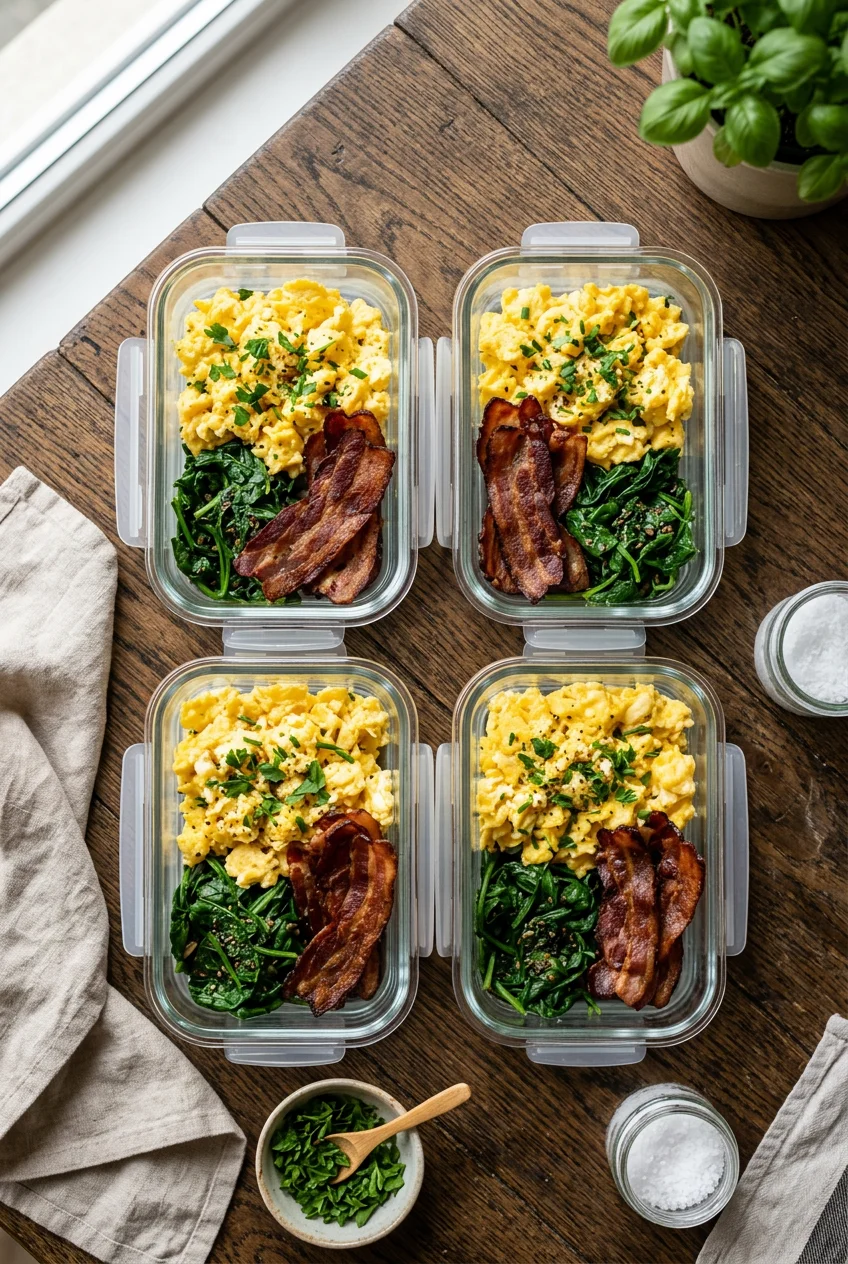
What’s Inside
- Master the Egg Muffin for Grab-and-Go Low Carb Breakfast Meal Prep
- Choose Sugar-Free Bacon Wisely
- Use Your Air Fryer for Crispy Perfection
- Prep Savory Chia Pudding for an Egg-Free Alternative
- Prioritize High-Quality, Unsweetened Dairy Alternatives
- Embrace Low-Carb Sweeteners for Baked Goods
- Prep Breakfast Bags for Quick Scrambles
- Watch Out for Sneaky Carbs in Processed Meats for Low Carb Breakfast Meal Prep
- Incorporate Veggie-Packed Breakfast Bowls
- Don’t Overlook Low-Carb Tortillas for Burritos
Last Tuesday at Whole Foods, I found myself staring blankly at a $9 tiny plastic box of soggy, overpriced egg bites. I realized right then that mastering low carb breakfast meal prep isn’t just about saving money. It’s about avoiding the wet-dish-sponge texture of store-bought desperation. I bought them anyway, ate them cold in the parking lot, and instantly regretted my life choices. The texture was rubbery, the flavor was entirely absent, and I was hungry again forty minutes later. No exaggeration.
If you’re trying to keep your morning carbs down, you already know the struggle. You wake up late, you panic, and you end up eating a handful of plain almonds or skipping breakfast entirely. I tried winging my morning meals for months before figuring out that relying on willpower at 7 AM is a terrible strategy. You need a system. You need real, flavorful food ready to grab the second you open the fridge door.
I’ve spent the last three years refining my morning routine down to an exact science. I don’t spend hours in the kitchen on Sundays. I spend exactly thirty minutes. I prioritize high protein, I strictly monitor hidden sugars, and I refuse to eat anything that tastes like diet food. Skip the fat-free cheese and the watery egg whites. They taste like wet cardboard. Let’s walk through the exact steps, specific brands, and reliable recipes I use to stock my fridge for the week.
1. Master the Egg Muffin for Grab-and-Go Low Carb Breakfast Meal Prep

Egg muffins are the absolute foundation of my weekly routine. I tried making these directly in a bare metal tin for months before figuring out that baked egg permanently fuses to aluminum. Learned that the hard way. I spent more time aggressively scrubbing the hot cast iron pan than I did eating the food. Now, I exclusively use silicone baking cups. I bought a 12-pack of Amazon Basics silicone liners for $8.99, and the eggs pop out perfectly clean every single time.
The formula is simple and highly repeatable. I whisk together 10 to 12 large eggs in a heavy glass mixing bowl. Then, I add my vegetables. I typically use a handful of chopped raw spinach, half a cup of diced red bell peppers, and a handful of finely chopped brown mushrooms. The secret to keeping the carb count low while maintaining rich flavor is the cheese. I use exactly one quarter cup of Target’s Good & Gather shredded sharp cheddar, which costs $2.99 for an 8-ounce bag.
I pour the mixture into the 12-cup silicone-lined tin and bake at 350 degrees Fahrenheit for 15 to 20 minutes. You know they’re done when the centers stop jiggling and the edges turn a light golden brown. I let them cool completely on the counter before moving them to a glass container. If you seal them while they’re warm, the trapped condensation makes them slimy. These sit in my refrigerator for up to five days. Each bite provides a quick, high-protein start to the day with only 1.5 to 2 net carbs.
2. Choose Sugar-Free Bacon Wisely

Bacon seems like an obvious choice for low-carb eating, but most people get this wrong. I certainly did. I bought standard maple-smoked bacon for a year, completely ignoring the nutrition label, and wondered why my blood sugar felt unstable by noon. Almost all conventional bacon is cured with heavy amounts of brown sugar or maple syrup. You must read the labels carefully.
I now buy Applegate Naturals Hickory Smoked No Sugar Uncured Bacon. I pick it up at Sprouts for $7.99 per 8-ounce package. It’s Whole30 approved and contains literally zero sugar. Pederson’s Farms and Naked Bacon are also excellent alternatives if your local store carries them. They usually run between $7 and $10 per pack.
I don’t cook bacon in a frying pan anymore. The grease splatters everywhere, and standing over a hot stove at 6 AM isn’t my idea of a good time. Instead, I cook the entire 12-slice package at once on Sunday afternoon. I line an aluminum baking sheet with parchment paper, lay the slices flat so they aren’t overlapping, and bake them at 400 degrees Fahrenheit for exactly 18 minutes. The oven method renders the fat slowly and evenly. You get perfectly flat, crispy strips that don’t curl up into sad little rubbery knots. Once they cool, I store them in a Ziploc bag in the fridge. I just grab two slices each morning and eat them cold, or I crumble them over my eggs.
3. Use Your Air Fryer for Crispy Perfection

Microwaving leftover eggs is a miserable experience. The microwave turns perfectly good eggs into hot, rubbery bouncing balls. I suffered through soggy reheated breakfasts for far too long before I realized my air fryer could solve the texture problem. I use a Ninja 4-Quart Air Fryer that I bought at Target for $99, and it sits permanently on my kitchen counter.
My current weekly staple is air fryer egg and turkey sausage bites. I mix six beaten eggs with a cup of crumbled, pre-cooked sugar-free turkey sausage. I use Jones Dairy Farm No Sugar Turkey Sausage, which costs about $4.50 at Kroger. I add a handful of shredded mozzarella cheese and pour the mixture directly into individual silicone muffin molds. I set the air fryer to 370 degrees Fahrenheit and cook them for 10 to 12 minutes. You might also like: 20 Clever Aesthetic Food Prep That Actually Work
The circulating hot air creates a slightly crispy, browned exterior that you simply can’t replicate in a standard oven or microwave. The inside stays incredibly soft and fluffy. When I need to reheat these on a busy Wednesday morning, I don’t use the microwave. I toss them back into the air fryer at 300 degrees for exactly three minutes. They crisp right back up. This method keeps the food from becoming soggy and maintains that fresh-cooked texture all week long. You might also like: 15 Brilliant Simple Meal Prep Ideas for a Fresh New Look
![C CREST [10 Pack] Glass Meal Prep Containers](https://m.media-amazon.com/images/I/81HfSfzlqUL._AC_UL320_.jpg)
C CREST [10 Pack] Glass Meal Prep Containers
C CREST [10 Pack] Glass Meal Prep Containers punches above its price — 349 buyers rated it 4.5 stars. I would buy it again.
4. Prep Savory Chia Pudding for an Egg-Free Alternative

Eating eggs every single morning gets incredibly boring. By Thursday, I usually can’t stand the sight of another scramble. Chia pudding offers a highly versatile, egg-free option that takes less than two minutes to prepare. Most people only make sweet chia pudding, which I find cloying and dessert-like. I prefer a savory version that hits the same comforting flavor notes as a warm bowl of grits. You might also like: 15 Inspiring Chicken Meal Prep Ideas You Haven’t Thought Of
The base ratio is always the same. I combine two tablespoons of whole black chia seeds with one cup of unsweetened almond milk in a small glass mason jar. I use Malk Organic Unsweetened Almond Milk. I buy the 28-ounce bottle at Whole Foods for $6.99 because it contains zero gums, zero fillers, and exactly zero grams of sugar. It costs about 38 cents per fluid ounce, which is slightly pricey, but the clean ingredient list justifies the cost.
Instead of adding berries or Lakanto Monkfruit Sweetener, I go the savory route. I add a heavy pinch of coarse sea salt, fresh cracked black pepper, and a dash of onion powder. I screw the lid on tight, shake the jar vigorously for ten seconds, and let it sit overnight in the fridge. When you open the jar in the morning, the texture should be incredibly thick, almost like cement, until you stir it vigorously. The black pepper and onion powder give it a sharp, savory bite. I top it with a heavy sprinkle of Trader Joe’s Everything But The Bagel seasoning right before eating. It stays fresh in the fridge for up to five days.
5. Prioritize High-Quality, Unsweetened Dairy Alternatives

Dairy is a massive trap for hidden carbohydrates. I ruined an entire batch of savory breakfast muffins last year because I accidentally bought vanilla-flavored almond milk instead of plain. The sweet vanilla flavor baked into the sharp cheddar cheese was honestly repulsive. I had to throw the whole pan in the trash. Since then, I triple-check every single carton I buy.
When selecting milk alternatives, you must ensure the label explicitly says unsweetened. Brands like Califia Farms Organic Unsweetened Almondmilk and Silk Organic Unsweetened Almond Milk are excellent choices. They typically contain zero to one gram of net carbs per cup. I use these heavily in my chia puddings and protein shakes.
For actual dairy, I skip the watery, fat-free yogurts entirely. They taste sour and leave me starving an hour later. Instead, I opt for full-fat plain Greek yogurt or Icelandic skyr. My absolute favorite grab-and-go dairy option is the Good Culture portable cottage cheese cups. I buy the 5.3-ounce single-serve cups at Target for $1.49 each. A single half-cup serving delivers 20 grams of high-quality protein and keeps my blood sugar perfectly stable. The full-fat version has a rich, creamy texture that doesn’t feel like diet food. I keep four of these stacked in my fridge at all times for mornings when I lack the time to even use the air fryer.
6. Embrace Low-Carb Sweeteners for Baked Goods

Sometimes you just want a muffin with your morning coffee. Giving up traditional baked goods was the hardest part of lowering my carbohydrate intake. I tried baking with pure stevia extract early on, and the bitter, metallic aftertaste coated my mouth for hours. I threw away dozens of failed low-carb baking experiments before I learned how to properly use modern sugar replacements.
Expert bakers generally agree that erythritol blends offer the best one-to-one sugar replacement for standard baking. I keep a bag of Swerve Confectioners in my pantry, which runs about $7.99 at Walmart. It dissolves easily and doesn’t leave a gritty texture in muffins or low-carb pancakes.
However, if I’m making something that needs a softer texture or a caramelized edge, I exclusively use allulose. Allulose actually browns in the oven just like real cane sugar. I order the Viva Doria Allulose Sweetener in a one-pound bag on Amazon for $11.99. The only catch is that allulose isn’t quite as sweet as standard sugar. It’s only about seventy percent as sweet. When I adapt a recipe, I know I must use one and a third teaspoons of allulose for every one teaspoon of sugar called for. I use this to make a large batch of low-carb almond flour muffins on Sunday, and they stay soft in a sealed container on the counter until Thursday.
![[8-Pack,30 oz]Glass Meal Prep Containers](https://m.media-amazon.com/images/I/713Zfdsgi4L._AC_UL320_.jpg)
[8-Pack,30 oz]Glass Meal Prep Containers
If you want something that just works, [8-Pack is a safe bet (7 reviews, 4.5 stars).
7. Prep Breakfast Bags for Quick Scrambles

This is my most effective trick for the absolute laziest mornings. I call them breakfast bags, and they take all the cognitive load out of cooking. Chopping vegetables at 6:30 AM is completely out of the question for me. I lack the patience, and I won’t wash a cutting board before the sun comes up.
On Sunday afternoon, I chop half of a large red bell pepper into tiny squares. I take 12 slices of the pre-cooked, sugar-free bacon I made earlier and chop them into bits. I line up six standard Ziploc snack bags on my counter. I buy the 90-count box of Ziploc bags at Target for $4.29, though reusable silicone Stasher bags work perfectly too if you prefer them. I divide the chopped peppers and bacon evenly among the six bags. Then, I add a heavy pinch of shredded cheddar cheese to each one.
I toss all six bags into the deli drawer of my fridge. When I wake up, I crack two raw eggs into a ceramic mug and whisk them with a fork. I dump the entire contents of one breakfast bag into the mug and stir. I microwave the mug for exactly 30 seconds, stir the semi-cooked eggs, and microwave for another 30 seconds. The result is a fully cooked, loaded scramble with only 2 grams of net carbs. I eat it straight out of the mug while standing at the kitchen counter.
8. Watch Out for Sneaky Carbs in Processed Meats for Low Carb Breakfast Meal Prep

Assuming all breakfast meats are automatically low-carb is a rookie mistake. I learned this the hard way at a diner when I ate a massive plate of breakfast sausage, tested my blood sugar later, and saw a massive spike. Processed meats are notorious for hiding cheap corn syrup, dextrose, and maltodextrin.
You must become a relentless label reader, especially with sausage and ham. When I buy Italian sausage for my breakfast bowls, I inspect the ingredient list for any mention of sugar or syrup. I frequently buy Premio Sweet Italian Sausage because their traditional links don’t contain added sugars, but you must always check the specific package. The maple-flavored varieties from any brand are an immediate disqualifier. They’re essentially meat candy.
If I’m making prosciutto egg cups in my silicone liners, I buy the Applegate Prosciutto at Whole Foods for $6.49. I line the silicone cups with a single slice of the cured meat, crack a raw egg directly into the center, and air fry them at 325 degrees Fahrenheit for 8 to 10 minutes until the whites are fully set. The prosciutto crisps up into a salty, crunchy shell around the egg. These store perfectly for up to three days. You can reheat them in the air fryer in under three minutes, and you won’t worry about hidden carbohydrate fillers derailing your morning.
9. Incorporate Veggie-Packed Breakfast Bowls

Eating just meat and eggs every day gets heavy. I need fiber in the morning, or I feel sluggish by mid-afternoon. Creating a large batch of vegetable-heavy breakfast bowls is the easiest way to hit my micronutrient goals without spending extra time cooking during the week.
On prep day, I pull out my largest cast-iron skillet. I chop two large portobello mushrooms, a bundle of fresh asparagus, one medium zucchini, and half of a red onion. I sauté the vegetables in olive oil until they’re deeply browned and tender. The earthy mushrooms and snappy asparagus provide incredible texture. Next, I slice up three links of sugar-free Italian sausage and toss them into the skillet to heat through.
I divide this massive mixture into four Pyrex 3-cup rectangular glass containers. I bought a six-pack of these glass containers at Costco for $22.99, and they’re vastly superior to plastic. Plastic absorbs grease and holds onto garlic smells forever. The glass washes completely clean. Each of these bowls contains roughly 8 grams of net carbs and a massive amount of dietary fiber. In the morning, I just pop the glass container in the microwave for 90 seconds. If I’m extra hungry, I’ll fry a quick egg to throw on top, but the bowl usually fills me up on its own.

KOMUEE 10 Packs 30 oz Glass Meal Prep Containers
Honestly, KOMUEE 10 Packs 30 oz Glass Meal Prep Containers surprised me — sturdier than it looks in the photos, and over 46 buyers gave it 4.5 stars.
10. Don’t Overlook Low-Carb Tortillas for Burritos

I missed breakfast burritos intensely when I first cut back on carbohydrates. I tried wrapping my eggs in lettuce leaves for a few weeks, which is exactly as messy and depressing as it sounds. Hot eggs instantly wilt the lettuce, leaving you with a soggy, dripping mess. I finally discovered that modern low-carb tortillas actually taste like real food.
I buy the La Tortilla Factory soft taco-sized low-carb tortillas. A pack of eight costs about $5.49 at my local Kroger. Depending on the exact variety, they contain between 3 and 6 grams of net carbs per tortilla due to the extremely high fiber content. They’re soft, pliable, and don’t crack when you roll them. Took me years to figure out which ones didn’t taste like sawdust.
To prep these, I scramble a dozen eggs with a splash of heavy cream. I lay out five tortillas on my counter. I divide the eggs, add crumbled sugar-free bacon, and sprinkle a little cheese. I roll them tightly, tucking the ends in so the filling doesn’t escape. The La Tortilla Factory wraps hold up perfectly under the weight of the greasy bacon and melted cheese. When you bite into it, the tortilla stretches just like a traditional flour wrap, rather than snapping or crumbling into dust like older diet tortillas used to do. I wrap each burrito individually in plastic wrap. I keep two in the fridge, where they stay fresh for 4 to 5 days. I put the other three in the freezer. They freeze beautifully for up to three months. My goal is always to hit 25 to 35 grams of protein per breakfast, which stabilizes my energy levels all morning. A loaded burrito easily hits that target.
Finding a routine that actually works doesn’t require culinary school skills. It just requires a solid plan and a willingness to read nutrition labels. I’ve completely eliminated the morning panic from my life by sticking to these simple methods. If you prep your proteins, utilize your air fryer, and embrace smart ingredient swaps, you won’t ever rely on a sad, cold protein bar again. Save this page to your bookmarks, or pin it to your meal prep board on Pinterest so you have the exact temperatures and brand names handy for your next grocery run. You’ve got this.
Frequently Asked Questions
How long do low carb breakfast meal prep egg muffins last in the fridge?
Baked egg muffins stay fresh in an airtight glass container in the refrigerator for up to five days. Let them cool completely on the counter before sealing the lid to prevent condensation from making the eggs slimy.
Can you freeze low carb breakfast burritos?
Yes, low carb breakfast burritos freeze beautifully for up to three months. Wrap each burrito tightly in plastic wrap before placing them in a freezer-safe bag. Thaw them overnight in the fridge before reheating in the microwave.
What is the best sweetener for low carb breakfast baked goods?
Erythritol blends work best as a direct one-to-one sugar replacement for standard muffins. If you need the sweetener to brown or caramelize, allulose is the superior choice, though you’ll need to use slightly more since it’s less sweet.
How do you reheat meal prepped eggs without them getting soggy?
The air fryer is the absolute best tool for reheating prepped eggs. Toss your egg bites or cups into the air fryer at 300 degrees Fahrenheit for about three minutes. This restores the slightly crispy exterior while keeping the center fluffy.
