What’s Inside
- Start Small With Easy Healthy Meal Prep For The Week
- Invest in Real, Leak-Proof Containers
- Follow the 50/25/25 Rule for Balanced Plates
- Batch Cook Versatile Components, Not Full Meals
- Don’t Be Afraid of Healthy Convenience Foods
- Prevent Soggy Salads with Strategic Layering
- Prioritize Protein First to Stop the 3 PM Crash
- “FIFO” Your Fridge and Label Absolutely Everything
- Use Smart Kitchen Appliances to Save Your Sanity
- Butterfly Your Chicken for Easy Healthy Meal Prep For The Week
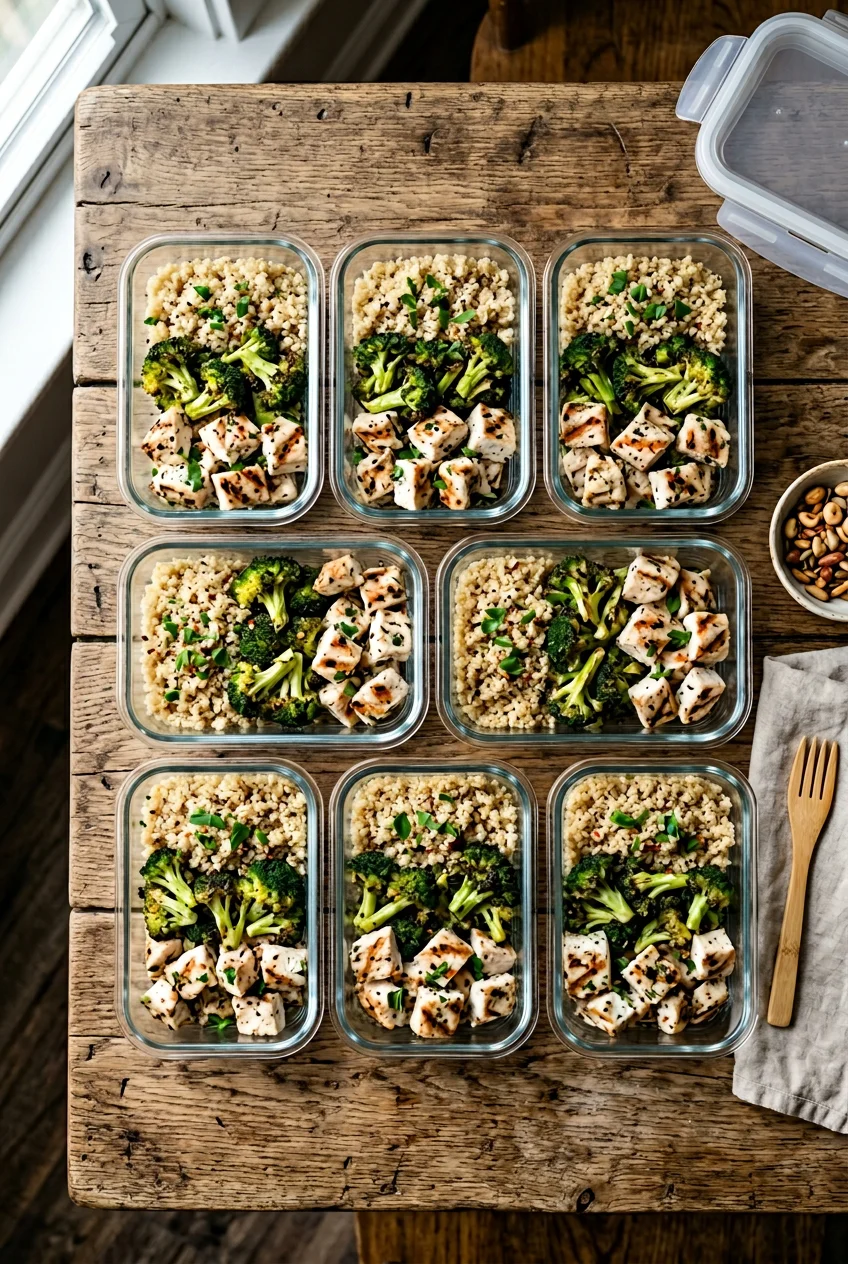
Two years ago, I stood in my kitchen at 11 PM on a Sunday, crying over fourteen identical, soggy plastic containers of rubbery chicken and gray broccoli. Figuring out easy healthy meal prep shouldn’t make you want to order a $30 pizza and toss your Tupperware in the trash. I tried doing it the rigid, fitness-influencer way for months before realizing that making twenty-one identical meals at once is a recipe for misery. The chicken tastes like wet cardboard by Wednesday. The broccoli smells like old socks. It’s just not sustainable. Let’s fix that. Today, I’m sharing my exact system for getting food ready without losing your entire weekend. You don’t need to be a professional chef to make this work. You just need a plan and a few smart shortcuts. I remember last Tuesday at Whole Foods, watching a girl panic-buy pre-made salads that cost twelve dollars each. I wanted to tell her she could make better food at home for a fraction of the price. I’ve made every mistake in the book so you won’t have to. Grab a coffee. Let’s get into the actual nitty-gritty of making your fridge look organized.
1. Start Small With Easy Healthy Meal Prep For The Week

When people decide to get healthy, they usually try to boil the ocean. They buy a hundred dollars worth of groceries and try to prep breakfast, lunch, and dinner for seven days. I did this wrong for months. You end up exhausted, staring at a mountain of dishes, and by Thursday, you’re so sick of your own cooking that you hit the drive-thru anyway. Let’s stop that. Instead of tackling a full week, begin by prepping just one or two meals for three or four days. Breakfast is the easiest place to start. I highly recommend prepping five simple servings of overnight oats. You just need 1/2 cup of Quaker Old Fashioned Oats ($5.29 for a 42 oz canister at Target), 1 cup of unsweetened Almond Breeze almond milk ($3.49 for a half-gallon), and 1/4 cup of fresh mixed berries per jar. That’s it. It takes maybe ten minutes on a Sunday afternoon. You mix it right in the jar, screw the lid on, and shove it in the fridge. The oats soak up the milk and get creamy by morning. The berries bleed this gorgeous purple juice into the oats. It’s stunning and tastes like dessert. Starting small builds your confidence. Once you master breakfast, you can add lunches. This prevents the burnout that makes most people quit before they see results. Trust me. Slow and steady works.
2. Invest in Real, Leak-Proof Containers

Listen carefully. Stop saving those flimsy plastic takeout containers. They warp, they stain orange the second you put chili in them, and they leak all over your car seats. I learned this the hard way last winter. I had a container of tomato soup tip over in my canvas tote bag on the way to work. It looked like a crime scene. It smelled like garlic for a month. The right containers are crucial for your sanity. Opt for durable, microwave-safe glass containers for home use. They don’t retain odors, and you can stick them in the oven if you take the lids off. I swear by the Glasslock 18-Piece Set ($30 to $45 on Amazon) or the Prep Naturals Glass Containers (usually under $25 for quality glass at Walmart). They’re heavy and feel premium. When you open your fridge and see neat stacks, you feel like you’ve got your life together. For portability, if glass is too heavy, you need Rubbermaid Brilliance containers ($25 to $35 for a 10-piece set at Target). They offer excellent leak-proof and stain-resistant Tritan plastic. The latches snap down with a satisfying click. You can hold them upside down and shake them. Nothing comes out. Skip the cheap stuff. It’s not worth the frustration of cleaning teriyaki sauce out of your car upholstery.
3. Follow the 50/25/25 Rule for Balanced Plates

Most people get this wrong when they start packing lunches. They fill the container with pasta, throw in three tiny pieces of chicken, and wonder why they’re asleep by 2 PM. Or worse, they pack a massive salad with no carbs and end up eating four donuts at 3 PM. You need a strategy. Dietitians recommend 50 percent fruits and vegetables, 25 percent lean protein, and 25 percent whole grains or starchy vegetables. This is the golden ratio. For example, a balanced lunch could be 1 cup of roasted broccoli and red bell peppers, 4 ounces of grilled chicken breast, and 1/2 cup of cooked Lundberg Family Farms Organic Brown Rice ($4.99 for a 2 lb bag at Sprouts). The vegetables give you crunch and volume. The protein keeps you full. The brown rice gives you slow-burning energy so you won’t crash. I used to pack bowls of plain white rice and chicken. It tasted bland. It looked beige and sad. Now, I make sure half my glass container is filled with vibrant, roasted veggies. The visual difference alone makes you want to eat it. It smells better. It digests better. When you portion this way, you naturally control your calories without having to weigh every grain on a digital scale. It’s just visual math. It makes everything simpler. You might also like: 15 Gorgeous Chicken Breast Dinner Ideas That Make a Real Difference

M MCIRCO 10-Pack,30 Oz Glass Meal Prep Containers 2
M MCIRCO 10-Pack punches above its price — 23 buyers rated it 4.5 stars. I would buy it again.
4. Batch Cook Versatile Components, Not Full Meals

This is the single biggest secret I can share. Don’t prepare twenty complex recipes on a Sunday. You’ll hate your life. Instead of preparing full meals, focus on cooking larger quantities of staple ingredients. I call this a buffet-style prep. Every Sunday, I cook 3 pounds of Kirkland Signature Organic Chicken Breasts ($5.99 per pound at Costco), 1 massive bag of quinoa, and 4 medium sweet potatoes. I don’t mix them together. I store them in separate glass containers. This prevents meal fatigue. On Monday, I might take 4 ounces of that chicken, 1/2 cup of quinoa, and 1 cup of spinach for a quick salad. On Tuesday, I’ll take 4 ounces of the same chicken, wrap it in a tortilla with 1/4 cup of black beans and some salsa, and I’ve got a burrito. The texture of the chicken stays better when it’s not sitting in a puddle of sauce for four days. You can mix and match these components into bowls, salads, or wraps based on your cravings. I used to make massive vats of chili and force myself to eat it five days in a row. By Thursday, looking at that chili made my stomach turn. Batch cooking individual ingredients gives you freedom. It takes a fraction of the time to roast two pans of plain ingredients than it does to follow four recipes. You might also like: 20 Brilliant Quick Dinner Ideas You’ll Want to Bookmark
5. Don’t Be Afraid of Healthy Convenience Foods

There’s a weird, toxic mindset that if you didn’t grow the vegetable yourself, it doesn’t count. That’s garbage. Save time by using pre-cut vegetables, frozen fruits, and canned goods. These are often just as nutritious and cut down your prep time. I used to spend forty-five minutes peeling and cubing butternut squash. My hands would cramp. My knife would get stuck. I learned that the hard way—I almost lost a finger trying to hack through a tough squash last November. Now? I march into Trader Joe’s and buy their Pre-Cut Butternut Squash Zig-Zags ($3.49 for a 12 oz bag). I dump the bag onto a baking sheet, toss it with 1 tablespoon of olive oil, and roast it. It takes ten seconds. I also rely on canned beans. Just look for the ‘no salt added’ labels. A can of S&W Organic Black Beans ($1.69 at Kroger) just needs a quick rinse. Toss 1/2 cup into your lunch, and you instantly have extra fiber and protein. Frozen vegetables are picked at peak ripeness and flash-frozen. They’re healthy. Stop feeling guilty for taking shortcuts. If buying a $4 bag of pre-washed spinach means you’ll actually eat a salad this week, buy the spinach. Your time and your fingers are worth the extra dollar. You might also like: 15 Inspiring Chicken Meal Prep Ideas You Haven’t Thought Of
6. Prevent Soggy Salads with Strategic Layering

Nothing’s more depressing than opening your lunchbox to find a slimy, wilted pile of brown lettuce. I ate mushy spinach for a year before I discovered the mason jar trick. To keep salads crisp, layer them in a tall jar with the dressing at the very bottom. You must follow this order. Pour 2 tablespoons of Primal Kitchen Ranch Dressing ($6.99 for an 8 oz bottle at Whole Foods) into the bottom of a Ball 32 oz Wide Mouth Mason Jar ($14.99 for a 12-pack at Target). Next, add hardier vegetables like 1/2 cup of chopped carrots, cherry tomatoes, or cucumbers. They can sit in the dressing without getting gross. Next, add your protein, like 4 ounces of chopped chicken or 1/2 cup of chickpeas. Finally, pack the top half of the jar full of delicate leafy greens. The greens stay dry at the top, miles away from the dressing. When you’re ready to eat, dump the jar into a bowl. The greens fall out first, creating a bed, and the dressing-soaked veggies fall on top. It’s practically magic. The crunch of a fresh carrot on a Thursday that was prepped on a Sunday is satisfying. It eliminates the need to carry those annoying, tiny dressing containers that always seem to leak.

Skroam 10 Pack Glass Meal Prep Containers
Skroam 10 Pack Glass Meal Prep Containers has been one of the most consistently praised picks in this category. 57 reviewers averaged 4.5/5.
7. Prioritize Protein First to Stop the 3 PM Crash


If you’re hungry two hours after lunch, you aren’t eating enough protein. Period. I used to pack elaborate vegan salads with just greens, cucumbers, and sunflower seeds. By 3 PM, my stomach would growl so loudly my coworkers could hear it. I’d end up sprinting to the vending machine for a candy bar. You must ensure each meal has a substantial protein source to stabilize your blood sugar. Aim for 30 grams or more for lunch. It changes everything. You feel grounded and focused. Great examples include 6 ounces of grilled chicken breast, 5 ounces of seasoned ground turkey, or 1 cup of Fage Total 2% Greek Yogurt ($6.49 for a 35.3 oz tub at Walmart). The Greek yogurt is thick and tart. It feels rich. If you top 1 cup of that yogurt with 1/4 cup of almonds and a drizzle of honey, you’ve got a massive protein hit that tastes like dessert. Protein takes longer for your body to break down. It acts like an anchor for your appetite. When I started prioritizing protein, my afternoon brain fog disappeared. Skip the fat-free, sugar-laden snack packs. They taste like wet cardboard and leave you starving. Build your meal around the protein first, then add veggies and carbs. It’s a non-negotiable rule in my kitchen.
8. “FIFO” Your Fridge and Label Absolutely Everything

We need to talk about fridge organization. If you just shove your containers in randomly, you’ll end up with science experiments in the back corner. I can’t tell you how many times I’ve had to throw away entire glass containers because I forgot what was inside and was too terrified to open the lid. Use the ‘First In, First Out’ method. It’s a standard professional kitchen hack. When you put new food in, push the older stuff to the front. You must also label everything. Don’t trust your memory. You won’t remember if that shredded pork was made on Sunday or Wednesday. Grab a roll of Scotch Blue Painter’s Tape ($4.98 at Target) and a Sharpie Fine Point Marker ($2.50). Tear off a piece of tape, write the meal and date, and stick it on the lid. ‘Chicken & Rice – Oct 12’. It takes five seconds. The blue tape peels off glass and plastic perfectly without leaving sticky residue. Seeing those neat labels lined up on your shelves is calming. It removes the guesswork from your mornings. You just grab the container at the front and walk out the door. This simple hack prevents forgotten food and saves you money by reducing waste.
9. Use Smart Kitchen Appliances to Save Your Sanity


You don’t need to stand over a hot stove for three hours. That’s exhausting and unnecessary. Use tools like an Instant Pot or a slow cooker to do the heavy lifting. I used to burn brown rice constantly. It would stick to the bottom of my saucepan and form an impenetrable crust. Now, I use my Instant Pot Duo 7-in-1 ($99.95 on Amazon). I dump in 1 cup of brown rice and 1.25 cups of water, press a button, and walk away. It cooks perfectly fluffy rice in twenty minutes. Every grain is tender. I also rely on sheet pan meals for minimal cleanup. You need a heavy-duty pan that won’t warp. I love the Nordic Ware Commercial Baker’s Half Sheet ($17.99 at Target). You can chop 2 cups of broccoli, 2 cups of sweet potatoes, and 1 cup of Brussels sprouts. Toss them with 2 tablespoons of olive oil, salt, and pepper. Spread them out on two sheets and roast them at 400 degrees. The edges of the Brussels sprouts get crispy and caramelized. The sweet potatoes get soft. You get a massive volume of roasted vegetables with one pan to wash. Let the appliances do the work while you fold laundry or watch a show. It makes the process feel effortless.

Vtopmart 5Pack 22oz Glass Storage Containers with Lids
If you want something that just works, Vtopmart 5Pack 22oz Glass Storage Containers with Lids is a safe bet (34 reviews, 4.5 stars).
10. Butterfly Your Chicken for Easy Healthy Meal Prep For The Week


This is the ultimate trick for cooking chicken breasts that actually taste good. A standard chicken breast is thick in the middle and thin at the ends. If you just throw it on a pan, the thin ends turn into dry, stringy jerky while the middle stays raw. It’s disgusting. To fix this, butterfly your chicken breasts to a uniform 1/2-inch thickness. Lay the chicken flat on a cutting board, take a sharp knife, and slice it horizontally through the middle, opening it up like a book. Suddenly, you’ve got two thinner cutlets of the same thickness. I rub them with 1 tablespoon of olive oil and 1 teaspoon of Simply Organic Garlic Powder ($5.49 at Sprouts). Then, I roast them at 400 degrees Fahrenheit for 20 to 25 minutes. Ensure the internal temperature hits 165 degrees. Because they’re thin and uniform, they cook fast and evenly. The outside gets a golden sear, and the inside stays juicy. The seasoning distributes better, too. Every bite has flavor. I used to dread eating my prepped chicken by Wednesday because it was so dry I had to choke it down with water. Butterflying solved that. It takes two extra minutes of knife work and yields protein you’ll actually want to eat.
We’ve covered a lot of ground. I know getting your fridge organized can feel overwhelming, but once you build these habits, they become second nature. You’ll save money, feel better, and get your Sunday evenings back. I highly recommend starting with the overnight oats this weekend. Just try it once. If you found this helpful, please pin this post to your favorite meal prep board on Pinterest so you can find it later. You’ve got this.
Frequently Asked Questions
How long does easy healthy meal prep for the week take?
It shouldn’t take your whole Sunday. By batch-cooking versatile ingredients and using smart appliances like an Instant Pot, you can finish a complete easy healthy meal prep for the week in under two hours.
How long do prepped meals stay good in the fridge?
Most prepped proteins and roasted vegetables stay fresh in airtight glass containers for 3 to 4 days. I’d recommend freezing anything you won’t eat by Thursday to prevent food waste and ensure maximum freshness.
Can I freeze my prepped meals?
Yes, absolutely. Soups, stews, and brown rice freeze incredibly well. Just ensure you’re using freezer-safe containers and leave a little room at the top for expansion. Don’t freeze fresh salads or raw vegetables, as they’ll turn to mush.
How do I stop my chicken from drying out?
The secret is butterflying your chicken breasts to a uniform 1/2-inch thickness before roasting. This ensures even cooking. Also, store your cooked chicken separately from acidic sauces until you’re ready to eat so it doesn’t break down and get rubbery.
