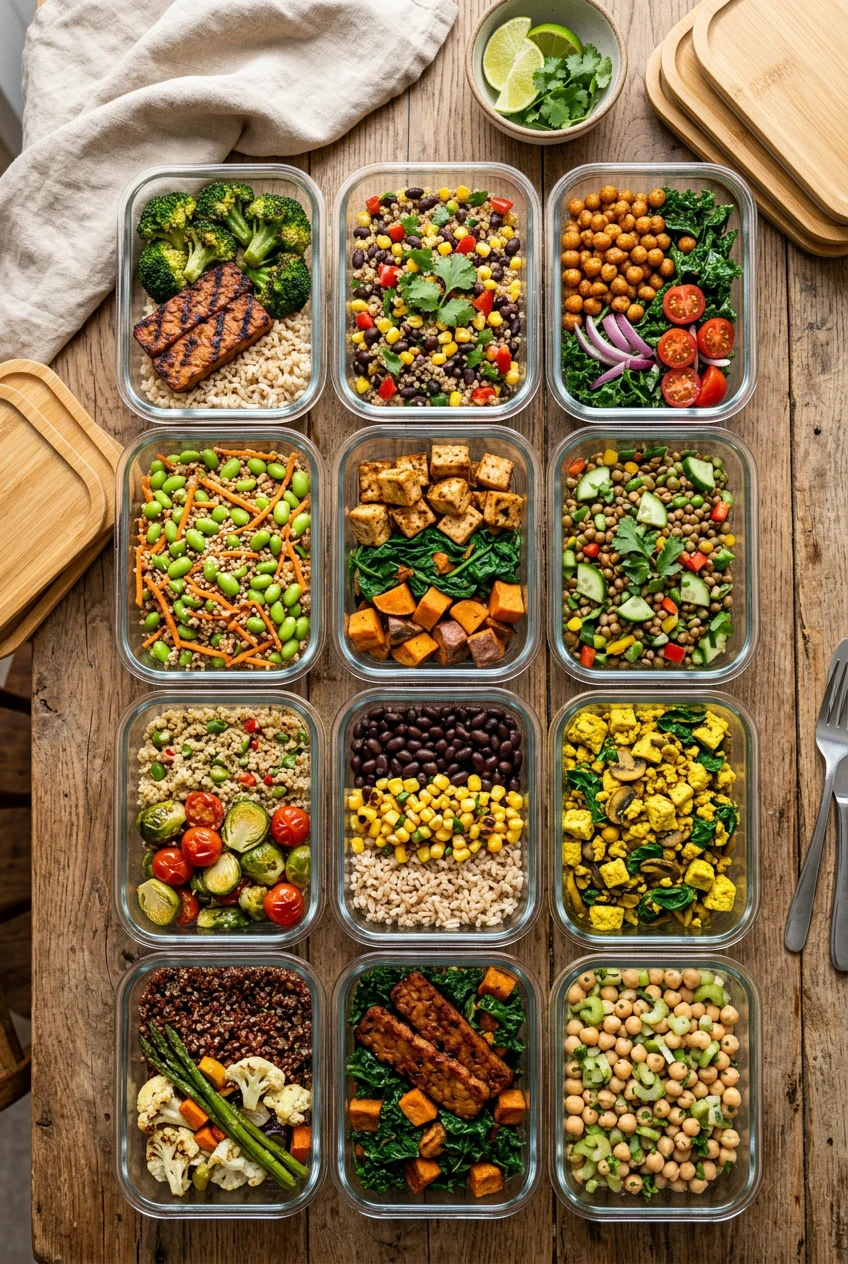
What’s Inside
- Master Tofu Pressing for Vegan High Protein Meal Prep
- Batch Cook Legumes in an Instant Pot for Efficiency
- Make Your Own Seitan for Lean Macros
- Pre-Portion Smoothie Packs for Quick Mornings
- Don’t Underestimate Edamame and Quinoa Bowls
- Strategic Use of Nutritional Yeast for Umami
- Fermented Tempeh for Enhanced Digestion
- Sneak in Hemp Seeds as a Topping Powerhouse
- Rotate 4-5 Meals to Prevent Vegan High Protein Meal Prep Burnout
- Optimize Storage with Glass Containers
- Explore New Mycelium and Plant-Based Seafood Innovations
Last Tuesday at Whole Foods, I caught my exhausted reflection in the bulk bin aisle glass while holding a sad, dripping block of waterlogged tofu. That was my absolute rock bottom before finally mastering vegan high protein meal prep. I used to think hitting my fitness macros meant choking down chalky, gritty protein shakes and plain, unseasoned black beans until my jaw ached. I’d spend four hours every Sunday chopping vegetables until my hands cramped, only to end up with a fridge full of soggy, flavorless mush I dreaded eating by Wednesday. It was a miserable cycle of wasting money and losing my motivation to eat clean. But after years of trial, error, and throwing away stained plastic containers, I finally cracked the code. You don’t need a culinary degree or an unlimited grocery budget to make plant-based eating work. You just need a solid strategy, the right tools, and a willingness to stop making the same basic mistakes I made for years. I’m going to walk you through exactly how I stock my fridge with delicious, macro-friendly meals that actually taste good. Let’s fix your Sunday routine.
1. Master Tofu Pressing for Vegan High Protein Meal Prep

I tried this wrong for months before figuring it out. I’d just squeeze a block of House Foods extra-firm tofu ($2.99 at Sprouts) between two flimsy paper towels and wonder why my stir-fry ended up looking like gray, mushy soup. I ruined so many dinners this way. Skip the paper towel method entirely. It’s a massive waste of paper, and the tofu tastes like wet cardboard anyway when it doesn’t absorb your marinade. You need a dedicated tofu press. I bought a basic, spring-loaded plastic one on Amazon for $22.99, and it fixed my texture issues overnight. Now, I press my tofu for at least 30 minutes right when I start my meal prep. This consistent pressure forces all that excess water out into the drip tray. The result? The tofu acts like a sponge. It absorbs soy sauce and ginger marinades deeply and gets crispy when you pan-fry or bake it in a hot cast iron pan. A standard block gives you about 35 grams of protein, but if it’s soggy, you won’t want to eat it. I learned that the hard way. I usually prep four whole blocks on Sunday afternoon. The rich, savory smell of toasted sesame oil soaking into perfectly pressed tofu cubes is the best part of my weekend. Don’t skip this step. It’s mandatory for a good, chewy texture.
2. Batch Cook Legumes in an Instant Pot for Efficiency

Most people get this completely wrong when they start eating plant-based for fitness. They buy endless, heavy cans of pre-cooked beans at $1.59 each from Target. That gets expensive fast, and your grocery bags weigh a ton. Instead, you need to batch cook dried legumes in an Instant Pot. I scored my basic 6-quart Instant Pot at Walmart for $89, and it paid for itself in two months. Here’s my foolproof method for lentils. I take 1 cup of dry red split lentils (usually just $1.99 for a one-pound bag) and add exactly 2 cups of filtered water. I set the Instant Pot to high pressure for 8 to 10 minutes, then let the steam naturally release. This ratio yields about 3 cups of cooked, fluffy lentils. You’re looking at roughly 18g of plant protein per cooked cup. I used to try boiling lentils on the stovetop constantly. I’d walk away for two minutes, and the bottom of the pot would turn into a scorched, black, bitter nightmare that took days to scrub clean. The Instant Pot fixes that completely. The texture comes out perfectly creamy and tender every time. I divide these into four glass containers for my weekday lunches. It saves so much money, time, and physical effort.
3. Make Your Own Seitan for Lean Macros

Store-bought seitan is overpriced for what you actually get. I paid $6.49 for a tiny, vacuum-sealed 8-ounce box at Whole Foods last month, and I finished the entire package in one sitting just trying to hit my macros. That’s not sustainable for a weekly grocery budget. Embracing homemade seitan is the only way to go if you want serious, lean protein without going broke. You just need a bag of vital wheat gluten. I always grab the Bob’s Red Mill brand for about $7.49 a pound at my local Kroger. When you mix 2 cups of vital wheat gluten (about 250g) with some savory vegetable broth and smoked paprika, you yield around 800g of dense, homemade seitan. The macros on this stuff are insane. You get about 31g of protein per 100g serving, with only 146 calories. It’s basically pure protein. My first attempt at making seitan from scratch was a total disaster. I kneaded the dough way too much, and it came out with the exact texture of a rubber car tire. I couldn’t chew it. The trick is to barely mix it with a spoon until it comes together, then steam it gently in foil. The savory, meaty smell while it steams is incredible. You can slice it paper-thin for sandwiches or chunk it up for stews. You might also like: 15 Clever Family Dinner Ideas for a Fresh New Look

M MCIRCO 10-Pack,30 Oz Glass Meal Prep Containers 2
Honestly, M MCIRCO 10-Pack surprised me — sturdier than it looks in the photos, and over 23 buyers gave it 4.5 stars.
4. Pre-Portion Smoothie Packs for Quick Mornings

I’m not a morning person. If my breakfast isn’t ready to consume in two minutes flat, I’ll just eat a handful of dry cereal standing over the sink and regret it by 10 AM. That’s why I rely on pre-portioned freezer smoothie packs. On Sunday afternoons, I line up five reusable silicone Stasher bags ($12.99 each at Target) on my kitchen counter. Inside each bag, I dump exactly 1 scoop of vegan protein powder. I recommend diversifying your protein powders for a complete amino acid profile. I usually alternate between Orgain Organic Protein ($29.99 for a massive 2-pound tub at Costco, yielding 21g protein per serving) and Garden of Life Sport Organic Plant-Based Protein ($34.99 at Sprouts, giving about 30g protein per two scoops). Then I add a large handful of fresh baby spinach, half a sliced ripe banana, and 1 cup of frozen mixed berries. During the hectic work week, I just grab a frozen bag, dump the icy contents straight into my high-speed blender, add 1.5 cups of unsweetened vanilla soy milk, and blend on high. The cold, thick, sweet berry texture wakes me right up. It’s a 30g protein breakfast that requires zero brain power at 6 AM. You might also like: 20 Clever Quick Lunch Ideas You Haven’t Thought Of
5. Don’t Underestimate Edamame and Quinoa Bowls

People always ask me where I get my protein, and they usually expect some complicated answer involving obscure supplements. Honestly, my favorite secret weapons are just plain edamame and quinoa. They’re basic, cheap ingredients, but they pack a nutritional punch. A single cup of shelled, cooked edamame provides a whopping 17g of protein. A cup of cooked quinoa adds another 8g of complete protein. That’s 25g of solid plant protein before you even add a peanut sauce or any other roasted veggies to your bowl. I always buy the massive 3-pound bags of frozen, pre-shelled edamame from Costco for about $10.99. I also grab their 4.5-pound bulk bag of organic white quinoa for $12.99. I used to hate quinoa because I wouldn’t rinse it before cooking. It always tasted like dusty, bitter sand. Always rinse your dry quinoa in a fine mesh strainer under cold water for at least thirty seconds. It washes away the naturally occurring, bitter coating called saponin. Now, my quinoa cooks up fluffy and slightly nutty. I toss the hot, steaming quinoa and bright green edamame together with 2 tablespoons of low-sodium soy sauce and a splash of tangy rice vinegar. The vibrant green color looks so fresh and appetizing in my prep containers. You might also like: 20 Cozy High Protein Lunch Ideas for Any Style
6. Strategic Use of Nutritional Yeast for Umami

If you aren’t using nutritional yeast in your kitchen, you’re doing plant-based eating wrong. I keep a massive, bulk-sized jar of it on my counter at all times because I use it daily. Specifically, I buy the classic Bragg Nutritional Yeast ($8.99 for the 4.5 oz shaker bottle at Walmart). It’s got a deeply savory, intensely cheesy, umami flavor that fixes almost any bland, boring dish. Plus, it’s a nutritional powerhouse for vegans. Just 2 tablespoons give you 8g of complete protein and a huge dose of fortified Vitamin B12, which is critical since we don’t naturally get B12 from unfortified plants. I sprinkle it over crispy roasted broccoli, mix it into soft tofu scrambles, and blend it into creamy cashew-based pasta sauces. The bright yellow flakes melt right into hot foods, creating a velvety texture. A quick warning from personal experience, though. Do not inhale deeply while shaking it over your hot food. The fine, dusty powder will go straight up your nose and make you sneeze violently. I did this last week while making mac and cheese sauce, and my entire kitchen counter was covered in yellow dust. Trust me on this. Use a measuring spoon to scoop out exactly 2 tablespoons instead. It upgrades your meals.

Skroam 10 Pack Glass Meal Prep Containers
Honestly, Skroam 10 Pack Glass Meal Prep Containers surprised me — sturdier than it looks in the photos, and over 57 buyers gave it 4.5 stars.
7. Fermented Tempeh for Enhanced Digestion

Tempeh is one of those traditional foods that scares people new to plant-based eating. It looks like a dense, beige brick of bumpy, glued-together beans. I get the hesitation. But you really need to get over the visual aspect because it’s incredible for your gut health. Since tempeh is traditionally fermented, it’s packed with natural probiotics that aid your digestion and prevent bloating. Plus, it delivers a solid 19g of protein per 4-ounce serving. I buy the Trader Joe’s Organic 3-Grain Tempeh for $2.29 a pack. It’s consistently the cheapest I’ve found, and the quality is great. My biggest, most embarrassing mistake with tempeh was trying to eat it raw crumbled over a salad once. It tasted bitter, sour, and earthy, almost like potting soil. You have to steam it first. I cut the block into 1-inch thick cubes and steam them in a metal basket over boiling water for 10 minutes. This opens up the tight pores and removes all that harsh, bitter flavor. After steaming, I marinate the warm cubes in 3 tablespoons of thick barbecue sauce and pan-fry them in a skillet until the edges get sticky and deeply caramelized. The chewy, firm, meaty texture is satisfying.
8. Sneak in Hemp Seeds as a Topping Powerhouse

Sometimes you finish prepping a beautiful meal, calculate the final macros on your phone, and realize you’re just a few grams short of your protein goal for the day. That’s when I bring out the hemp seeds. They’re my favorite cheat code for adding stealthy, effortless protein to anything. I always buy the Manitoba Harvest Hemp Hearts. An 8-ounce bag runs about $12.49 at my local Kroger. They’re tiny, soft, and have a mild, pleasantly nutty flavor that doesn’t overpower the rest of your food. Just 3 tablespoons of these little green and white seeds provide roughly 10g of complete protein and a dose of anti-inflammatory omega-3 fatty acids. I sprinkle them over my hot morning oatmeal, blend them invisibly into my thick protein shakes, and toss them over my crisp lunchtime salads. Because they’re naturally soft, they don’t add a weird, distracting crunch to smooth foods like yogurt. I used to buy cheap, generic hemp seeds from a bulk bin, but they tasted rancid and smelled exactly like old oil paint. The delicate oils in hemp seeds go bad quickly. Always buy them in a properly sealed bag and store them strictly in the fridge once opened.
9. Rotate 4-5 Meals to Prevent Vegan High Protein Meal Prep Burnout

Eating the exact same thick lentil stew for five days straight is a guaranteed way to hate your life by Thursday afternoon. I used to prep huge, heavy vats of spicy bean chili on Sundays, and by Wednesday night, I’d end up ordering a $25 greasy vegan pizza on DoorDash because I couldn’t stomach looking at another bowl of beans. Lack of variety leads to massive, expensive burnout. Nutrition experts highly recommend rotating 4 to 5 completely different high-protein meals throughout your week. This prevents flavor fatigue and ensures you’re getting a broader spectrum of essential micronutrients. I aim for exactly 20 to 30 grams of protein per meal to maintain my energy and satiety. So, my current weekly rotation looks a bit like this. Monday is a spicy, chewy seitan stir-fry. Tuesday is a massive, crunchy edamame and quinoa bowl. Wednesday is a savory tofu scramble wrap. Thursday is a rich, creamy coconut lentil curry. Friday is sticky barbecue tempeh with roasted sweet potatoes. It sounds like a lot of work, but I just prep the plain proteins in bulk on Sunday and mix and match my carb sources and sauces each morning.

Vtopmart 5Pack 22oz Glass Storage Containers with Lids
Vtopmart 5Pack 22oz Glass Storage Containers with Lids punches above its price — 34 buyers rated it 4.5 stars. I would buy it again.
10. Optimize Storage with Glass Containers

Please, I’m begging you, throw away those flimsy, warped, permanently stained plastic takeout containers. They aren’t doing you any favors, and they’re ruining your carefully prepped food. I prepped a beautiful, vibrant yellow tofu turmeric scramble last year and stored it in a cheap plastic tub I saved from a restaurant. Two days later, the food tasted faintly like old dish soap, and the plastic was permanently stained a toxic-looking neon yellow. It was disgusting, and I had to throw the container away anyway. You must optimize your storage with high-quality, airtight glass containers. I personally swear by the heavy-duty Pyrex 18-piece glass storage set. I picked mine up at Target for $44.99 on sale. Glasslock is another fantastic brand if you prefer the really secure snap-on lids. Glass is non-toxic, doesn’t retain weird garlic smells, and prevents nasty flavor transfer between meals. It also keeps your delicate salad greens crisper for days longer than cheap plastic ever could. Plus, you can pop a cold glass container straight into the microwave or oven without worrying about melting harmful chemicals into your healthy lunch. The heavy, solid, clinking sound of stacking sparkling clean glass containers in my fridge gives me so much aesthetic peace of mind.
11. Explore New Mycelium and Plant-Based Seafood Innovations

The vegan protein market is exploding right now, and you don’t have to stick strictly to plain beans and tofu anymore if you don’t want to. I highly recommend exploring the new wave of mycelium-based proteins. Mycelium is basically the intricate root structure of mushrooms, and it naturally grows into a dense, meaty texture. I recently tried the Meati Foods Classic Cutlets ($8.99 for a frozen two-pack at Sprouts). The fibrous texture is shockingly close to a whole-cut chicken breast. When you sear it in a screaming hot pan with a little olive oil and salt, it gets a gorgeous, savory brown crust and pulls apart in actual shreds. It packs a solid 17g of protein per cutlet. Plant-based seafood is also trending incredibly hard. I used to miss the light, flaky texture of fish, but brands are getting so good at replicating it using seasoned pea protein bases. I constantly buy the Good Catch Foods Plant-Based New England Style Crab Cakes ($6.49 at Whole Foods). They crisp up beautifully in the air fryer in just ten minutes and give you 20g of clean protein per serving. Don’t be afraid to try these slightly pricier new innovations.
Wrapping up your Sunday cooking session doesn’t have to be a stressful, all-day chore that ruins your weekend. Once you get the hang of pressing your tofu properly, utilizing your Instant Pot for bulk lentils, and sneaking hemp seeds into your smoothies, your entire work week becomes easier. I’ve been doing this for years now, and honestly, the peace of mind that comes from opening a clean fridge full of perfectly stacked, vibrant glass containers is totally unmatched. You don’t have to panic or stress about hitting your daily protein macros when all the difficult math and prep work is already done for you. It frees up so much mental energy. No exaggeration. If you found these honest tips helpful, or if you’re just tired of eating sad, bland salads at your desk, please save this post or pin it to your favorite healthy recipe board on Pinterest so you can reference it before your next Sunday grocery run!
Frequently Asked Questions
How much protein should I aim for per vegan meal?
Experts recommend aiming for 20 to 30 grams of protein per meal to maintain your energy and keep you full. You can easily hit this by combining sources like edamame, quinoa, and pressed tofu in a single bowl.
Is it cheaper to make your own seitan?
Yes, absolutely. Store-bought seitan can cost over six dollars for a tiny box. If you buy a bag of vital wheat gluten for around seven dollars, you can make multiple batches of dense, lean homemade seitan for a fraction of the price.
How long does vegan meal prep last in the fridge?
Most plant-based meals last four to five days in the fridge if stored properly. I highly recommend using airtight glass containers instead of plastic. Glass prevents weird flavor transfers and keeps your greens crisper for much longer.
Can I freeze vegan protein smoothies?
Yes, freezing pre-portioned smoothie packs is my favorite morning hack. Just load silicone bags with your favorite vegan protein powder, fresh spinach, and frozen berries. When you wake up, dump the frozen contents into a blender with soy milk.
