What’s Inside
- Prioritize Lean Protein Sources with Specific Quantities
- Generously Incorporate Non-Starchy Vegetables
- Smartly Utilize Low-Carb Protein Powders
- Invest in Proper Meal Prep Low Carb High Protein Containers
- Master Low-Carb Condiments and Sauces
- Avoid the “Too Much Protein” Mistake
- Leverage AI for Personalized Meal Planning
- Incorporate “Fibermaxxing” for Gut Health and Satiety
- Don’t Underestimate the Power of Cottage Cheese
- Optimize Nutrient Timing for Meal Prep Low Carb High Protein
I spent three hours last Sunday scraping burnt, rubbery chicken off a cheap aluminum baking sheet while realizing my entire week of food was completely ruined. Figuring out meal prep low carb high protein routines didn’t happen overnight for me. I tried doing this wrong for months before I actually understood the mechanics of feeding myself. I’d pack plain boiled chicken and limp spinach into flimsy plastic tubs, only to throw it all in the trash by Wednesday because the texture was like wet cardboard. You can’t survive on dry meat and sad lettuce. If you’re trying to eat clean without spending your entire paycheck or weekend in the kitchen, you need a system that actually works in the real world. I’m Esperanza Eliza, and I run simpleprepsunday.com to help people avoid my early, expensive mistakes. Today, I’m breaking down exactly how I structure my food for the week. No vague advice. Just the exact measurements, brands, and grocery store strategies I use right now. Let’s get into the specifics of how to build meals that survive the fridge.
1. Prioritize Lean Protein Sources with Specific Quantities

If you don’t weigh your protein, you’re guessing, and guessing usually leads to mid-afternoon hunger crashes. I aim for 25 to 35 grams of protein per main meal to maintain muscle and actually feel full. That translates to a 4 to 5 ounce (roughly 113 to 142g) serving of cooked chicken breast, 4 ounces of salmon, or 4 ounces of 90/10 ground beef. I used to buy those tiny, overpriced meat packs at my local grocer until I realized I was bleeding cash. Learned that the hard way. Now, I buy the Kirkland Signature Organic Chicken Breasts at Costco. A 6-pound pack costs around $24.99, which brings my per-meal cost way down. I divide the 6-pound pack into individual freezer bags the minute I get home. If I leave it in the original packaging, it leaks chicken juice all over my fridge shelves. I portion them out, season them heavily with smoked paprika and salt, and bake them on a wire rack so they don’t sit in their own juices and get soggy. One mistake I made early on was buying 99 percent lean ground turkey to save calories. Skip the fat-free stuff. It tastes like wet cardboard. The 90/10 ground beef gives you the necessary fat to keep the meat from turning into dry crumbles when you reheat it in the microwave on Tuesday. You need some moisture for the food to survive the fridge environment for four days.
2. Generously Incorporate Non-Starchy Vegetables

Filling half your container with non-starchy vegetables is non-negotiable if you want your digestion to function properly. I neglected this for a whole year. I’d eat just meat and a sprinkle of spinach, and I felt permanently bloated. You need volume. Excellent low-carb options include broccoli, cauliflower rice, spinach, bell peppers, zucchini, and asparagus. My current rotation relies heavily on Trader Joe’s Organic Riced Cauliflower. It costs $2.99 for a 12-ounce bag. Swapping regular white rice for a 1-cup serving of this cauliflower rice cuts my carbohydrate intake drastically while adding a ton of bulk to the meal. I roast it with olive oil and garlic powder until the edges get crispy. If you microwave it straight from the bag, it turns into a watery, sulfur-smelling mush. Don’t do that. Roast it on a hot sheet pan at 400 degrees for 20 minutes. I also grab the big $4.99 bags of fresh broccoli florets from Trader Joe’s. I chop them smaller than they come in the bag so they cook evenly alongside the cauliflower. I learned the hard way that massive broccoli chunks stay raw in the middle while the tiny florets burn to ash. The crunch holds up beautifully in glass containers, even by Thursday afternoon.
3. Smartly Utilize Low-Carb Protein Powders

Sometimes you don’t have time to chew a chicken breast. Low-carb protein powders offer a fast way to hit that 20 to 25 grams of protein target with less than 5 grams of carbohydrates. I keep a tub of Isopure Zero Carb in Creamy Vanilla on my counter. It delivers 25g of protein and 0g carbs per scoop. I buy the 3-pound tub at Sprouts for about $54.99, which breaks down to roughly $1.60 per serving. Another solid option is Klean Athlete Klean Isolate, which gives you 20g of protein and 1g of carbs, usually costing around $2.50 per serving. I tried a cheaper, generic whey concentrate last summer and it gave me horrible stomach cramps and clumped up like wet cement in my shaker bottle. The isolates blend much smoother. I mix one scoop of the Isopure with 8 ounces of unsweetened almond milk and a handful of ice. It’s thin, cold, and doesn’t leave a chalky film on my teeth. I also bake with it, folding half a scoop into my morning chia pudding to bump up the macros without adding any gritty texture. The powder dissolves instantly, unlike pea protein which always leaves a sandy residue at the bottom of my bowl. You might also like: 15 Cozy Easy Dinner Ideas for Every Budget
![[8-Pack,30 oz]Glass Meal Prep Containers](https://m.media-amazon.com/images/I/713Zfdsgi4L._AC_UL320_.jpg)
[8-Pack,30 oz]Glass Meal Prep Containers
If you want something that just works, [8-Pack is a safe bet (7 reviews, 4.5 stars).
4. Invest in Proper Meal Prep Low Carb High Protein Containers

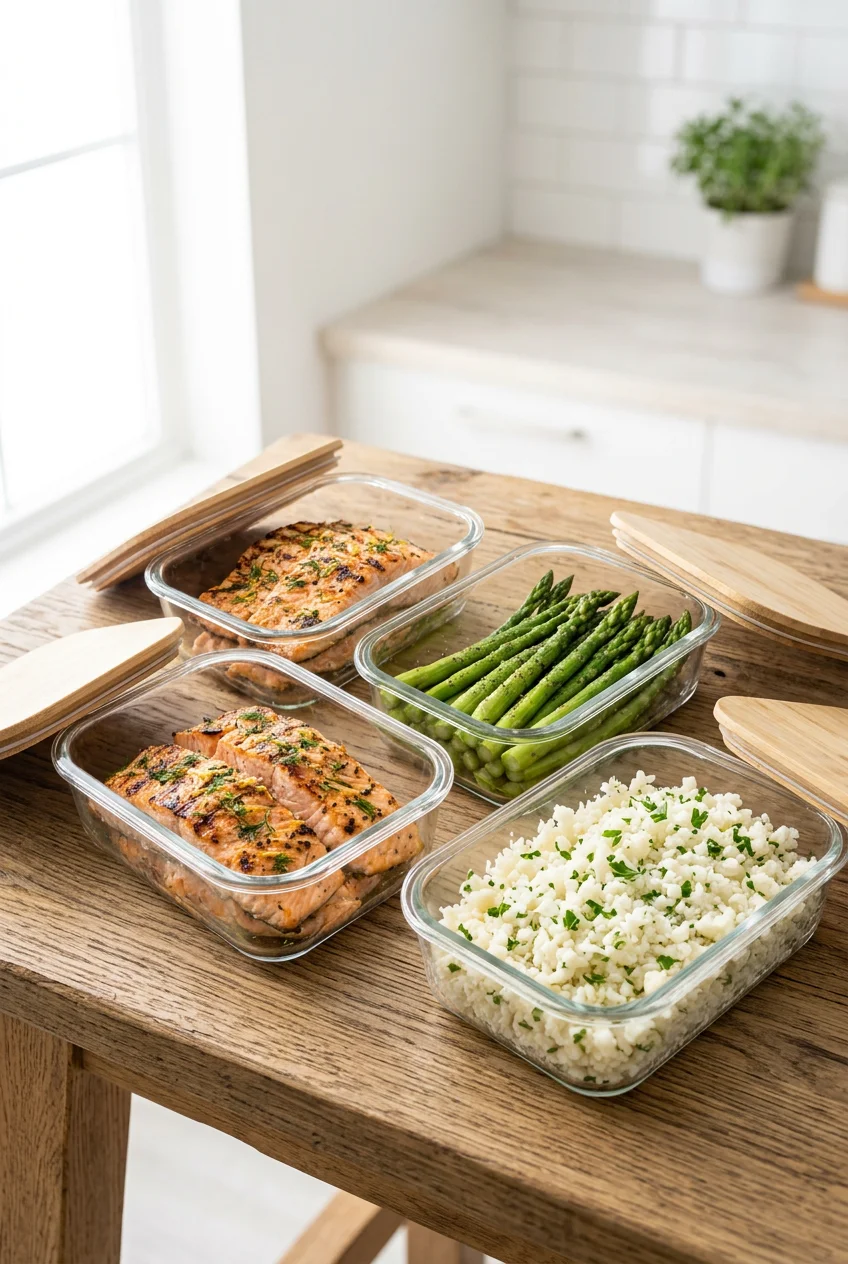
Storing your meal prep low carb high protein recipes in cheap plastic takeout containers is a rookie error. I did this during my first year of prepping. The plastic absorbed the smell of garlic salmon, stained orange from paprika, and warped in the dishwasher. You need glass for the main meals. I use Glasslock and Pyrex containers because they don’t absorb odors, stain, or release weird chemicals when heated. I bought an 18-piece Pyrex glass set at Target for $39.99. They are heavy, yes, but they go straight from the cold fridge to the hot microwave safely without shattering. I used to use cheap plastic bowls from the dollar store, and they literally melted into my meatballs once. For snacks or cold items that I need to throw in my tote bag without worrying about weight or shattering, I use Rubbermaid Brilliance BPA-free plastic containers. A 10-piece set runs about $22.99 at Target. They have a latching lid system that is completely leak-proof. I tested this accidentally by dropping a container of vinaigrette down my front steps. The plastic scuffed, but the seal held tight. The clear plastic also lets me see exactly what’s inside without opening the lid, which stops me from forgetting about the chopped bell peppers hiding in the back of my fridge.
5. Master Low-Carb Condiments and Sauces

Dry food is the enemy of consistency. But conventional sauces are basically liquid sugar. I ruined a perfectly good week of lean ground beef by drowning it in a store-bought teriyaki sauce that had 14 grams of sugar per tablespoon. Now, I read every single label. I stock my pantry with Primal Kitchen Avocado Oil Mayonnaise, which has 0g carbs per tablespoon. A 12-ounce jar costs about $9.99 at Kroger. It’s expensive, but the texture is rich and it doesn’t separate into a greasy mess when mixed into a chicken salad. I also use G Hughes Sugar Free Honey Mustard. It has 1g of carbs per 2 tablespoons and costs $3.49 a bottle. It’s a bit thinner than regular honey mustard, but it glazes a baked pork chop perfectly. The 2026 trend of high-protein condiments is also valid. I make my own spicy mayo by blending 2 tablespoons of cottage cheese with a teaspoon of sriracha. It adds moisture and protein without the empty calories. If your food tastes boring, you won’t eat it. Trust me on this. Spending $10 on a high-quality, low-carb sauce saves you from ordering a $25 delivery pizza when you get frustrated with bland chicken. You might also like: 11 Meal Prep Lunch Ideas That Actually Work
6. Avoid the “Too Much Protein” Mistake

Most people get this wrong when they start cutting carbs. They panic about being hungry and eat 60 grams of protein in one sitting. I did this in 2023. I was eating massive 10-ounce steaks for dinner, wondering why I felt sluggish and wasn’t seeing results. Registered dietitians point out that consuming excessive protein can lead to gluconeogenesis. This is a process where your body actually converts that excess protein into glucose, which spikes your blood sugar and can kick you out of ketosis if you’re tracking that. You need adequate protein, not excessive protein. Stick to the 4 to 5 ounces I mentioned earlier. To actually feel full, you need to add healthy fats. I buy the 365 Everyday Value Organic Extra Virgin Olive Oil from Whole Foods for $10.99. The dark green glass bottle protects the oil from oxidizing. I drizzle exactly one tablespoon (14g of fat) over my roasted vegetables after they come out of the oven. Cooking the oil at high heat degrades the flavor, so I add it at the end. The fat slows down digestion and provides the energy you aren’t getting from carbohydrates. Don’t fear the olive oil. Just measure it so you aren’t pouring 400 calories onto your broccoli. You might also like: 20 Clever School Lunch Ideas You Can Try Today

Skroam 10 Pack Glass Meal Prep Containers
Skroam 10 Pack Glass Meal Prep Containers has been one of the most consistently praised picks in this category. 57 reviewers averaged 4.5/5.
7. Leverage AI for Personalized Meal Planning

Trying to calculate macros by hand on a notepad is a waste of your Sunday. AI-driven applications are taking over in 2026, and they actually make this process tolerable. I use apps to generate grocery lists and check my math. I pay $19.99 a month for MyFitnessPal Premium. The barcode scanner is fast, and the app tracks my daily carbohydrate limits while warning me if a food has hidden sugars. I’ve used this specific app for three years. I also tested Hungryroot last month. It acts A typical weekly box costs me around $105. It sent me black bean pasta and shaved Brussels sprouts that I never would have picked out myself. The algorithm learns what you rate highly and adjusts. One negative I found with Hungryroot is that they sometimes send too many pre-made sauces that don’t fit my strict carb limits, so I have to manually edit the cart before it ships. But letting an app do the heavy lifting of figuring out how to hit 130 grams of protein while staying under 50 grams of carbs saves me at least an hour of planning every week.
8. Incorporate “Fibermaxxing” for Gut Health and Satiety

“Fibermaxxing” sounds like a silly internet buzzword for 2026, but the science behind it is solid. You need 25 to 38 grams of fiber daily for proper gut health and stable blood sugar. When I first cut carbs, I cut out all grains and beans, and my digestion completely stopped. It was miserable. You have to actively replace that fiber. I do this by pairing my proteins with heavy hitters like broccoli, spinach, and bell peppers. I also rely on Wonderful Pistachios. I buy the 24-ounce bag of shelled pistachios at Walmart for $14.98. A 1-ounce serving (about 49 nuts) gives you 6 grams of complete protein and 3 grams of fiber for only 5 net carbs. I weigh out exactly one ounce on my digital food scale and pack them in tiny glass jars for my 3 PM snack. If you eat them straight from the big bag, you’ll accidentally consume 600 calories while answering emails. I also buy frozen shelled edamame. A half-cup serving steams in the microwave in two minutes, adding 9 grams of protein and 4 grams of fiber to a salad. The combination of protein and fiber is what actually keeps you full until dinner.
9. Don’t Underestimate the Power of Cottage Cheese

I hated cottage cheese for twenty years. The watery, lumpy texture grossed me out. Then I bought Good Culture Low-Sodium Cottage Cheese and realized I was just eating bad brands. Good Culture is thick, almost like ricotta, and contains live active cultures. A 16-ounce tub costs $3.99 at Target. A half-cup serving delivers 14 to 19 grams of protein depending on the fat percentage. I drain the slight liquid off the top before using it. I use it as a base for creamy sauces. Last week, I made a low-carb “Marry Me Chicken Bake.” Instead of heavy cream, I blended one cup of Good Culture cottage cheese with sun-dried tomatoes, garlic, and chicken broth, then poured it over chicken breasts and baked it at 375 degrees for 30 minutes. The sauce thickens up beautifully and adds a massive protein boost without the extra fat of heavy cream. I also eat it cold, topped with exactly 50 grams of fresh raspberries. The tartness of the berries cuts the richness of the cheese. No exaggeration. Just make sure you check the label. Some cheaper store brands add thickeners like carrageenan or hidden sugars that ruin the macro profile.

M MCIRCO 10-Pack,30 Oz Glass Meal Prep Containers 2
M MCIRCO 10-Pack has been one of the most consistently praised picks in this category. 23 reviewers averaged 4.5/5.
10. Optimize Nutrient Timing for Meal Prep Low Carb High Protein

When you eat matters almost as much as what you eat. Emerging nutritional science in 2026 confirms that timing your macros improves digestion and energy levels. I used to eat a massive high-fat meal right before bed, and I’d wake up feeling groggy with a resting heart rate ten beats higher than normal. Now, I structure my meal prep low carb high protein containers specifically for the time of day I plan to eat them. My lunch containers are heavily focused on lean protein and fibrous vegetables. For example, 4 ounces of grilled chicken over 2 cups of raw spinach with a vinegar-based dressing. The vinegar provides a sharp, acidic bite that wakes up my palate and prevents the 2 PM desk slump. I save my fattier cuts of meat, like a 4-ounce portion of salmon or chicken thighs, for my dinner containers. The fats take longer to digest, keeping me full through the night so I don’t wake up craving cereal at 1 AM. I label my glass containers with a dry-erase marker: “L” for lunch, “D” for dinner. It takes two seconds on Sunday but stops me from grabbing the wrong meal when I’m rushing out the door on Wednesday morning with my keys in my teeth.
Getting your food sorted for the week doesn’t require a culinary degree. It requires a digital food scale, some reliable glass containers, and a willingness to read nutrition labels. I threw away a lot of soggy cauliflower and dry chicken before I figured out these ratios. Stick to the 4-ounce protein rule, load up on the fiber, and don’t be afraid to use a blender to make cottage cheese palatable. I’ve been eating this way for two years now, and the lack of afternoon brain fog is worth the hour I spend chopping vegetables every Sunday. If you found this breakdown helpful, save this page or pin it to your meal prep boards so you can reference the exact brands and measurements next time you’re standing in the grocery store aisle trying to remember which mayonnaise to buy. Planning ahead means you won’t be staring into the fridge at 7 PM wondering what’s for dinner.
Frequently Asked Questions
How many grams of protein should I aim for per meal?
Aim for 25 to 35 grams of protein per main meal. This translates to roughly 4 to 5 ounces of cooked chicken breast, salmon, or 90/10 ground beef, which helps maintain muscle and keeps you full.
What are the best containers for meal prep?
Glass containers like Pyrex or Glasslock are ideal for main meals because they don’t absorb odors or stain. For cold snacks, leak-proof BPA-free plastic containers like Rubbermaid Brilliance work well.
How can I add flavor without adding carbohydrates?
Use low-carb condiments like Primal Kitchen Avocado Oil Mayonnaise or G Hughes Sugar Free Honey Mustard. You can also blend cottage cheese with sriracha or sun-dried tomatoes for a creamy, high-protein sauce.
What is the “too much protein” mistake?
Eating excessive protein (like a 10-ounce steak) can trigger gluconeogenesis, where your body converts protein into glucose. Stick to 4 to 5 ounces of protein and add healthy fats like olive oil for energy.
