What’s Inside
- Choose the Right Size for Your Mason Jar Meal Prep
- The Ultimate Salad Layering Strategy
- Ditch Store-Bought for Homemade Dressings
- Hack Your Breakfast with Overnight Oats
- Prep Instant Noodle Jars for Work Lunches
- Keep Berries and Onions Tasting Fresh
- Know When Mason Jars Fail You
- Track Your Macros and Safety Rules
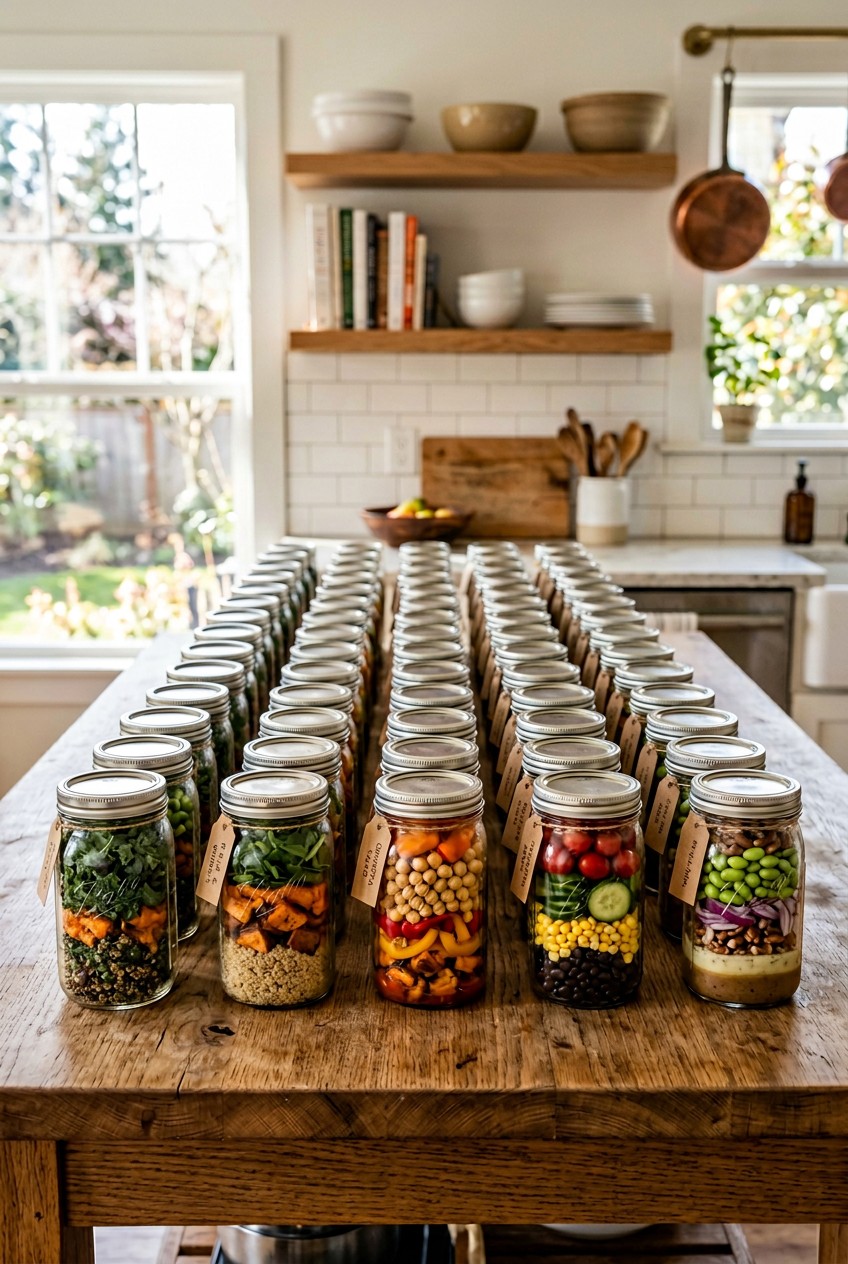
Last Tuesday at Whole Foods, I grabbed my lunch bag a little too hard and my plastic container popped open. Vinaigrette soaked my favorite canvas tote. It smelled like garlic and sadness for three days straight. That moment is exactly why mason jar meal prep took over my Sunday routine. I’m telling you, heavy glass jars won’t betray you like cheap plastic. If you’re tired of soggy lettuce or cleaning dressing out of your car seats, you need to make the switch. It’s a totally different way to pack food. I did it wrong for months before I figured out the science of layering. Now, my fridge looks like a colorful meal prep factory. The satisfying clink of glass jars makes me excited to eat healthy. Plus, eating out of cold glass feels better than scraping a plastic tub. Let’s look at the methods, measurements, and costly mistakes I’ve made so you don’t have to.
1. Choose the Right Size for Your Mason Jar Meal Prep

I tried this wrong for months. I bought regular mouth jars because they looked cute. Big mistake. My hand got wedged in there with a soapy sponge on a Tuesday night. I panicked for five minutes before yanking my hand free. Learn from me: always buy the wide-mouth jars. For a big meal like a high-protein salad or a grain bowl, you need the 32-ounce (quart-sized) wide-mouth mason jars. I swear by the classic Ball 32-ounce jars. I buy a 12-pack for $14.99 at Target. They’re tough. When I drop one on the counter, it doesn’t even chip. For snacks or morning oats, the 16-ounce (pint-sized) wide-mouth jars are perfect. I grab the Kerr brand 16-ounce jars for $11.99 at Walmart. Wide-mouth jars make filling and eating easy without getting dressing on your knuckles. You need space to shake the jar before eating. If you pack a 16-ounce jar to the brim with dry spinach, you can’t mix it. The dressing just sits at the bottom mocking you. Trust me. Spend the extra money on the 32-ounce size for your main meals. It’s worth every penny.
2. The Ultimate Salad Layering Strategy

Most people get this wrong and end up chewing on slimy, brown spinach by Wednesday. To stop soggy salads, follow a strict order. Always start with 2 to 3 tablespoons of dressing at the bottom. I measure this because eyeballing it leads to a soup-like disaster. Follow the dressing with hard, non-absorbent vegetables. I’m talking 1/2 cup of diced carrots, 1/2 cup of cucumbers, or crisp bell peppers. These act as a barrier. They sit in the dressing and marinate, getting better over time. Next, add your grains or proteins. I pack in 1/2 cup of cooked quinoa and 4 oz of grilled chicken breast. Finally, stuff your delicate leafy greens like spinach or arugula at the top. This keeps your greens crisp until mealtime. When you’re ready to eat, shake the jar upside down. I learned that the hard way after packing greens at the bottom. Skip the fat-free store dressings. They taste like wet cardboard and ruin the vibe. I prefer Primal Kitchen Avocado Oil dressing. It costs $9.99 at Sprouts, but the clean ingredients make a massive difference in how the salad holds up.
3. Ditch Store-Bought for Homemade Dressings

Honestly, this changed how I view salads. According to F45 Sport Nutritionist Kim Bowman, crafting your own dressings with quality oils ensures better flavor and avoids the hidden sugars or fats in store-bought bottles. I used to buy cheap ranch, but it just coated my mouth in a weird film. Now, I make a fresh batch of vinaigrette every Sunday. A classic ratio is 3 parts oil to 1 part vinegar. I use 3/4 cup of Pompeian Extra Virgin Olive Oil ($8.99 at Kroger) and mix it with 1/4 cup of Trader Joe’s Balsamic Vinegar ($3.49). I add a pinch of sea salt, black pepper, and 1 teaspoon of Dijon mustard to help it emulsify. I whisk it in a glass bowl until it’s thick and glossy. The tangy smell is incredible. You can also use equal parts oil and vinegar if you want more tang. I’ve noticed homemade dressing doesn’t separate as much in the fridge. Plus, when you pour those 2 tablespoons into the jar, it stays pooled there without creeping up the sides. It’s a small step that makes lunches taste like they came from a fancy café. You might also like: 20 Inspiring Sunday Dinner Ideas You Need to See

Skroam 10 Pack Glass Meal Prep Containers
If you want something that just works, Skroam 10 Pack Glass Meal Prep Containers is a safe bet (56 reviews, 4.5 stars).
4. Hack Your Breakfast with Overnight Oats

Mornings in my house are chaotic. I don’t have time to cook eggs when I’m rushing out the door. Prepare healthy breakfasts by combining 1/2 cup of rolled oats with 1 cup of milk in a 16-ounce jar. I recommend Bob’s Red Mill Rolled Oats. I buy the large bag for $5.49 at Whole Foods. For the liquid, I use Silk Almond Milk, which is about $3.99. You can layer these with fruit, nuts, or chia seeds. These jars last 4 days in the fridge. Here is the best trick for dry ingredients: use a clean, empty plastic fruit cup container. Place it upside down on top of your wet ingredients. You can fill this little plastic cup with dry toppings like granola, pecans, or seeds. It keeps them crunchy until you’re ready to eat. I used to dump pecans straight into the milk. By Wednesday, they had the texture of wet sponges. It was gross. This simple cup trick saves your nuts from turning to mush. You just pop the lid, pull out the cup, dump the crunchy bits into the oats, and enjoy. You might also like: 15 Inspiring Chicken Meal Prep Ideas You Haven’t Thought Of
5. Prep Instant Noodle Jars for Work Lunches

If you’re craving something hot during winter, try this. A trend for 2026 is creating instant noodle soups in a jar. You layer everything dry and add hot water later. Start with 1 teaspoon of bouillon powder at the bottom. I love Better Than Bouillon Roasted Chicken Base. It costs $4.99 at Costco and lasts for months. Next, add 2 oz of dried vermicelli noodles. Top that with mushrooms, shredded carrots, and 3 oz of cooked rotisserie chicken. When you’re ready to eat, pour boiling water from the kettle into the jar. Let it steep with the lid loosely placed on top for 5 minutes. The smell of roasted chicken broth will fill the room. You’re making a custom cup of noodles, but it’s packed with actual protein instead of freeze-dried mystery meat. Be careful handling the glass. The jar gets hot. I wrap a paper towel around it before carrying it back to my desk. It’s warm, customizable, and satisfying on a cold Tuesday. You might also like: 20 Clever School Lunch Ideas You Can Try Today
6. Keep Berries and Onions Tasting Fresh

Nothing ruins a lunch faster than raw onion breath or moldy fruit. I’ve thrown away so many expensive raspberries because they went bad in two days. A tip for keeping berries fresh is to soak them in a vinegar solution. Mix 1 part white vinegar to 3 parts cold water. I use Heinz White Vinegar, which is $2.99 at Walmart. Soak your berries for 5 minutes. The smell is strong, but don’t panic. Rinse them under cold water and pat them dry with a paper towel before storing. They will last twice as long. As for onions, if raw red onions are too strong, slice them thin and soak them in ice-cold water for 10 minutes before adding them to your prep. This reduces their sharp flavor. I skipped this once and my jar smelled like a sulfur pit by Thursday. Mellowing the onions keeps the crunch but removes the harsh bite that lingers all afternoon. It’s a tiny step that makes a massive difference.
![[8-Pack,30 oz]Glass Meal Prep Containers](https://m.media-amazon.com/images/I/713Zfdsgi4L._AC_UL320_.jpg)
[8-Pack,30 oz]Glass Meal Prep Containers
[8-Pack punches above its price — 7 buyers rated it 4.5 stars. I would buy it again.
7. Know When Mason Jars Fail You

I’ve made mistakes trying to force every meal into a jar. Chef Janice Carte, founder of Tiny Spoon Chef, advises against using mason jars for complex, multi-component meals. She notes the space can squish delicate food and make ingredients hard to reach. I once tried to layer baked salmon over mashed potatoes and asparagus. It turned into a horrifying, mushy paste. Mason jars are best for single ingredients, brothy liquids, or tightly layered salads. Also, avoid overfilling if you plan to freeze them. I filled a 32-ounce jar of lentil soup to the top and shoved it in the freezer. The liquid expanded, and the glass shattered. Cleaning frozen glass and lentils out of my freezer drawer took two hours. Always leave at least an inch of headspace. To protect my jars, I use silicone sleeves. I bought JarJackets for $12.99 at Target. They slide over the glass and provide a layer of protection against drops on the concrete.
8. Track Your Macros and Safety Rules

You can’t just leave chicken in a jar for a week and hope for the best. While salads with raw ingredients can last 5 days in the fridge, those with cooked meats are different. Any jar with chicken, beef, or shrimp should be eaten within 3 to 4 days. I’ve eaten day-six chicken before and regretted it instantly. The smell alone should have warned me. Don’t test your luck. Always store your jars upright to prevent dressing contact with your greens. If a jar falls, the dressing leaks and ruins the batch. To prevent bacteria, clean your jars well. My dishwasher lacks a sanitizing cycle, so I boil my jars in a stockpot for 10 minutes. It sounds tedious, but it ensures a sterile environment. For portion control, I use the My Fitness Pal app to track macros. I weigh ingredients using an Ozeri Digital Kitchen Scale ($14.99 at Walmart). Weighing 4 oz of chicken and 1/2 cup of quinoa guarantees I hit my goals without overeating. It takes the guesswork out of my week.
If you’re ready to stop eating sad, soggy desk lunches, you need to try this. Grab a pack of wide-mouth jars this weekend and start with a simple vinaigrette and fresh greens. I promise you won’t regret it. The crunch of fresh bell peppers on a Thursday is worth the Sunday prep. If you found these tips helpful, please pin this article to your favorite meal prep board on Pinterest or save it to your bookmarks for your next grocery run!
Frequently Asked Questions
What size jar is best for mason jar meal prep?
For main meals like high-protein salads or grain bowls, a 32-ounce wide-mouth jar is perfect. For snacks, chia pudding, or overnight oats, a 16-ounce wide-mouth jar works best. Always choose wide-mouth jars for easier filling and cleaning.
How do you keep greens from getting soggy?
The secret is strict layering. Pour your dressing at the very bottom, followed by hard vegetables like carrots. Add your proteins and grains next, and pack the delicate leafy greens at the very top, far away from the liquid.
How long do mason jar salads last in the fridge?
Salads made entirely of fresh, raw vegetables can last up to 5 days. However, if your mason jar meal prep includes cooked proteins like chicken or beef, you should consume it within 3 to 4 days for optimal food safety.
Can you freeze meals in glass mason jars?
Yes, but you must leave at least an inch of empty headspace at the top of the jar. Liquids expand as they freeze, and overfilling the jar will cause the glass to shatter in your freezer.
