What’s Inside
- Idea 1: The Costco Rotisserie Chicken Salad (Meal Prep Recipes For Beginners)
- Idea 2: Trader Joe’s Soyaki Glazed Meatballs
- Idea 3: Target’s Good & Gather Quinoa Black Bean Bowls
- Idea 4: Whole Foods Inspired Lemon Herb Salmon (Meal Prep Recipes For Beginners)
- Idea 5: Walmart’s Great Value Spicy Turkey Chili
- Idea 6: Sprouts Farmers Market Sheet Pan Sausage and Veggies
- Idea 7: Kroger Simple Truth Tofu Stir-Fry
- Idea 8: The Aldi Budget Beef Enchilada Skillet
- Idea 9: Why You Need Rubbermaid Brilliance Containers Now
- Idea 10: The 50/25/25 Rule For Plating Your Prep
Last Tuesday at Whole Foods, I stood in the produce aisle and realized I was about to repeat my worst habit of letting $45 worth of organic spinach turn into a slimy, foul-smelling swamp in my crisper drawer. Finding meal prep recipes for beginners saved me from this expensive cycle of guilt. When you’re just starting, meal prep recipes for beginners shouldn’t require three hours of chopping or a culinary degree. I tried this wrong for months before figuring it out. I’d make these massive, complicated casseroles that tasted like wet cardboard by day three. Skip the fat-free stuff. It tastes like wet cardboard. You need real flavors, exact measurements, and a little patience. Let’s get into the stuff that actually works. We aren’t going to spend our entire Sunday slaving over a hot stove. Instead, we’re going to focus on quick, flavorful meals that hold up in the fridge. I’m going to show you exactly what I buy, how much it costs, and how to avoid the stupid mistakes I made when I first started packing my lunches.
Idea 1: The Costco Rotisserie Chicken Salad (Meal Prep Recipes For Beginners)

Let’s talk about the holy grail of easy cooking. A store-bought rotisserie chicken is a beginner’s best friend. I’m telling you, a $4.99 Costco rotisserie chicken will save your sanity on a Sunday afternoon. Last month at my local warehouse, I grabbed two of these warm, heavy birds and felt like I won the lottery. Shredding one yields exactly 3 cups of diced, juicy meat. You’re getting a versatile, pre-cooked protein base that cuts your kitchen time in half. I like to make a massive batch of chicken salad. I take 3 cups of the shredded chicken, 1/2 cup of Hellmann’s Real Mayonnaise (skip the fat-free stuff, it ruins the texture), 2 tablespoons of Grey Poupon Dijon mustard, and 1/4 cup of diced red onions. The sharp, pungent smell of the onions cuts right through the rich mayonnaise. You mix it up in a big glass bowl, and the sound of the wet ingredients folding into the chicken is oddly satisfying. But here’s a major mistake I made. I used to shred the chicken while it was still piping hot, mix in the mayo, and immediately seal it in a plastic tub. The heat made the mayonnaise separate and it turned into a greasy, warm, sour-smelling nightmare. (Learned that the hard way.) Always let your cooked food cool to room temperature (within 2 hours) before sealing and refrigerating. This keeps the texture creamy and prevents bacterial growth. It’s a simple fix, but it makes all the difference.
Idea 2: Trader Joe’s Soyaki Glazed Meatballs

If you aren’t shopping at Trader Joe’s for quick proteins, you’re missing out. I personally swear by their frozen section. I grab a bag of Trader Joe’s Party Size Mini Meatballs for exactly $5.99. These little beef and pork spheres are fully cooked and perfectly seasoned. I pair them with 1/2 cup of Trader Joe’s Soyaki Sauce, which costs $3.99 a bottle. The sauce is thick, salty, and packed with sesame seeds. I toss 20 frozen meatballs into a hot cast iron pan, pour the sauce over them, and let them simmer on medium heat. The sticky sweet glaze bubbling in the pan smells like toasted garlic and ginger. It coats the meatballs in a shiny, dark brown lacquer. I serve this over 1 cup of cooked jasmine rice. Honestly, this changed how I view frozen food. However, you’ve got to be careful with rice. Most people get this wrong and leave rice in the fridge all week. Cooked rice should be consumed within 1 day due to the risk of Bacillus cereus bacteria. I once ate four-day-old rice and spent the next 24 hours regretting every life choice I’d ever made. Now, I only prep enough rice for tomorrow’s lunch, or I use microwaveable rice pouches on the spot. Don’t risk the food poisoning. It won’t end well.
Idea 3: Target’s Good & Gather Quinoa Black Bean Bowls

Sometimes you just need a meatless option that actually fills you up. Target is my go-to for pantry staples. I buy the Good & Gather Microwaveable Quinoa pouches for $2.29 each. They’re a lifesaver when I can’t be bothered to boil water. For this bowl, I use 1 cup of the cooked quinoa, 1/2 cup of rinsed black beans from a 99-cent can, and 1/4 cup of frozen corn. I chop up half of a red bell pepper for crunch. The earthy smell of the black beans mixes perfectly with the sweet corn. I squeeze half a fresh lime over the top. Last week, the zesty lime juice stung a paper cut on my thumb so badly I had to drop the lime on the floor. Painful, but the flavor is worth it. I add 2 tablespoons of fresh cilantro and a pinch of salt. I tried this wrong for months by using dried cilantro from a plastic shaker. Dried cilantro tastes like dusty grass clippings. You need the fresh stuff for this to work. I pack these bowls into my glass containers and they sit happily in the fridge for three days. The quinoa absorbs the lime juice overnight, making it taste even better on day two. It’s cheap, colorful, and packed with fiber.

KOMUEE 10 Packs 30 oz Glass Meal Prep Containers
KOMUEE 10 Packs 30 oz Glass Meal Prep Containers has been one of the most consistently praised picks in this category. 45 reviewers averaged 4.5/5.
Idea 4: Whole Foods Inspired Lemon Herb Salmon (Meal Prep Recipes For Beginners)

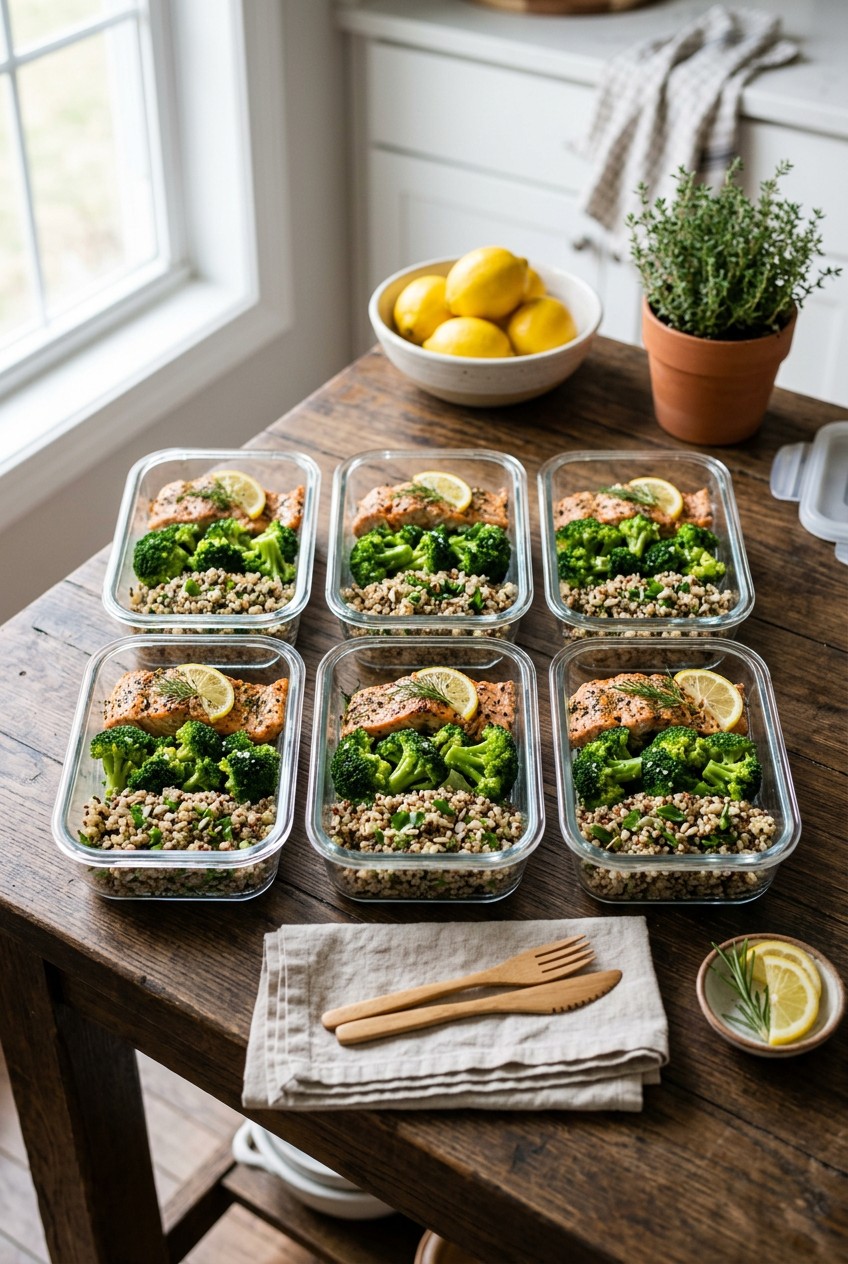
Seafood scares a lot of people, but it doesn’t have to. I buy the 365 Everyday Value Atlantic Salmon Portions at Whole Foods. A pack of two 4 oz fillets costs around $9.99. I place the pink, fleshy fillets on a baking sheet lined with parchment paper. I drizzle them with 1 tablespoon of olive oil, a heavy pinch of kosher salt, and 1 tablespoon of dried dill. The smell of the roasting fish skin sizzling in the oven makes my kitchen feel like a high-end restaurant. I bake them at 400 degrees for exactly 12 minutes. The salmon flakes apart effortlessly with a fork. I serve it with 1 cup of roasted asparagus spears. But listen to me carefully regarding seafood storage. Most cooked meals are safe for 3-4 days in the refrigerator when stored below 40 degrees Fahrenheit in airtight containers. Seafood is different. You must eat it within 2-3 days. I once left a beautiful piece of salmon in the fridge for five days. The aggressive, fishy smell when I opened the container made my eyes water and I had to throw the whole glass dish outside. Don’t do it. Prep this on Sunday and eat it by Wednesday. You won’t regret the strict timeline when your lunch tastes fresh and flaky. You might also like: 20 Inspiring Meal Prep Ideas for Any Style
Idea 5: Walmart’s Great Value Spicy Turkey Chili

When the weather gets cold, I crave something heavy and warm. Walmart is surprisingly great for cheap, lean proteins. I buy a 16 oz package of Great Value Ground Turkey 93/7 for $4.48. I brown the turkey in a large pot, breaking it up with a wooden spoon until there are no pink spots left. Then I dump in 1 can (15 oz) of dark red kidney beans, 1 can (15 oz) of diced tomatoes, and 2 tablespoons of chili powder. The thick red tomato sauce bubbles and spits, splashing little red dots on my stovetop. The kick of the chili powder hits the back of your throat just by smelling the steam. It’s incredibly comforting. I divide this massive pot into four containers. This brings up an important rule. Don’t try to prep every single meal for the entire week right away. Begin by focusing on just 2-3 meals, such as lunches for your busiest workdays, to build consistency and prevent feeling overwhelmed. I tried making 21 meals in one day once. By hour four, my feet were throbbing, my kitchen looked like a disaster zone, and I hated cooking. Start small to avoid burnout. Just prep this chili for your lunches and figure out the rest later. You might also like: 20 Cozy High Protein Lunch Ideas for Any Style
Idea 6: Sprouts Farmers Market Sheet Pan Sausage and Veggies

Sheet pan meals are the lazy cook’s dream. I head to Sprouts Farmers Market for their amazing meat counter. I buy a 12 oz package of Sprouts Mild Italian Chicken Sausage for $5.99. I slice the plump sausages into thick coin shapes. I toss them on a huge metal baking sheet with 2 cups of fresh broccoli florets and 1 cup of diced sweet potatoes. I pour 2 tablespoons of olive oil over the whole pile and mix it with my bare hands. The olive oil coats my fingers while I massage salt and pepper into the vegetables. The smell of the roasted garlic powder hitting the hot pan fills the entire house with a savory, mouth-watering aroma. I roast it at 400 degrees for 25 minutes. The snapping skins of the sausage and the charred, crispy edges of the broccoli are visually stunning. When you bite into the sweet potato, the outside is slightly tough but the inside mashes instantly against the roof of your mouth. It’s the perfect contrast to the snappy sausage. But here’s the catch. Don’t crowd the pan. I did this last year and piled everything on top of each other. The moisture couldn’t escape, so I ended up steaming my veggies instead of roasting them. They were mushy, pale, and completely gross. Give your ingredients space to breathe on the pan so they get that beautiful brown crust. When reheating baked dishes or roasted meats, use an oven preheated to 300 or 350 degrees Fahrenheit to maintain crispiness. The microwave just makes the sausage casings tough and chewy. You might also like: 15 Brilliant Salmon Dinner Ideas for Any Style

Vtopmart 5Pack 22oz Glass Storage Containers with Lids
Vtopmart 5Pack 22oz Glass Storage Containers with Lids has been one of the most consistently praised picks in this category. 32 reviewers averaged 4.5/5.
Idea 7: Kroger Simple Truth Tofu Stir-Fry

If you think you hate tofu, you’re just cooking it wrong. I buy the Simple Truth Extra Firm Tofu from Kroger for $1.99 a block. It comes packed in water, so you’ve got to press it. I wrap the spongy white block in paper towels and stack heavy cookbooks on top for 20 minutes to squeeze the water out. Once it’s dry, I cut it into small cubes. I heat 1 tablespoon of sesame oil in a wok. When the tofu hits the hot oil, there’s a loud, aggressive hiss. I let it sit undisturbed until the edges turn golden brown and crispy. Then I toss in 2 cups of frozen mixed stir-fry vegetables and 3 tablespoons of Kikkoman soy sauce. The salty, savory steam fogs up my glasses every single time. It’s delicious. But reheating this dish requires a specific technique. Avoid solely relying on the microwave, as it can make some foods rubbery or unevenly heated. For stir-fries, I use a stovetop pan with a splash of water or chicken broth to prevent the tofu from drying out. The microwave ruins the crispy texture of the tofu, making it feel like chewing on a wet sponge. Take the extra five minutes to use a pan.
Idea 8: The Aldi Budget Beef Enchilada Skillet

Aldi is my secret weapon for cheap, flavorful Mexican-inspired ingredients. I buy a 1 lb package of 80/20 ground beef for $4.49 and a 15 oz can of Casa Mamita Enchilada Sauce for just $1.39. I brown the beef in a deep cast-iron skillet, draining the excess grease into a glass jar. Then I pour the rich, dark red chili sauce directly over the meat. I stir in 1 cup of cooked white rice and 1/2 cup of shredded cheddar cheese. The cheese melts instantly, creating gooey, stretchy strings when you pull a spoon through the mixture. It smells like cumin, garlic, and toasted corn. I scoop this heavy, comforting mixture into my glass containers. It’s incredibly filling and costs barely anything per serving. When you reheat this, you need to be smart. Always ensure proteins reach an internal temperature of 165 degrees Fahrenheit for safe consumption. I use a cheap meat thermometer just to be sure. I’ve eaten under-heated beef before and spent the entire afternoon with terrible stomach cramps. Just pop it in the microwave for two full minutes, stir it aggressively, and heat for another minute. The cheese gets bubbly all over again.
Idea 9: Why You Need Rubbermaid Brilliance Containers Now

Good containers are crucial for meal prep. If you’re using cheap, flimsy plastic tubs from the dollar store, you’re going to have a bad time. I highly recommend opting for durable, oven-safe glass containers like the Pyrex Simply Store 12-Pack (around $27 to $32) or the Rubbermaid Brilliance plastic containers (around $33 to $40 for a set). I personally use the Rubbermaid Brilliance line. They’re completely leak-proof, microwave-safe, and won’t absorb odors or stains. The crystal clear plastic lets you see exactly what you packed, and the latches make a loud, satisfying click when they lock into place. Last year, I used to use cheap takeout containers from a restaurant supply store. One morning, I packed a container of spicy turkey chili for work. I hit a pothole on the highway, the cheap lid cracked, and red, greasy chili water leaked all over my cloth passenger seat. It took me three hours with a scrub brush to get the smell of cumin out of my car. (Trust me on this.) Paying $35 for high-quality containers is a worthwhile investment for long-term use. They stack perfectly in the fridge and make your Sunday prep look incredibly organized and professional.

Skroam 10 Pack Glass Meal Prep Containers
If you want something that just works, Skroam 10 Pack Glass Meal Prep Containers is a safe bet (56 reviews, 4.5 stars).
Idea 10: The 50/25/25 Rule For Plating Your Prep

Knowing what to cook is only half the battle. Knowing how to portion it out is where most beginners fail. I used to pack containers entirely full of pasta with just a tiny sprinkle of chicken on top. I’d eat lunch and feel like I needed a nap under my desk by 2 PM. Now, I embrace the 50/25/25 portion rule. For balanced meals, aim for a plate composition of 50 percent fruits and vegetables, 25 percent lean protein (like chicken breast or tofu), and 25 percent grains or starchy vegetables (like quinoa or brown rice). Visually, seeing half of your glass container filled with bright green broccoli or roasted carrots is really satisfying. It balances the heavy brown rice and the white chicken. For precise protein measurements, I consider using a digital kitchen scale like the Vitafit digital food scale, which costs about $12.99 on Amazon. I weigh out exactly 4 ounces of chicken for every single box. It removes all the guesswork. If you don’t measure, you’ll end up eating way more calories than you intended, or you won’t get enough protein to stay full. This simple rule changed my entire relationship with food.
Honestly, starting a meal prep routine doesn’t have to be a miserable, exhausting chore. If you stick to simple ingredients, buy the right containers, and follow basic food safety rules, you’ll save so much time during the week. Think about all the money you’ll save by skipping the drive-thru. No more $15 soggy salads from the cafe down the street. You’re in control of your ingredients, your portions, and your budget. I can’t express how nice it is to open the fridge on a chaotic Wednesday morning and see three perfect, stacked glass containers waiting for me. I’ve ruined enough produce and eaten enough dry, rubbery chicken to know that these specific recipes actually work. You won’t regret taking an hour on Sunday to set yourself up for success. I’d love it if you saved this post or pinned it to your favorite Pinterest board so you can find these exact measurements next time you’re stuck in the grocery store aisle. Go grab a rotisserie chicken and get started.
Frequently Asked Questions
How long do meal prep recipes for beginners last in the fridge?
Most cooked meals are safe for 3-4 days when stored below 40 degrees Fahrenheit in airtight glass containers. However, cooked rice should be eaten within 1 day, and seafood within 2-3 days to avoid bacterial growth.
What is the best way to reheat meal prep food?
Avoid the microwave for everything. Reheat roasted meats and veggies in an oven at 350 degrees Fahrenheit to keep them crispy. For stir-fries, use a stovetop pan with a splash of water or broth.
Do I need to let food cool before putting it in the fridge?
Yes. Always let your cooked food cool to room temperature within 2 hours before sealing the containers. Putting hot food in the fridge raises the internal temperature, which encourages bacterial growth and makes your food soggy.
What is the 50/25/25 portion rule for meal prep?
It’s a simple way to plate balanced meals. Fill 50 percent of your container with fruits or vegetables, 25 percent with lean protein like chicken or tofu, and 25 percent with complex carbohydrates like quinoa or brown rice.
