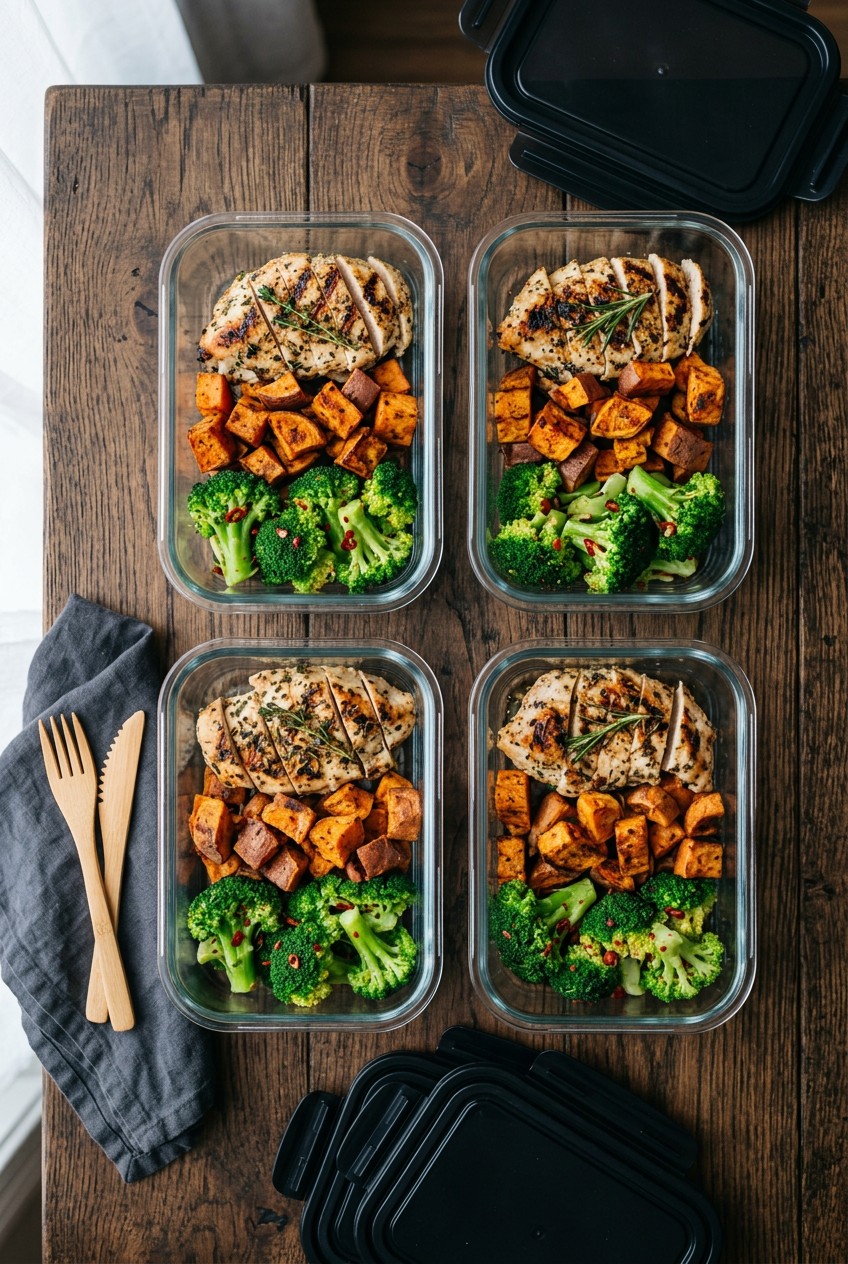
What’s Inside
- Swap Breasts for Thighs to Save Your Meal Prep Chicken
- Marinate Your Meal Prep Chicken with Greek Yogurt
- Stop Dicing Before Cooking (Seriously, Stop It)
- Let Your Air Fryer and Instant Pot Do the Heavy Lifting
- Reheat with Added Moisture to Avoid the Rubber Chicken Effect
- Ditch the Cheap Plastic for Proper Glass Storage
- Flash Freeze Your Leftovers for the Ultimate Lazy Week
- Prep Plain Components and Use Global Wet Rubs
I still remember sitting at my desk three years ago, aggressively chewing meal prep chicken that had the texture and moisture of a pencil eraser. My Tupperware was stained a weird orange. The meat smelled vaguely of sad garlic powder and despair. I did this wrong for months before finally figuring it out. You don’t have to suffer through dry, stringy poultry just to save time on a Tuesday. Over the years, I’ve ruined pounds of meat trying to find the perfect formula for Sunday prep. Now, I’m texting you my secrets so you don’t make the same mistakes. Trust me.
Meal prep chicken shouldn’t be a chore. It shouldn’t taste like diet food. If you understand how marinades work, how to store your food, and why your microwave is actively working against you, everything changes. Let’s get into the nitty-gritty of making lunches that actually taste good by Thursday. I’ll walk you through what I buy, what it costs, and the exact measurements I use in my kitchen.
1. Swap Breasts for Thighs to Save Your Meal Prep Chicken

Most people grab boneless, skinless chicken breasts when they start prepping. I did this for years. Last Tuesday at Whole Foods, I watched three different people toss expensive packs of plain breasts into their carts without a second thought. Here’s my take: stop buying breasts if you struggle with dry meat. You’re making life harder than it needs to be. Boneless, skinless chicken thighs are more forgiving because they’ve got higher fat content. This means they won’t dry out when you inevitably have to reheat them in a sad office microwave.
I swear by the Kirkland Signature Boneless Skinless Chicken Thighs from Costco. They cost exactly $14.99 for a massive 6-pound pack. The value is unbeatable. When you cook thighs in a hot cast iron pan, they get a golden-brown crust that breasts simply can’t achieve without drying out in the center. The meat is richer, pulls apart easily, and absorbs marinades well. If you’re worried about calories, just trim the visible fat with kitchen shears before cooking. I use a pair of OXO Good Grips Kitchen and Herb Scissors that cost $17.95 on Amazon. They cut through raw fat like butter. I’ve abandoned breasts for my weekly lunches. Thighs stay juicy until Friday, and that alone is worth the swap.
2. Marinate Your Meal Prep Chicken with Greek Yogurt

Marinating is a requirement if you want flavor that penetrates to the center. A quick toss in olive oil right before cooking won’t cut it. You need at least 30 minutes, but ideally 1 to 4 hours. My favorite method is a Greek yogurt marinade. The lactic acid in the yogurt tenderizes the meat without turning it into mush, which is a common problem with acidic citrus marinades.
Here’s my recipe. I use 1/2 cup of Fage Total 5% Plain Greek Yogurt. It costs $6.49 for a 32 oz tub at Target. Skip the fat-free stuff. It tastes like wet cardboard and separates in a hot pan. I mix the yogurt with 1 tablespoon of fresh lemon juice, 2 tablespoons of Pompeian Robust Extra Virgin Olive Oil ($8.99 at Kroger), 1 teaspoon of garlic powder, 1 teaspoon of smoked paprika, and 1/2 teaspoon of salt. I coat 2 pounds of chicken thighs in this mixture and let it sit in the fridge. The yogurt creates a crust when you bake or grill it, sealing in all the juices. I tried this wrong for months using cheap, watery yogurt; the coating just slid right off. Use the thick 5% milkfat yogurt. You’ll thank me when you bite into a piece of chicken on Wednesday and it’s still moist and flavorful. You might also like: 20 Lovely Work Lunch Ideas to Inspire Your Next Project
3. Stop Dicing Before Cooking (Seriously, Stop It)

This is a hill I’ll die on. Stop cutting your raw chicken into tiny cubes before you cook it. I used to do this to save time. I’d chop raw chicken on a flimsy $2.50 plastic cutting board from Walmart, getting raw meat juice everywhere, then toss the cubes into a hot skillet. The result? Little rubbery pebbles. When you cut chicken before cooking, you expose more surface area to the heat. All the internal juices leak out into the pan, leaving you with dry, stringy chunks. You might also like: 15 Creative Healthy Meal Prep Ideas That Make a Real Difference
Instead, cook the thighs or breasts whole. Let them develop a crust. More importantly, use a meat thermometer to ensure they reach an internal temperature of exactly 165°F (74°C). I use the ThermoPro TP03 Digital Meat Thermometer, which costs $14.99 on Amazon. It takes the guesswork out entirely. Once the chicken hits 165°F, pull it off the heat and let it rest on a clean cutting board for at least 10 minutes. Do not touch it. Let the juices redistribute. Only after it has rested should you take a knife to it. Dicing cooked, rested chicken gives you clean, bite-sized pieces bursting with moisture. It makes assembling your bowls cleaner and keeps the meat tender all week long. You might also like: 15 Stunning Easy Lunch Ideas You Need to See
![[8-Pack,30 oz]Glass Meal Prep Containers](https://m.media-amazon.com/images/I/713Zfdsgi4L._AC_UL320_.jpg)
[8-Pack,30 oz]Glass Meal Prep Containers
[8-Pack has been one of the most consistently praised picks in this category. 7 reviewers averaged 4.5/5.
4. Let Your Air Fryer and Instant Pot Do the Heavy Lifting

If you’re only baking your chicken on a sheet pan every week, you’ll get bored. You need to master multiple methods to create different textures. I rotate between my air fryer and my Instant Pot depending on what I’m prepping. For shredded chicken, the Instant Pot is unmatched. I toss 2 frozen chicken breasts into the pot with exactly 1 cup of Swanson Chicken Broth ($2.89 for a 32 oz carton at Kroger) and a pinch of salt. I set it to high pressure for 10 minutes. It comes out perfectly shreddable every time. Just a warning: I once overfilled the pot and didn’t vent it correctly, resulting in hot broth spraying all over my cabinets. Learned that the hard way.
For crispy, fast results, I use my Ninja Foodi 6-in-1 8-qt Air Fryer ($199.99 at Target). I can cook a batch of tenders in 5 to 7 minutes at 350°F. The forced hot air creates a crispy exterior without a deep fryer. I spray the basket with a quick coat of PAM Olive Oil Cooking Spray ($4.48 at Walmart) to prevent sticking. Rotating between soft, shredded Instant Pot chicken for tacos and crispy, air-fried pieces for salads keeps my palate engaged. It prevents that dreaded mid-week meal prep fatigue where you end up ordering takeout because you can’t stand eating another identical baked breast.
5. Reheat with Added Moisture to Avoid the Rubber Chicken Effect

This is the number one reason people hate meal prep chicken. They throw a dry container of chicken and rice into the microwave for two minutes on high and expect it to taste fresh. Microwaves work by vibrating water molecules to create heat. If your chicken is already cooked, the microwave will evaporate whatever moisture is left, leaving you with a rubbery disaster. I’ve choked down so many dry lunches in the breakroom before I learned this simple trick.
When you’re ready to reheat your meal, you must add moisture. I add exactly 2 tablespoons of water or chicken broth directly over the cold chicken. Then, I place a damp paper towel over the container or place the lid loosely on top to trap the steam. I heat it on 50% power for 90 seconds, check it, and do another 60 seconds if needed. Heating it slower, with trapped steam, completely revives the texture. If I’m reheating dinner at home, I skip the microwave. I put the diced chicken in a small skillet over medium-low heat, add 3 tablespoons of water, and put a lid on the pan for 4 minutes. The steam gently warms the meat without cooking it further. It’s a tiny step that saves your food.
6. Ditch the Cheap Plastic for Proper Glass Storage

Your storage containers matter as much as your cooking method. I used to buy those massive 30-packs of flimsy plastic containers from Sprouts for $15. It seemed like a great deal until they warped in the dishwasher, retained the smell of old taco seasoning, and leaked chicken juice into my tote bag on the subway. Plastic is porous. It holds onto odors and bacteria, and it doesn’t insulate your food well.
You need to invest in glass. I use the Pyrex 6-Piece Rectangular Glass Storage Set. It costs $24.99 at Target, and it is worth every penny. Glass is completely non-porous. It won’t stain, it won’t hold smells, and it’s safe for the microwave, dishwasher, and oven. When you pack your meals, let the chicken cool completely before snapping the lid on. If you put a lid on warm chicken, condensation builds up, drips back down, and makes everything soggy. It also creates a breeding ground for bacteria. I let my chicken cool on the counter for exactly 45 minutes. Then I portion it into my Pyrex containers and put them in the fridge. Cooked chicken is only good for 3 to 4 days in the fridge. Label your glass containers with a dry-erase marker so you aren’t playing a dangerous guessing game by Thursday.

8 Pack 36oz Large Glass Meal Prep Containers with lids
A dependable everyday pick — 8 Pack 36oz Large Glass Meal Prep Containers with lids pulls in 866 ratings at 4.5 stars. Not flashy, just solid.
7. Flash Freeze Your Leftovers for the Ultimate Lazy Week

Sometimes I prep too much food. Sometimes my plans change and I go out to dinner twice in one week. Instead of letting my hard work rot in the fridge, I use my freezer. Cooked chicken freezes well if you do it correctly. You can keep it frozen for up to 3 months. But you can’t just throw a pile of cooked meat into a bag. I did that once with a Kroger brand freezer bag. I threw a whole 3 lb block of cooked, diced chicken into the freezer. Two weeks later, it had frozen into a solid, impenetrable boulder. I had to chisel pieces off with a butter knife.
You need to flash freeze. I take a large aluminum baking sheet and line it with Reynolds Wrap Heavy Duty Aluminum Foil ($4.99 at Target). I spread my diced chicken out in a single layer so none of the pieces are touching. I put the tray into the freezer for exactly 20 minutes. The outside of the chicken freezes solid. Then, I transfer the partially frozen pieces into a Ziploc Gallon Freezer Bag ($5.49 at Kroger) and squeeze all the air out. Because I flash-froze them, the pieces won’t stick together. I can reach in, grab exactly 4 ounces of diced chicken for a quick salad, and leave the rest in the freezer. It’s the ultimate hack for lazy weeks.
8. Prep Plain Components and Use Global Wet Rubs

In the past, I’d make five identical containers of teriyaki chicken and rice. By Wednesday, I was so bored I couldn’t even look at it. The secret to sustainable meal prep is preparing plain, versatile components rather than fully composed, heavily sauced meals. I cook a massive batch of relatively neutral chicken. Then, I rely on highly concentrated “wet rubs” to change the flavor profile day by day. A wet rub is a mixture of oil, acid, and spices that you can brush onto the cooked chicken right before you eat it.
My current obsession is a Cuban Mojo wet rub. I use 2 tablespoons of Pompeian olive oil, 1 tablespoon of fresh orange juice, and 1 tablespoon of Trader Joe’s Cuban Style Citrusy Garlic Seasoning Blend ($1.99). I mix it in a tiny ramekin. On Monday, I might toss my plain shredded chicken in this Mojo rub and eat it with black beans. On Tuesday, I’ll take the same chicken but toss it in a Peruvian-style blend using 1 teaspoon of Aji Amarillo paste ($6.99 on Amazon), a splash of soy sauce, and cumin. Prepping plain components gives you the freedom to crave different things throughout the week. You aren’t locked into one flavor. It takes an extra 60 seconds of effort each morning, but it saves you from the monotony of repetitive lunches. No exaggeration.
If you’re tired of eating dry, flavorless lunches, start by making just one of these changes this Sunday. Swap out your breasts for thighs, grab a meat thermometer, and throw away those stained plastic containers. I’m telling you, treating your meal prep chicken with a little bit of respect changes the way you view your weekly lunches. Pin this guide for your next grocery run, and let me know which marinade you try first!
Frequently Asked Questions
How long does meal prep chicken last in the fridge?
According to food safety guidelines, cooked chicken safely lasts 3 to 4 days in the refrigerator. Store it in airtight glass containers at or below 40°F (4°C) to maintain the best texture and prevent bacterial growth.
Why is my meal prep chicken always dry?
Dry chicken usually happens from overcooking, cutting the meat before it cooks, or reheating it without added moisture. Use a meat thermometer to pull chicken at exactly 165°F, and always add a splash of water or broth before microwaving.
Can I freeze cooked chicken for meal prep?
Yes, you can freeze cooked chicken for up to 3 months. Flash-freeze diced pieces on a baking sheet for 20 minutes before transferring them to a freezer bag so they don’t clump together into a solid block.
Are chicken thighs better than breasts for meal prep?
Chicken thighs are generally better for meal prep because their slightly higher fat content keeps them juicy during the cooking and reheating process. Breasts are leaner and dry out much faster when microwaved.
