What’s Inside
- Master The 2026 Trend Of Protein Bowls
- Stop Buying Chicken Breasts And Buy Thighs Instead
- Nail Your Meal Prep High Protein Breakfasts
- Prep Ingredients Instead Of Boring Full Meals
- Use High-Protein Dairy As A Secret Weapon
- Embrace Cheap Plant Proteins For Fiber
- Hack Your Meal Prep High Protein Snacks To Hit Your Daily Goals
- Lock Down Your Storage To Prevent Spoilage
I sat on my kitchen floor, actually crying over a plastic container of grey, rubbery chicken breast last Tuesday. My attempt at a high-protein meal prep week was a total disaster. I’d just spent eighty dollars at Whole Foods on ingredients, but instead of delicious food, my kitchen smelled like boiled sulfur, stale garlic, and sad, steamed broccoli. The visual alone was depressing. I just stared at pale, watery lumps of food sitting in a scratched plastic tub. If you want to nail high-protein prep without losing your mind, you’ve got to stop doing what I did. I tried this the wrong way for months before figuring it out. I thought hitting my macros meant choking down dry, unseasoned meat and plain vegetables every afternoon. I’d microwave my sad little tub at work, and the smell of oxidized, day-old poultry would make my coworkers scatter. Trust me. Skip the fat-free stuff. It tastes like wet cardboard. You need real flavor, juicy textures, and an actual strategy if you’re going to stick to this. My biggest mistake was treating food like a math equation instead of a meal. I’d weigh out exactly 4 oz of plain chicken, force it down, and then end up bingeing on stale tortilla chips at 9 PM because my brain was unsatisfied. You can’t live like that. I won’t let you. Today, I’m sharing the exact methods I use to make food that tastes incredible by Thursday. This is a survival guide for your sanity and your tastebuds. Grab your bags. Let’s fix your fridge right now.
1. Master The 2026 Trend Of Protein Bowls

Let’s talk about the protein bowl trend that’s everywhere in 2026. I swear by this method because it completely cures food fatigue. Last month, I tried eating the same chicken and rice dish for five days straight. By Wednesday, the texture of the mushy, clumped rice made me gag. I threw the last two portions in the trash. Don’t do that. Instead, build customizable bowls that let you mix and match flavors. Start with a high-fiber grain base. I usually grab a 16 oz bag of Trader Joe’s Organic Quinoa for $3.99. Quinoa contains its own protein, which is a nice bonus when you’re tracking macros. I cook exactly 1 cup of dry quinoa with 2 cups of rich bone broth for a deep, savory flavor. Then, add a pre-cooked lean protein like grilled chicken strips or marinated tofu. Top it off with roasted vegetables. I toss 2 cups of chopped red bell peppers and red onions with 1 tablespoon of olive oil, roasting them until the edges get blistered and sweet. The secret to making this work is keeping your dressing separate until you eat. I use Rubbermaid Brilliance Food Storage Containers for this. A 5-piece set is around $16.99 at Target. They’re leak-proof, airtight, and BPA-free. I’ve tossed them into my canvas tote bag sideways, and my sesame ginger dressing never spills. You just mix and match your grains, proteins, and veggies each morning. This approach stops you from getting bored and keeps textures fresh.
2. Stop Buying Chicken Breasts And Buy Thighs Instead

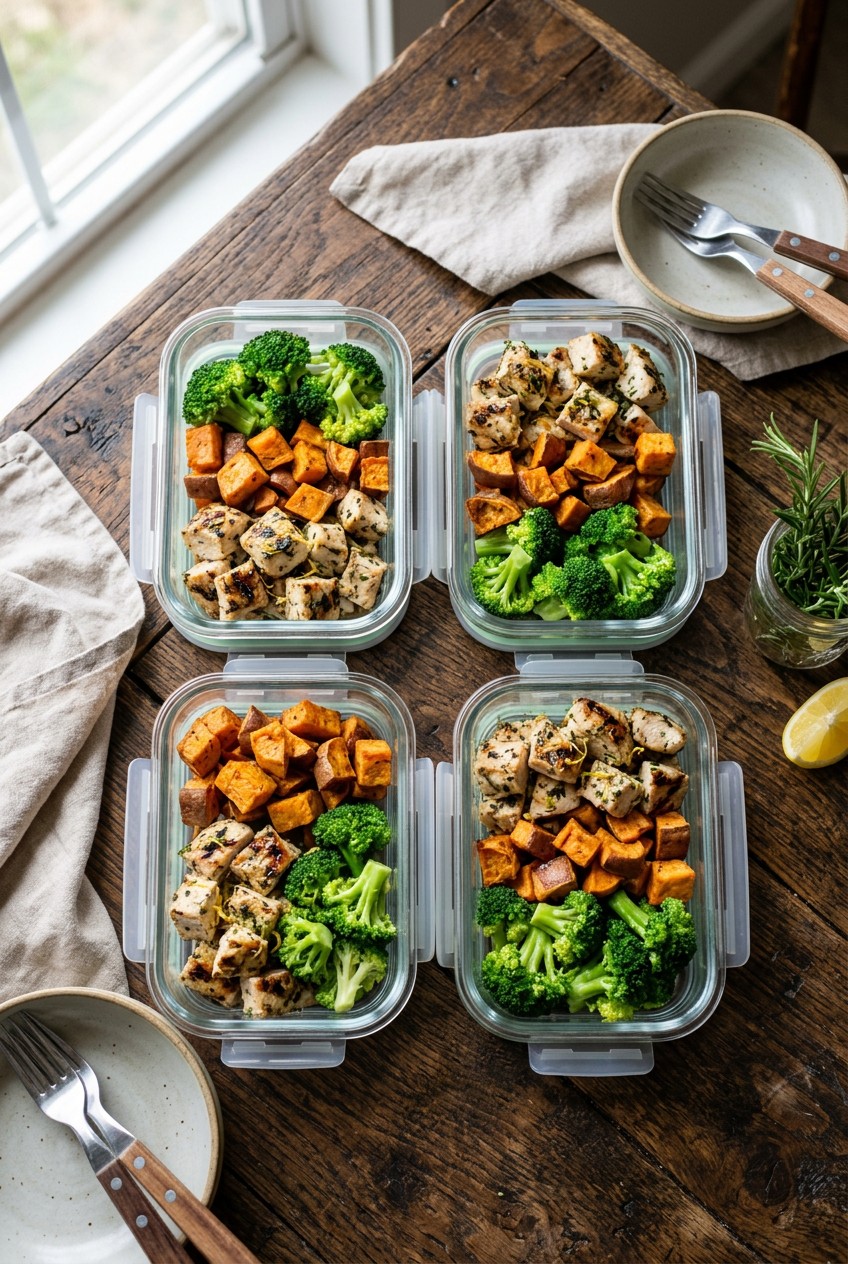
Most people get this wrong right out of the gate. They walk into Kroger, head to the meat section, and grab the most expensive, boneless skinless chicken breasts they can find. I did this for years. I thought dietary fat was the enemy. But lean chicken breast dries out in the fridge fast. When you microwave it on day three, it gets this awful, metallic taste and a chalky texture. Experts call it Warmed-Over Flavor, or WOF. It happens because of lipid oxidation in the lean meat. Basically, your expensive chicken tastes like a wet dog smells. It’s disgusting. Stop doing this. Buy chicken thighs instead. They’re forgiving to cook. At my local Walmart, a 3-pound package of Tyson Bone-In Skin-On Chicken Thighs costs about $8.92. That breaks down to roughly $0.035 to $0.055 per gram of protein. You get about 26 grams of protein per 3.5-ounce serving. It’s 30 to 40 percent cheaper than chicken breast. I batch cook the entire 3-pound package on Sundays. I rub the thighs with 2 tablespoons of smoked paprika, 1 teaspoon of garlic powder, and a heavy pinch of kosher salt. I roast them at 400 degrees for 40 minutes until the skin is blistered and crackling. The natural fat keeps the meat juicy all week. Even when you reheat it in a sad office microwave, it stays tender. This batch yields about 150 grams of total protein and gives me 5 to 7 solid servings. Extra portions freeze beautifully for up to 3 months.
3. Nail Your Meal Prep High Protein Breakfasts

You can’t skip breakfast if you want to hit your macro goals without starving by noon. I used to just drink black coffee and eat a handful of dry Cheerios at 7 AM. By 10 AM, my stomach would be roaring loudly enough for the whole office to hear. I was shaky, cranky, and desperate for sugar. Research in 2026 shows you really need to aim for about 30 grams of high-quality protein first thing in the morning. This supports overnight muscle repair, regulates your hormones, and keeps your blood sugar stable. I figured out how to do this without waking up an hour early. I rely on protein pacing, which means getting 30 to 50 grams of protein per serving across multiple meals. For breakfast, smoothies are my lifesaver. I use Optimum Nutrition Gold Standard 100% Whey. I strictly buy the Double Rich Chocolate flavor because the others taste too artificial. A 2-pound tub costs exactly $36.99 at Costco. One scoop gives you 24 grams of protein. I blend 1 scoop of whey with 1 cup of unsweetened almond milk, 1/2 cup of frozen spinach, and 2 tablespoons of Kirkland Signature Creamy Peanut Butter. It tastes like a melted peanut butter cup milkshake. If I don’t want a cold smoothie, I rely on hard-boiled eggs. Eggs are a budget contender, costing around $0.015 to $0.025 per gram of protein. I boil a dozen on Sunday. Two large eggs give me 12 grams of protein. I mash them on Dave’s Killer Bread with flaky sea salt. You might also like: 20 Clever Quick Lunch Ideas You Haven’t Thought Of

M MCIRCO 10-Pack,30 Oz Glass Meal Prep Containers 2
If you want something that just works, M MCIRCO 10-Pack is a safe bet (23 reviews, 4.5 stars).
4. Prep Ingredients Instead Of Boring Full Meals

Honestly, this changed how I view my Sunday afternoon prep. I used to spend four agonizing hours cooking massive vats of chili or assembling ten identical casseroles. By Thursday, looking at another square of soggy baked ziti made me want to cry. Meal fatigue is a real, miserable thing. Now, I prep ingredients instead of full meals. This is the smartest shift you can make for your sanity. I wash and chop all my vegetables right when I get home from Sprouts, before I even put my keys away. I cut 3 large zucchini into thick half-moons and slice 2 red onions. I store them raw in glass containers. Then, I cook my lean proteins and a large batch of whole grains. I’ll make 2 cups of Target Good & Gather Quinoa or Lundberg Family Farms Wild Rice, which runs about $5.49 a bag. Having these separate, pre-cooked components means I can assemble whatever I’m craving in five minutes. On Tuesday, I might toss 4 oz of cooked chicken with 1/2 cup of wild rice and raw zucchini in a hot cast iron pan for a quick stir-fry. On Wednesday, I’ll eat that same chicken cold over spinach with balsamic dressing. You need to measure your portions accurately. I use an Ozeri Digital Food Scale I bought for $14.99 on Amazon. I aim for exactly 3 to 4 ounces of cooked protein per meal. That usually delivers 20 to 30 grams of protein. Starting with a scale stops you from accidentally under-eating your macros and feeling exhausted. You might also like: 20 Inspiring Meal Prep Ideas for Any Style
5. Use High-Protein Dairy As A Secret Weapon

If you aren’t using dairy to hit your goals, you’re missing out on the easiest hack in the book. I’ve got a massive sweet tooth. A few years ago, I tried to cut out all dairy to be “clean.” I ended up miserable, eating dry rice cakes that tasted like dusty ceiling tiles. I cracked after three days and ate an entire pint of Ben & Jerry’s over the kitchen sink. I learned my lesson. Now, I lean heavily on Greek yogurt and cottage cheese. They’re affordable and pack a massive nutritional punch. A standard 6-ounce serving of plain Greek yogurt gives you 15 to 20 grams of protein. I buy the Fage Total 2% Plain Greek Yogurt at Target for $6.89 for a large 32-ounce tub. I use it for everything. I swap out heavy sour cream and use plain Greek yogurt on my spicy turkey taco bowls. The tangy, cool flavor is identical, but the macros are better. Cottage cheese is another powerhouse. You get a whopping 24 grams of protein per cup. I buy the Good Culture Low-Fat Cottage Cheese for $4.99 at Whole Foods. The texture is thick, rich, and creamy, not watery like generic brands. I blend 1/2 cup of cottage cheese with 1 tablespoon of ranch seasoning powder in my food processor. It makes a thick, savory dip for raw carrots, celery, and bell peppers. Plus, the casein protein found in dairy digests slowly, keeping you full for hours. You might also like: 15 Creative Cold Lunch Ideas to Transform Your Space
6. Embrace Cheap Plant Proteins For Fiber

You don’t have to eat meat at every single meal to hit your numbers. I used to think vegan meals were just sad, wilted salads with zero staying power. I was wrong. Plant-based options are cheap and they bring a massive amount of crucial fiber to your diet. Fiber keeps your stomach full and your digestion moving. Dried beans and lentils are economical. They range from just $0.008 to $0.025 per gram of protein. I buy a 16-ounce bag of Goya Dry Black Beans at Walmart for just $1.88. I soak them overnight, then simmer them for an hour with 1 chopped white onion and 2 cloves of smashed garlic. They turn out deeply savory, thick, and creamy. Tofu is another weekly staple. A lot of people hate tofu because they don’t press the water out. If you don’t press it, it feels like chewing on a wet, squishy kitchen sponge. I learned that the hard way. I buy Nasoya Extra Firm Tofu for $2.99 at Kroger. It gives you around 23 grams of protein per cup. I slice the tofu into 1-inch cubes, toss it with 1 tablespoon of cornstarch and 1 tablespoon of low-sodium soy sauce, and bake it at 400 degrees for 25 minutes. The cornstarch makes the edges shatteringly crisp. I throw these crispy tofu bites into my grain bowls with a handful of steamed edamame. Combining plant proteins with whole grains ensures you get a complete amino acid profile.

Vtopmart 5Pack 22oz Glass Storage Containers with Lids
Honestly, Vtopmart 5Pack 22oz Glass Storage Containers with Lids surprised me — sturdier than it looks in the photos, and over 32 buyers gave it 4.5 stars.
7. Hack Your Meal Prep High Protein Snacks To Hit Your Daily Goals

Snacking is where most people ruin their week. You do so well all morning, then 3 PM hits. Your energy crashes. You wander into the office breakroom and inhale three stale powdered donuts before you even realize what you’re doing. I did this exact thing last Thursday. I forgot my prepped snack on the kitchen counter, saw a pink pastry box, and lost my mind. The sugar crash an hour later was brutal. You’ve got to prep your snacks just like your lunches. For active individuals, a daily target of 1.6 to 2.2 grams of protein per kilogram of body weight is widely recommended. You can’t hit that number just from three standard meals. When I’m short on time, I use protein powders. I keep a bag of Huel Black Edition stashed in my desk drawer. It’s a complete high-protein powder meal. You get 40 grams of protein and 400 calories per serving. It costs around $2.65 per meal, which is cheaper than a sugary drive-thru coffee. I just shake 2 scoops with 17 ounces of ice-cold water. It stops my cravings instantly. If I want real food with crunch, I prep little snack bento boxes on Sundays. I’ll take a small glass container and add 1 ounce of Blue Diamond Lightly Salted Almonds (about $7.98 a bag at Walmart), 1 low-fat string cheese, and 1/2 cup of fresh raspberries. You have to include healthy fats and fiber-rich fruits. No exaggeration, it’s a huge help.
8. Lock Down Your Storage To Prevent Spoilage

All of this hard work means nothing if your food goes bad by Wednesday. I learned this when I first started prepping. I once prepped a beautiful, expensive batch of roasted salmon and jasmine rice. I shoved it into a cheap, flimsy plastic container with a warped lid. By Tuesday morning, my entire fridge smelled like a fish market at low tide. The salmon was slimy and gray. I had to throw away thirty dollars worth of perfectly good food. Proper storage is critical. Good containers are vital for food safety, freshness, and locking in flavors. I invested in the OXO Smart Seal Glass Container Sets. A 16-piece set is about $49.99 at Target. Yes, it’s an upfront investment. But they’re freezer, microwave, dishwasher, and oven-safe. The lids have a thick silicone seal that locks out air completely. If you need a more budget-friendly plastic option, the FullStar 50-Piece Food Storage Container Set is an incredible value. You can find it for around $35.99 on Amazon, and it includes little chalkboard labels for organization. Cooked proteins typically stay fresh in the refrigerator for up to 4 days. If I’m prepping for longer, I freeze the extra portions immediately. They can last 2 to 3 months in the freezer. You also have to ensure rapid cooling. Don’t leave your hot roasted chicken sitting on the counter for three hours. You want to avoid the “Danger Zone” between 40°F and 140°F.
You don’t have to eat boring, dry food to hit your fitness goals. High-protein routines should make your life easier, not more miserable. I spent way too long choking down plain chicken breasts and watery vegetables before I realized that flavor and strategy are the keys to consistency. By swapping to juicy chicken thighs, leaning on cheap plant proteins like tofu and lentils, and utilizing high-protein dairy, you can overhaul your weekly menu. Remember to invest in good glass containers so your hard work doesn’t spoil by Wednesday. Stop treating your meals like a punishment. Add the smoked paprika. Roast your veggies in real olive oil. Blend that peanut butter into your morning whey smoothie. When your food actually tastes good, you won’t even be tempted to hit the drive-thru on your way home. If you try any of these tips, especially the 2026 protein bowl method, I promise your week will run so much smoother. Pin this guide to your favorite recipe board so you can reference these exact brand prices and measurements before your next grocery run. Now get into the kitchen and let’s get prepping.
Frequently Asked Questions
How long does meal prep high protein food last in the fridge?
Cooked proteins like chicken, beef, or tofu typically stay fresh in an airtight glass container in the refrigerator for up to four days. If you need them to last longer, freeze the extra portions immediately to maintain quality for up to three months.
What is the cheapest meat for meal prep high protein?
Chicken thighs are incredibly budget-friendly, often costing 30 to 40 percent less than chicken breasts. They run about $0.035 to $0.055 per gram of protein. Eggs are another highly economical choice, costing around $0.015 to $0.025 per gram of protein.
How do I avoid warmed-over flavor in my meal prep?
To prevent warmed-over flavor, stop using ultra-lean meats like dry chicken breasts that oxidize quickly. Instead, use cuts with slightly more natural fat, like chicken thighs, and rely on moisture-locking marinades or sauces. Storing your food in completely airtight glass containers also helps significantly.
Can I use plant-based ingredients for meal prep high protein?
Absolutely. Ingredients like extra firm tofu, dried black beans, lentils, and chickpeas are incredibly cheap and pack a massive amount of protein and fiber. Combining these plant proteins with whole grains like quinoa ensures you get a complete amino acid profile to hit your daily goals.
