What’s Inside
- Embrace the Hero Grain Approach for Meal Prep Ideas Vegetarian
- Prep Components Instead of Full Meals
- Master Flavor Bombs to Fix Bland Food
- Par-Cook Dried Beans for Quick Dinners
- Prioritize Borosilicate Glass Over Plastic
- Utilize Frozen Produce Strategically
- Keep Dressings Separate to Save Your Greens
- Incorporate Diverse Plant Proteins
- Avoid the All-In-One-Day Meal Prep Ideas Vegetarian Trap
- Final Thoughts
I stared at the limp, graying spinach trapped inside a foggy plastic tub last Tuesday at Whole Foods. I realized my entire approach to Sunday prep was fundamentally wrong. The condensation pooling at the bottom of the container smelled faintly of wet dog, and the cherry tomatoes had shriveled into sad, wrinkled raisins. Finding meal prep ideas vegetarian eaters can rely on shouldn’t mean forcing yourself to eat soggy, degrading salads by Wednesday afternoon. I’m Esperanza Eliza, and I’ve ruined more expensive organic produce than I care to admit. Trust me on this.
I spent my first two full years of eating plant-based trying to cook twenty identical portions of rice and beans on Sundays. By Thursday, the rice texture resembled construction spackle. The flavor was dead. I threw out at least four meals a week. It’s frustrating to spend eighty dollars on fresh groceries just to scrape half of it into the compost bin because it spoiled. But after failing, I figured out exactly what works and what simply doesn’t hold up in the fridge. I stopped trying to make perfectly composed, identical bowls. I looked at the science of how vegetables degrade. I learned how starch behaves when it gets cold, and why acid destroys leafy greens. I’m sharing my exact methods here. If you’re tired of eating rubbery tofu and mushy broccoli, these nine methods will fix your fridge. Let’s get into the routines, the containers, and the precise measurements you need to make your food last all week.
1. Embrace the Hero Grain Approach for Meal Prep Ideas Vegetarian

Instead of cooking one cup of rice every night, I dedicate my Sunday afternoon to one massive batch of a sturdy whole grain. I call this the hero grain approach, and it’s essential for the meal prep ideas vegetarian diets require. Quinoa, farro, and freekeh hold their texture beautifully. Last month, I tried making a week’s worth of delicate jasmine rice to save money. It turned into a solid, impenetrable brick by Tuesday morning.
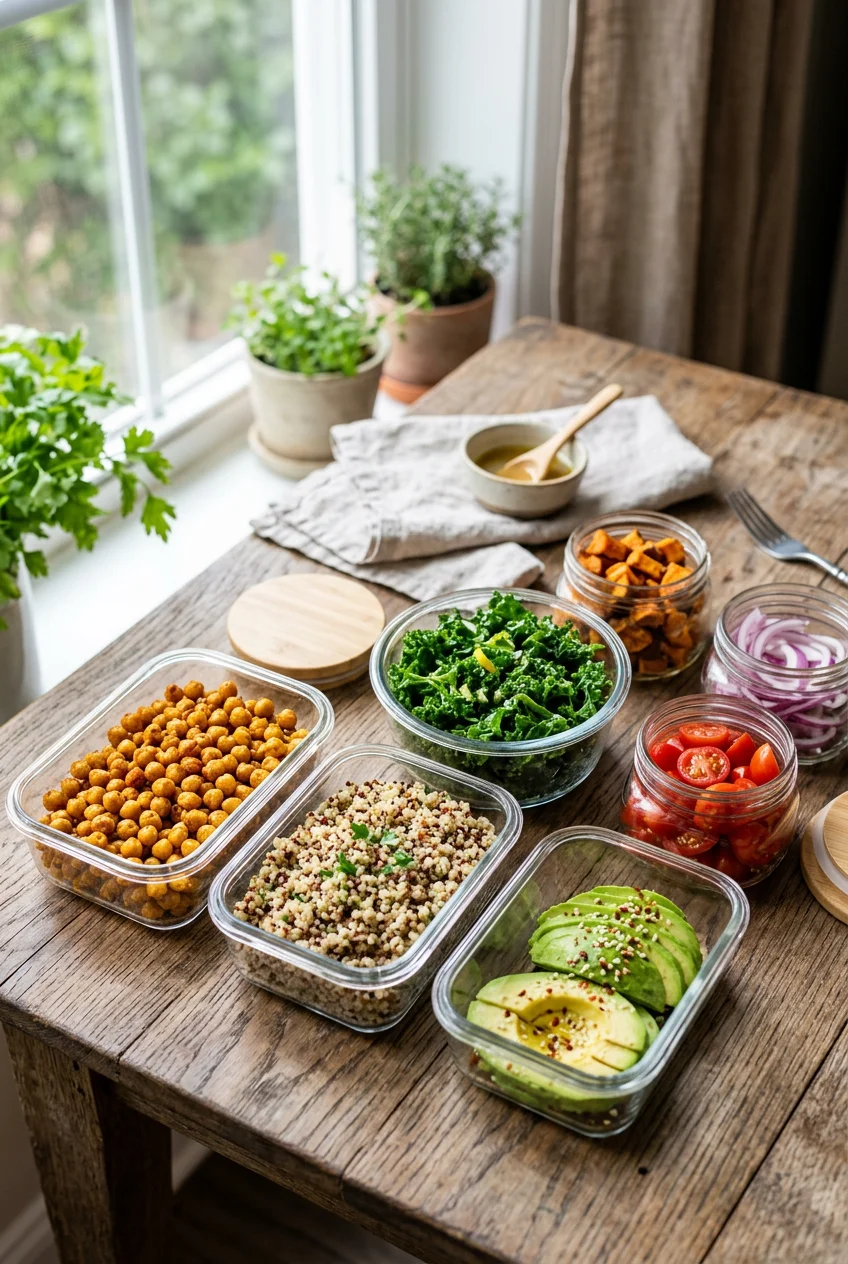
Now, I measure out exactly 4 cups of dry farro. Instead of water, I boil it in 12 cups of low-sodium vegetable broth with two whole garlic cloves and a dried bay leaf. This yields about 12 cups of cooked grains. The broth forces salt and savory notes directly into the grain as it expands. You get a deeply flavorful base for any bowl or salad. I store the entire batch in a Pyrex Freshlock 14-Piece Glass Food Storage Set. I bought my set at Target for $39.99. The heavy glass prevents that weird refrigerator taste from seeping into the food. These grains easily last 5 to 7 days without drying out. When I need a quick lunch, I scoop out 1 cup of cold farro, toss it with roasted vegetables, and microwave it for exactly ninety seconds. It’s efficient. Plus, buying grains in bulk at stores like Sprouts keeps the cost under two dollars per pound. You aren’t wasting time boiling water every evening. You’re just assembling components from a high-quality base.
2. Prep Components Instead of Full Meals

The fastest way to hate your own cooking is to prep five identical containers of the exact same meal. I did this for months when I started. I’d line up five black plastic trays on my counter, fill them with 1/2 cup of brown rice, 4 oz of baked tofu, and 1 cup of steamed broccoli. By Wednesday, I couldn’t stomach the sight of it. The broccoli smelled terrible, and the tofu was rubbery from sitting next to wet vegetables.
Now, I exclusively prep individual components. I buy 2 pounds of fresh Brussels sprouts from Trader Joe’s. I trim the woody ends, halve them, and toss them with 2 tablespoons of balsamic vinegar, 1 tablespoon of olive oil, and a heavy pinch of kosher salt. I roast them at 425 degrees for exactly 25 minutes until the outer leaves turn dark brown and crispy. On a separate metal pan, I cube 2 large sweet potatoes and coat them in 1 teaspoon of ground cumin and 1 tablespoon of oil, roasting them for 30 minutes. I keep these vegetables completely separate in my fridge. I use M Mcirco Glass Meal Prep Containers. A set of 5 with compartments costs $34.99 on Amazon. Keeping the ingredients isolated means the moisture from the sweet potatoes won’t turn the Brussels sprouts into mush. When it’s time to eat, I can build a taco using the sweet potatoes, or throw the Brussels sprouts over my hero grain. You’re giving yourself daily choices instead of forcing yourself to eat a predetermined, soggy meal.
3. Master Flavor Bombs to Fix Bland Food

Vegetarian food gets a bad reputation for being boring. If you’re just eating steamed zucchini and plain chickpeas, you’ll crave takeout by Tuesday night. I combat this by relying on concentrated flavor pastes. I keep three specific jars in my fridge door at all times. First, Miso Master Organic Mellow White Miso. I buy the 16 oz tub at Whole Foods for $9.49. Second, Sempio Gochujang, which costs $7.99 for a 1.1 lb tub at my local Asian market. Third, Soom Tahini, priced at $11.99 for an 11 oz jar. You might also like: 20 Inspiring Carnivore Meal Prep Ideas That Are Totally Worth It
On my prep day, I spend exactly five minutes whisking together a thick sauce. My standard formula is 1/4 cup of the Soom tahini, 2 tablespoons of fresh lemon juice, 1 tablespoon of warm water, and a pinch of salt. The tahini seizes up at first, looking like clumpy peanut butter, but if you keep whisking, it smooths out into a creamy, rich dressing. I pour this over cold grains or dip raw carrots into it. The miso paste is equally useful. I rub 1 tablespoon of miso mixed with 1 teaspoon of sesame oil directly onto eggplant slices before roasting them. The saltiness penetrates the spongy flesh. Skip the fat-free, store-bought vinaigrettes. They taste like wet cardboard and artificial sweeteners. Mixing your own high-fat, high-flavor sauces guarantees your vegetables taste good, and the healthy fats keep you full until dinner. I learned that the hard way after relying on bottled dressings that separated and turned into a watery mess by mid-week. You might also like: 10 Postpartum Meal Prep You Need to See

Bento Box Adult Lunch Box – 4 Pack, 5
Bento Box Adult Lunch Box – 4 Pack punches above its price — 24 buyers rated it 4.5 stars. I would buy it again.
4. Par-Cook Dried Beans for Quick Dinners

Canned beans are convenient, but dried beans taste superior and cost pennies per serving. The problem is the cooking time. You can’t boil dried chickpeas on a Tuesday night after working an eight-hour shift. They take nearly two hours to soften. I tried doing this once last winter and we didn’t eat dinner until almost nine o’clock. The chickpeas were still chalky in the center, and I was furious. You might also like: 11 Vegan Meal Prep That Actually Work
I learned to par-cook my legumes on Sundays. I soak 1 cup of dried chickpeas overnight in a large bowl. On Sunday afternoon, I boil them in 6 cups of water for exactly 40 minutes. I stop cooking them when they are just tender but still have a firm bite. They aren’t fully soft yet. I transfer them, along with their starchy cooking liquid, into a large glass jar and put them in the fridge. On Thursday night, when I want to make a quick coconut curry, I dump the partially cooked chickpeas and a splash of their liquid straight into the simmering coconut milk. They finish cooking in just fifteen minutes. They absorb the coconut and curry flavors deeply because they finish their hydrating process inside the sauce. I buy my dried lentils and beans in bulk from Walmart. A 1 lb bag of dried green lentils costs $2.28. It’s cheap. Par-cooking gives you the complex texture of slow-cooked meals with the speed of opening an aluminum can. This single habit cut my weeknight cooking time in half.
5. Prioritize Borosilicate Glass Over Plastic

I spent my first year of meal prepping using those cheap, flimsy plastic containers you get in a fifty-piece set for ten dollars. It was a mistake. After a month, the plastic absorbed a permanent garlic odor that transferred to everything else. Every time I microwaved tomato sauce, it left a bright orange stain that bleach couldn’t remove. The lids warped in the dishwasher, meaning they no longer sealed properly. My spinach oxidized and rotted twice as fast because air leaked in constantly. I threw out the entire plastic collection last summer.
I switched exclusively to borosilicate glass. Borosilicate glass resists thermal shock, meaning you can take a container out of the freezer and put it directly into a 350-degree oven without it shattering. I use the OXO Good Grips Smart Seal Glass Containers. I bought a 12-piece set at Costco for $64.99. The silicone seals inside the lids are thick, and the locking tabs snap down tightly. This creates a true airtight environment. I tested this by putting half an avocado in one of these glass containers and half in a plastic tub. The plastic-stored avocado turned brown in twelve hours. The glass-stored avocado stayed bright green for two full days. Glass is heavier to carry in your work bag, which is annoying on a commute, but it doesn’t leach microplastics into your hot food. It’s a non-negotiable upgrade for keeping your prepped ingredients fresh all week. If you’re serious about eating well, ditch the cheap plastic immediately.
6. Utilize Frozen Produce Strategically

There is a stubborn myth in the cooking world that fresh vegetables are always superior to frozen. That simply isn’t true. Fresh spinach often sits on a truck for a week before it hits the grocery store shelves, losing nutrients every day. Frozen vegetables are picked at peak ripeness and flash-frozen immediately, locking in their vitamins.
I rely heavily on the freezer aisle to cut down my chopping time. I hate peeling and dicing butternut squash. It takes twenty minutes, requires a massive knife, and makes my hands sticky. Instead, I buy bags of pre-cubed frozen squash. My freezer is always stocked with Birds Eye Steamfresh Organic Edamame. I buy the 10 oz bags at Kroger for $3.49 each. I don’t even microwave them in the bag as the instructions suggest. I just run 1/2 cup of the frozen edamame beans under hot tap water in a metal colander for sixty seconds. They thaw perfectly and retain a bright green color and crisp snap. I toss them straight into my cold noodle salads for an instant protein boost. I also keep frozen organic peas on hand. If I’m making a quick batch of macaroni and cheese on the stove, I stir in 1 cup of frozen peas during the last three minutes of boiling the pasta. It requires zero prep work, zero cutting boards, and zero knives. Let the commercial freezers do the hard work for you while you focus on building flavor.
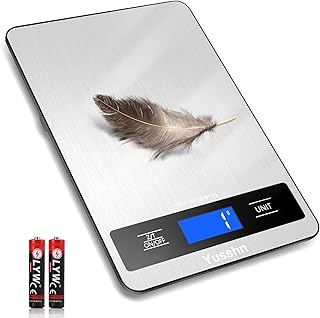
Food Scale, 11lb Kitchen Scale with 0.05oz/1g Precision
A dependable everyday pick — Food Scale pulls in 15 ratings at 4.5 stars. Not flashy, just solid.
7. Keep Dressings Separate to Save Your Greens

Nothing ruins a Monday lunch quite like a soggy, translucent leaf of romaine lettuce. I used to build massive salads on Sunday nights. I’d pile 3 cups of spring mix into a bowl, add cucumbers, tomatoes, and drench the whole thing in a heavy vinaigrette. By the time I sat down at my desk the next day, the acid in the dressing had essentially cooked the delicate greens. The texture was slimy and repulsive. I had to throw the entire container away.
You must store your wet ingredients away from your dry greens. I use Ball 16-ounce Mason Jars for this exact purpose. I buy a case of twelve at Target for $14.99. I put 3 tablespoons of my heavy tahini dressing at the very bottom of the jar. Then, I add hard, non-absorbent vegetables like 1/2 cup of diced carrots and 1/2 cup of whole cherry tomatoes. Next comes the heavy protein, like 1/2 cup of my par-cooked chickpeas. The delicate greens go at the very top, completely untouched by the dressing at the bottom. I screw the metal lid on tight. When I’m ready to eat, I just shake the jar vigorously for thirty seconds. The dressing travels up the glass and coats the greens right before I take my first bite. The lettuce stays loud and crunchy. It’s a minor structural change that saves the integrity of the meal for up to four days.
8. Incorporate Diverse Plant Proteins

Eating plain black beans every day gets old fast. If you want your meal prep to satisfy you, you need varying textures of protein. I make sure to prep at least two different protein sources on Sundays. First, I press and bake a block of tofu. I use Nasoya Organic Super-Firm Tofu, which costs $3.69 at Sprouts. The super-firm variety comes vacuum-sealed, not sitting in a tub of water, so you don’t have to waste twenty minutes pressing it with heavy books. I cut it into half-inch cubes, toss it with 1 tablespoon of soy sauce and 1 tablespoon of cornstarch, and bake it until crispy.
Second, I prepare tempeh. I buy Lightlife Organic Tempeh for $4.29 a block. Tempeh has a naturally bitter, fermented taste that puts a lot of people off. I hated it the first three times I tried it. The trick is to steam the block in a shallow pan of water for ten minutes before you marinate it. Steaming opens the pores of the soybeans and removes the bitterness. After steaming, I crumble it into a pan with 2 tablespoons of barbecue sauce and fry it until the edges caramelize. For days when I don’t have time to chew a heavy meal, I rely on protein powder. I mix one scoop of Transparent Labs Organic Plant-Based Protein Isolate. It costs $59.99 for 30 servings. It dissolves cleanly in 8 oz of almond milk without that chalky, gritty residue at the bottom of the shaker cup. Took me years to figure out.
9. Avoid the All-In-One-Day Meal Prep Ideas Vegetarian Trap

The biggest lie on the internet is that you need to spend six hours every Sunday making twenty-one meals for the week. I tried that schedule for a month when I was looking for meal prep ideas vegetarian diets could sustain. By hour four, my kitchen looked like a disaster zone, my feet ached, and I was sweating over a hot stove. More importantly, the food doesn’t last that long. A roasted sweet potato might taste okay on Wednesday, but by Friday, it’s growing a thin layer of white fuzz.
I abandoned the all-in-one-day method. Now, I split my prep into two short, focused sessions. I spend ninety minutes on Sunday afternoon making my hero grain, roasting two trays of sturdy vegetables, and mixing a sauce. On Wednesday evening, while I’m already in the kitchen making dinner, I spend thirty minutes doing a mid-week refresh. I’ll boil a fresh pot of lentils or chop a new head of broccoli. If I have leftover cooked quinoa that I know I won’t eat before it spoils, I freeze it. I spread 2 cups of the cooked quinoa flat on a metal baking sheet and put it in the freezer for an hour. Once the grains are frozen individually, I scrape them into a freezer bag. This prevents them from freezing into a giant, wet clump. If you’re struggling to come up with ideas, I sometimes use Green Chef. Their plant-based boxes cost around $13 per serving, which is pricey, but they send exact portions of organic ingredients. It removes the mental fatigue of planning when I’m having an exceptionally busy week at work.
Final Thoughts
You don’t need to be a professional chef to make your fridge work for you. You just need to understand how moisture, air, and time affect your ingredients. I’ve ruined enough expensive organic spinach to know that throwing everything into a cheap plastic tub on Sunday night is a recipe for failure. Start small this week. Pick one hero grain to cook in bulk. Buy a sturdy glass container to store it in. Mix one high-quality sauce using real tahini or miso paste. Once you stop trying to assemble twenty identical, sad little salads, the process becomes enjoyable. The texture of your food matters just as much as the flavor, and keeping ingredients separate is the only way to preserve that crunch. Don’t settle for mushy broccoli or rubbery tofu ever again. Pin this guide for your next grocery run, and let me know which brand of glass containers you end up choosing. I’m always looking to test new ones, even if my cabinets are already overflowing with lids I can’t match. No exaggeration.

Etekcity Food Kitchen Scale
Etekcity Food Kitchen Scale has been one of the most consistently praised picks in this category. 1,736 reviewers averaged 4.5/5.
Frequently Asked Questions
How long do vegetarian meal preps last in the fridge?
Most cooked vegetarian components like roasted vegetables and grains last 3 to 5 days in airtight glass containers. Delicate greens degrade faster, so store them separately from wet ingredients.
Can I freeze cooked quinoa or rice for meal prep?
Yes. Spread the cooked grains flat on a metal baking sheet and freeze them for an hour before transferring to a bag. This prevents them from freezing into a solid clump.
What are the best containers for meal prep ideas vegetarian diets use?
Borosilicate glass containers with locking silicone seals are ideal. They resist thermal shock, don’t absorb garlic odors, and prevent vegetables from oxidizing as quickly as cheap plastic tubs do.
How do I keep my prepped salads from getting soggy?
Never dress your greens in advance. Layer your salad in a tall glass jar with the wet dressing at the very bottom, followed by hard vegetables, proteins, and delicate greens at the top.
