What’s Inside
- Use the Monash App for Low FODMAP Meal Prep
- Prioritize Certified Products at Sprouts
- Master Flavor Bases with Garlic-Infused Oil
- Batch Cook Safe Grains Like Quinoa and Rice
- Prep Low FODMAP Proteins at Target
- Safe Vegetable Roasting Strategies
- Utilize Low FODMAP Meal Prep Snacks
- Build a Safe Pantry at Kroger
- Portion Control Containers for Safe Serving Sizes
- Prep Safe Breakfasts with Oats
- Freeze Safe Soups for Emergencies
Two years ago, I stood in aisle four of Whole Foods reading a pasta sauce label and started crying. Figuring out low FODMAP meal prep feels like learning a new language where the alphabet constantly changes. I tried winging it for months before realizing that guessing leads directly to a bloated stomach and ruined afternoons. My initial attempts were a disaster. I’d buy random vegetables, hope for the best, and end up eating plain white rice for three days straight because I was too scared of triggering a flare-up. Let’s fix that. I’ve put together this guide to show you exactly how I prep safe, edible food every Sunday without losing my mind. This isn’t about eating bland chicken and sad lettuce. It’s about using smart swaps, strict portion control, and the right grocery staples to make your week stress-free. If you’re tired of feeling sick after lunch, these are the exact steps I take to build a safe menu.
1. Use the Monash App for Low FODMAP Meal Prep

The Monash University FODMAP Diet App costs exactly $8 on the App Store. I bought it last October after eating what I thought was a safe amount of sweet potato and spending the rest of the night in agony on my couch. This app acts as your baseline truth. It uses a traffic light system: green is safe, yellow is moderate, and red is high FODMAP. You open it, search for an ingredient, and it gives you the exact gram weight you can eat safely. For example, 75 grams of broccoli heads get a green light, but 75 grams of broccoli stalks get a red light for fructose. Before I buy anything, I check the app. You can’t rely on memory here. I tried that and accidentally stacked fructans by eating a green-light portion of wheat bread alongside a green-light portion of garlic-infused oil. The app tells you exactly how to avoid FODMAP stacking. It updates constantly with new data. If you skip this step, you’re just guessing. Guessing leads to stomach cramps. I keep the app on my home screen right next to my text messages. It dictates every single item on my grocery list, and I won’t cook a new vegetable without checking it first. Trust me on this.
2. Prioritize Certified Products at Sprouts

Reading labels for hidden garlic and onion powder takes hours. I stopped doing it. Instead, I buy certified products at Sprouts. Look for the Monash University Low FODMAP Certified or FODMAP Friendly logos on the jar. Fody Foods makes a Tomato Basil Pasta Sauce that costs $6.49 for a 19.4 oz jar. I buy three jars every time I go. The sauce actually tastes like real tomatoes instead of watered-down paste. When I first started, I tried making my own safe marinara sauce from scratch. It took two hours, ruined my kitchen, and usually tasted like acidic metallic water. Buying certified products removes the guesswork. You just open the jar and pour it over your gluten-free noodles. Bay’s Kitchen is another brand that carries certified safe simmer sauces. Their Mild Korma sauce runs about $7.99 for a 260g jar. It saves me on days when I want curry but can’t deal with blending my own safe spices. A common mistake is assuming all gluten-free products are low FODMAP. They aren’t. Many gluten-free breads use apple juice concentrate or inulin for sweetness, which will wreck your stomach. Stick to the certified logos for complex items like sauces and marinades.
3. Master Flavor Bases with Garlic-Infused Oil

Onion and garlic are the hardest things to give up. They’re in literally everything. You can still get that flavor profile safely if you understand the chemistry. FODMAPs are water-soluble, not fat-soluble. This means you can use garlic-infused oil safely because the fructans from the garlic can’t leach into the oil. I use Cobram Estate Garlic-Infused Olive Oil. It costs $11.99 for a 12.1 oz bottle at Kroger. The caramel-butter smell when it hits a hot cast iron pan is identical to fresh garlic. I use 1 tablespoon of this oil to cook my chicken and roast my vegetables. You also need to utilize the green parts of scallions. The white bulb is high FODMAP, but the dark green tops are completely safe. I chop up 1/2 cup of scallion greens and use them exactly like diced onions in stir-fries. Early on, I made the mistake of using the white parts of the scallions because I didn’t read the app closely enough. I paid for that mistake for two days. Now I cut the white bulbs off immediately and throw them in the trash. Fresh ginger is another safe flavor base. I grate 1 inch of fresh ginger root into my soy sauce marinades to add heat without triggering symptoms. You might also like: 15 Inspiring Chicken Meal Prep Ideas You Haven’t Thought Of

Food Scale -33lb Digital Kitchen Scale for Food Ounces
A dependable everyday pick — Food Scale -33lb Digital Kitchen Scale for Food Ounces Grams Rechargea pulls in 78 ratings at 4.5 stars. Not flashy, just solid.
4. Batch Cook Safe Grains Like Quinoa and Rice

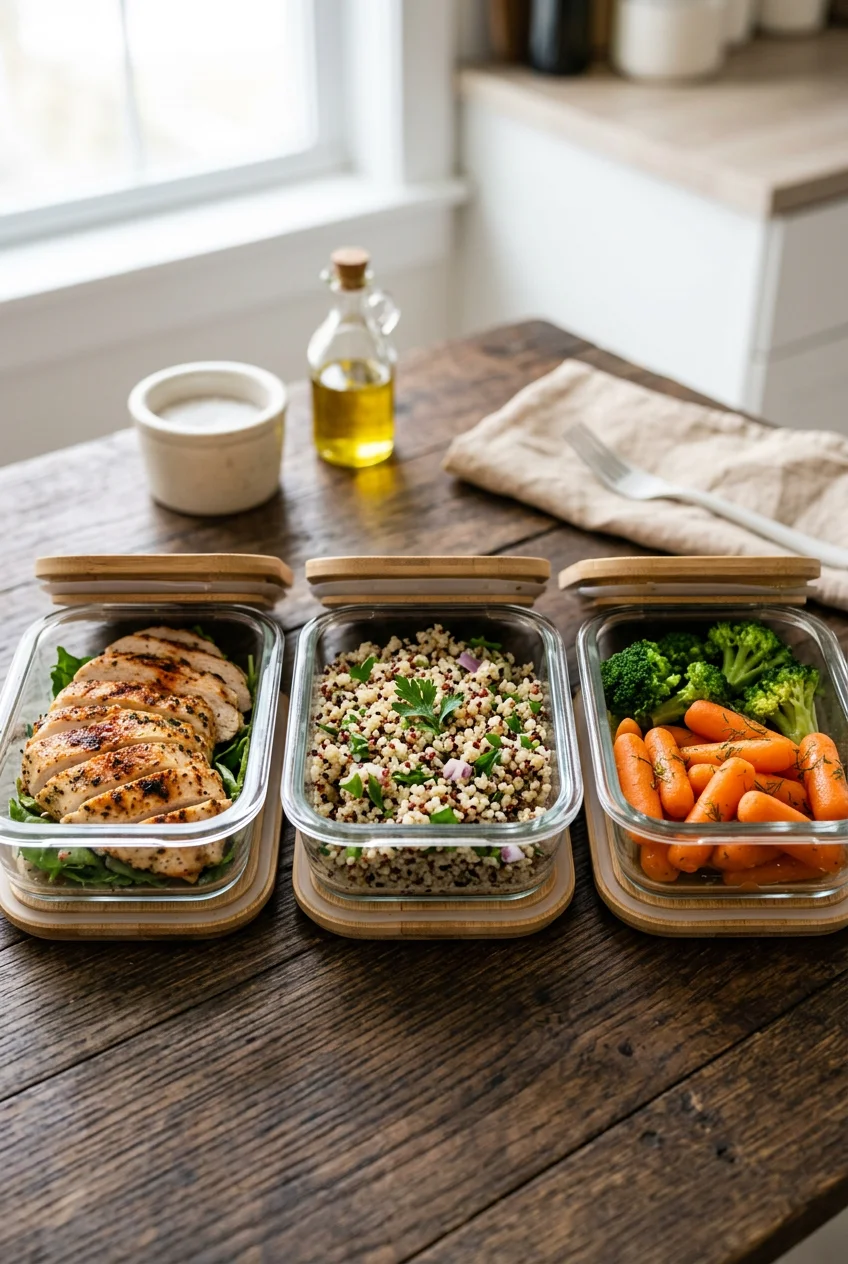
Carbohydrates are tricky on this diet because wheat is generally restricted. You need reliable, filling grains that won’t cause bloating. I buy the 4.5 lb bag of Kirkland Organic Quinoa at Costco for $10.99. Quinoa is completely safe, and it packs enough protein to keep you full. Every Sunday, I rinse 2 cups of dry quinoa in a fine mesh strainer for exactly two minutes. If you skip rinsing, the natural saponins on the outside make it taste bitter and soapy. I boil it in 4 cups of water, let it simmer for 15 minutes, and then fluff it with a fork. It yields about 6 cups of cooked quinoa. I divide this into my glass containers for lunches. White rice is another incredibly safe staple. I buy the 15 lb bag of Botan Calrose Rice at Walmart for $18.98. It cooks up sticky and soft. I prep 3 cups of cooked rice to keep in the fridge. Cold rice develops resistant starch, which is actually good for your gut bacteria. Just make sure you reheat it until it’s steaming hot. Having cooked, safe grains ready to go means I’m never tempted to order takeout when I’m tired on a Wednesday night. You might also like: 20 Beautiful High Protein Meal Prep Ideas That Are Totally Worth It
5. Prep Low FODMAP Proteins at Target

Meat itself doesn’t contain carbohydrates, which means plain chicken, beef, and pork are naturally low FODMAP. The danger comes entirely from marinades and seasonings. I buy the Good & Gather plain chicken breast at Target for $5.99 per pound. I get about 3 pounds for my Sunday prep. Never buy pre-marinated meats from the butcher counter. They always contain garlic powder or onion powder. I learned this the hard way last summer when I bought pre-seasoned turkey patties and spent the afternoon completely bloated. Now, I make my own safe marinades. I take 1/4 cup of San-J Tamari Gluten-Free Soy Sauce, which costs $4.49 for 10 oz, and mix it with 1 tablespoon of sesame oil and 1 tablespoon of maple syrup. I pour this over the raw chicken breasts in a glass bowl and let it sit for thirty minutes. Then I bake the chicken at 400 degrees Fahrenheit for 25 minutes until the juices run clear. The chicken comes out tender with a slightly caramelized crust. I slice it into thin strips and weigh out 4 oz portions for my lunches. Keeping the protein simple and controlling the seasoning yourself is the only way to guarantee the meal won’t hurt you. You might also like: 15 Cozy Freezer Meals Ideas to Transform Your Space
6. Safe Vegetable Roasting Strategies

Roasting vegetables requires strict portion control. You can’t just fill a sheet pan with random produce. I buy large bags of carrots and whole zucchinis at Trader Joe’s. Carrots are a zero-FODMAP food, meaning you can eat them freely. A 2 lb bag of organic carrots costs $1.99. Zucchini, however, has a strict Monash limit. The app says 65 grams (about 1/2 cup chopped) is the safe green-light serving size. If you eat a whole cup, you hit moderate levels of fructans. I chop 4 cups of carrots and exactly 1 cup of zucchini. I spread them out on a large aluminum baking sheet. Pro tip: don’t crowd the pan. I used to dump all my vegetables onto one small pan, and they just steamed in their own juices. They turned into a soggy, gray mess. Now I use two pans so the hot air circulates. I toss the vegetables in 2 tablespoons of regular olive oil, 1 teaspoon of kosher salt, and 1/2 teaspoon of smoked paprika. I roast them at 400 degrees for 30 minutes until the carrot edges turn dark brown and crispy. When I pack my lunches, I make sure each container only gets that safe 65-gram serving of zucchini alongside plenty of carrots.

buluker 4 Pack Bento Lunch Box Set 3 Compartment Food
A dependable everyday pick — buluker 4 Pack Bento Lunch Box Set 3 Compartment Food Storage Containe pulls in 23 ratings at 4.5 stars. Not flashy, just solid.
7. Utilize Low FODMAP Meal Prep Snacks

Finding safe snacks is notoriously difficult. Most protein bars are packed with chicory root fiber, honey, or high-fructose corn syrup. If you eat a standard granola bar, your stomach will inflate like a balloon. I rely heavily on specific low FODMAP snacks to bridge the gap between lunch and dinner. I buy Fody Foods Almond Coconut Snack Bars online. They cost $14.99 for a box of 12. They are certified safe and taste like a dense, chewy macaroon. I keep two in my purse at all times. For a cheaper option, I go to Walmart and buy Lundberg Family Farms lightly salted rice cakes. A sleeve costs $3.48. Rice is completely safe. I take two rice cakes and spread exactly 2 tablespoons of Justin’s Classic Peanut Butter ($6.49 for a 16 oz jar) across them. Peanut butter is safe at a 2-tablespoon serving. Don’t exceed that amount. I once ate half a jar while stressed and the fat and trace FODMAPs caused a massive flare-up. No exaggeration. I prep these snacks on Sunday by putting the 2-tablespoon portions of peanut butter into tiny plastic condiment cups. That way, I can just grab a cup and a couple of rice cakes when I head to the office.
8. Build a Safe Pantry at Kroger

A well-stocked pantry prevents desperate, unsafe food choices. Legumes are usually off-limits, but canned lentils are an exception. The water-soluble FODMAPs leach out of the lentils into the canning liquid. I buy Simple Truth Organic Canned Lentils at Kroger for $1.79 a can. The trick is that you must rinse them thoroughly. I dump the can into a colander and run cold water over them for a full minute until all the starchy foam disappears. The safe serving size is 46 grams, which is roughly 1/4 cup. I prep a quick pantry salad by mixing 1/4 cup of rinsed lentils with 1 cup of chopped cucumber, 1 tablespoon of red wine vinegar, and 1 tablespoon of garlic-infused oil. It provides necessary fiber without the bloat. I also stock up on canned coconut milk for curries. Thai Kitchen Unsweetened Coconut Milk runs $3.29 a can at Kroger. The safe serving for canned coconut milk is 1/4 cup. I use it to make a mild, safe chicken curry for dinner. The smell of coconut and fresh ginger simmering on the stove is incredible. Building a pantry of safe staples means you don’t have to run to the grocery store every single time you want to cook a meal.
9. Portion Control Containers for Safe Serving Sizes

The entire low FODMAP diet relies on exact portion sizes. You can’t eyeball your food. If you guess the difference between 1/2 cup of sweet potato and 3/4 cup, you might push yourself from a green light into a red light. This is called FODMAP stacking. To prevent this, I use identical glass containers. I bought a set of Room Essentials glass containers with locking lids at Target. They cost $4.00 each. I bought ten of them. Skip the cheap plastic containers. I used cheap plastic for a year. They warped in the dishwasher, stained orange from tomato sauce, and the lids eventually snapped. Glass is non-porous and handles microwave reheating perfectly. On Sundays, I line all ten glass containers up on my kitchen counter. I place my digital kitchen scale right next to them. I weigh out exactly 75 grams of broccoli heads, 65 grams of zucchini, and 4 oz of chicken for each container. Doing this assembly-line style takes about ten minutes, but it guarantees that every single meal I eat from Monday to Friday is mathematically safe. The visual organization also calms my anxiety. I know exactly what’s in each box, and I know it won’t trigger my symptoms.

Etekcity Food Kitchen Scale
If you want something that just works, Etekcity Food Kitchen Scale is a safe bet (1,736 reviews, 4.5 stars).
10. Prep Safe Breakfasts with Oats

Breakfast used to be my hardest meal. Most cereals contain wheat, and most yogurts contain lactose. I switched to overnight oats, which are cheap, filling, and safe. I buy the 365 Everyday Value Rolled Oats at Whole Foods. A 32 oz bag costs $4.29. The Monash app states that rolled oats are safe at a 1/2 cup serving (52 grams). Don’t buy quick oats or instant oats, as their processing changes the FODMAP content and they digest too quickly, leaving you hungry. I take five small mason jars and put exactly 1/2 cup of rolled oats into each one. Then I pour in 1/2 cup of Califia Farms Unsweetened Almond Milk, which costs $4.99 for a 48 oz bottle at Whole Foods. Almond milk is safe at a 1 cup serving. I add 1 tablespoon of chia seeds for fiber and 1 teaspoon of maple syrup for sweetness. I screw the lids on tight and shake them vigorously. I leave them in the fridge overnight. By morning, the oats have absorbed the almond milk and turned into a thick, creamy pudding. The texture is dense and satisfying. I top it with exactly 10 raspberries, which is the strict safe limit for that fruit. It takes five minutes on Sunday and solves breakfast for the entire week.
11. Freeze Safe Soups for Emergencies

You will inevitably have days where you feel sick, tired, or just can’t stand the thought of cooking. On those days, having a safe soup in the freezer is crucial. Store-bought broths are basically poison on this diet. Even the ones labeled plain almost always contain hidden onion or celery powder. I make my own safe chicken broth every other Sunday. I buy a whole chicken from Costco for $1.49 per pound. I roast the chicken for dinner, then take the leftover carcass and throw it in a large stockpot. I add chopped carrots, the green tops of scallions, fresh parsley, and a tablespoon of whole black peppercorns. I cover it with water and simmer it on low for four hours. The smell of rich chicken broth fills the entire house. I strain the liquid through a fine mesh sieve and let it cool. I store the broth in 32 oz plastic deli containers. You can buy a pack of 24 deli containers on Amazon for $14.99. I freeze them. When I need a quick meal, I pop a frozen block of broth into a saucepan, bring it to a boil, and toss in a handful of rice noodles and some leftover chicken. It takes ten minutes and won’t upset my stomach.
Meal prepping on a restricted diet takes patience. You will make mistakes. I certainly did. But once you get your safe staples locked down, it stops feeling like a punishment and starts feeling like a routine. I’d highly recommend starting with just two safe recipes this week. Master the garlic-infused oil, weigh your portions, and see how your body reacts. If this guide helped you figure out your grocery list, save it or pin it for your next Sunday prep session. Your stomach will thank you.
Frequently Asked Questions
Can I use onion powder in low fodmap meal prep?
No. Onion powder is highly concentrated and packed with fructans. You should use the dark green tops of scallions or chives to get a safe onion flavor without triggering digestive symptoms.
How do I add garlic flavor safely?
You can use garlic-infused olive oil. The FODMAPs in garlic are water-soluble, meaning they can’t leach into the oil. This gives you the exact taste of garlic while remaining completely safe for your stomach.
Are all gluten-free products low FODMAP?
No. Many gluten-free breads and pastas use high FODMAP ingredients like apple juice concentrate, honey, or inulin (chicory root fiber) for texture and sweetness. Always check the ingredient list against the Monash app.
What is the best way to store low fodmap meals?
Use identical glass containers with locking lids. Glass won’t warp or absorb odors from your food. Pre-weighing your exact portions into these containers prevents accidental FODMAP stacking during the busy work week.
