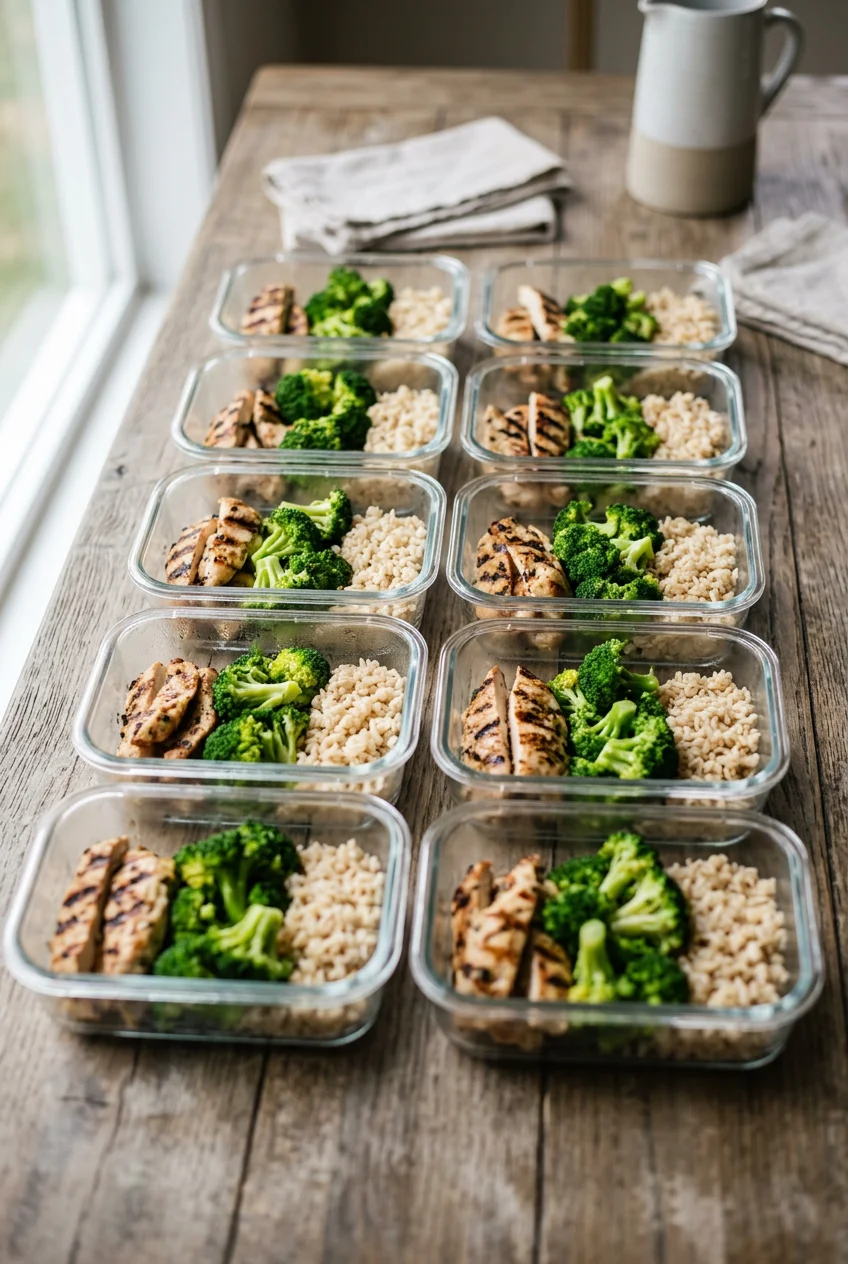
What’s Inside
- Calculate Your Personalized Macros Before Cooking
- Prioritize High-Quality Lean Proteins
- Master Complex Carbohydrate Batch Cooking
- Integrate Essential Healthy Fats Thoughtfully
- Invest in Quality BPA-Free Storage Containers
- Batch Cook Smart to Prevent Spoilage (Bodybuilding Meal Prep)
- Embrace Sous Vide for Perfectly Cooked Bulk Protein
- Combat Flavor Fatigue with the Foil Pan Trick
- Utilize Volume Hacks for Satiety During Cutting
- Avoid the Same Meal Every Day Trap in Bodybuilding Meal Prep
Last Tuesday at Whole Foods, I watched a guy load thirty pounds of raw chicken into his cart while looking miserable. I knew that exact expression. My first attempt at bodybuilding meal prep involved eating cold, rubbery chicken breasts out of a stained plastic tub in my car while it rained. I didn’t know how to season it, I didn’t measure my portions, and I had to throw half of it away by Thursday because it smelled like sulfur. I learned that the hard way. Real bodybuilding meal prep doesn’t require eating sad, flavorless food until your jaw aches. You just need a methodical system. I’m going to walk you through how I structure my week to hit my macros without spending my entire Sunday standing over a hot stove. Let’s get into the mechanics.
1. Calculate Your Personalized Macros Before Cooking

Before you chop a single vegetable, you need cold, hard numbers. Guessing your portions won’t work if you’re trying to build muscle or cut fat. I tried eyeballing my rice and chicken for six months in 2022. I ended up gaining five pounds of fat because my fist-sized portion of rice was actually three cups. You need to calculate your specific macronutrients (protein, carbs, and fats). A standard bodybuilding split is often 40% carbohydrates, 40% protein, and 20% fats, but you’ll need to run your own numbers through a macro calculator based on your exact body weight and goals.
Once you’ve got those targets, you need a reliable way to enforce them. I bought the OXO Good Grips 11-Pound Stainless Steel Food Scale for $32.99 at Target. The pull-out display means I can actually read the screen when I place a massive mixing bowl on top of it. You have to weigh everything raw. Meat shrinks when it cooks, and rice expands. If you weigh 4 oz of cooked chicken, you’re actually getting the macros for roughly 5.5 oz of raw chicken, which throws your entire daily protein count off. Stop guessing. Buy a scale and use it for every single ingredient. Trust me. I also highly recommend using a digital macro tracker. Top apps like Eat This Much or Mealime allow you to input your exact OXO scale measurements. They automate your meal schedule based on your preferences, which removes the mental friction of calculating every gram of protein by hand.
2. Prioritize High-Quality Lean Proteins

Protein is the structural foundation of your entire plan. Aim for 20 to 40 grams of protein per meal, spread across three to four meals daily. This maximizes muscle protein synthesis. I used to buy the cheapest frozen chicken breasts from a discount grocer. They injected the meat with a 15% sodium solution. When I baked them, they expelled half a cup of white, slimy water and shrank to the size of golf balls. It tasted like wet cardboard.
Now, I strictly buy Kirkland Signature boneless, skinless chicken breasts for $2.99 per pound at Costco. The texture is vastly superior, and it won’t turn into a watery mess in the oven. I usually prep about six pounds at a time. If you have the budget, fresh Atlantic salmon provides excellent protein and omega-3s, though it’s pricier at around $12.99 per pound at Whole Foods. I usually bake two large fillets for my Monday and Tuesday dinners. If you’re incorporating plant-based options, extra firm tofu is highly efficient. I press a 14 oz block of Nasoya Extra Firm Organic Tofu (usually $3.29 at Kroger) under a heavy cast iron skillet for twenty minutes to drain the water before baking it. This makes it dense enough to absorb marinades without falling apart in your lunchbox. Don’t rely solely on protein powder to hit your numbers. Solid food digests slower and keeps you full, which matters when your calories drop during a cutting phase.
3. Master Complex Carbohydrate Batch Cooking

Cooking complex carbohydrates in tiny daily batches is a waste of time. You need to prep these in bulk. I typically cook 5 to 6 cups of dry brown rice on Sunday afternoon. I use Lundberg Family Farms Organic Brown Basmati Rice, which costs $7.49 for a 32 oz bag at Whole Foods. The basmati variety won’t turn into a sticky, unappetizing block in the fridge like short-grain brown rice does. I tried cooking standard brown rice in a pot for months before figuring it out. Half the time, the bottom burned while the top remained crunchy. I finally bought a basic Aroma 6-Cup Rice Cooker for $19.99 at Walmart. You just rinse the rice, add water, press a button, and walk away.
Brown rice is generally preferred for bodybuilding because the higher fiber content slows digestion and prevents aggressive insulin spikes. You should also expand your grain repertoire beyond just rice. I often pre-cook 2 cups of dry Bob’s Red Mill Organic Quinoa ($6.49 at Sprouts). Quinoa is a complete protein, and you can eat it cold in salads or warm as a side dish, which gives you diverse textures throughout the week. If you aren’t a fan of grains, sweet potatoes are your next best option. I wash and stab six large sweet potatoes with a fork, rub them with 1/2 teaspoon of coarse salt, and bake them at 400 degrees Fahrenheit for an hour. They keep perfectly in the fridge for five days. You can just grab one, slice it open, and toss it in your container. You might also like: 15 Creative Cold Lunch Ideas to Transform Your Space
![[8-Pack,30 oz]Glass Meal Prep Containers](https://m.media-amazon.com/images/I/713Zfdsgi4L._AC_UL320_.jpg)
[8-Pack,30 oz]Glass Meal Prep Containers
Honestly, [8-Pack surprised me — sturdier than it looks in the photos, and over 7 buyers gave it 4.5 stars.
4. Integrate Essential Healthy Fats Thoughtfully

A major mistake people make during prep is slashing their fat intake to zero. Dietary fats are essential for hormone production, including testosterone. I made this error during my first cutting phase. I ate nothing but dry chicken breast and steamed broccoli. My joints ached, my skin peeled, and I felt exhausted by 2 PM every day. You have to integrate healthy fats deliberately. You might also like: 15 Lovely Kids School Lunch Ideas That Changed Everything
I add exactly 1 tablespoon of California Olive Ranch Everyday Extra Virgin Olive Oil ($11.49 for a 16.9 oz bottle at Sprouts) over my cooked green beans. The fat helps your body absorb the fat-soluble vitamins in the vegetables. I also portion out exactly 1 oz of raw almonds into small snack bags. I use Blue Diamond Whole Natural Almonds, which run about $6.49 for a 16 oz bag. Don’t eyeball nuts or oils. A small handful of almonds can easily be 400 calories if you have large hands or you’re hungry. Fats are incredibly calorie-dense at nine calories per gram. Measure them with your digital scale to the exact gram. If you prefer avocado, cut a quarter of a medium Hass avocado (roughly 50 grams) right before eating. Don’t prep sliced avocado on Sunday because it will turn brown and slimy by Tuesday morning. You might also like: 15 Cozy Freezer Meals Ideas to Transform Your Space
5. Invest in Quality BPA-Free Storage Containers

Your food is only as good as the container holding it. I learned this the hard way last October. I packed a cheap, flimsy plastic container of teriyaki ground turkey in my gym bag. The lid popped off in transit. Teriyaki sauce soaked into my lifting belt and knee sleeves. I had to throw the belt away. You need containers with secure, latching lids.
I strictly use the Rubbermaid Brilliance 10-Piece Glass Food Storage Set, which I bought for $22.99 at Target. The glass won’t absorb odors. If you store spicy chicken in cheap plastic, that plastic will smell like garlic for the rest of its life, no matter how much soap you use. The Rubbermaid lids have heavy-duty latches and built-in vents for microwaving. If you need to carry multiple meals and prefer something lighter than glass, look for high-grade BPA-free plastic. You can buy a 15-piece set of Yangrui multi-compartment containers for $18.99 on Amazon. The compartments keep your wet vegetables from turning your rice into mush. When you’re washing these containers, always put the plastic lids on the top rack of your dishwasher. The heating element on the bottom rack will warp the plastic latches over time, ruining the airtight seal you paid for. A proper seal locks out oxygen, which keeps your food tasting fresh on day four instead of taking on that stale, refrigerator taste. Don’t skimp on storage.
6. Batch Cook Smart to Prevent Spoilage (Bodybuilding Meal Prep)

Bulk cooking is highly efficient, but over-prepping leads to massive food waste. Cooked meats generally only last three to four days in the refrigerator. I used to cook seven days’ worth of chicken on Sunday. By Friday, the chicken had a slightly sour smell and a slimy texture. I ate it anyway and spent the entire weekend violently ill with food poisoning. No exaggeration. According to food safety guidelines, you shouldn’t ever push poultry past that four-day mark. If you find yourself constantly throwing food away, you’re prepping too much volume at once.
Now, I split my bodybuilding meal prep into two phases. I keep Monday through Wednesday’s meals in the fridge. I immediately freeze Thursday and Friday’s portions. I use Pyrex 4-Cup Round Glass Storage Containers ($7.99 each at Kroger) for the freezer meals. When Wednesday night rolls around, I move the frozen containers to the fridge to thaw overnight. This strategy completely prevents spoilage. If you’re prepping delicate vegetables like spinach or zucchini, don’t freeze them. They turn into a watery, unpalatable paste when thawed. Instead, prep your proteins and heavy carbs (like rice or potatoes) for the freezer, and steam fresh vegetables mid-week. It takes exactly four minutes to microwave a 10 oz bag of Green Giant Steamers Broccoli Florets ($1.99 at Walmart). You don’t need to prep every single component on Sunday if it compromises the food’s safety and texture.

M MCIRCO 10-Pack,30 Oz Glass Meal Prep Containers 2
A dependable everyday pick — M MCIRCO 10-Pack pulls in 23 ratings at 4.5 stars. Not flashy, just solid.
7. Embrace Sous Vide for Perfectly Cooked Bulk Protein

Cooking ten chicken breasts in the oven usually results in unevenly cooked meat. The edges dry out and turn tough, while the thickest parts barely reach a safe internal temperature. I switched to sous vide cooking two years ago, and it fixed this issue. It took me years to figure out.
I use the Anova Culinary Nano Sous Vide Precision Cooker, which costs $129.00 at Target. You attach the device to a large pot of water, set the exact temperature (I use 145 degrees Fahrenheit for chicken breast), and it circulates the water to hold that temperature perfectly. I place raw, seasoned chicken breasts into FoodSaver Vacuum Sealer Bags ($14.99 for a 44-count box at Costco), seal them, and drop them in the water bath for two hours. You can cook five pounds of meat at once. Because the chicken cooks in its own juices inside the vacuum bag, it stays tender. Once it’s done, I plunge the sealed bags into an ice bath to chill them rapidly, then store them in the fridge. When I’m ready to eat, I just open a bag and sear the meat in a hot pan for thirty seconds per side. It tastes like it was freshly cooked, eliminating the dry, leftover chicken texture.
8. Combat Flavor Fatigue with the Foil Pan Trick

Eating the exact same flavor profile for five days straight causes severe diet fatigue. You’re likely to end up craving fast food simply because you’re bored. I used to bake a massive sheet pan of chicken coated only in salt and pepper. By Wednesday, I couldn’t stomach another bite. I started using the foil pan trick to fix this without dirtying extra dishes.
I take a standard aluminum baking sheet and line it with Reynolds Wrap Heavy Duty Aluminum Foil ($5.49 for 50 square feet at Sprouts). I pinch and fold the foil to create three distinct, walled-off sections on the same pan. I also use a quick spray of PAM Original Cooking Spray ($3.48 at Kroger) on the foil before placing the chicken down. This ensures the meat won’t stick and tear when you try to lift it off the pan with tongs. In section one, I place chicken tossed with 1 tablespoon of McCormick Perfect Pinch Lemon & Herb Seasoning. In section two, I use 1 tablespoon of sweet paprika and garlic powder. In section three, I use 2 tablespoons of G Hughes Sugar-Free Hickory BBQ Sauce ($3.98 at Walmart). I bake the entire pan at 400 degrees Fahrenheit for 25 minutes. The foil barriers prevent the juices and marinades from bleeding into each other. You get three entirely different flavor profiles cooked simultaneously on a single pan. Clean-up takes ten seconds because you just crumple the foil and throw it away.
9. Utilize Volume Hacks for Satiety During Cutting

When you enter a cutting phase to strip away body fat, your daily calorie allowance drops significantly. Hunger becomes a serious mechanical issue. If your stomach feels empty, you’re likely to break your diet. You have to use volume hacks to physically fill your stomach without adding meaningful calories.
I rely heavily on cauliflower rice. A standard 150-gram serving of cooked white rice packs about 195 calories. The exact same 150-gram volume of Trader Joe’s Organic Riced Cauliflower (priced at $2.99 for a 12 oz frozen bag) contains only 25 calories. I mix half a cup of regular brown rice with a full cup of steamed cauliflower rice. It looks and feels like a massive portion, but the calorie load is minimal. I also use 1/2 cup of Libby’s 100% Pure Pumpkin Puree ($2.49 at Kroger) mixed into my morning oatmeal. It adds dense volume and fiber for only 40 extra calories. You can also bulk up your meals by adding a cup of shredded carrots to your ground turkey. A 10 oz bag of Kroger Matchstick Carrots costs $1.79 and adds satisfying crunch and volume without derailing your carbohydrate limits. Another effective tactic is adding 1/2 cup of Bob’s Red Mill Egg White Protein Powder ($16.89 at Whole Foods) to your pancake batter. The whipped egg whites introduce air into the batter, making the pancakes thick and fluffy. You trick your brain into thinking you’re eating a massive meal.

KOMUEE 10 Packs 30 oz Glass Meal Prep Containers
Honestly, KOMUEE 10 Packs 30 oz Glass Meal Prep Containers surprised me — sturdier than it looks in the photos, and over 46 buyers gave it 4.5 stars.
10. Avoid the Same Meal Every Day Trap in Bodybuilding Meal Prep

The most common reason people fail at bodybuilding meal prep isn’t a lack of discipline; it’s crippling monotony. Eating the exact same chicken, rice, and broccoli combination for lunch and dinner every day is a trap. I did this in my early twenties. I lasted eleven days before I snapped and ordered a large pepperoni pizza. You need a modular system.
Instead of building completed, identical meals on Sunday, I prep components. I cook three different protein sources: 2 pounds of 93% lean ground turkey, 2 pounds of chicken breast, and a dozen hard-boiled Vital Farms Pasture-Raised Eggs ($6.99 a dozen at Whole Foods). I prep two carb sources: a large batch of quinoa and roasted sweet potatoes. I also chop raw bell peppers and steam green beans. I store all these components in separate, large glass containers in the fridge. On Monday morning, I might grab ground turkey, quinoa, and green beans. On Tuesday, I’ll take sliced chicken breast, sweet potatoes, and bell peppers. Having hard-boiled eggs ready means I can instantly add 6 grams of high-quality protein to any meal if my macros are running low. Mixing and matching components keeps the diet sustainable while maintaining strict portion control.
That’s how I handle my food every week. It takes a little practice to get the timing right, but once you set up your system, you won’t spend more than two hours in the kitchen on a Sunday. Skip the complicated recipes with twenty ingredients. Stick to weighing your food, batching your proteins, and storing everything in high-quality containers. If you found these methods helpful, pin this page so you have the temperature and measurement references ready for your next grocery run.
Frequently Asked Questions
How long does bodybuilding meal prep last in the fridge?
Cooked proteins like chicken or ground turkey generally last 3 to 4 days in the refrigerator. To prevent spoilage, keep Monday through Wednesday’s meals in the fridge and freeze the rest, moving them to thaw on Wednesday night.
What are the best containers for bodybuilding meal prep?
Glass containers with latching lids, like Rubbermaid Brilliance or Pyrex, are superior because they won’t absorb odors or warp in the microwave. If you need lighter options, choose high-grade, BPA-free plastic containers with multiple compartments to separate wet and dry foods.
Do I weigh my meat raw or cooked for macro tracking?
You must weigh your meat raw using a digital food scale. Meat shrinks during the cooking process as it loses water weight. Weighing it cooked will cause you to underestimate your portion size and throw off your entire daily protein count.
How do I stop my meal prep rice from getting hard?
Short-grain rice tends to dry out and form hard blocks in the fridge. Switch to a high-quality organic brown basmati rice, and make sure you store it in completely airtight containers. Adding a tiny splash of water before microwaving also helps restore its original texture.
