What’s Inside
- Invest in Leak-Proof Containers That Actually Work
- Master Batch Cooking For Meal Prep For The Week Family Dinners
- Enforce Strict Temperature Control
- Utilize Your Freezer With Silicone Trays
- Involve Everyone In Your Meal Prep For The Week Family Menu
- Wash and Chop Produce Immediately
- Embrace the Prep Once, Eat Twice Method
- Lean Heavily on Time-Saving Gadgets
- The Power of Store-Bought Rotisserie Chicken
- Plan for No-Cook Breakfasts
- Avoid Overcommitting to Unsuitable Recipes
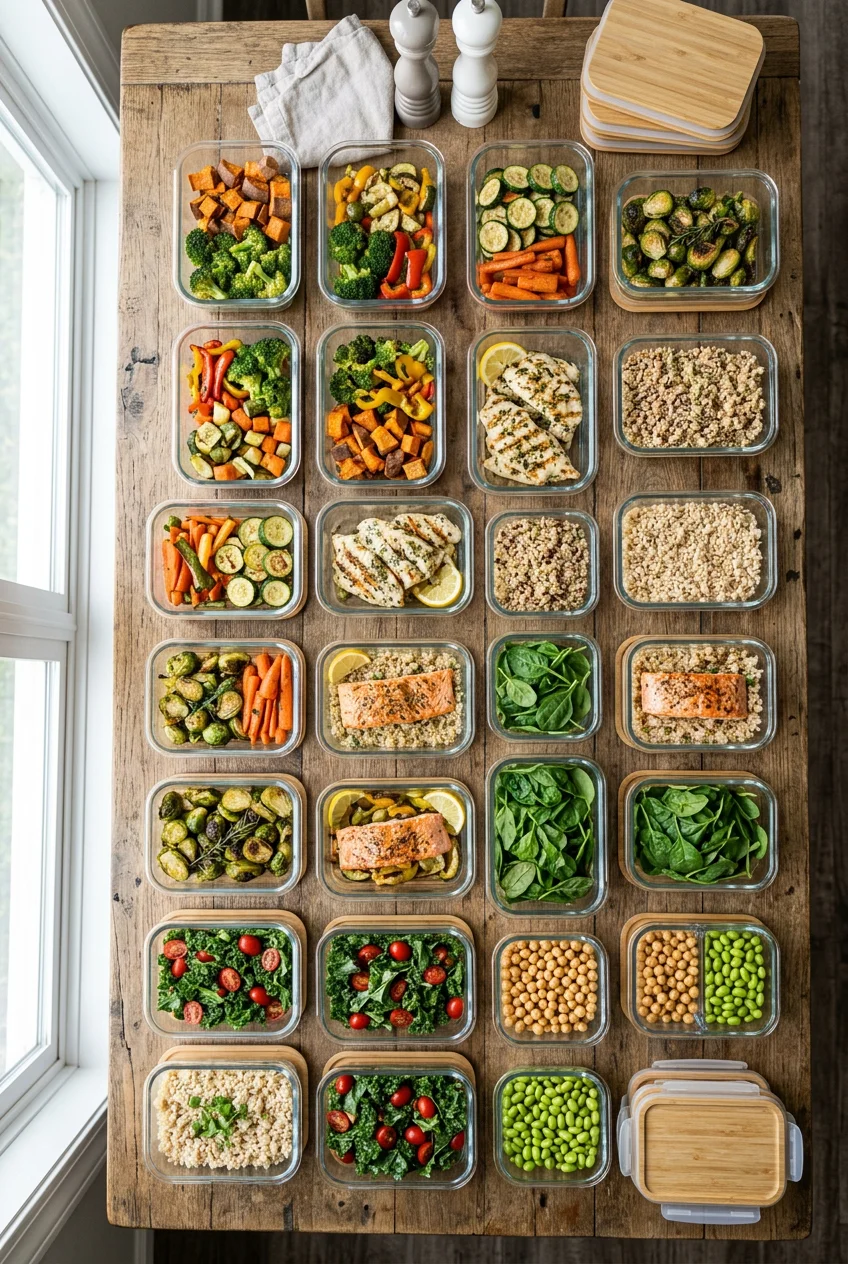
Last Tuesday at Whole Foods, I stood staring at a $14 pre-made salad while my toddler had a meltdown over a bruised banana. That moment is why mastering family-style meal prep became my actual survival strategy. It took me three years of soggy broccoli and wasted groceries to figure out how to feed everyone without losing my mind. I used to try making five different gourmet meals every Sunday. I’d end up exhausted by 4 PM, standing in a kitchen covered in flour, with a sink full of crusty pans and a backache. The food wouldn’t even taste good by Thursday. Now, I keep it realistic. I don’t spend eight hours cooking. I spend two hours prepping smart components. If you’re tired of the 5 PM panic where you stare into the fridge hoping a dinner materializes out of thin air, you need a system. Let’s break down how I feed my household without relying on expensive takeout or frozen pizzas every Wednesday night.
1. Invest in Leak-Proof Containers That Actually Work

Using cheap takeout containers is a huge mistake. I bought a stack of generic plastic bins two years ago. Last November, one cracked in my bag and leaked cold lentil soup all over my canvas tote on the subway. It smelled like cumin for a month. I learned that the hard way. Now, I only use durable containers with locking lids. I bought the Rubbermaid Brilliance 10-piece set at Target for $34. The plastic is thick, clear, and it doesn’t stain even when I store turmeric chicken in it for three days. The latches snap down tight enough that I can toss it into a backpack without anxiety. If you prefer glass, the OXO Smart Seal 8-piece glass set is usually $30 at Sprouts. The heavy borosilicate glass means I can transfer a 4-ounce portion of lasagna straight from the fridge to the oven. The tradeoff is the weight. Carrying three glass containers to work hurts your shoulders. Still, the silicone gaskets on the OXO lids are reliable. Skip the flimsy plastic. Spend the $30 upfront. It saves you from replacing shattered plastic every three weeks. The OXO containers stack perfectly in my narrow fridge, which stops that annoying avalanche of plastic tubs when I reach for the milk.
2. Master Batch Cooking For Meal Prep For The Week Family Dinners

When you’re tackling family meal prep, cooking complete, plated meals is a rookie mistake. I tried that for six months before realizing nobody wants to eat the same chicken and broccoli four days in a row. Instead, I spend two hours on Sunday making 5 cups of brown rice or quinoa and boiling a massive pot of green lentils. I buy 3 pounds of boneless skinless chicken thighs from Costco. They run about $14 for the family pack. I roast them on a single aluminum sheet pan with 2 tablespoons of olive oil, 1 teaspoon of kosher salt, and a pinch of black pepper at 400°F. Once they cool, I chop the meat into 1-inch cubes. Having plain, cooked chicken and a massive Tupperware of rice means I can make a quick stir-fry on Monday and chicken wraps on Tuesday. I store the 5 cups of cooked grains in a 9.6-cup Rubbermaid Brilliance container. It costs $16, but it keeps the rice from drying out into hard little pellets. I also prep 2 cups of dry black beans in the slow cooker with half a chopped onion and a bay leaf. They cost maybe $1.50 dry, compared to six cans, and the texture is infinitely creamier.
3. Enforce Strict Temperature Control

Most people get food safety wrong. I used to leave a 6-quart pot of chili on the stove for four hours to cool. That’s a hazard. You have a two-hour window to get cooked food refrigerated. I keep my fridge set at 38°F and my freezer at 0°F. If you don’t know your fridge temperature, buy a basic Taylor refrigerator thermometer for $7 at Walmart. It hangs right on the wire rack. Cooked meats, vegetables, and starches only last 3 to 4 days. If I make a batch of beef stew on Sunday, we have to finish it by Thursday lunch. Anything left over gets tossed, which hurts when beef chuck costs $8 a pound. To avoid wasting food, I use a CDN ProAccurate meat thermometer. I got it for $15 on Amazon. I use it to ensure I’m reheating leftovers to exactly 165°F. Reheating food more than once ruins the texture. Chicken breast reheated twice turns into chalk. Portion out exactly what you plan to eat that night into a smaller bowl before microwaving it. Bacteria doesn’t always smell bad, so sticking to the four-day rule gives me peace of mind. You might also like: 15 Lovely Kids School Lunch Ideas That Changed Everything
![[8-Pack,30 oz]Glass Meal Prep Containers](https://m.media-amazon.com/images/I/713Zfdsgi4L._AC_UL320_.jpg)
[8-Pack,30 oz]Glass Meal Prep Containers
Honestly, [8-Pack surprised me — sturdier than it looks in the photos, and over 7 buyers gave it 4.5 stars.
4. Utilize Your Freezer With Silicone Trays

Freezing leftovers in giant blocks is useless. I learned this when I froze an entire 9×13 pan of cheesy chicken bacon ranch kale casserole. Trying to chisel out a single 6-ounce portion on a Tuesday night with a butter knife was miserable. Now, I use silicone Souper Cubes. I bought the 1-cup portion trays for $20 at Sur La Table last winter. You ladle your soup or stew into the four compartments, freeze them overnight, and pop out perfect square bricks of food the next morning. I transfer the frozen bricks into gallon-sized Ziploc freezer bags. I can pull out exactly two portions of black bean soup for lunch without thawing a whole pot. If you prefer glass, the Pyrex Ultimate 10-piece set runs about $55 at Macy’s. They have silicone-wrapped glass lids that don’t crack in the freezer like standard plastic lids do. Always write the date and contents on a piece of masking tape. I once thawed what I thought was tomato soup, only to discover it was a very watery, unseasoned strawberry puree I made for my toddler six months prior. The Souper Cubes are also dishwasher safe. I just rinse them and throw them on the top rack. You might also like: 12 Meal Prep Snacks You Need to See
5. Involve Everyone In Your Meal Prep For The Week Family Menu

You can’t successfully manage family dinners if you’re the only one deciding the menu. I spent a whole Sunday making a complex eggplant parmesan only for my husband and kid to push it around their plates. It was infuriating. Now, we hold a 10-minute meeting every Saturday morning before going to Kroger. Everyone gets to pick one core dinner. My daughter usually asks for tacos, my husband wants turkey burgers, and I pick a large batch salad. Giving them ownership cuts down on the whining at 6 PM. I limit the choices, though. I ask, “Do you want black bean quesadillas or spaghetti bolognese?” If you ask a five-year-old what they want, they’ll just say ice cream. We write the three meals on a $12 magnetic dry-erase board I stuck to the front of the fridge. This stops the daily “what’s for dinner” texts I used to get at 3 PM. We even color-code the board. Blue means I’m cooking, red means my husband is, and green means it’s a leftover night. This visual cue stops the assumption that I’m solely responsible for every single meal. You might also like: 8 Protein Meal Prep for Every Budget
6. Wash and Chop Produce Immediately

If I put a bag of whole carrots in the crisper drawer, they’ll rot. I’ve thrown away so many slimy bags of spinach because I was too tired to deal with them after grocery shopping. My rule now is that produce doesn’t go into the fridge until it’s processed. When I get home from Trader Joe’s, I immediately wash and chop 3 bell peppers, 4 large carrots, and a head of celery. I store the sticks in tall, 32-ounce wide-mouth Ball mason jars. A 12-pack is $14 at Target. I put an inch of cold water at the bottom of the carrot and celery jars, which keeps them crisp for a week. For leafy greens, I take the $3 bag of arugula, shove a dry paper towel into the plastic clamshell, and store it upside down. The paper towel absorbs the moisture that usually turns the leaves to mush. I also wash my berries in a solution of one part white vinegar to three parts water. I let them soak for five minutes, rinse them, and dry them on a clean dish towel. A $5 pint of raspberries from Sprouts will actually last a full week this way. Prep the vegetables before you sit down.

M MCIRCO 10-Pack,30 Oz Glass Meal Prep Containers 2
M MCIRCO 10-Pack punches above its price — 23 buyers rated it 4.5 stars. I would buy it again.
7. Embrace the Prep Once, Eat Twice Method

I used to think meal prep meant cooking fifteen individual plastic containers of chicken and rice. That burned me out in a month. Now I focus on ingredient prep and strategic leftovers. I buy a massive sleeve of garlic from Costco, peel about 20 cloves, and pulse them in my Cuisinart mini food processor. It cost $40 and takes up barely any counter space. I scrape the minced garlic into a 4-ounce jelly jar, pour 3 tablespoons of olive oil over the top to seal out the air, and keep it in the fridge. That one task saves me smelling like garlic all week. I also forcefully double whatever I’m cooking. If I’m making a 1-pound batch of ground turkey for taco night, I cook 2 pounds instead. The extra pound goes straight into a Bentgo Prep 3-Compartment glass container. A 2-pack is $25 on Amazon. I pack the turkey alongside 1/2 cup of black beans and a handful of cherry tomatoes. Lunch for the next two days is handled without any extra dirty pans. If I’m roasting sweet potatoes, I never roast just one pan. I fill two baking sheets with diced sweet potatoes tossed in paprika and olive oil. We eat one pan with dinner, and the second pan goes into a glass container for breakfast hashes.
8. Lean Heavily on Time-Saving Gadgets

I resisted buying an Instant Pot for years. I thought it was a bulky fad. I was wrong. I finally bought the 6-quart Instant Pot Duo for $99 at Target, and it handles the heavy lifting for my batch cooking. I can dump 2 cups of dried green lentils, 4 cups of chicken broth, and a can of coconut milk into it, press a button, and walk away. Thirty minutes later, I have perfect coconut curry lentils without standing over a hot stove. But my favorite trick involves my KitchenAid Artisan stand mixer. It was a painful $450 purchase, but I’ve used it weekly for five years. Hand-shredding 3 pounds of hot chicken breasts with two forks takes forever and hurts your wrists. Instead, I throw the hot chicken breasts directly into the mixer bowl, attach the paddle, and turn it on low for 30 seconds. It perfectly shreds the meat. I tried doing this with cold chicken once, and it just pulverized it into a weird paste. Make sure the chicken is still warm. If you don’t have a stand mixer, a $20 hand mixer from Walmart will do the exact same thing in a large glass bowl. Just use a deep bowl, or you’ll launch shredded chicken across your kitchen.
9. The Power of Store-Bought Rotisserie Chicken

There’s zero shame in buying pre-cooked protein. When I know I have a chaotic week ahead, I skip roasting raw meat. I go to Costco and buy two of their massive $4.99 rotisserie chickens. If I’m at Whole Foods, I’ll grab their organic ones, though they run closer to $11 each. As soon as I get home, while the birds are still warm, I strip all the meat off the bones. You get about 4 cups of shredded meat per chicken. I portion the dark meat into one 3-cup Pyrex dish and the white meat into another. This gives me instant protein to throw into a 10-minute quesadilla, toss over a bagged Caesar salad, or stir into a jar of Rao’s marinara sauce. Rao’s is $8 a jar, but worth every penny because it doesn’t taste like tin. The chicken carcass goes into a gallon Ziploc in the freezer to make stock later. Relying on rotisserie chicken cuts my Sunday prep time in half. Just don’t wait until the chicken is cold to pull the meat off. The fat congeals and makes the process incredibly gross and slippery. I always dig to the back of the warming display at Costco to find the ones packed within the last hour. They’re significantly juicier.

Vtopmart 5Pack 22oz Glass Storage Containers with Lids
Vtopmart 5Pack 22oz Glass Storage Containers with Lids has been one of the most consistently praised picks in this category. 34 reviewers averaged 4.5/5.
10. Plan for No-Cook Breakfasts

I used to scramble eggs every morning. The pan was always a nightmare to scrub while trying to get out the door. Now, I strictly prep no-cook breakfasts. I make a batch of overnight oats using Quaker old-fashioned rolled oats. It costs maybe $0.40 per serving. I line up five 16-ounce wide-mouth mason jars on the counter. In each jar, I measure 1/2 cup of oats, 1 tablespoon of chia seeds, 1/2 cup of unsweetened almond milk, and 1/4 cup of frozen blueberries. I screw on the plastic Ball leak-proof lids. The metal ones rust after two runs in the dishwasher, so skip them. I put them in the fridge, and by Monday morning, the chia seeds have thickened the milk into a pudding texture. I also make smoothie kits using quart-sized silicone Stasher bags. They’re $13 each. I stuff 1 cup of frozen spinach, 1/2 cup of frozen mango chunks, and 1 scoop of Orgain vanilla protein powder into the bag. In the morning, I dump the frozen block into my Vitamix with a cup of water. Zero chopping required at 6 AM. If you hate the texture of chia seeds, swap them for a tablespoon of ground flaxseed. I buy a bag of Bob’s Red Mill ground flaxseed at Kroger for $8.
11. Avoid Overcommitting to Unsuitable Recipes

The fastest way to quit meal prepping is to try making 21 meals on a single Sunday. Start by prepping just 3 lunches for the week. The other major pitfall is choosing the wrong recipes. I tried prepping a beautiful beef and broccoli stir-fry for a full week. By Wednesday, the broccoli smelled like sulfur and the crispy beef had turned into a wet, rubbery sponge. Delicate, crispy foods do not survive three days in a 38°F fridge. Instead, focus on wet foods. Soups, stews, curries, and casseroles actually taste better on day three because the spices have time to meld. A massive batch of turkey chili made with 2 cans of kidney beans and 28 ounces of crushed tomatoes reheats beautifully. I store it in a 7-cup Anchor Hocking glass bowl. I found mine for $14 at Walmart. If you really want a crispy element, like tortilla strips for your chili or croutons for a salad, keep them in a small dry Ziploc bag in your pantry and add them right before you eat. Another mistake is prepping salads with the dressing already mixed in. Always keep your dressings in tiny, separate 2-ounce condiment containers and only pour it on right before you stick your fork in.
Meal prep shouldn’t feel like a second full-time job. Once I stopped trying to create perfect bento boxes and focused on functional, realistic batch cooking, my weeknights completely changed. The $34 Rubbermaid Brilliance containers and a simple $12 dry-erase board saved my sanity. It took me years to figure out. Start small this weekend. Pick two proteins, chop your vegetables immediately, and use your freezer strategically. You don’t need to be a professional chef to make this work. You just need a plan, some decent glass containers, and the willingness to spend a couple of hours on Sunday setting your future self up for success. Try implementing just one of these strategies this week and see how much lighter your mental load feels by Wednesday. If you found these tips helpful, pin this post to your favorite recipe board so you can reference it before your next grocery run. I’d love to hear what your core family meals are right now.
Frequently Asked Questions
How long does cooked chicken last in the fridge?
Cooked chicken safely lasts 3 to 4 days in a refrigerator set to 38°F or below. Always store it in an airtight container, like Rubbermaid Brilliance, and reheat it to exactly 165°F before eating.
Can I freeze meals in glass containers?
Yes, but you must use tempered glass like Pyrex or OXO borosilicate containers. Leave an inch of space at the top for the food to expand, and let the food cool completely in the fridge before transferring it to the freezer to prevent cracking.
What are the best foods for meal prep for the week family dinners?
Soups, stews, curries, and casseroles are ideal because their flavors improve over time and they reheat without drying out. Avoid prepping delicate items like crispy fried foods or dressed salads, as they become soggy after one day in the fridge.
How do I keep chopped vegetables crisp all week?
Store chopped carrots and celery in wide-mouth mason jars with an inch of cold water at the bottom. For leafy greens, place a dry paper towel inside the container and store it upside down to absorb excess moisture.
