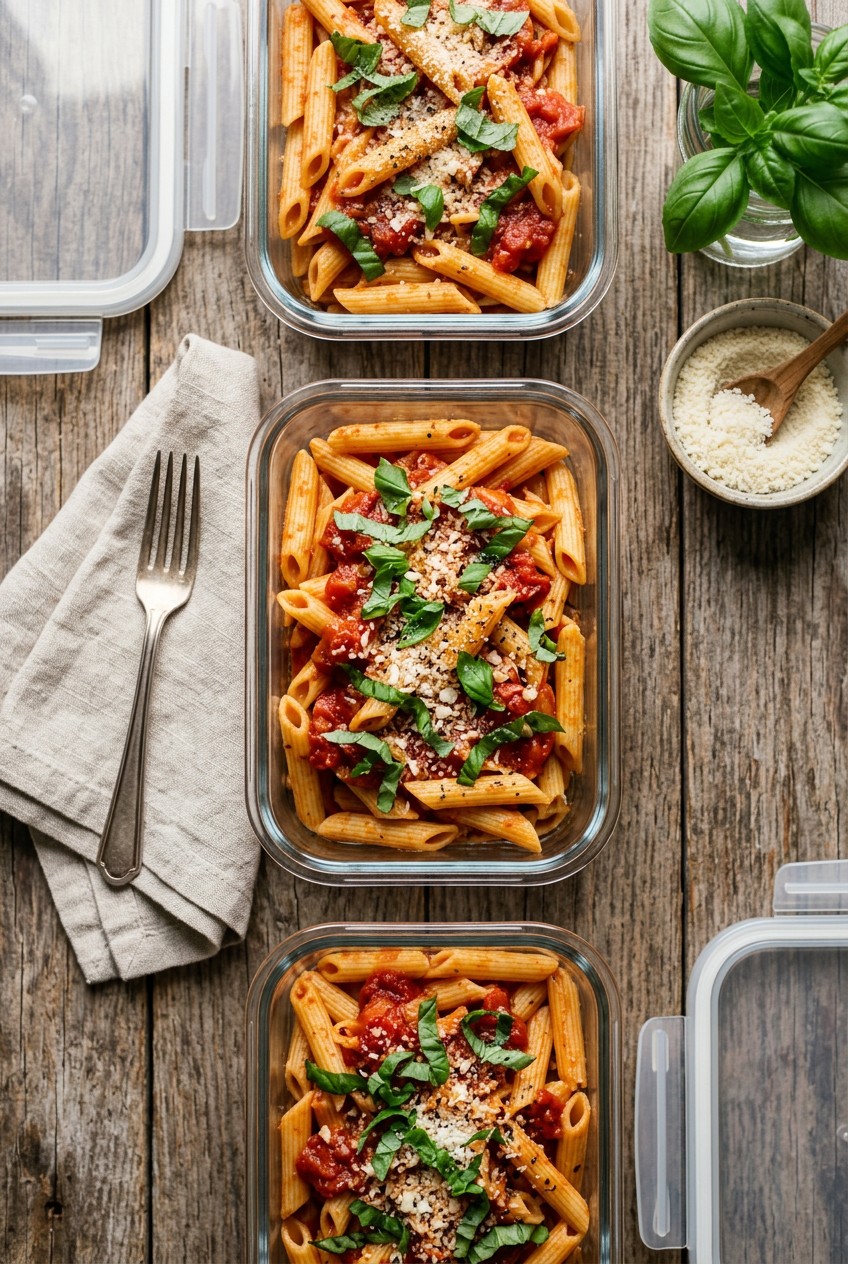
What’s Inside
- Pick Protein-Packed Noodles For Your Meal Prep Pasta
- Undercook It Slightly (Seriously, Do Not Follow The Box)
- The Cold Water Rinse Is Mandatory
- Toss With Olive Oil To Prevent Sticking
- Short Shapes Are The Only Way To Go
- Store Your Sauce Separately For Perfect Meal Prep Pasta
- Ditch The Plastic For Glass Containers
- Portion Correctly And Add Moisture Before Reheating
- Keep The Fresh Stuff Far Away Until You Eat
Last Tuesday at Whole Foods, I stared at a sad, congealed brick of week-old spaghetti in my glass container and realized I’d been doing it all wrong. Meal prep pasta shouldn’t look like a science experiment, but mine absolutely did. It smelled like sour tomatoes and felt like cold rubber when I poked it with my fork. I ended up throwing away a massive batch of mushy penne that day, feeling completely defeated. If you’re tired of eating gummy, sticky noodles by Wednesday, I’m right there with you. I tried this wrong for months before figuring it out. The truth is, most people treat Sunday prep like regular cooking, and that’s a massive mistake. You can’t just boil a pot of noodles, dump hot sauce on them, shove them in a plastic tub, and expect a miracle three days later. It takes a specific strategy to keep those noodles tasting fresh, snappy, and delicious all week long. Today, I’m sharing my exact routine for making meal prep pasta that actually tastes good. Skip the fat-free stuff and the weird diet hacks. They taste like wet cardboard. Let’s get into the real, practical steps you need to take for lunches you’ll actually want to eat.
1. Pick Protein-Packed Noodles For Your Meal Prep Pasta

When I first started prepping lunches, I used regular white flour noodles. By 2:00 PM at my desk, I’d experience a massive sugar crash and feel like I needed a nap under my keyboard. That’s why I’m completely obsessed with swapping in protein-packed varieties for any meal prep pasta recipe. In 2026, the grocery store aisles are packed with high-protein, fiber-rich options that actually hold up incredibly well to reheating. My absolute favorite right now is Barilla Protein+ Penne. You can grab a 14.5 oz yellow box for exactly $2.98 at Walmart. It contains durum wheat, lentils, chickpeas, and peas, giving you around 25 grams of protein per 100 grams. It tastes exactly like traditional noodles, without that gritty texture some health foods have.
If you’re looking for a gluten-free option, Banza Chickpea Pasta is fantastic. A standard 8 oz box runs about $3.99 at Target, and it delivers 11 grams of protein per serving. I love the slightly earthy smell it has straight out of the box. However, I’ve made some bad choices in this aisle, too. Last month, I bought Ancient Harvest Red Lentil Pasta (an 8 oz box for $4.29 at Sprouts). I wanted to love it, but it turned into a complete bowl of orange sludge when I reheated it on Tuesday. The texture was terribly mushy and it completely ruined my lunch. Stick to Barilla Protein+ or Banza if you want structural integrity that survives the fridge.
2. Undercook It Slightly (Seriously, Do Not Follow The Box)

Here’s a hard truth about meal prep pasta. If you cook it fully on Sunday, you’re eating mush by Wednesday. A common mistake I made for years was boiling my noodles until they were perfectly soft and ready to eat right out of the pot. I’d follow the package instructions to the exact minute. That’s a terrible idea for meal prep. When you put those soft noodles in the refrigerator, they continue to absorb whatever residual moisture is in the container. Then, when you blast them in the microwave, they steam and soften even more.
You must cook your pasta just until al dente, or honestly, slightly undercooked. I’m talking about a firm, slightly chalky bite in the very center of the noodle. When I cook Banza Chickpea Cavatappi, the box says 9 to 11 minutes. I pull it off the heat at exactly 7 minutes. It feels a bit too hard when I test it, but that’s exactly what you want. This is incredibly important for legume-based pastas, which lose their structural integrity fast. I learned this the hard way with a batch of Trader Joe’s Organic Brown Rice Penne (a 16 oz bag for $3.49). I boiled it for the full 10 minutes. By the time I reheated it at work, the penne tubes had completely collapsed into a flat, sticky paste. Save yourself the heartbreak and set your timer for two minutes less than the box suggests.
3. The Cold Water Rinse Is Mandatory

If you grew up with an Italian grandmother, she probably told you to never, ever rinse your pasta. She was right for a fresh Sunday dinner. But for meal prep, we’re playing by entirely different rules. To halt the cooking process and remove the excess starch that causes sticking, you must rinse your freshly cooked pasta under cold water the absolute second it goes into the colander. I’m telling you, this step is non-negotiable.
Last winter, I decided to skip this step because I was feeling lazy and didn’t want to stand over the sink. I just drained my hot noodles and dumped them into a big glass bowl. Within twenty minutes, the residual heat had cooked them into mush, and the sticky surface starch glued the entire batch into a giant, impenetrable lump. I literally had to cut it with a knife. Now, I immediately run the cold tap water at full blast. I dump the hot noodles into my stainless steel colander and toss them vigorously with my hands under the freezing water. You can actually see the cloudy, white starch washing away down the drain. The noodles instantly cool down, stopping the cooking process dead in its tracks. They feel slick, firm, and completely separate. It only takes thirty seconds, but it’s the secret to keeping your noodles from turning into a solid brick in your fridge. You might also like: 15 Brilliant Simple Meal Prep Ideas for a Fresh New Look

M MCIRCO 10-Pack,30 Oz Glass Meal Prep Containers 2
Honestly, M MCIRCO 10-Pack surprised me — sturdier than it looks in the photos, and over 23 buyers gave it 4.5 stars.
4. Toss With Olive Oil To Prevent Sticking

Once you’ve rinsed your noodles and they’re completely cool to the touch, you aren’t done yet. Water alone won’t keep them separated for four days in the fridge. After rinsing and thoroughly draining (shake that colander until no more water drips out), you need to toss your pasta with a touch of extra virgin olive oil. This creates a protective, slippery barrier around each individual noodle, preventing them from sticking together during refrigeration. It ensures they remain separate and easy to portion out later in the week. You might also like: 15 Brilliant Batch Cooking Ideas That Actually Work
I personally swear by Kirkland Signature Organic Extra Virgin Olive Oil from Costco. A massive 2-liter bottle costs $18.99, and it has a beautiful, peppery smell that adds incredible flavor to plain noodles. You only need about 1 tablespoon of oil per 500g of cooked pasta. I measure it out carefully. I used to just eyeball it and pour directly from the bottle. One Sunday, I accidentally dumped a massive glug of oil into my bowl. The noodles tasted like a heavy grease slick all week, and the oil pooled at the bottom of my containers in a really gross way. Measure your tablespoon, drizzle it over the cold noodles, and use silicone tongs to toss them until every single piece is lightly coated and shiny. They’ll slip right through your fingers. You might also like: 15 Gorgeous Chicken Breast Dinner Ideas That Make a Real Difference
5. Short Shapes Are The Only Way To Go

I love a beautiful, twirly plate of spaghetti just as much as anyone else. But long strands are the absolute enemy of successful meal prep. Shorter pasta shapes like penne, rotini, or farfalle tend to reheat significantly better and maintain their texture much longer than spaghetti, linguine, or fettuccine. The structural shape of a short tube or spiral holds up against the microwave’s harsh heat.
My go-to shape is De Cecco Fusilli No. 34. You can find a 16 oz box for $3.29 at Kroger. The tight little spirals are incredibly sturdy, and they catch little pockets of sauce beautifully. Fusilli is also excellent for retaining texture if you’re making a cold pasta salad. I tried prepping spaghetti for my lunches exactly once. It was a disaster. The long strands tangled together in the container. When I microwaved it, the edges of the spaghetti dried out into sharp, crunchy sticks, while the center remained a soggy, tangled mess. It was impossible to eat neatly at my desk without splashing red sauce all over my white blouse. Stick to short, bite-sized shapes. They fit perfectly into your containers, they portion out evenly with a measuring cup, and they won’t splatter your work clothes.
6. Store Your Sauce Separately For Perfect Meal Prep Pasta

If you want your meal prep pasta to actually taste good, you have to stop mixing the sauce and the noodles together on Sunday. For the best results and to avoid dry, absorbed pasta or weirdly separated sauces, store them in completely separate containers. When you mix them in advance, the noodles act like little sponges. They suck all the moisture out of the sauce. By Wednesday, you’re left with bloated, red-stained noodles and zero actual sauce.
This is especially critical for creamy varieties. I made a huge batch of Alfredo using Trader Joe’s Alfredo Sauce (a 16 oz jar for $3.99). I mixed it directly into my penne on Sunday night. When I pulled it out on Wednesday, the cream had completely separated. It looked like oily, curdled milk clinging to sad noodles. It smelled sour and the texture was horrifying. I threw it straight into the office trash can. Now, I portion my noodles into my main container, and I put exactly 1/2 cup of sauce into a small, separate leak-proof dressing container. Tomato-based sauces like Rao’s Homemade Marinara (a 24 oz jar for $7.99 at Target) freeze and reheat exceptionally well. I just pour the cold marinara over the cold noodles right before I hit the start button on the microwave. The heat warms them together perfectly.

Vtopmart 5Pack 22oz Glass Storage Containers with Lids
Vtopmart 5Pack 22oz Glass Storage Containers with Lids has been one of the most consistently praised picks in this category. 32 reviewers averaged 4.5/5.
7. Ditch The Plastic For Glass Containers

I know plastic containers are cheap and lightweight. You can get a massive pack of them for $5 to $15 at the grocery store. But if you’re serious about your meal prep pasta, you have to throw the plastic away and invest in glass. Glass containers are the superior choice for meal prepping due to their durability, safety, and versatility. Glass is completely toxin-free, it won’t leach weird chemicals into your hot food, and it’s perfectly safe for the microwave, oven, and freezer.
I use the Pyrex Simply Store Glass Rectangular Containers. A 6-piece set costs $24.99 at Target, and it’s worth every single penny. I used to use cheap plastic tubs. After one week of storing marinara sauce, the plastic was permanently stained a cloudy, greasy orange color. No amount of scrubbing with dish soap would get the tomato smell out. Even worse, when I microwaved the plastic, the lids would warp and bend, so they never sealed properly again. Quality glass sets will easily last you 5 to 10 years. They wash completely clean in the dishwasher, leaving zero residual smells. Plus, eating out of a heavy glass dish feels like a real meal, whereas eating out of flimsy, stained plastic feels like you’re eating cheap takeout.
8. Portion Correctly And Add Moisture Before Reheating

Portion control is where a lot of people mess up their Sunday prep. For a main meal, you want to aim for approximately 75 grams of dry pasta per person, which expands to about 180 grams when cooked. As a general visual guideline, a serving of cooked pasta is about the size of your fist, or roughly 1/2 to 1 cup. I always follow the 50/25/25 rule from registered dietitians: 50% roasted vegetables, 25% lean chicken or tofu, and 25% pasta. This keeps the meal balanced so you aren’t in a carb coma all afternoon.
But the real secret to reheating is adding moisture back in. When you pull your glass container out of the fridge, the noodles will look a bit dry and stiff. That’s totally normal. Before you put it in the microwave, you must add 1 to 2 tablespoons of water or chicken broth directly into the container. I learned this trick after microwaving a dry bowl of rotini at work. The noodles got so hard and dry they sounded like popping rocks hitting my teeth. By adding just a splash of water and covering the container loosely with the lid, you create a mini steam room. Heat it in 1-minute increments, stirring in between. The steam revitalizes the starches, making the noodles soft, plump, and perfectly tender again.
9. Keep The Fresh Stuff Far Away Until You Eat

In 2026, we’re all about adding vibrant, fresh ingredients to our lunches. But if you want to maintain crispness and bright flavors, you have to incorporate delicate fresh ingredients right before you eat. Do not mix them in on Sunday. I’m talking about things like fresh arugula, cherry tomatoes, or soft herbs like basil and parsley. If you store them mixed in with the prepped pasta, they’ll wilt, turn brown, and get incredibly slimy by day two.
I ruined a beautiful Mediterranean pasta salad this way. I tossed Organic Girl Baby Arugula (a 5 oz clamshell for $4.99 at Sprouts) and Sunset Wild Wonders Cherry Tomatoes (a 1-pint container for $3.99 at Kroger) directly into my big bowl of warm pasta. By Tuesday, the arugula was a dark, slimy green mess that smelled like hot lawn clippings. The tomatoes had burst and made everything soggy. Now, I keep my fresh greens in a completely separate ziplock bag with a dry paper towel inside to absorb moisture. I slice my cherry tomatoes fresh in the office kitchen. Right before I sit down to eat, I toss the crisp arugula and juicy tomatoes into my reheated pasta. The contrast between the hot, savory noodles and the cold, bright, peppery greens is absolutely incredible.
I’m so glad you stopped by to read these tips. Meal prep pasta doesn’t have to be a sad, soggy desk lunch. By choosing the right protein-packed brands, undercooking your noodles, and using the cold water rinse, you’ll completely change your weekday lunches. I’ve spent years making all the mushy, separated, plastic-stained mistakes so you don’t have to. I highly recommend grabbing a good set of Pyrex glass containers and giving that Barilla Protein+ a try this Sunday. If you found these tips helpful, please save this post and pin it to your favorite meal prep boards on Pinterest! Let’s make sad desk lunches a thing of the past.

KOMUEE 10 Packs 30 oz Glass Meal Prep Containers
A dependable everyday pick — KOMUEE 10 Packs 30 oz Glass Meal Prep Containers pulls in 45 ratings at 4.5 stars. Not flashy, just solid.
Frequently Asked Questions
How long does meal prep pasta last in the fridge?
Cooked pasta dishes generally last 3 to 4 days in the refrigerator when stored in airtight glass containers. Tomato-based pasta dishes can often stretch to 5 days in the fridge and freeze exceptionally well for 3 to 6 months.
How do I keep my pasta from getting mushy?
You must cook your noodles slightly undercooked or al dente. Immediately rinse them under cold water to stop the cooking process and wash away sticky starches. Finally, toss them with a tablespoon of olive oil before storing.
Should I store the sauce and pasta together?
No, you shouldn’t mix them. Store your sauce and noodles in separate containers. If mixed, the noodles absorb the liquid and become bloated, while creamy sauces tend to separate, curdle, and become oily after sitting in the fridge.
What is the best way to reheat meal prep pasta?
Add 1 to 2 tablespoons of water or broth directly to your container before microwaving. Cover it loosely to trap the steam, and heat in 1-minute increments. The steam revitalizes the dried starches, making the noodles perfectly tender.
