What’s Inside
- Master The 3-3-3 Method For Simple Meal Prep Ideas
- Ditch Flimsy Plastic For High-Quality Glass Containers
- Try Ingredient Prep Instead Of Full Meals
- Cook Your Grains In An Instant Pot
- Build Grab-And-Go Smoothie Packs
- Roast Frozen Vegetables To Save Cash
- Use Separate Cutting Boards To Stop Cross-Contamination
- Chill Foods Fast To Beat The Danger Zone
- Rotate Sauces And Seasonings For Simple Meal Prep Ideas
- Start Small And Label Absolutely Everything
It was a rainy Tuesday night in 2019. I stood in front of my open fridge, crying over a $15 batch of slimy, spoiled chicken. The pungent, sour smell hit me the second I cracked the lid. I realized then that I needed simple meal prep ideas that actually worked for my chaotic life. If you’re tired of throwing away rotting produce and eating sad desk lunches, you’re in the right place. I’m going to share the strategies I use to keep my fridge organized and my stomach full. These ideas will save your sanity and your grocery budget. I’ve made every mistake in the book so you don’t have to. Let’s fix your fridge and get your weekly food schedule under control.
1. Master The 3-3-3 Method For Simple Meal Prep Ideas

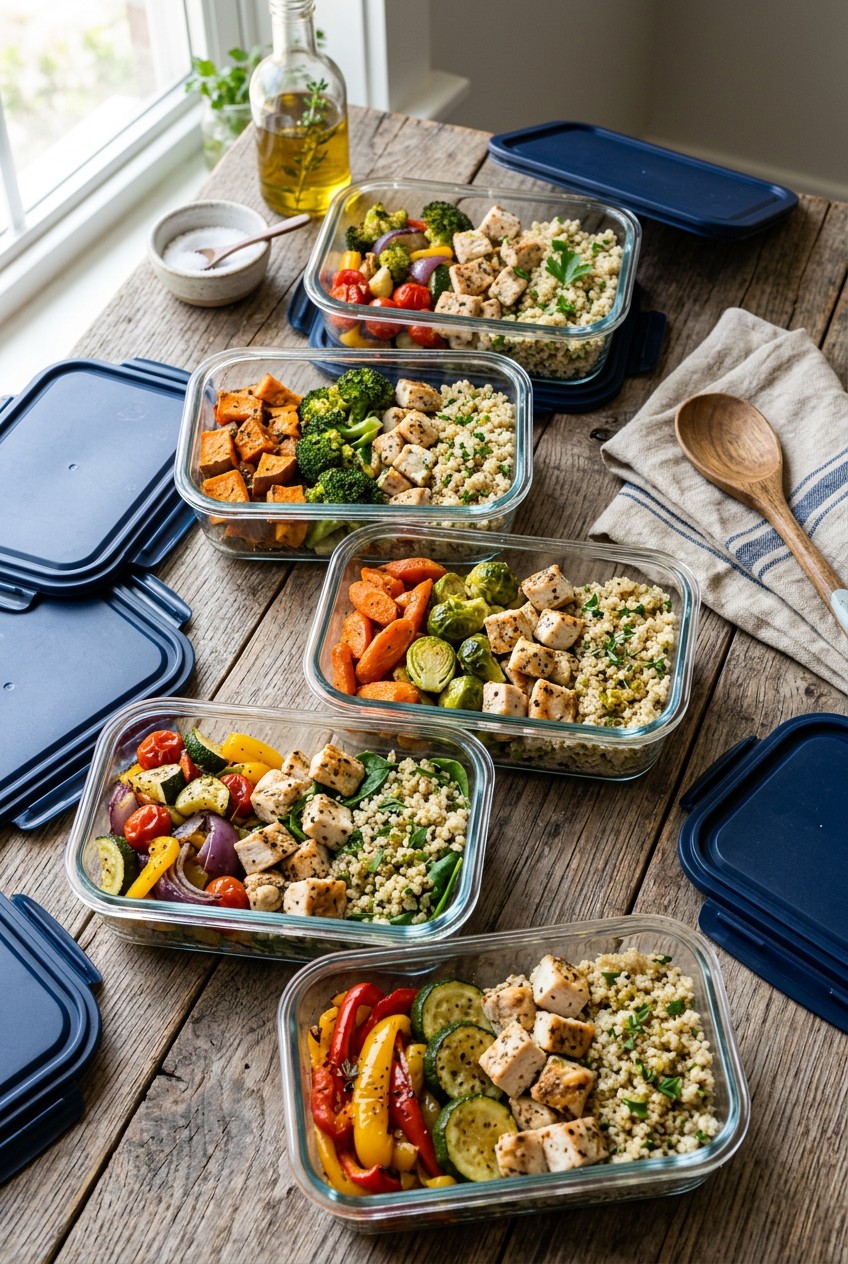
I tried this wrong for months. I used to cook twenty-one identical meals of plain chicken breast and steamed broccoli on Sundays. By Wednesday, I wanted to scream. The boredom of eating the same dry, flavorless meal made me order expensive takeout. Now, I’m hooked on the 3-3-3 method. Instead of building rigid, identical boxes, you pick three proteins, three carbohydrates, and three vegetables to mix and match all week. This prevents meal fatigue.
For example, I’ll batch cook 2 lbs of Kirkland Signature boneless, skinless chicken breasts. You can grab a 6.5 lb pack for around $19.99 at Costco. The meat is always tender when cooked right. Then, I’ll boil 1 cup of dry quinoa until it gets that fluffy texture. Finally, I roast a large tray of Trader Joe’s Organic Foursome Vegetable Medley. A 16 oz bag costs about $2.99. The smell of roasting carrots and zucchini fills the house. When I’m hungry, I just grab some chicken, a scoop of nutty quinoa, and a pile of vegetables. You’re never locked into one flavor. You can add hot sauce on Monday and a peanut glaze on Tuesday. It’s the ultimate system for anyone who hates leftovers. Trust me.
2. Ditch Flimsy Plastic For High-Quality Glass Containers

Last Tuesday at Whole Foods, I saw someone buying a stack of cheap plastic tubs. I wanted to warn them. I used cheap plastic once, and my sticky teriyaki sauce leaked all over my favorite canvas work bag. The sweet soy sauce smell never came out. You need durable, oven-safe glass containers.
While Pyrex Simply Store is a classic, I’ve found a flaw. Their rubber lids can be flimsy and crack after a few runs in the dishwasher. Instead, I recommend brands like Vtopmart or OXO Good Grips Smart Seal. These feature tight, four-hinge snap-lock lids with silicone gaskets. They’re leakproof. You can turn a bowl of chicken noodle soup upside down, and not a drop will escape. Expect to pay between $25 and $50 for a solid set at Target or Walmart. The heavy glass feels substantial, it doesn’t hold onto garlic odors, and you can pop it in the microwave without worrying about melting plastic. They slide right onto the dishwasher rack and come out sparkling. It’s a small investment that pays off every day.
3. Try Ingredient Prep Instead Of Full Meals

If you hate eating soggy, pre-assembled meals, ingredient prep is your best friend. I used to build five identical mixed greens salads on Sunday. By Thursday, the lettuce was a swampy mess that tasted like wet cardboard. I ended up throwing most of it away. I learned that the hard way. Now, I prep individual ingredients and store them separately.
I’ll buy 2 large sweet potatoes from Sprouts, cube them, and roast them until crispy. The natural sugars bubble and caramelize, making them taste almost like candy. I also boil 6 large eggs and rinse a 15 oz can of black beans (usually $1.29 at Kroger). I store these in separate glass bowls. When lunch rolls around, I assemble a fresh bowl in sixty seconds. The sweet potatoes stay firm, the eggs are fresh, and I can decide if I want a warm grain bowl or a cold salad. Dietitians recommend aiming for 20 to 35 grams of protein per meal to support muscle recovery. By keeping hard-boiled eggs and black beans ready, I’m never scrambling to hit my protein goals. You might also like: 20 Inspiring Carnivore Meal Prep Ideas That Are Totally Worth It

M MCIRCO 10-Pack,30 Oz Glass Meal Prep Containers 2
A dependable everyday pick — M MCIRCO 10-Pack pulls in 23 ratings at 4.5 stars. Not flashy, just solid.
4. Cook Your Grains In An Instant Pot

Most people get this wrong. They stand over a hot stove for forty-five minutes, stirring rice so it doesn’t burn. I don’t have the patience for that. You need to batch cook your grains using an Instant Pot. I bought my 6-quart Instant Pot Duo at Target for $89.99, and it changed my Sunday routine. You might also like: 15 Clever Family Dinner Ideas for a Fresh New Look
The hands-off efficiency is incredible. If you want nutty brown rice, just add 1 cup of dry rice and 1.25 cups of water. Press the button, and it takes about 22 minutes. The hiss of the steam release lets you know it’s done, and the grains come out fluffy every time. If you prefer quinoa, 1 cup takes 1 minute of high-pressure cooking. The stainless steel inner pot is a breeze to scrub, unlike those thin aluminum pans that scorch. While the machine does the work, you’re free to chop vegetables or marinate chicken. Once the grains cool, I scoop them into a large container. They stay fresh for 3 to 5 days, or you can freeze them for 3 months. You might also like: 20 Clever School Lunch Ideas You Can Try Today
5. Build Grab-And-Go Smoothie Packs

Mornings in my house are chaos. I used to skip breakfast because I didn’t want to drag out six different bags of fruit and seeds at 6:30 AM. Then I started assembling pre-portioned smoothie packs. You just need a box of Ziploc quart-sized freezer bags. I grab a 40-count box for $5.49 at Kroger.
On Sunday, I line up five bags. Into each, I drop 1 cup of frozen mixed berries, 1/2 of a sliced banana, a handful of fresh spinach, and 2 tablespoons of chia seeds. I zip them tight and toss them in the freezer. When I wake up, I dump the frosty block of ingredients straight into my blender. I pour in 1 cup of unsweetened almond milk and hit blend. The sound of the blades is my morning alarm. In less than two minutes, I pour a thick, cold smoothie into an insulated tumbler, and it stays frozen for my entire commute. You won’t believe the time this saves. Plus, freezing spinach before it gets slimy saves me money.
6. Roast Frozen Vegetables To Save Cash

People turn their noses up at frozen vegetables, but they’re wrong. There’s a misconception that fresh is always better. Last winter, I bought fresh asparagus for $7.99 at Walmart. When I roasted it, the stalks were stringy and tasted like bitter twigs. I was mad I spent that much on terrible produce.
Frozen vegetables are picked at peak ripeness and flash-frozen, locking in the nutrients. They’re also cheap. Trader Joe’s offers great options. I stock up on frozen broccoli florets for $1.69 a bag, or Brussels sprouts for just 99 cents. You don’t even need to thaw them. I dump the icy vegetables onto a baking sheet, drizzle them with 1 tablespoon of olive oil, sprinkle with sea salt and garlic powder, and roast at 400 degrees for 15 to 20 minutes. The florets soak up the garlic, turning into crunchy flavor bombs. The edges get charred and crispy. Relying on frozen produce is the smartest way to keep your grocery bill low while eating massive portions of greens.

8 Pack 36oz Large Glass Meal Prep Containers with lids
8 Pack 36oz Large Glass Meal Prep Containers with lids has been one of the most consistently praised picks in this category. 866 reviewers averaged 4.5/5.
7. Use Separate Cutting Boards To Stop Cross-Contamination

A massive mistake beginners make is ignoring kitchen safety. I learned this the hard way. During college, I used the same wooden board to slice raw chicken and then chopped strawberries. I gave myself the most violent food poisoning you can imagine. The cramps were a nightmare, and I couldn’t leave my bed for two days. Don’t do this. Cross-contamination is a serious risk.
You must use dedicated tools for raw meats and ready-to-eat foods. I bought a 3-pack of colored plastic cutting boards from Target for $12.99. I use the red board for raw poultry and beef. The green board is for fruits and vegetables. This color-coding makes it impossible to mess up, even when I’m rushing through my Sunday cooking. You also need to wash your hands for 20 seconds with warm water and soap after touching raw ingredients. I scrub with a dish soap that cuts right through chicken grease. The FDA warns about foodborne illnesses, and keeping your prep surfaces separate is the easiest way to protect yourself.
8. Chill Foods Fast To Beat The Danger Zone

Last month, I spent three hours making a 6-quart pot of beef stew. I left the pot on the stove to cool and fell asleep. When I woke up, I realized my mistake. I had to dump $30 worth of ingredients in the trash. The broth had separated, and a film had formed. The smell was heartbreaking.
You can’t leave food sitting on the counter. The FDA recommends keeping food out of the danger zone (40 to 140 degrees Fahrenheit) for no longer than two hours. Bacteria multiplies rapidly at room temperature. To chill food quickly, don’t put a massive pot in the fridge, as the center stays warm for hours. Instead, divide batches into shallow containers. I use Pyrex 3-cup rectangular dishes (a 3-pack is $19.99 at Target). Spreading food out allows the heat to escape. Once the steam stops, snap the lids on and get them into the refrigerator. Following this cooling rule ensures your hard work doesn’t turn into a science experiment.
9. Rotate Sauces And Seasonings For Simple Meal Prep Ideas

If you think healthy food is boring, you’re under-seasoning it. A common complaint I hear is that prepped lunches taste bland. Skip the fat-free store-bought dressings. They taste like wet cardboard and are packed with artificial gums. Flavor is king when you’re eating out of plastic containers. I’d rather spend ten minutes chopping garlic than eat another bland meal.
To combat flavor fatigue, rotate your sauces and spices. One week, I’ll lean into Asian-inspired flavors using Spice World Minced Garlic ($4.99 at Walmart) and Squeezable Ginger. I’ll mix those with soy sauce and sesame oil for an umami glaze. The next week, I’ll switch to a blend of smoked paprika, cumin, and chili powder for a Mexican-inspired bowl. I also recommend making a batch of dressing on Sundays. A lemon-tahini dressing takes two minutes: whisk 2 tablespoons of tahini, 1 tablespoon of lemon juice, and 1 clove of minced garlic. I store it in a small glass Weck jar (the 8-ounce size is $34.99 for a set of 6). Watching that creamy dressing cascade over a bowl of warm quinoa changes the entire experience.
![[8-Pack,30 oz]Glass Meal Prep Containers](https://m.media-amazon.com/images/I/713Zfdsgi4L._AC_UL320_.jpg)
[8-Pack,30 oz]Glass Meal Prep Containers
Honestly, [8-Pack surprised me — sturdier than it looks in the photos, and over 7 buyers gave it 4.5 stars.
10. Start Small And Label Absolutely Everything

A mistake I see people make is trying to prep twenty-one gourmet meals on their first try. They spend eight hours in the kitchen and burn out. Registered Dietitian Carrie from Colorado Nutrition Counseling says, “A good meal prep should feel doable, not like a second job.” Start small. Just prep two or three days’ worth of lunches.
Once you cook, label everything. I used to shove containers into the freezer without writing anything on them. Six months later, I thawed what I thought was chili, and it turned out to be pureed beets. It was a nasty shock. Now, I keep a roll of masking tape ($2.99 at any hardware store) and a permanent marker in my kitchen drawer. I write the contents and the date on every lid. The tape peels off easily before I toss the glass into the dishwasher. This prevents mystery bags from haunting your freezer and ensures you follow the first in, first out rule. For refrigerated items, especially chicken, consume them within 3 to 4 days.
I hope these simple meal prep ideas help you take back your Sunday afternoons. You don’t need to be a chef to eat well; you just need a plan and some airtight glass containers. Start with one or two of these strategies this weekend. I promise you’ll feel better when you open your fridge on Tuesday and see healthy food waiting. If you found this guide helpful, please pin it to your favorite Pinterest board or save it to your bookmarks so you can reference it during your next grocery run. Happy cooking!
Frequently Asked Questions
What is the 3-3-3 method in meal prep?
The 3-3-3 method involves prepping three proteins, three carbohydrates, and three vegetables for the week. Instead of building identical meals, you mix and match these components daily to prevent flavor fatigue and ensure balanced nutrition.
How long do meal prep meals last in the fridge?
Most cooked meals, especially those containing chicken or other meats, should be consumed within 3 to 4 days for optimal freshness and safety. Always store them in airtight glass containers to maintain quality.
Can I use frozen vegetables for meal prep?
Yes, frozen vegetables are perfect for meal prep. They are picked at peak ripeness and flash-frozen, retaining their nutrients. You can roast them directly from frozen at 400 degrees for a quick, affordable side dish.
What is ingredient prep versus full meal prep?
Ingredient prep means cooking individual components like roasted sweet potatoes, hard-boiled eggs, and grains, storing them separately, and assembling them into meals right before eating. This prevents food from getting soggy and offers more daily variety.
