What’s Inside
- Start Small with Easy Meal Prep for Beginners
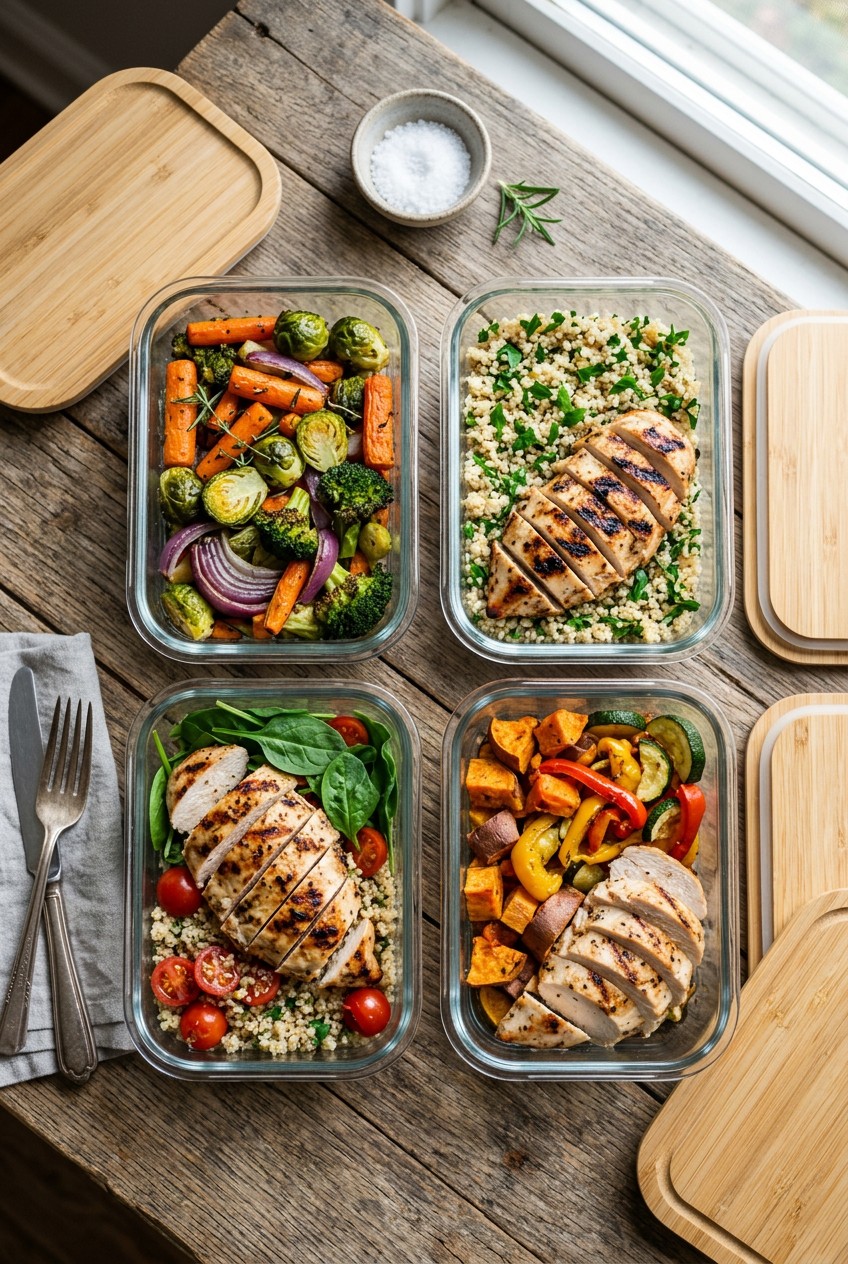
- Invest in Real Glass Containers
- Prep Individual Components Instead of Full Meals
- Master the “Start with 2” Method for Easy Meal Prep for Beginners
- Choose Reheat-Friendly Recipes Wisely
- Understand Meal Shelf Life for Food Safety
- Use Your Slow Cooker for Hands-Off Cooking
- Embrace Smart Convenience Ingredients
- Practice Portion Control with Visual Cues
- Layer Your Mason Jar Salads Like a Pro
I’m staring at a puddle of brown, foul-smelling liquid leaking from a cheap plastic container onto my refrigerator’s bottom shelf. That was my reality three years ago when I first tried meal prepping. I went for a full seven days of chicken and broccoli on a Sunday night. By Thursday, my kitchen smelled like a wet dog. The broccoli turned into a sulfurous mush. The chicken tasted like wet cardboard. I tossed everything. I sat on my cold kitchen floor and ordered a $25 pizza in defeat. If you’re tackling meal prep, you don’t need to suffer through soggy vegetables or food poisoning panics. You don’t need to spend six hours in the kitchen every Sunday. I’ve made all the miserable mistakes so you don’t have to. I’ve ruined expensive groceries. I’ve melted plastic containers in the microwave. I’ve eaten unseasoned ground turkey that made me want to cry. Let’s fix this mess. I’ll show you exactly how I stock my fridge now. I’ll give you the exact brands I buy and the prices I pay. Skip the fat-free stuff. It tastes like wet cardboard. We’re going to build a routine that actually works for your busy life.
1. Start Small with Easy Meal Prep for Beginners

Don’t attempt to prep every meal for a week on your first try. I did this wrong for months. Last Tuesday at Whole Foods, I watched a girl load her cart with 30 identical plastic prep bowls. I wanted to tell her to put them back. You’ll burn out if you try to cook 21 meals in one afternoon. Dietitian Toby Amidor says start slow. Prepare 2 or 3 dishes at once. Work your way up to 5 or 6. I agree. Focus on a few meals. I suggest starting with lunches for 3 to 4 days. This builds confidence. It keeps you from feeling overwhelmed by a mountain of dirty dishes. For budget-friendly plastic, I recommend the Bentgo Prep 10-packs. They cost around $15.99 at Target. They offer decent leak resistance and portion control. But don’t buy three packs. Just buy one. Start with 4 ounces of cooked chicken and 1/2 cup of roasted sweet potatoes per container. That’s it. Keep the menu simple. When I started, I tried making elaborate curries and stuffed peppers on day one. I ended up with a sink full of dirty pans at midnight. I was exhausted. I hated the process. Start small. Master one recipe. Then move on.
2. Invest in Real Glass Containers

Your storage is key to freshness. Opt for durable, leak-proof containers. Throw away those flimsy takeout containers you’re hoarding. They stain. They warp. They hold onto the ghost of last month’s garlic shrimp forever. I swear by glass. Rubbermaid Brilliance glass containers are my favorite. You can get a 10-piece set for $29.98 at Walmart. The glass is thick. The lids snap on with a satisfying click. You can hear the seal locking in freshness. They’re microwave, freezer, and dishwasher safe. You can even put the glass bases in the oven. Prep Naturals Glass Containers are another great choice. They run around $35.99 for a set on Amazon. Glass won’t stain when you store tomato sauce. It won’t retain the smell of onions. I used cheap plastic for a year. My food always tasted faintly like plastic and dish soap. It’s disgusting. Spending $30 on good glass saves you hundreds in spoiled food. I’ve dropped my Rubbermaid containers on my hardwood floor twice. They didn’t chip. They’re sturdy. Pack 1 cup of cooked pasta and 1/2 cup of marinara in a glass container. It reheats beautifully. It tastes just like it did when you cooked it.
3. Prep Individual Components Instead of Full Meals

A massive trend right now is component-based prepping. Instead of fully assembled meals, you prepare ingredients. You cook large batches of grains, roasted vegetables, and proteins separately. This lets you mix and match all week. It combats meal fatigue. Honestly, this changed how I eat. I used to assemble five identical taco bowls on Sunday. By Wednesday, the lettuce was slimy. The tortilla strips were soggy. I couldn’t stomach another identical bowl. Now, I prep components. I buy a 32-ounce bag of Lundberg Family Farms Brown Rice for $4.49 at Sprouts. I cook 2 cups of dry rice on Sunday. It yields about 6 cups of fluffy, nutty rice. I store it in a large glass container. I buy 2 pounds of chicken breast. I bake and shred it. I store that separately. On Monday, I add 1/2 cup of the chicken to a wrap. On Tuesday, I toss 3/4 cup of the chicken with 1 cup of brown rice and black beans. On Wednesday, I throw the chicken into a quick soup. You aren’t locked into one flavor profile. You’re building a flexible buffet in your fridge. It takes the same amount of time but gives you ten times the variety. You might also like: 20 Inspiring Sunday Dinner Ideas You Need to See

M MCIRCO 10-Pack,22 Oz Glass Meal Prep Containers
Honestly, M MCIRCO 10-Pack surprised me — sturdier than it looks in the photos, and over 86 buyers gave it 4.5 stars.
4. Master the “Start with 2” Method for Easy Meal Prep for Beginners

For beginners, the “Start with 2” method is effective. Choose one grain and one protein to batch cook. That’s your entire Sunday chore. I’ve got a busy schedule. I don’t want to spend my weekend chopping vegetables. I use this when I’m exhausted. Prepare 2 cups of dry quinoa. I buy Ancient Harvest Organic Quinoa for $6.49 at Sprouts. While that simmers, prepare your protein. I love tofu. I grab 1.5 pounds of Nasoya Extra Firm Tofu. It costs $2.99 at Kroger. I press the water out. I toss it with 2 tablespoons of soy sauce and 1 tablespoon of sesame oil. I bake it at 400 degrees for 25 minutes. The whole process takes about 45 minutes. You get versatile bases for multiple meals. Most people get this wrong by trying to cook five proteins at once. Your kitchen turns into a disaster. Your smoke alarm goes off. You’re crying over a burnt pan of turkey meatballs. Just pick two things. One carb. One protein. Put them in separate containers. You’ve got the foundation for three days of lunches. I tried baking tofu on a metal pan once. It stuck. I spent an hour scrubbing burnt soy sauce off the aluminum. Always line your pan with Reynolds Kitchens Parchment Paper. It costs $4.29 at Target. It saves your sanity. You might also like: 15 Brilliant Batch Cooking Ideas That Actually Work
5. Choose Reheat-Friendly Recipes Wisely

Avoid recipes that lose texture when reheated. Crispy fried foods are a bad idea. Delicate seafood is worse. I brought leftover baked salmon to my office once. I microwaved it. The floor smelled like a fish market for three days. My coworkers were furious. The salmon turned into a rubbery puck. I had to throw it away and buy a $15 salad. Soups, stews, casseroles, and grain bowls hold up well. They often improve in flavor after a day in the fridge. The spices have time to meld. I love prepping a massive pot of vegetable stew. I use 1 carton of Pacific Foods Organic Low Sodium Vegetable Broth. It costs $3.79 at Whole Foods. I add 2 cups of chopped carrots, 1 can of diced tomatoes, and 1 cup of lentils. It simmers for an hour. The broth gets rich. When you microwave it on Tuesday, it tastes even better than it did on Sunday. Roasted vegetables also reheat beautifully if you don’t overcook them. Toss 2 cups of broccoli florets with 1 tablespoon of olive oil. Roast them until they’re just barely tender. They won’t turn to mush when you zap them later. Skip anything breaded. Stick to hearty, sturdy ingredients. You might also like: 15 Stunning Easy Lunch Ideas You Need to See
6. Understand Meal Shelf Life for Food Safety

Most cooked foods are safe for 3 to 4 days in the refrigerator. Your fridge needs to be at or below 40 degrees Fahrenheit. Cooked rice is a high-risk food. It contains spores of a bacteria called Bacillus cereus. These spores survive the cooking process. If you leave cooked rice at room temperature, the bacteria multiply rapidly. You must cool your rice within one hour. Refrigerate it immediately. Consume it within 1 day if possible. I have a terrifying story. In college, I left a massive pot of rice on the stove overnight. I ate it the next day. I got violently sick. I spent 48 hours shivering in bed. Don’t mess with food safety. A common beginner mistake is forgetting when food was actually cooked. You stare at a container of chili and wonder if it’s three days old or three weeks old. Always label your containers. Write the meal name and the date. I use Sharpie Chalk Markers. A pack costs $7.99 at Target. I write directly on the glass. The ink wipes off with a wet sponge. This habit helps you follow the first-in, first-out rule. It prevents food waste. For longer storage, freeze portions you won’t eat within 3 days. Most meals keep for 2 to 3 months frozen.

8 Pack 36oz Large Glass Meal Prep Containers with lids
8 Pack 36oz Large Glass Meal Prep Containers with lids has been one of the most consistently praised picks in this category. 866 reviewers averaged 4.5/5.
7. Use Your Slow Cooker for Hands-Off Cooking

A slow cooker is a lifesaver for large batches of protein. Budget-friendly options are everywhere. I use the Crock-Pot 7-Quart Oval Manual Slow Cooker. It costs around $34.99 at Walmart. You can also find the Hamilton Beach 6-Quart Manual Slow Cooker for under $50 at Target. These machines cook massive quantities of chicken, beef, or lentils with zero effort. I swear by slow cooker shredded beef. I buy a 3-pound Chuck Roast from Costco for about $14.99. I drop it into the slow cooker on Sunday morning. I add 1 cup of beef broth and 2 tablespoons of chili powder. I turn it on low and walk away. I run errands. I do laundry. I watch a movie. Eight hours later, my apartment smells like a high-end barbecue restaurant. The meat falls apart when I touch it with a fork. It yields about 6 cups of shredded beef. I pack 1/2 cup portions into my glass containers. It stays moist for days. I tried making pulled pork in the oven once. I had to monitor the temperature and baste it every hour. It took my entire Sunday. The slow cooker eliminates that stress. It’s the ultimate tool for lazy, delicious cooking.
8. Embrace Smart Convenience Ingredients

Don’t shy away from pre-cut, frozen, or canned ingredients to save time. I used to think I had to chop every vegetable by hand. I spent 40 minutes hacking at a raw butternut squash with a dull knife. I nearly sliced my thumb off. My hands were stained orange for two days. Not worth it. Now, I buy Trader Joe’s Pre-Cut Butternut Squash Zig Zags. A 12-ounce bag costs $3.49. I dump the bag onto a baking sheet, toss it with 1 tablespoon of olive oil, and roast it. It takes thirty seconds of prep. Frozen fruits and vegetables are often frozen at peak ripeness. They can be more nutrient-dense than the wilted fresh produce on grocery store shelves. I always keep three bags of frozen broccoli florets in my freezer. Canned beans are another time saver. I buy S&W Low Sodium Black Beans. They cost $1.29 a can at Kroger. Boiling dried beans takes hours. Opening a can takes five seconds. Look for reduced-sodium options. Pour the beans into a mesh strainer. Rinse them under cold water for a full minute. This washes away the excess salt and the metallic canning liquid. Using these items cuts my Sunday kitchen time in half. You aren’t cheating by buying pre-chopped onions. You’re being smart.
9. Practice Portion Control with Visual Cues

To build balanced meals, use visual guidelines. Aim for your container to be roughly half vegetables. Split the other half between lean protein and whole grains. For protein, aim for a hand-sized piece of chicken breast. If you’re using ground meat, 1/3 cup of cooked ground beef is perfect. For grains, two heaping spoonfuls of rice or quinoa is plenty. I tried this wrong for months. I bought a digital food scale. I weighed every almond. I measured 112 grams of chicken for every meal. It was miserable. I felt like I was working in a lab instead of a kitchen. I ended up crying over my food scale. Visual cues are easier. They’re sustainable. When I pack my Rubbermaid container, I fill the left half with roasted zucchini. I put my 1/3 cup of ground beef in the top right corner. I put my 1/2 cup of brown rice in the bottom right corner. It’s perfectly balanced. It looks appetizing. I buy a 1-pound package of Laura’s Lean Ground Beef for $7.99 at Target. I brown it in a skillet with a pinch of salt. It yields exactly enough for three or four lunches. Don’t overcomplicate portion sizes. Look at the box. Half color. Quarter meat. Quarter carb. It works every time.
![[8-Pack,30 oz]Glass Meal Prep Containers](https://m.media-amazon.com/images/I/713Zfdsgi4L._AC_UL320_.jpg)
[8-Pack,30 oz]Glass Meal Prep Containers
[8-Pack has been one of the most consistently praised picks in this category. 7 reviewers averaged 4.5/5.
10. Layer Your Mason Jar Salads Like a Pro

To keep salads fresh, you must layer them in wide-mouth Mason jars. I hate soggy lettuce. I used to pack my salads in flat plastic containers. I’d pour the dressing on top on Sunday. By Tuesday, the spinach was a slimy, squelching mess. It tasted like swamp water. I threw away so many ruined salads. Now, I use 32-ounce Ball Wide Mouth Mason Jars. You can buy a 12-pack for $14.99 at Walmart. The layering technique is crucial. Start with 2 tablespoons of dressing at the bottom. I love Newman’s Own Olive Oil and Vinegar Dressing. It costs $3.99 at Target. Next, add your hardier vegetables that can soak up the dressing without getting gross. I chop 1/2 cup of carrots and 1/2 cup of cucumbers. Drop them directly in the dressing. Next, add 1/2 cup of grains or beans. I use chickpeas. Then, add 4 ounces of shredded protein. Finally, pack the top full of leafy greens. The greens stay bone-dry at the top of the glass tower. When you’re ready to eat at your desk, just shake the jar vigorously. The dressing coats everything perfectly. The lettuce stays crisp. It’s a massive improvement. It makes eating a desk salad enjoyable instead of a chore.
I’ve shared all my worst kitchen disasters and best tips with you. Meal prep doesn’t have to be a miserable Sunday chore. You don’t need to eat wet, flavorless chicken every day. Start with just two ingredients. Buy those heavy glass containers. Use your slow cooker. If you follow these basic steps, you’ll save hundreds of dollars a month. You won’t be staring at the fridge at 7 PM wondering what to eat. I swear by the component method. It saved my sanity. I’d love to hear what you try first. Pin this article to your Pinterest board so you don’t lose these brand recommendations. Save it to your phone for your next grocery run. Let’s make this week delicious.
Frequently Asked Questions
How many days in advance should a beginner meal prep?
Beginners should start by prepping for just 3 to 4 days in advance. This prevents food spoilage and keeps you from feeling overwhelmed. Most cooked meats and roasted vegetables remain fresh and safe to eat within this four-day window when stored in airtight glass containers.
Are glass or plastic containers better for easy meal prep for beginners?
Glass containers are significantly better. They don’t stain, they won’t warp in the microwave, and they don’t retain odors from strong ingredients like garlic or onions. While they cost a bit more upfront, they last much longer than cheap plastic options.
What is the start with 2 method?
The start with 2 method is a beginner-friendly approach where you only batch cook one grain and one protein on your prep day. This takes under an hour and gives you a versatile foundation to build multiple different meals throughout the week without kitchen burnout.
How do you keep meal prep salads from getting soggy?
You prevent soggy salads by layering them in wide-mouth Mason jars. Pour the dressing at the very bottom, add hardy vegetables like carrots next, follow with proteins and grains, and pack the leafy greens at the very top so they stay completely dry until you shake the jar.
