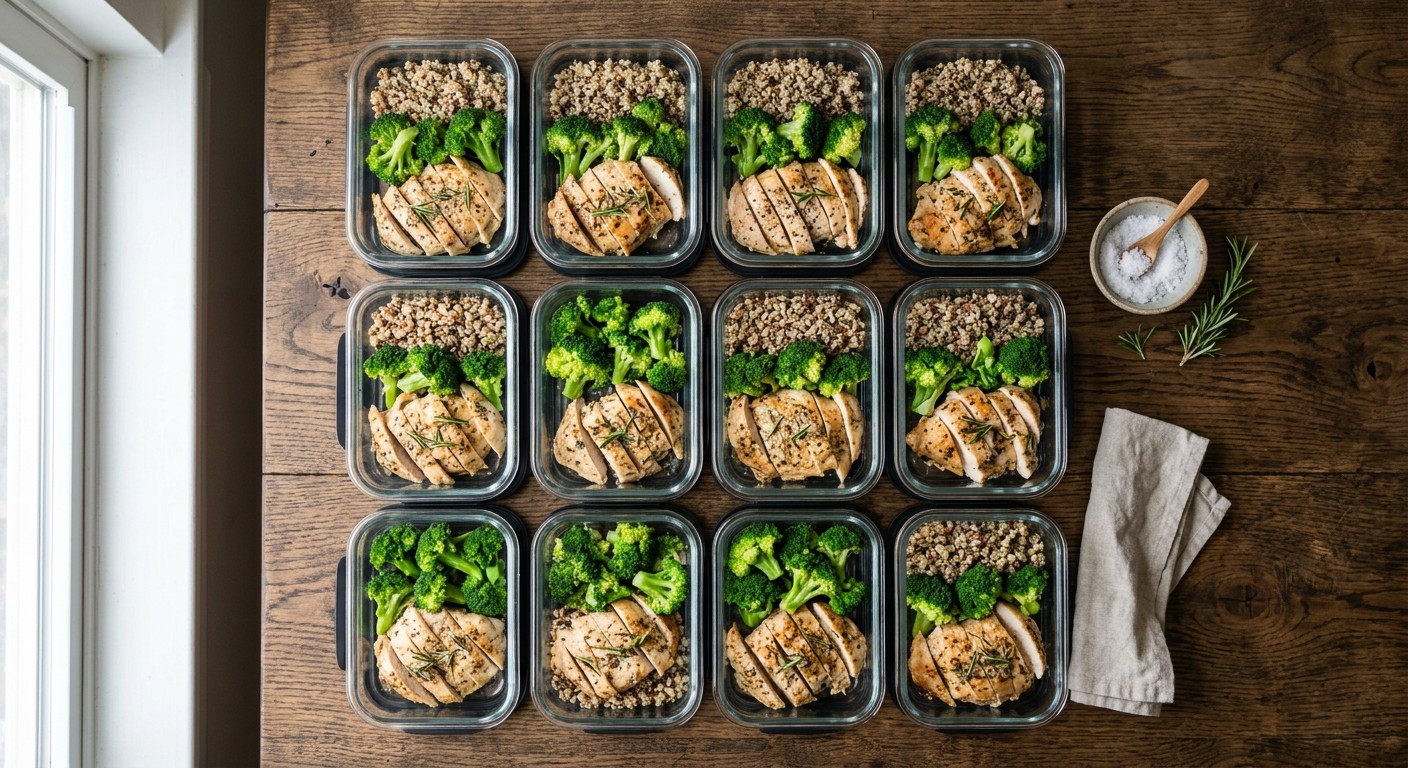
What’s Inside
- 1. The Undisputed King of Cheap High Protein Meal Prep (Eggs)
- 2. Don’t Sleep on Canned Fish (Tuna and Sardines)
- 3. Dried Lentils and Beans Are Basically Free Protein
- 4. Swap Breasts for Chicken Thighs Immediately
- 5. Buy Ground Meat in Massive Bulk
- 6. Giant Tubs of Greek Yogurt and Cottage Cheese
- 7. Hack Your Grains with Bone Broth for Cheap High Protein Meal Prep
- 8. High-Protein Wraps and Frozen Veggies Save Budgets
- 9. Secret Weapons: Nutritional Yeast and PB Powder
- Conclusion: Stick to the Basics and Save Your Cash
Standing in my tiny kitchen last Tuesday night, staring at a fourteen-dollar sad, soggy salad from Whole Foods, I realized my budget was bleeding out. I needed cheap high-protein meal prep that worked. The wilted spinach smelled like damp earth. The watery dressing leaked all over the plastic container. I’m embarrassed to admit how much money I’ve wasted on “healthy” convenience foods because I was just too lazy to cook. It’s a trap. Buying pre-made healthy food is a scam that drains your wallet while leaving you hungry two hours later.
I tried doing this wrong for months before I figured it out. I’d buy random expensive ingredients, cook them without a plan, and end up tossing rotten produce by Friday. You can’t just wing it. If you’re serious about hitting your macros without going broke, you need a system. I’m Esperanza Eliza, and I’m going to show you how I stock my fridge for the week. Skip the fat-free, flavorless stuff. It tastes like wet cardboard. We’re going for rich, filling, cheap ingredients. Here are the exact products, prices, and methods I use to keep my grocery bill low and my protein intake massive.
1. The Undisputed King of Cheap High Protein Meal Prep (Eggs)
Eggs are some of the most cost-effective protein sources on the planet. I used to skip them because I hated peeling hard-boiled eggs, but I’ve finally mastered it. You’re looking at $2 to $4 per dozen depending on where you shop. Each large egg provides about 6 grams of protein. That makes them roughly $0.015 to $0.025 per gram. You can’t beat that math.
I buy the 1 dozen large Great Value eggs for $2.18 at Walmart. Every Sunday, I hard-boil the whole carton. I used to overcook them constantly. I’d end up with that disgusting, chalky green ring around the yolk that smells like sulfur. Don’t do that. Drop your eggs into a rolling boil for 6 minutes for a jammy yolk, or 9 minutes for a firm but creamy center. Immediately transfer them to an ice bath for 5 minutes. The sudden temperature drop shocks the membrane, making the shells slide off effortlessly. Learned that the hard way.
I store my peeled eggs in a 3-cup Pyrex glass container in the fridge. They stay fresh for 4 days. I slice two over a bed of spinach, or mash them with 1/4 avocado for a quick breakfast bowl. It’s cheap. It’s fast. The rich, creamy texture of a perfectly boiled egg makes any sad desk lunch feel luxurious.

2. Don’t Sleep on Canned Fish (Tuna and Sardines)
Canned fish offers excellent protein at a shockingly low price. I know, it gets a bad reputation. I once opened a can of cheap tuna in my old office breakroom and practically gassed out my coworkers. The smell lingered for hours. I was mortified. But if you prep it right at home, it’s a massive budget saver.
I swear by the 5 oz can of Trader Joe’s Chunk Light Tuna in Water. It costs $1.69 per can. You get around 29 grams of protein per 100g serving. I drain the water completely. Nobody likes soggy tuna. Then I mix it with 2 tablespoons of Primal Kitchen Mayo, which costs $8.99 for a 12 oz jar. Yes, the mayo is pricey, but you only use a tiny bit, and the rich, tangy avocado oil flavor completely masks that metallic canned fish taste. I add 1 tablespoon of diced celery for crunch.
Sardines are another secret weapon. They’re slightly lower in protein at about 25g per 100g serving, but they’re packed with omega-3s. I buy the 4.4 oz tin of Season Brand Sardines in Olive Oil at Costco. I mash them up with a heavy squeeze of lemon juice and 1/2 teaspoon of cracked black pepper. The acid cuts right through the oily fishiness. Spread that over a piece of toasted sourdough, and you’ve got a massive protein hit for under three bucks.

3. Dried Lentils and Beans Are Basically Free Protein
These legumes are incredibly cheap and versatile, offering significant plant-based protein and fiber. If you’re buying canned beans, you’re paying for water and aluminum. Dried is the way to go. Dried lentils cost around $1.50 per pound and provide 9 grams of protein per half-cup once cooked.
I made a horrible mistake when I first started cooking dried lentils. I was in a rush and didn’t simmer them long enough. I bit into my meal prep bowl on a Tuesday at work, and the lentils were rock hard. It was awful. I ended up throwing the whole batch in the trash. You have to be patient. I buy a 1 lb bag of Sprouts Brown Lentils for $1.49 from the bulk section. I take 2 cups of dried lentils, rinse them well, and simmer them in 6 cups of water with 1 bay leaf for 25 minutes. They expand massively. Those 2 dried cups yield about 6 cups cooked. You might also like: 20 Clever Quick Lunch Ideas You Haven’t Thought Of
The texture becomes earthy, soft, and filling. I scoop 1/2 cup of these cooked lentils into my containers alongside some roasted vegetables. They soak up whatever sauce or dressing you put on them. It’s the cheapest way to bulk up your meals so you aren’t starving by 3 PM. You might also like: 15 Brilliant Good Meal Prep Ideas That Changed Everything

HOMBERKING 10 Pack Borosilicate Glass Meal Prep Containers
HOMBERKING 10 Pack Borosilicate Glass Meal Prep Containers with Lockin has been one of the most consistently praised picks in this category. 23 reviewers averaged 4.5/5.
4. Swap Breasts for Chicken Thighs Immediately
While chicken breast is popular, chicken thighs are often 30 to 40 percent cheaper and contain nearly the same protein. You get around 26 grams of protein per 3.5-ounce serving. I used to force myself to eat dry, chalky, unseasoned chicken breasts because I thought that’s what healthy people did. It’s miserable. Chicken thighs are juicier, harder to overcook, and way kinder to your wallet. Trust me. You might also like: 20 Clever School Lunch Ideas You Can Try Today
I grab a 3 lb package of Kroger Bone-In Skin-On Chicken Thighs for $6.49. That makes them roughly $0.04 to $0.055 per gram of protein. I heat a large cast-iron skillet until it’s smoking hot. I add 1 tablespoon of olive oil. I place the thighs skin-side down. The sound of the sizzling fat and the smell of roasting chicken makes my kitchen feel like a high-end restaurant. I let the skin get crispy and golden brown for 8 minutes before flipping.
Once they’re cooked, I pull the meat off the bone and portion out 4 oz servings into my meal prep containers. The rich dark meat doesn’t dry out in the microwave at work. It stays tender and flavorful. If you’re still buying expensive, boneless skinless breasts, you’re wasting money and missing out on flavor.

5. Buy Ground Meat in Massive Bulk
Ground turkey and beef are staples for me. Ground turkey that is 93/7 lean typically costs $3 to $5 per pound and offers about 22 grams of protein per 3.5-ounce serving. That’s about $0.045 to $0.070 per gram of protein. But my favorite bulk purchase is the Kirkland Signature Organic Ground Beef from Costco. It costs $24.99 for a massive 4 lb package.
I used to cook just one pound at a time. That’s a rookie mistake. You’re dirtying the pan four different times. Now, I brown 2 or 3 pounds of that Kirkland ground beef all at once on Sunday afternoon. I toss in 1 tablespoon of kosher salt, 1 teaspoon of garlic powder, and 1/2 cup of diced white onions. The smell of savory beef browning is intoxicating.
Certified exercise physiologist Jim White, R.D.N., emphasizes the importance of balanced macronutrients in each meal to avoid energy crashes. I follow his advice. I aim for half my container to be non-starchy vegetables. I’ll put 4 oz of the cooked ground beef on one side, fill the middle with 1 cup of steamed broccoli, and add 1/2 cup of roasted sweet potatoes on the other side. This balance keeps me full until dinner.

6. Giant Tubs of Greek Yogurt and Cottage Cheese
If you’re buying those tiny, single-serve cups of flavored yogurt, you’re throwing money out the window. They’re loaded with sugar and cost too much per ounce. You need large tubs of plain Greek yogurt and cottage cheese. Kirkland Signature Organic Greek Nonfat Yogurt at Costco offers 18 grams of protein per serving and is affordable. But I usually go to Aldi for my dairy.
Aldi’s Friendly Farms Nonfat Greek Yogurt is a budget-friendly option. A large 32-ounce tub costs $3.55. It’s thick, tangy, and cold. I scoop 1 cup into a glass bowl and mix in 1/2 cup of Good & Gather frozen mixed berries from Target, which cost $3.99 for a 16 oz bag. The frozen berries slowly thaw into the yogurt, creating a sweet purple syrup without any added sugar.
Cottage cheese is another powerhouse. It provides nearly 24 grams of protein per cup. A lot of people hate the curdy texture. I get it. I used to gag on it. But if you toss 1 cup of cottage cheese into a blender for 30 seconds, it turns into a silky smooth, creamy base. I use that blended cottage cheese as a high-protein substitute for sour cream on my ground beef bowls. It’s rich, savory, and brilliant.

8 Pack 36oz Large Glass Meal Prep Containers with lids
A dependable everyday pick — 8 Pack 36oz Large Glass Meal Prep Containers with lids pulls in 859 ratings at 4.5 stars. Not flashy, just solid.

7. Hack Your Grains with Bone Broth for Cheap High Protein Meal Prep
Batch cooking grains is essential, but cooking them in plain water is a missed opportunity. You can boost the flavor and the macros by swapping water for bone broth. I cook larger quantities of brown rice or quinoa early in the week. I’ll measure out 2 cups of dry Lundberg Quinoa, which costs $6.99 for a 16 oz bag at Whole Foods.
Instead of water, I boil the quinoa in 4 cups of Pacific Foods Organic Chicken Bone Broth. A 32 oz carton costs $4.99. Cooking it in bone broth adds a slight protein boost, bringing the quinoa up to about 9g of protein per serving. The broth also infuses the grains with a deep, savory, roasted chicken flavor that plain water can’t achieve. The quinoa fluffs up beautifully, creating a nutty, slightly chewy base for my bowls.
A frequent pitfall I see is people eating the same flavor profile daily. This leads to boredom, and eventually, you’ll abandon your meal prep and order takeout. To fix this, I divide my large batch of cooked quinoa into three different bowls. I’ll mix 1 teaspoon of taco seasoning into one, 1 teaspoon of Italian herbs into the second, and 1/2 teaspoon of curry powder into the third. It keeps the flavors exciting all week long.
8. High-Protein Wraps and Frozen Veggies Save Budgets
The trend for the next few years continues towards customizable, easy-to-assemble meals. I rely heavily on high-protein wraps. Aldi’s L’Oven Fresh Protein Wraps are incredible. They offer 12 grams of protein and 14 grams of fiber per wrap for $3.29 for a 6-pack. They are soft, pliable, and don’t crack when you fold them.
I pair these wraps with frozen vegetables for cost and convenience. Frozen mixed vegetables are often cheaper than fresh, they reduce waste, and they are frozen at peak ripeness. I buy the massive 80 oz bag of Great Value Mixed Vegetables at Walmart. It costs $6.92. You can’t buy fresh produce for that price.
I’ll take 1 cup of the frozen veggies, steam them in the microwave for 3 minutes until tender, and toss them in 1 tablespoon of low-sodium soy sauce. I lay an Aldi protein wrap flat, add 4 oz of my prepped chicken thighs, top it with the steamy veggies, and roll it up tightly. Wrap it in aluminum foil, and you’ve got a dense, protein-packed burrito that costs less than two dollars to make.

9. Secret Weapons: Nutritional Yeast and PB Powder
You can boost protein in unexpected ways without buying expensive cuts of meat. Nutritional yeast is one of my favorite hacks. I buy it from the bulk bins at Sprouts. It looks like yellow fish flakes, but it adds a deep, savory, cheesy flavor to anything it touches. I sprinkle 2 tablespoons over roasted broccoli or plain popcorn for a quick plant-based protein hit.
My absolute favorite secret weapon is PB Fit peanut powder. I grab the giant 30 oz jar at Costco for $11.99. It can add 7 grams of protein per 2-tablespoon serving to smoothies, oatmeal, or yogurt. It costs around $2.50 per 16-ounce jar of natural peanut butter equivalent. It mixes instantly into my morning oats, giving me that rich, roasted peanut flavor without the heavy fat content of regular peanut butter. Took me years to figure out.
Let’s talk about a huge mistake: improper storage. Using low-quality or mismatched plastic containers leads to leaks, spoilage, and unappetizing food. I used to use cheap plastic takeout bins, and my sauces would leak all over my work bag. It was a disaster. Invest in high-quality, airtight glass containers. I bought a set of 3-cup Pyrex glass containers with snap lids for $24.99 at Target. They are heavy, they don’t stain, and they seal perfectly. Food typically stays fresh for 3 to 4 days in the fridge when stored properly.

Conclusion: Stick to the Basics and Save Your Cash
You don’t need to spend a fortune to hit your protein goals. I’ve transformed my grocery budget just by sticking to these staples. Relying on eggs, canned tuna, chicken thighs, and bulk grains has saved me hundreds of dollars a month. It’s not about buying fancy superfoods; it’s about being smart with your ingredients and taking the time to prep them properly on Sunday.
If you’re tired of spending your entire paycheck on food that leaves you hungry, try implementing just three of these tips this week. Start with the Aldi protein wraps and the Costco ground beef. You’ll be shocked at how much food you get for your money. I’m telling you, this system works. No exaggeration. Pin this post so you have the exact prices and measurements ready for your next grocery run. Happy prepping!

M MCIRCO 10-Pack,30 Oz Glass Meal Prep Containers 2
A dependable everyday pick — M MCIRCO 10-Pack pulls in 23 ratings at 4.5 stars. Not flashy, just solid.
Frequently Asked Questions
What is the cheapest source of high protein?
Eggs and dried lentils are consistently the cheapest sources. A dozen large eggs cost around $2-$4, providing 6g of protein each. Dried lentils cost about $1.50 per pound and yield massive amounts of plant-based protein once cooked.
How long does cheap high protein meal prep last in the fridge?
When stored in high-quality, airtight glass containers like Pyrex, most prepped proteins and grains will stay fresh for 3 to 4 days. Always let your food cool completely before sealing the lids to prevent soggy textures.
Is chicken breast or chicken thigh better for meal prep?
Chicken thighs are generally better for budget meal prep. They are 30-40% cheaper than breasts, contain nearly the same protein (26g per 3.5 oz), and stay much juicier when reheated in the microwave.
How can I add protein to meals without buying more meat?
Use clever pantry staples. Cook your grains in bone broth instead of water, sprinkle nutritional yeast on roasted veggies, or mix peanut powder (like PB Fit) into your morning oats and yogurt for cheap, easy protein boosts.
2 thoughts on “9 Cheap High Protein Meal Prep Worth Trying”