What’s Inside
- Choose the Right Lean-to-Fat Ratio for Your Ground Turkey Meal Prep
- Season Liberally and Strategically to Avoid Blandness
- Prevent Dryness with Moisture-Boosting Techniques
- Master the Mix-and-Match Meal Prep Trend
- Invest in Quality, Portion-Controlled Glass Containers
- Batch Cook Grains and Veggies Simultaneously
- Embrace Global Flavors for Endless Variety
- Avoid Over-Handling the Meat Before Cooking
- Always Use a Digital Meat Thermometer
- Smart Storage for Cooked and Raw Portions
- Buy in Bulk for Massive Cost Savings
I’m still haunted by the great turkey disaster of 2021. I tried my first ground turkey meal prep on a Sunday, and by Wednesday, I was chewing on what tasted like gray, rubbery pencil erasers. The smell of wet dog filled my kitchen every time I hit the microwave button. It’s a rite of passage. Ground turkey meal prep can be incredibly cheap and healthy, but it’s unforgiving if you treat it like beef. Last Tuesday at Whole Foods, I watched a girl grab five pounds of 99% fat-free turkey breast, and I had to physically restrain myself from warning her about the dry, sad lunches in her future. I’ve spent three years ruining perfectly good poultry so you don’t have to endure the same misery. You can’t just throw this meat into a hot cast iron pan, walk away, and hope for the best. It requires a strategy. Let’s fix your prep routine now. I’ll show you exactly how I keep my turkey juicy, flavorful, and actually delicious by day four. No dry crumbles. No bland sadness. Just really good food you won’t dread eating when Wednesday rolls around.
1. Choose the Right Lean-to-Fat Ratio for Your Ground Turkey Meal Prep

Don’t just grab any package and assume it’s all the same. The fat content dictates the taste, moisture, and texture of your final dish. For most of my weekly cooking, I opt for a 93% lean and 7% fat blend. I swear by Jennie-O 93% Lean Ground Turkey. I pick up a 16 oz package for $4.99 at Target. When you drop 93/7 into a hot skillet, it sizzles and releases a tiny sheen of oil that helps crisp the edges. It provides enough moisture to carry flavor without swimming in grease. However, if you’re making meatballs or burgers where you need a rich, juicy bite, you need an 85% lean and 15% fat blend. I tried making turkey burgers with the super lean stuff last summer, and they crumbled into dry dust on my grill grates. Learned that the hard way. Conversely, if your goal is the absolute leanest option, 99% fat-free ground turkey breast is available. Skip the fat-free stuff if you’re a beginner. It tastes like wet cardboard unless you babysit it with exact cooking times and extra liquid. When you cook 99%, it sticks to the pan and turns a depressing shade of gray. As a bonus, I read a Reddit thread noting that turkey has a much lower carbon footprint than beef. Choosing this protein is a step toward eating more sustainably, but you have to buy the right ratio so you actually enjoy eating it.
2. Season Liberally and Strategically to Avoid Blandness

Ground turkey has a much milder flavor profile than ground beef. It doesn’t have that natural, rich umami taste right out of the package. Because of this, it needs heavy seasoning to taste like anything at all. Don’t be shy with your spices. For months, I just sprinkled salt and pepper over my meat and wondered why I hated my lunches. I used to open my Tupperware in the breakroom and feel a wave of depression because the meat was white and tasteless. Now, I have a strict spice formula. For a Mexican-inspired prep, I use 1 tablespoon of chili powder, 1 teaspoon of cumin, 1 teaspoon of smoked paprika, and 1/2 teaspoon of dried oregano per 16 oz of meat. I buy Simply Organic Chili Powder for $5.49 (a 2.89 oz bottle) at Sprouts because the flavor is punchy and the color is a vibrant, deep red. You want to bloom these spices directly in the pan. Toss them in while the meat is browning so the heat wakes up the oils. The caramel-butter smell of cumin hitting a hot skillet is intoxicating. Chef and author Jessie-Sierra Ross emphasizes that seasoning is crucial when turkey is the star of the dish. If you’re going for an Asian twist, skip the dry Mexican spices and incorporate 2 tablespoons of low-sodium soy sauce, a splash of sesame oil, and a tablespoon of fresh grated ginger. You can’t over-season this meat. It absorbs whatever you throw at it.
3. Prevent Dryness with Moisture-Boosting Techniques

The most common mistake people make is cooking their meat until every drop of moisture evaporates. You aren’t making turkey jerky. To combat this dry, crumbly texture, you have to actively incorporate moisture back into the pan. After browning your meat, deglaze the skillet. I use 1/4 to 1/2 cup of chicken broth to scrape up all those delicious brown bits stuck to the bottom. If I don’t have boxed broth, I use 1 teaspoon of Better Than Bouillon Roasted Beef Base dissolved in 1/2 cup of warm water. I buy the 8 oz jar for $4.79 at Kroger, and it lives permanently in my fridge door. The beef bouillon gives the poultry a deeper, richer flavor that mimics actual ground beef. You want to hear that loud, aggressive hiss when the cold liquid hits the screaming hot iron. That hiss is the sound of flavor being rescued from the trash. If you’re simmering your meat in a marinara sauce or a heavy chili, slightly undercook the meat initially. Let it finish cooking directly in the simmering liquid so it absorbs all those flavors without toughening up. It’s a tiny adjustment that changes the texture of your leftovers. You might also like: 15 Brilliant Good Meal Prep Ideas That Changed Everything

KOMUEE 10 Packs 30 oz Glass Meal Prep Containers
A dependable everyday pick — KOMUEE 10 Packs 30 oz Glass Meal Prep Containers pulls in 45 ratings at 4.5 stars. Not flashy, just solid.
4. Master the Mix-and-Match Meal Prep Trend

A massive trend for 2026 is the mix-and-match approach. This changed how I handle my Sunday afternoons. Instead of fully assembling five identical taco bowls and letting them get soggy, I prepare all my components separately. I cook 16 to 32 oz of seasoned meat, roast a giant batch of vegetables, and make a pot of grains. I store these separate components in Rubbermaid Brilliance 3.2-cup containers. I grabbed a 2-pack for $14.99 at Walmart, and they stack perfectly. Every morning, I just scoop what I want into a fresh bowl. This prevents meal fatigue because you aren’t forced to eat the exact same combination every day. Monday can be a turkey and quinoa bowl. Tuesday can be turkey stuffed into a baked sweet potato. To avoid a soggy mess, you must separate your sauces and dressings until serving. Keep your salsa or sour cream in a tiny 2 oz cup until you’re ready to eat. I used to dump everything together on Sunday night. By Wednesday, the quinoa had absorbed all the salsa, turning into mushy paste. The meat was sitting in a pool of pink, watery liquid. It was visually repulsive. Keep things separated, and your food will taste fresh and retain its crunch all week. You might also like: 15 Creative Cold Lunch Ideas to Transform Your Space
5. Invest in Quality, Portion-Controlled Glass Containers

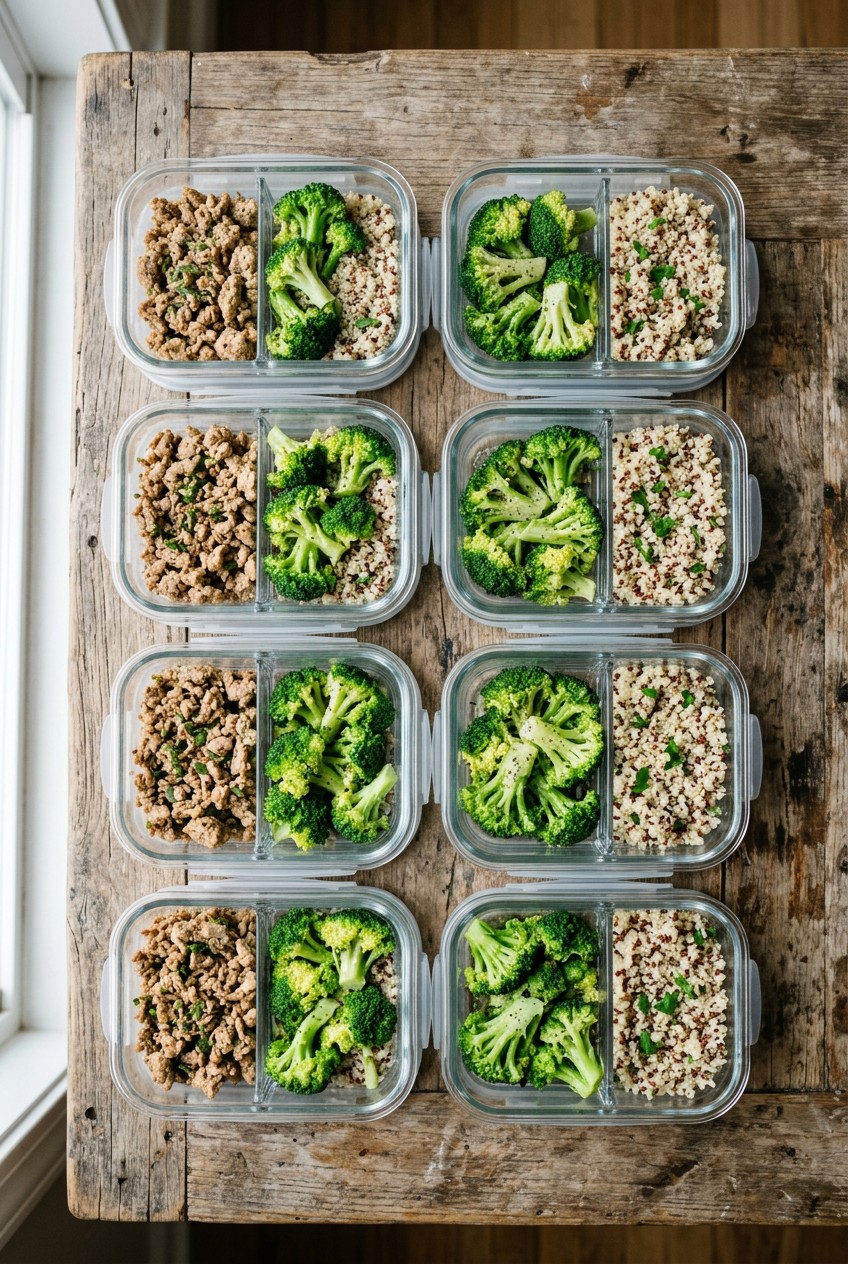
The containers you use are just as important as the food you cook. Dietitians recommend starting with 3-cup glass containers. I strictly use the Pyrex 3-cup rectangular glass containers. You can get a 4-pack for $19.99 at Target. Glass is non-negotiable for me now. Last October at my old office, I microwaved my lunch in a cheap plastic tub that had permanently absorbed the smell of old garlic and yellow curry. My lunch tasted like plastic and regret. Glass is durable, microwave-safe, freezer-safe, and won’t retain odors or those awful red chili stains. The satisfying click of a heavy glass lid snapping into place is the best part of Sunday. You know your food is locked in and protected. If you’re making big batches of turkey chili or soup, you need to freeze individual portions. I’m obsessed with Souper Cubes. I use their 1-cup silicone trays, which cost $19.95 online. You just pour your leftover chili into the slots, freeze it overnight, and pop out perfectly sized blocks the next morning. You transfer those blocks to a freezer bag, and you have instant, portion-controlled meals ready for nights when you can’t be bothered to cook. Don’t waste money on flimsy plastic containers that warp in the dishwasher after three uses. It’s a waste of money and it ruins the taste of your hard work. You might also like: 20 Inspiring Sunday Dinner Ideas You Need to See
6. Batch Cook Grains and Veggies Simultaneously

Efficiency is the only way you won’t burn out on Sunday prep. Maximize your time by cooking your grains and roasting your vegetables while your meat is browning. I always start by rinsing 2 cups of dry quinoa in a fine mesh strainer. I buy Trader Joe’s Organic Tricolor Quinoa for $3.99 per 16 oz bag. Two cups of dry quinoa yields about 6 cups cooked, which is plenty for a week of lunches. While the quinoa simmers, I chop 4 to 5 cups of vegetables. My go-to mix is two large sweet potatoes, two bell peppers, and two zucchini. Toss them in a little olive oil, salt, and pepper, and spread them out on a large sheet pan. Roast them at 400 degrees Fahrenheit for 20 to 25 minutes. You want to see dark, caramelized edges on those sweet potatoes. The steam rising off the fluffy quinoa smells earthy and nutty, perfectly complementing the sweet sugars leaking out of the roasted vegetables. The contrast of the sweet, soft vegetables against the savory, spiced meat is incredible. By the time your vegetables come out of the oven, your quinoa is fluffy and your meat is perfectly browned. You’ve created a massive amount of healthy, balanced food in under forty minutes. If you try to cook these things one by one, you’ll be trapped in your kitchen all afternoon.

Skroam 10 Pack Glass Meal Prep Containers
A dependable everyday pick — Skroam 10 Pack Glass Meal Prep Containers pulls in 56 ratings at 4.5 stars. Not flashy, just solid.
7. Embrace Global Flavors for Endless Variety

Eating the same taco-seasoned meat five days in a row is a form of self-sabotage. To keep your diet exciting, infuse it with diverse international flavors. This is a continuing trend for 2026, and it’s how I stay on track without losing my mind. One week, I’ll make a Thai-inspired stir-fry. I use 16 oz of meat cooked with 2 tablespoons of low-sodium soy sauce, 1 tablespoon of sesame oil, and 1 teaspoon of freshly grated ginger. I buy Kikkoman Less Sodium Soy Sauce for $3.29 (a 10 oz bottle) at Safeway. The smell of toasted sesame oil hitting the hot skillet makes my kitchen smell like an expensive restaurant. The next week, I’ll pivot to a Mediterranean profile. I’ll mix the raw meat with dried oregano, lemon zest, and a huge handful of crumbled feta cheese before cooking. The salty, funky bite of the feta melting into the warm meat is incredible. It masks the fact that you’re eating a lean diet protein. Or I’ll do a Korean-inspired bowl with a heavy spoonful of spicy gochujang paste. The beauty of this protein is that it’s a blank canvas. If you’re bored with your diet, it’s not the meat’s fault. You just aren’t experimenting enough with your pantry staples. Buy a few new sauces and spices, and you’ll change your perspective on healthy lunches.
8. Avoid Over-Handling the Meat Before Cooking

Whether you’re forming meatballs, pressing burgers, or just breaking it up in a skillet, minimize how much you touch the raw meat. Overworking the protein compacts the delicate fibers, leading to a tough, dense final product. I learned this the hard way. I once made a batch of meal prep meatballs and squeezed the mixture so hard it turned into a thick paste. The squishy sound of overmixing should have been my first warning. When they came out of the oven, they were so rubbery they bounced when I dropped one on the counter. You want the meat to look rustic and loose, not like a perfectly smooth, manufactured hockey puck. Mix your seasonings in gently with your fingertips until they’re just combined. If you’re forming shapes, use lightly oiled hands to prevent sticking. I spray a tiny bit of Pam Original Cooking Spray on my palms. I buy the 8 oz can for $3.88 at Walmart. It works perfectly. Also, here is a crucial food safety tip: never rinse raw ground turkey in your sink. I see people do this on TikTok, and it’s terrifying. Rinsing raw poultry just splashes microscopic bacteria all over your clean dishes, countertops, and sponge. You aren’t cleaning the meat. Proper cooking to 165 degrees will kill any harmful bacteria. Just open the package and drop it straight into your hot, oiled skillet.
9. Always Use a Digital Meat Thermometer

A surprising number of people rely purely on color to determine if their food is done. This is a dangerous game. Ground turkey can look slightly pink even when it’s fully cooked and safe. Conversely, it can turn brown on the outside while the inside is still raw and teeming with bacteria. I used to cut my meatballs in half to check the center, which let all the delicious juices bleed out onto the baking sheet, leaving me with dry, ruined meat. Now, I always use a digital meat thermometer. I bought a ThermoPro Digital Thermometer for $14.99 on Amazon, and it’s my most used kitchen gadget. You have to ensure your food reaches a safe internal temperature of exactly 165 degrees Fahrenheit (74 degrees Celsius). This is a non-negotiable food safety rule. Plunge the metal probe into the thickest part of your meatball or the center of your burger patty. If you’re cooking loose crumbles, just scoop a small pile together in the pan and test the center of the mound. The bright red glow of the digital screen hitting 165 degrees brings total peace of mind. Guessing isn’t worth a bout of food poisoning that ruins your entire week. Spend the fifteen dollars and cook with confidence.

M MCIRCO 10-Pack,30 Oz Glass Meal Prep Containers 2
Honestly, M MCIRCO 10-Pack surprised me — sturdier than it looks in the photos, and over 23 buyers gave it 4.5 stars.
10. Smart Storage for Cooked and Raw Portions

Proper storage is the only way to ensure your food stays fresh and safe to eat. Cooked ground turkey can be safely stored in airtight containers in the refrigerator for 3 to 4 days. If I prep on Sunday, I know I have to eat or freeze everything by Thursday. For longer storage, you can freeze cooked portions for 3 to 4 months. Managing raw meat is just as important. If you buy a massive family pack and aren’t using it all at once, you need to portion it out immediately. I divide my raw meat into 16 oz (450g) portions and slide them into Ziploc Gallon Freezer Bags. I grab a 30-count box for $5.99 at Target. I flatten the meat inside the bag so it looks like a thin, even square. This is a brilliant trick because flat bags stack perfectly in the freezer and thaw in half the time. The frost building up on the outside of a flat, stackable freezer bag is a beautiful sight for a prepper. I once threw a giant, round, three-pound frozen ball of meat into the fridge to thaw, and the center was still a solid ice block two days later. Raw ground turkey only lasts 1 to 2 days in the fridge, so if you aren’t cooking it tonight or tomorrow, it needs to go into the freezer immediately.
11. Buy in Bulk for Massive Cost Savings

If you’re buying tiny one-pound packages at a premium grocery store every week, you’re draining your bank account. Ground turkey becomes incredibly affordable when you purchase it in bulk. I always look for sales at stores like Costco or Aldi. At my local Costco, I buy the Butterball Everyday Ground Turkey. It comes in a massive 4-pound package for around $14.99, which breaks down to roughly $3.75 per pound. The heavy thud of that massive four-pound package hitting the bottom of my shopping cart means I’m set for the entire month. Sometimes you can find 93% lean options for as low as $2.99 to $5.24 per pound depending on the store and current sales. Yes, dealing with four pounds of raw meat on a Sunday afternoon takes ten extra minutes of prep work. You have to open the giant package, weigh out your portions on a kitchen scale, and bag them up for the freezer. But taking that brief amount of time cuts my monthly grocery bill dramatically. Meal prep isn’t just about saving time; it’s about optimizing your budget. When you combine bulk buying with smart freezer storage, you ensure you always have a cheap, healthy protein source ready to go. You won’t ever have to rely on expensive takeout because you forgot to go to the store.
Honestly, mastering your ground turkey meal prep routine will change your week. Once you stop treating it like beef and start respecting its need for heavy seasoning, extra moisture, and careful handling, it becomes the ultimate lunch staple. I’ve ruined enough batches to know that these small tweaks—like deglazing your pan with beef bouillon and buying the right 93/7 fat ratio—make the difference between a sad desk lunch and a meal you actually look forward to eating. If you found these tips helpful, pin this article to your favorite recipe board so you can reference the exact spice blends and cooking temperatures next Sunday. Happy prepping!
Frequently Asked Questions
How long does ground turkey meal prep last in the fridge?
Cooked ground turkey meal prep safely lasts 3 to 4 days in an airtight container in the refrigerator. If you aren’t going to eat it by day four, move it to the freezer where it stays fresh for up to four months.
Why is my ground turkey always dry?
It’s likely because you’re buying 99% fat-free meat and cooking it until all the moisture evaporates. Stick to a 93% lean blend and always deglaze your hot skillet with a splash of chicken broth to lock in the juices.
Can I freeze raw ground turkey in its original packaging?
You can, but it’s much better to divide it into 16 oz portions in separate freezer bags. Flatten the bags before freezing so they stack easily and thaw in half the time compared to a thick block of meat.
How do I know when ground turkey is fully cooked?
Never rely on color, as poultry can remain pink even when fully cooked. Always use a digital meat thermometer and ensure the thickest part of the meat reaches a safe internal temperature of 165 degrees Fahrenheit.
