What’s Inside
- Optimize Your Steak Cut for Budget and Tenderness
- Master the Dry Brine for Better Steak Meal Prep
- Marinate Strategically for Flavor and Tenderness
- Avoid the Common Mistake of Cooking Cold Steak
- Utilize Sous Vide for Perfect Batch Cooking
- Sear for a Superior Crust in Cast Iron
- Rest Your Steak Properly to Retain Juices
- Slice Against the Grain for Maximum Tenderness
- Portion and Store in High-Quality Containers
- Reheat Gently and Re-Season Your Steak Meal Prep
Last Tuesday at my kitchen island, I stared down at a sad, gray piece of rubber that used to be a $20 ribeye. I tried cooking cold meat straight from the fridge, and my steak meal prep was officially ruined. The smell of burnt garlic filled my apartment, the texture was exactly like chewing on a dog toy, and I ended up ordering takeout anyway. I’m not proud of it. But honestly, getting beef right for the whole week is tricky if you don’t know the basics. I tried this wrong for months before figuring it out. Took me years. You spend good money on quality protein, so it’s frustrating when Wednesday rolls around and your lunch tastes like a wet shoe. I’m here to fix that. Skip the complicated restaurant techniques. You don’t need them. I’ve broken down my routine for keeping meat juicy, tender, and flavorful from Monday to Friday. Let’s look at the exact steps, prices, and tools you need to stop wasting money and start eating better.
1. Optimize Your Steak Cut for Budget and Tenderness

Most people get this wrong at the grocery store. I used to buy expensive ribeye for my Sunday cooking, thinking higher price meant better leftovers. It doesn’t. Ribeye was sitting around $15.34 per pound last time I checked, which is absurd for a Tuesday desk lunch. For cost-effective prep, opt for flank, sirloin, top blade, chuck eye, or tri-tip. I swear by chuck eye steak. I found it at Kroger last week for just $7.99 per pound. It’s cut from right next to the ribeye, so it has beautiful white marbling, but it’s nearly 48% cheaper. Flank and skirt steaks are also fantastic. They usually run about 15% cheaper than premium cuts and soak up marinades like a sponge. When I’m at Costco, I’ll grab a massive pack of sirloin for about $35.00 total. Sirloin is lean, easy to slice, and holds up well in the fridge. Don’t waste your money on tenderloin for lunch boxes. It lacks the fat needed to survive reheating. Stick to the hard-working, flavorful cuts. Your wallet will thank you.
2. Master the Dry Brine for Better Steak Meal Prep

If you’re just sprinkling salt on your meat right before hitting the pan, you’re missing out on the biggest flavor secret. I tried this wrong for years. I’d season my beef, throw it in the pan, and wonder why it steamed instead of searing. The secret is the dry brine. Pat the meat completely dry with paper towels. Then, generously season both sides with coarse kosher salt. I exclusively use Morton Coarse Kosher Salt. A 3-pound box costs exactly $3.19 at Target and lasts for months. You need about 1 teaspoon of salt per pound of meat. Place the salted meat uncovered on a wire rack over a baking sheet. I use a Nordic Ware aluminum half-sheet pan that cost me $18.50. Shove it in the refrigerator for at least 3 hours. Ideally, leave it for 24 hours for thicker cuts. The salt draws out the moisture, mixes with it, and the meat reabsorbs that seasoned liquid. The surface becomes tacky and dry. This guarantees an aggressive, crusty sear and deeply seasoned bites all the way through the center. It’s mandatory.
3. Marinate Strategically for Flavor and Tenderness

Marinades are crucial for leaner cuts like flank or skirt. But you can’t just drown the meat in random liquids and hope for the best. I ruined a beautiful skirt steak last year by leaving it in a heavy lime juice marinade for 48 hours. The acid cooked the meat in the fridge. It turned into mushy cat food texture. Vile. You need about 1/2 cup of marinade per 1 pound of meat. My go-to recipe is simple. I mix 1/3 cup Trader Joe’s Soy Sauce ($2.99 for a 15 oz bottle), 1/3 cup fresh lemon juice, 1/2 cup olive oil, 1/4 cup Lea & Perrins Worcestershire sauce ($4.50 for 10 oz), 1 tablespoon minced garlic, and 2 tablespoons dried Italian seasoning. Marinate for at least 30 minutes. Don’t exceed 12 to 24 hours. The soy sauce acts as a brine, the oil carries the flavor, and the lemon juice tenderizes just enough without turning the muscle fibers to mush. I usually toss everything into a large glass bowl at Trader Joe’s on Sunday morning, run some errands, and cook it by Sunday afternoon. Perfect. You might also like: 15 Lovely Kids School Lunch Ideas That Changed Everything

M MCIRCO 10-Pack,30 Oz Glass Meal Prep Containers 2
M MCIRCO 10-Pack has been one of the most consistently praised picks in this category. 23 reviewers averaged 4.5/5.
4. Avoid the Common Mistake of Cooking Cold Steak

This is the mistake I mentioned in my opening disaster story. Pulling a cold block of meat from a 38-degree fridge and throwing it into a 500-degree pan is a recipe for disaster. The outside will burn while the inside remains a chewy, raw mess. You’ll get that dreaded gray band of overcooked meat around a cold center. Always allow your meat to come to room temperature for 30 to 60 minutes before cooking. I like to lay out a sheet of Reynolds Kitchens Parchment Paper. I buy the 45-square-foot roll at Sprouts for $4.99. I place the meat on the paper right on my counter. This takes the chill off. It allows the heat from the pan to penetrate evenly. I usually use this 45-minute waiting period to chop my sweet potatoes or wash my broccoli. It’s idle time, but it’s critical. If you skip this, you’re setting yourself up for a terrible lunch. Just let it rest on the counter. Trust me. You might also like: 15 Stunning Healthy Dinner Ideas to Steal Right Now
5. Utilize Sous Vide for Perfect Batch Cooking

If you prep multiple portions of beef every week, sous vide is a lifesaver. It eliminates the guesswork. I bought an Anova Culinary Sous Vide Precision Cooker for $129.00 at Target, and it paid for itself in a month of saved meat. You seal your seasoned portions in bags and drop them into a water bath set to an exact temperature. I set mine to 131 degrees Fahrenheit for a perfect medium-rare. You can cook four or five steaks at once. It takes about two hours, but it’s hands-off. You can’t overcook it. Once they finish, immediately transfer the sealed bags to an ice bath to cool. This stops the cooking process instantly. Then, just toss the cold bags into the fridge. When Tuesday night rolls around, open a bag, pat the meat dry, and sear it for 60 seconds per side. You get fresh, hot, perfectly cooked beef in two minutes. I use Ziploc gallon freezer bags ($5.89 at Walmart) and use the water displacement method to push the air out. It works flawlessly. You might also like: 20 Clever School Lunch Ideas You Can Try Today
6. Sear for a Superior Crust in Cast Iron

Whether you’re cooking fresh cuts or finishing off a sous vide batch, the crust is everything. A gray, steamed piece of beef is depressing. You need a screaming hot cast-iron skillet. I use a Lodge 12-inch Cast Iron Skillet. I picked it up at Walmart for $24.90, and it’s practically indestructible. Put the dry skillet on high heat for at least five minutes. You want it smoking. Add a high smoke point oil. Don’t use extra virgin olive oil. It will burn instantly and taste like battery acid. I use Chosen Foods Avocado Oil. It costs $11.99 for a 16.9 oz bottle at Whole Foods. Pour in about 2 tablespoons. Carefully lay the meat in the pan. You should hear a violent, aggressive sizzle. Sear for 1 to 2 minutes per side until a rich, dark mahogany crust forms. Yes, your smoke alarm might go off. Open a window. The deep, caramelized flavor you get from a proper hard sear is what makes leftovers actually enjoyable.

8 Pack 36oz Large Glass Meal Prep Containers with lids
8 Pack 36oz Large Glass Meal Prep Containers with lids has been one of the most consistently praised picks in this category. 866 reviewers averaged 4.5/5.
7. Rest Your Steak Properly to Retain Juices

This step requires patience, which I struggle with when I’m hungry. But it’s non-negotiable. After pulling the meat from that blistering hot cast iron, you must let it rest. If you slice into it immediately, all the internal juices will flood out onto your cutting board. You’ll be left with a dry, chalky piece of meat sitting in a puddle of red water. Transfer the hot meat to a clean surface. I use a heavy John Boos Maple Cutting Board. I splurged on it for $65.00, but any sturdy board works. Let thinner cuts rest for 5 minutes. Thicker cuts need 10 to 15 minutes. During this time, the muscle fibers relax. The juices redistribute evenly throughout the entire piece. When you finally slice it, the moisture stays trapped inside the beef, exactly where you want it. I usually use this resting time to wipe down my stove because the avocado oil splatters everywhere. It’s a messy process, but the juicy results are worth the cleanup.
8. Slice Against the Grain for Maximum Tenderness

You can buy the most expensive cut, cook it perfectly, rest it, and still ruin it if you slice it wrong. I learned this the hard way with a massive flank steak. I cut it parallel to the lines running down the meat. I ended up chewing a single bite for five straight minutes. It was like a rubber band. You absolutely must slice against the grain. Look closely at the meat. You’ll see long muscle fibers running in a specific direction. Position your knife perpendicular to those lines and cut across them. This physically shortens the fibers, making the meat incredibly tender and easy to chew. I use a Victorinox Fibrox Pro 8-Inch Chef’s Knife. It’s $39.95 on Amazon, and it slices through beef like butter. I cut my prep portions into 1/4-inch strips. This makes them easy to eat cold over a salad or quickly warm up in a skillet. Slicing against the grain transforms cheap, tough cuts into melt-in-your-mouth meals.
9. Portion and Store in High-Quality Containers

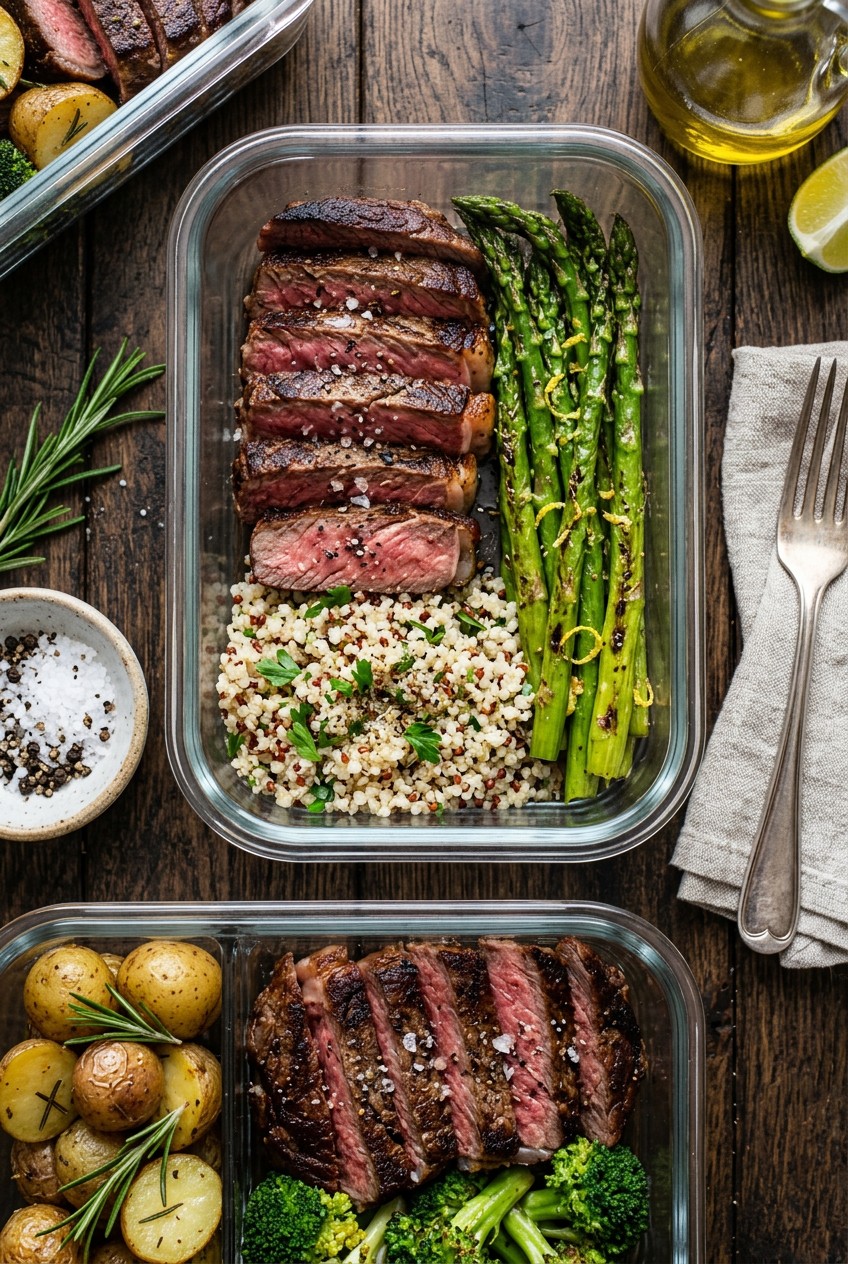
Storage is where good food goes to die. I used to throw all my sliced meat into cheap, flimsy plastic tubs. The plastic stained, held onto old garlic smells, and let air in, which oxidized the meat and made it taste stale by Wednesday. You need high-quality, airtight containers. I exclusively use glass now. Glass doesn’t hold odors, and you can reheat right in the container. I love the OXO Smart Seal Glass Container Sets. A good set costs about $32.99 at Target. If you’re tracking macros and need exact portions, the Bentgo Prep 2-Compartment Meal Prep Containers are fantastic. You can get a 20-pack for $12.99 at Walmart, which breaks down to about $0.65 per container. Divide your sliced meat into individual 4 oz or 6 oz portions. Cooked beef is generally safe to eat for 3 to 4 days when stored in the refrigerator at or below 40 degrees Fahrenheit. Make sure the food cools quickly. Don’t leave it on the counter for more than two hours before refrigerating, or you risk bacterial growth. Snap those airtight lids on tight.

Vtopmart 5Pack 22oz Glass Storage Containers with Lids
Honestly, Vtopmart 5Pack 22oz Glass Storage Containers with Lids surprised me — sturdier than it looks in the photos, and over 32 buyers gave it 4.5 stars.
10. Reheat Gently and Re-Season Your Steak Meal Prep

Microwaving beef on high power is a culinary crime. I did it for years. The microwave boils the water inside the meat, turning a beautiful medium-rare strip into gray, chewy leather. It pops, it sizzles, and it tastes awful. The best reheating method is the oven-to-stovetop reverse sear. Warm the slices in an oven at 250 degrees Fahrenheit for 20 minutes, then sear briefly in a hot pan. If you’re at work, use an air fryer. Preheat it to 350 degrees Fahrenheit and heat the slices for just 3 to 5 minutes. You want an internal temperature of about 110 degrees Fahrenheit. It should be warm, not piping hot. Here’s a restaurant trick: much of the initial seasoning gets lost in the fridge. You need to re-season. I keep a small tin of Maldon Sea Salt Flakes at my desk. An 8.5 oz box costs $6.50 at Whole Foods. A quick sprinkle of flaky salt and fresh black pepper right before eating wakes up the flavors. Pair it with roasted sweet potatoes and a dollop of chimichurri sauce. You won’t believe it’s leftovers.
Getting your weekly protein sorted doesn’t have to end in gray disasters. I’ve ruined enough expensive cuts to know what works and what fails. Stick to the budget cuts like chuck eye, always dry brine with coarse salt, and for the love of everything, don’t microwave your leftovers on high power. I highly recommend picking up some glass OXO containers and a cheap Lodge cast iron pan this weekend. It changes the entire experience. If you found this breakdown helpful, pin this article to your favorite Pinterest board so you have the exact marinade measurements and temperature guides ready for your next Sunday cooking session. Happy prepping!
Frequently Asked Questions
How long does steak meal prep last in the fridge?
Cooked steak is generally safe to eat for 3 to 4 days when stored in an airtight container in the refrigerator at or below 40 degrees Fahrenheit. Ensure it cools within two hours of cooking before storing.
What is the best cut of meat for steak meal prep?
Budget-friendly, flavorful cuts like flank, skirt, sirloin, and chuck eye are perfect for prepping. They marinate beautifully, slice easily against the grain, and hold their texture much better during reheating than ultra-lean cuts.
How do you reheat steak without drying it out?
Avoid microwaving on high. The best method is warming it in an oven at 250 degrees Fahrenheit for 20 minutes, then quickly searing it. Alternatively, use an air fryer at 350 degrees Fahrenheit for 3 to 5 minutes.
Should I slice my steak before or after storing it?
It is best to slice your steak before storing it in individual containers. Slicing against the grain ahead of time makes portion control easier and allows for quicker, more even reheating during your busy work week.
