What’s Inside
- Prioritize Omega-3 Fatty Fish For Your Anti Inflammation Meal Prep
- Master High-Polyphenol Extra Virgin Olive Oil
- Pair Turmeric With Black Pepper And Fat
- Grate Fresh Ginger For Versatile Flavor
- Stock Up On Frozen Berries For Antioxidants
- Batch Cook Legumes And Whole Grains
- Crush Garlic And Wait Ten Minutes
- Keep Raw Walnuts And Almonds On Hand
- Supplement Magnesium And Zinc In Your Anti Inflammation Meal Prep
- Swap Refined Grains For Steel-Cut Oats And Farro
- Adopt Plant-Forward Flexitarianism For Family Dinners
Last Tuesday at Whole Foods, I stood in the produce aisle with a cart full of processed snacks and a throbbing knee that wouldn’t quit. I realized my approach to anti-inflammation meal prep was a disaster. I kept buying “healthy” stuff that tasted like wet cardboard. My family started sneaking bowls of sugary cereal at nine at night. My husband actually hid a box of Frosted Flakes behind the paper towels. I spent months doing this wrong. I bought pricey green powders and ignored the actual whole foods in front of me. I learned that the hard way.
Once I stopped buying random “health halos” and started focusing on specific functional ingredients, my knee pain faded. My kids actually started eating the dinners I made. The 2026 approach to eating isn’t about restriction. It’s about flooding your body with unlimited vegetables, herbs, spices, and gut-healing fibers. You don’t need a culinary degree for this. You just need a plan for Sunday afternoon. Here is exactly how I structure my weekly prep, including the brands I buy, the mistakes I made, and the prices I pay to keep my grocery budget in check.
1. Prioritize Omega-3 Fatty Fish For Your Anti Inflammation Meal Prep

Let’s talk about fish. I tried feeding my family cheap frozen tilapia for months. It tasted like muddy water. My kids refused to eat it. I realized I was missing the point. The goal is omega-3 fatty acids, specifically EPA and DHA, which suppress inflammatory signaling. Now, I aim for 3 to 6 ounce servings of fatty fish two to four times a week. I buy Bumble Bee Wild Caught Sardines in Water. They cost exactly $1.12 a can at my local Trader Joe’s. I mash them up with a little Dijon mustard and lemon juice for a quick lunch.
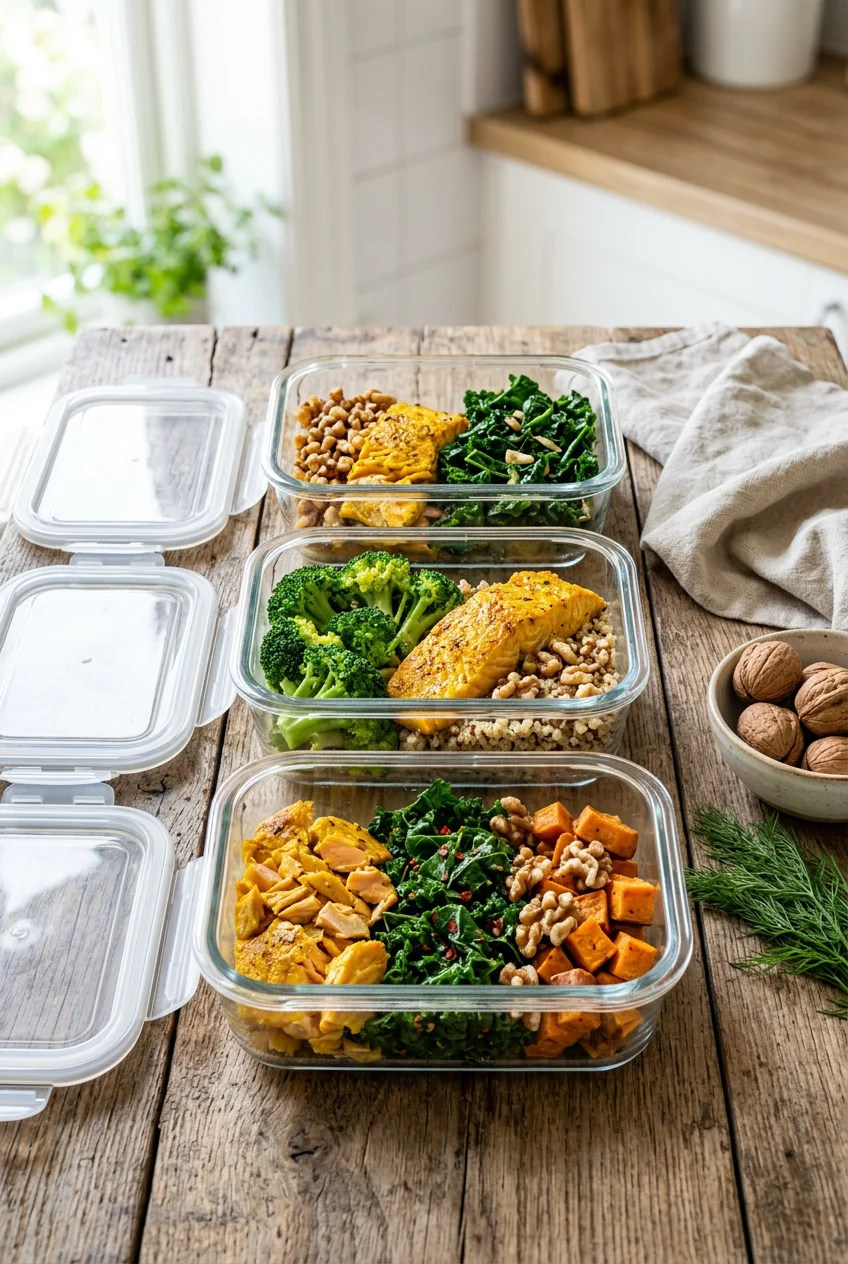
If sardines are too strong, look into Vital Choice Wild Alaskan Salmon. It costs more, usually around $14.99 for a good frozen fillet, but the texture is firm and flakes perfectly. It doesn’t have that fishy smell that stinks up the kitchen for days. When I prep salmon on Sundays, I bake four fillets on a sheet pan at 375 degrees for exactly 14 minutes. I store them in glass Pyrex containers. By Wednesday, they still taste fresh over a bed of spinach. Skip the farm-raised Atlantic salmon. It’s often fed soy and corn that promotes inflammation, defeating the whole purpose. I learned that the hard way after reading the fine print on a cheap bag of frozen portions.
2. Master High-Polyphenol Extra Virgin Olive Oil

I used to buy massive plastic jugs of generic olive oil and keep them right next to my hot stove. Huge mistake. Heat and light destroy the delicate compounds, turning it rancid and inflammatory. Now, I seek out early harvest varieties with a high polyphenol count. You want an oil with at least 400 mg/kg of polyphenols. When you swallow it, you should feel a peppery kick at the back of your throat. That burn indicates oleocanthal, a compound that mimics ibuprofen.
I buy Laconiko ZOI for medicinal use. It boasts 1799 mg/kg of polyphenols and an oleocanthal count of 946 mg/kg. It costs about $50 a bottle, so I only use a 1 teaspoon dose daily over morning avocado toast. For everyday roasting, I buy Graza Sizzle Extra Virgin Olive Oil. You can find a small bottle at Whole Foods for $4.99. The squeeze bottle is a lifesaver when I’m holding a baby and trying to dress a salad one-handed. Always store your olive oil in a dark, cool pantry. If your oil tastes like crayons or old wax, throw it away. You’re just pouring free radicals over your vegetables. Trust me.
3. Pair Turmeric With Black Pepper And Fat

I drank plain turmeric water every morning for a year before a nutritionist told me I was wasting my time. Curcumin, the active compound in turmeric, is notoriously difficult to absorb. You have to pair it with black pepper and a healthy fat. The piperine in black pepper boosts curcumin absorption by two thousand percent. Now, I incorporate 1/2 teaspoon of organic turmeric powder into my Sunday prep, but I always add a heavy pinch of freshly ground black pepper and a drizzle of olive oil.
I use Country Life Foods organic turmeric powder. A 16 oz bag costs about $8.99 and lasts for months. I add it to lentil soups, roasted cauliflower, and even the water when I cook quinoa. It stains everything bright yellow. My favorite wooden spoon is permanently dyed mustard color. Be careful when scooping it. I spilled a tablespoon on my white kitchen rug last October and the stain won’t come out. Despite the mess, the joint relief is noticeable. Just remember, a small, consistent daily dose of 1/2 teaspoon is much more effective than a massive, stomach-upsetting dose once a week. You might also like: 10 Healthy Breakfast Meal Prep That Actually Work
![C CREST [10 Pack] Glass Meal Prep Containers](https://m.media-amazon.com/images/I/81HfSfzlqUL._AC_UL320_.jpg)
C CREST [10 Pack] Glass Meal Prep Containers
Honestly, C CREST [10 Pack] Glass Meal Prep Containers surprised me — sturdier than it looks in the photos, and over 349 buyers gave it 4.5 stars.
4. Grate Fresh Ginger For Versatile Flavor

Ginger is another root I completely misunderstood. I used to buy that pre-minced ginger in a glass jar. It tastes sour, mostly like the vinegar it’s preserved in, and it ruined my stir-fries. Fresh ginger is entirely different. The gingerols and shogaols are potent for easing muscle soreness. I buy a large hand of fresh ginger at Target for about $1.50. It sits in a wire basket on my counter. You might also like: 15 Cozy Freezer Meals Ideas to Transform Your Space
To prep it, I peel the skin with the edge of a metal spoon. It works much better than a vegetable peeler. Then I grate about 2 tablespoons using a microplane. I store the grated ginger in a tiny airtight glass jar in the fridge. When I’m making a quick dinner on Tuesday, I just scoop out a teaspoon and toss it into a pan with broccoli and chicken. The smell of fresh ginger hitting hot sesame oil is incredible. It clears your sinuses. If you have extra ginger going soft, slice it into thin coins and freeze them in a silicone bag. You can drop the frozen coins straight into a mug of hot water for a soothing tea. You might also like: 15 Stunning Lunch Weekly Meal Prep Ideas You Haven’t Thought Of
5. Stock Up On Frozen Berries For Antioxidants

Fresh berries are a trap. I can’t count how many times I spent ten dollars on beautiful raspberries, only to find them covered in white fuzz by Wednesday. It’s infuriating. Now, I rely entirely on the freezer aisle. Berries are rich in polyphenols and anthocyanins, which fight oxidative stress. Freezing them locks in those nutrients at their peak.
I buy the Whole Foods 365 Organic Mixed Berries. They run about $2.64 for a 10 oz bag. I buy five bags at a time and stack them in the freezer. Every morning, I measure out 1/2 cup of frozen berries and microwave them in a glass bowl for 30 seconds. They break down into a warm, jammy syrup that I pour over steel-cut oats. It naturally sweetens the oatmeal without refined sugar. The dark purple juice will stain your fingers and countertops, so wipe up spills immediately. Don’t bother thawing them for smoothies. Just throw them straight into the blender with spinach and almond milk. It makes the smoothie thick and frosty, like a milkshake.
6. Batch Cook Legumes And Whole Grains

Fiber diversity is a huge deal. It’s not just about eating a lot of fiber. It’s about eating different types to feed the various beneficial bacteria in your gut. A healthy microbiome is your first line of defense against systemic inflammation. I batch cook legumes and grains every Sunday afternoon. I use Lundberg Family Farms Organic Brown Rice, which costs $4.99 a bag, and Bob’s Red Mill Red Lentils for $3.49.
I made the mistake of boiling red lentils like regular green lentils for my first few batches. They turned into a watery, unappetizing mush that my kids hated. Red lentils cook fast. They only need about 15 minutes. I portion out 1/2 cup servings of cooked rice and lentils into individual glass containers. I buy all my bulk grains at Sprouts because their turnover is high, meaning the grains aren’t sitting in bins getting stale. Having these staples ready means I can throw together a grain bowl in three minutes on a busy Wednesday. I just add greens, a scoop of lentils, and a drizzle of that high-polyphenol olive oil.

Skroam 10 Pack Glass Meal Prep Containers
Skroam 10 Pack Glass Meal Prep Containers has been one of the most consistently praised picks in this category. 57 reviewers averaged 4.5/5.
7. Crush Garlic And Wait Ten Minutes

Garlic is a staple, but I was cooking it wrong for years. I used to chop it and immediately throw it into a hot pan with onions. When you do that, you destroy the enzyme that creates allicin. Allicin is the potent anti-inflammatory compound that makes garlic a superfood. To get the benefits, you have to crush or mince the garlic and let it sit on the cutting board for ten minutes before applying heat. This resting period allows the allicin to fully develop.
I buy fresh heads of garlic at Walmart for about $0.50 each. I peel and crush 1 to 2 cloves every evening while I’m getting out my pots. By the time the pan is hot, the garlic has rested for its mandatory ten minutes. The smell of garlic cooking is the foundation of almost every dinner I make. Skip the pre-peeled garlic cloves in plastic bags. They often taste slightly fermented and lack the sharp bite of a fresh bulb. Taking the extra sixty seconds to smash a fresh clove with the flat side of a chef’s knife makes a massive difference.
8. Keep Raw Walnuts And Almonds On Hand

Snacking used to be my downfall. At 3 PM, I’d crash and reach for whatever processed crackers were in the pantry. Those refined carbohydrates spike your blood sugar, which triggers an inflammatory cascade. Now, I keep raw nuts on hand for a quick, filling snack. Just 1/4 cup of walnuts provides the suggested daily amount of plant-based omega-3s. They’re slightly bitter, but the crunch is satisfying.
I buy giant bags of raw almonds and walnuts at Costco. A large bag of almonds runs about $14.99, which breaks down to roughly $4.99 a pound. It’s a fantastic deal. I made the mistake of buying roasted, salted nuts for a while. I didn’t realize they were roasted in cheap, inflammatory seed oils like cottonseed or sunflower oil. Always read the ingredient list. It should just say almonds. Nothing else. When I get home, I divide the nuts into small 1/4 cup glass jars and line them up in the pantry. When the afternoon hunger hits, I just grab a jar. It prevents me from mindlessly eating out of a massive bag.
9. Supplement Magnesium And Zinc In Your Anti Inflammation Meal Prep

You can eat a perfect diet and still fall short on certain micronutrients because our soil is heavily depleted. Dietitian Dawn Jackson Blatner notes that an estimated fifty percent of people are low in magnesium. Low magnesium is linked to elevated CRP, a primary marker of inflammation. I noticed my sleep was terrible and my muscles twitched at night, classic signs of deficiency. Women need 310 to 320 mg daily, while men need 400 to 420 mg.
I started incorporating a magnesium glycinate supplement into my nightly routine. Don’t buy magnesium oxide. It’s cheap, but your body barely absorbs it and it will send you running to the bathroom. I also track my zinc intake. The recommended daily intake is 11 mg for males and 8 mg for females. Zinc is vital for immune support and controlling inflammation. I try to get it from pumpkin seeds and lentils, but a supplement helps fill the gaps during cold season. Talk to a doctor before adding pills, but don’t assume your grocery haul is giving you 100 percent of what you need. I assumed food alone was enough, and I walked around exhausted for two years. It took me forever to figure out.
![[8-Pack,30 oz]Glass Meal Prep Containers](https://m.media-amazon.com/images/I/713Zfdsgi4L._AC_UL320_.jpg)
[8-Pack,30 oz]Glass Meal Prep Containers
[8-Pack has been one of the most consistently praised picks in this category. 7 reviewers averaged 4.5/5.
10. Swap Refined Grains For Steel-Cut Oats And Farro

The bread aisle is a minefield. For years, I bought bread labeled “whole wheat” or “multi-grain,” thinking I was making the right choice. In reality, most commercial whole wheat bread is just refined white flour dyed brown with molasses, packed with added sugars and dough conditioners. Refined flours hit your bloodstream almost as fast as pure sugar. This causes an insulin spike that fuels inflammation. You have to seek out truly intact whole grains.
I completely ditched sandwich bread. Instead, I prep steel-cut oats, quinoa, and farro. I buy Bob’s Red Mill Steel Cut Oats at Kroger for about $5.49 a bag. A 1/2 cup serving of cooked steel-cut oats takes longer to digest because the grain is simply chopped, not pulverized into a fine powder. Farro is my favorite for dinner. It has a chewy, nutty texture that holds up beautifully in meal prep containers without getting soggy. I boil a large pot of farro in vegetable broth on Sundays. It takes about 30 minutes. I drain the excess and toss it with a little olive oil to keep the grains separate. It acts as a hearty, blood-sugar-stabilizing base for all my roasted vegetables and chicken.
11. Adopt Plant-Forward Flexitarianism For Family Dinners

Trying to force my meat-and-potatoes family into strict veganism was a disaster. I tried making a tofu scramble last January, and my kids actually cried. My husband ordered a pizza. It caused more stress than it was worth. The trend of plant-forward flexitarianism saved my sanity. It emphasizes plant-based foods while allowing moderate consumption of high-quality animal products. It’s sustainable, nutritionally balanced, and much easier to prep for a picky family.
Now, I make vegetables and legumes the star of the plate, and treat meat as a side dish or garnish. Instead of serving a massive 8 ounce steak, I grill one or two, slice them thin, and serve a 3 ounce portion over a bowl of roasted broccoli, farro, and tahini dressing. The family still gets the flavor of beef, but the bulk of the meal is anti-inflammatory plants. I buy frozen organic broccoli florets for $2.49 a bag and roast them at 400 degrees until the edges get crispy. The kids fight over the crispy bits. This lowered our grocery bill and stopped the dinner table arguments. You don’t have to be perfect to reduce inflammation. You just have to be intentional about what takes up the most space on your plate.
Meal prepping to fight inflammation doesn’t mean eating bland, boring food. It means using spices, buying the right oils, and ditching the refined carbohydrates that make your joints ache. I recommend starting with just two of these tips this Sunday. Swap your cooking oil and batch cook one whole grain. Notice how your body feels by Wednesday. If you found this breakdown helpful, save this article or pin it to your meal prep board so you have the brand names and prices ready for your next grocery run.
Frequently Asked Questions
What is the best fish for anti inflammation meal prep?
Wild-caught fatty fish like salmon, sardines, and mackerel are the best choices. They are packed with EPA and DHA omega-3 fatty acids. Aim for 3 to 6 ounce servings two to four times a week to suppress inflammatory signaling.
How do you make turmeric absorb better in recipes?
Curcumin in turmeric is poorly absorbed on its own. You must pair it with a pinch of black pepper and a healthy fat, like extra virgin olive oil. The piperine in black pepper boosts absorption by two thousand percent.
Why should you let crushed garlic sit before cooking?
Crushing garlic and letting it rest for ten minutes allows the enzyme alliinase to create allicin. Allicin is a potent antibacterial and anti-inflammatory compound. Applying heat immediately destroys the enzyme before the allicin can fully develop.
What kind of olive oil is best for reducing inflammation?
Look for early harvest or agourelaio extra virgin olive oil with a high polyphenol count of at least 400 mg/kg. A peppery kick at the back of your throat indicates the presence of oleocanthal, a powerful anti-inflammatory compound.
