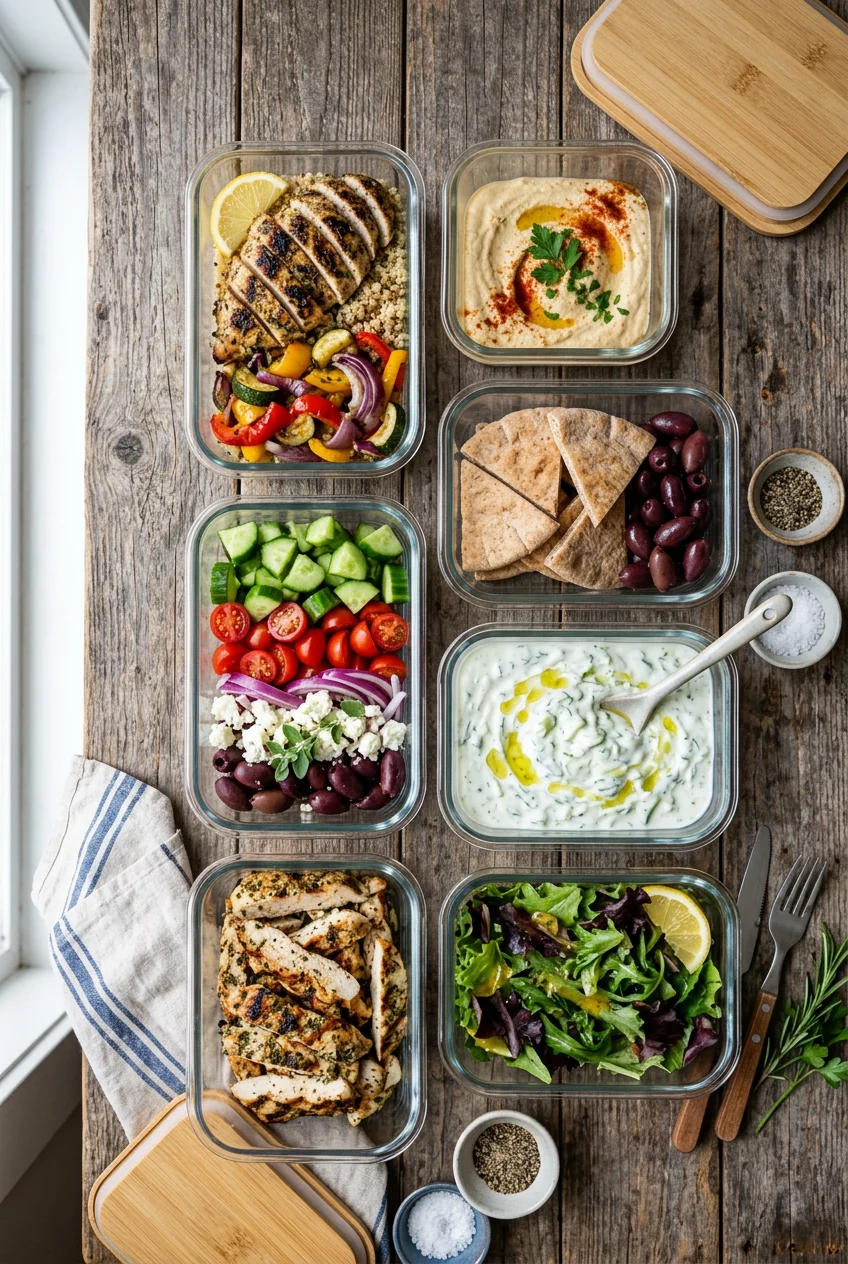
What’s Inside
- Prioritize Quality Greek Yogurt for Creamy Bases
- Invest in High-Quality Extra Virgin Olive Oil
- Batch Cook Grains for Your Greek Meal Prep Bowls
- Marinate Chicken for Maximum Flavor and Tenderness
- Master the Art of Tzatziki Separation
- Embrace Sheet Pan Cooking for Greek Meal Prep
- Choose English Cucumbers for Lasting Crispness
- Portion Smartly with Glass Containers
- Store Components Separately for Optimal Freshness
- Don’t Overcook Your Chicken
- Utilize Legumes for Plant-Based Protein Options
- Freeze Traditional Soups for Deeper Flavor
I stood in my kitchen last Tuesday staring at a container of sad, gray chicken and a puddle of watery cucumber juice. My first attempt at Greek meal prep was a literal swamp. I spent three hours chopping vegetables only to end up with lunches that tasted like wet cardboard by Wednesday. It’s frustrating when you spend your Sunday prepping healthy food, but it turns into a soggy mess. I’ve ruined so many batches of tzatziki before I finally figured out the right way to build these bowls. Now I’m obsessed. I can’t imagine eating anything else for lunch. Let’s fix your lunch routine with some hard-earned lessons. I’m going to walk you through exactly how I fix these common mistakes.
1. Prioritize Quality Greek Yogurt for Creamy Bases

I used to buy the cheapest fat-free yogurt I could find. Skip the fat-free stuff. It tastes like wet cardboard. Last month at Target, I grabbed a 32 oz tub of Fage Total 5% for $6.99, and it completely changed my tzatziki game. You need full-fat, plain Greek yogurt for optimal creaminess and protein content in your sauces. Fage has this traditional tanginess and thickness that you just can’t get from the watery store brands. If you prefer a slightly sweeter profile, Oikos Triple Zero is decent, but nothing beats Fage for savory dips. A 32 oz tub of Chobani whole milk yogurt is another solid choice and usually runs under $6 at most stores. I learned the hard way that low-fat yogurt separates into a gross, watery puddle by day three in the fridge. When I mix 1 cup of Fage 5% with 2 tablespoons of lemon juice, 1 tablespoon of minced garlic, and 1/2 cup of grated cucumber, the texture stays thick and rich all week long. You’re making a huge mistake if you skimp on the base. It’s the foundation of your entire meal. The thick yogurt coats the chicken perfectly. It’s magic.
2. Invest in High-Quality Extra Virgin Olive Oil

Most people get this wrong. They use cheap, generic olive oil that smells like old cooking spray. Authentic Greek Extra Virgin Olive Oil makes a massive difference for dressings and finishing dishes. Last Friday at Sprouts, I picked up a 750 ml bottle of Krinos olive oil for $14.99. It has a peppery flavor that cuts right through the heavy garlic in my marinades. If you’re willing to splurge, Klēa costs around $31 for a 250 ml bottle online, but it’s cold-pressed from Koroneiki olives. I personally swear by pouring exactly 2 tablespoons of good EVOO over my finished bowls right before eating. I tried this wrong for months before figuring it out. I used to dump cheap vegetable oil blends on my salads, and they always tasted flat and greasy. You won’t believe how much better your food tastes when you use single-origin Greek olive oil. It coats the vegetables perfectly without feeling heavy. The golden green color looks beautiful drizzled over feta cheese. It smells earthy and rich, almost like fresh-cut grass. Don’t ruin your hard work with cheap oil.
3. Batch Cook Grains for Your Greek Meal Prep Bowls

Cooking grains every single night is a massive waste of time. I prepare a large batch of whole grains like brown rice, quinoa, or farro at the beginning of the week. Last Sunday, I bought a 2 lb bag of Lundberg Family Farms organic quinoa for $7.49 at Whole Foods. I cook 2 cups of dry quinoa with 4 cups of chicken broth, which yields enough for my entire week of lunches. A common portion size for meal prep bowls is exactly 1/2 cup of cooked grain per serving. This gives you a solid, filling base without making you feel sluggish by 2 PM. I used to eyeball my portions and ended up with bowls that were 90 percent rice and zero flavor. Measuring out that exact 1/2 cup keeps the ratios perfect. You can mix the warm grains with 1 tablespoon of fresh lemon juice and a heavy pinch of kosher salt right after cooking. They absorb the citrus flavor beautifully. It’s a simple step, but it makes the base of your bowl taste bright and fresh instead of dry and boring.

Vtopmart 5Pack 22oz Glass Storage Containers with Lids
Honestly, Vtopmart 5Pack 22oz Glass Storage Containers with Lids surprised me — sturdier than it looks in the photos, and over 34 buyers gave it 4.5 stars.
4. Marinate Chicken for Maximum Flavor and Tenderness

Dry chicken breasts are the enemy of a good lunch. I marinate my boneless, skinless chicken breasts for at least 20 minutes, or up to 12 hours if I’m prepping overnight. My go-to marinade uses exact measurements. I mix 1/4 cup olive oil, 1/3 cup fresh lemon juice, 1 tablespoon red wine vinegar, 1 tablespoon dried oregano, and 3 tablespoons minced garlic. I normally buy a 3 lb pack of Kirkland Signature organic chicken breasts for $17.99 at Costco. Greek yogurt also acts as an excellent tenderizer in marinades. Sometimes I add 1/4 cup of plain yogurt to the mix, and it breaks down the proteins so the meat literally melts in your mouth. I once left chicken in a heavy lemon marinade for two days by accident, and the acid turned the meat into a weird, stringy mush. Don’t do that. Stick to the 12-hour maximum. When you pull the chicken out of the bag, the garlic and oregano should be clinging to the meat. It smells incredibly pungent and earthy before it even hits the hot cast iron pan. You might also like: 15 Brilliant Simple Meal Prep Ideas for a Fresh New Look
5. Master the Art of Tzatziki Separation

Nothing ruins a crisp salad faster than a giant dollop of tzatziki melting into the lettuce. To prevent salads and bowls from becoming soggy, you must store homemade tzatziki sauce in a separate small container. I make my sauce with 1/2 cup grated cucumber, 1 cup Greek yogurt, fresh dill, minced garlic, and 2 tablespoons of lemon juice. I used to just plop it right on top of my chicken on Sunday night. By Tuesday, the whole container smelled like sour milk and looked like a swamp. Now, I use OXO silicone baking cups. I bought a pack of 12 for $9.99 at Target. I scoop exactly 2 tablespoons of tzatziki into a silicone cup and nestle it into the corner of my glass container. When I’m ready to eat, I just pull the little cup out, heat my chicken and grains, and then dip everything into the cold sauce. It keeps the hot food hot and the cold sauce cold. You’re going to love this trick. The bright green dill pops against the stark white yogurt. You might also like: 15 Inspiring Chicken Meal Prep Ideas You Haven’t Thought Of
6. Embrace Sheet Pan Cooking for Greek Meal Prep

I used to dirty four different pots and pans just to make one week of lunches. Now, I toss chicken chunks with 2 tablespoons of olive oil, 1/4 cup lemon juice, garlic, and oregano, then roast them on a single pan. I add chopped vegetables like zucchini, red onion, and bell peppers. I roast everything at 400 degrees Fahrenheit until the chicken is cooked through. This method is incredibly efficient for busy schedules. I use a Nordic Ware aluminum half sheet pan that I found for $14.99 at Walmart. It heats evenly and cleans up fast. The edges of the red onions get perfectly charred and sweet, while the zucchini stays tender but not mushy. I learned to cut the zucchini into thick 1-inch half-moons. If you cut them too thin, they turn into absolute slime in the oven. The smell of roasting oregano and garlic fills my entire apartment on Sunday afternoons. It’s the best part of my weekend routine. Sheet pan cooking saves me at least an hour of active standing time in the kitchen. You might also like: 20 Cozy High Protein Lunch Ideas for Any Style

Skroam 10 Pack Glass Meal Prep Containers
If you want something that just works, Skroam 10 Pack Glass Meal Prep Containers is a safe bet (57 reviews, 4.5 stars).
7. Choose English Cucumbers for Lasting Crispness

Regular cucumbers are basically just tubes of water waiting to ruin your meal prep. When preparing salads for the week, you have to opt for English cucumbers. I usually grab a 3-pack of Sunset English Cucumbers for $4.99 at Kroger. They stay crisp much longer and hold up better in the fridge, preventing a watery mess. The skin is super thin, so you don’t even need to peel them. Just slice them into thick 1/2-inch chunks. I used to buy those thick, waxy regular cucumbers because they were 50 cents cheaper. I’d spend ten minutes peeling them and scraping out the giant seeds, only to find my salad swimming in an inch of cucumber juice the next day. It’s just not worth the hassle. English cucumbers have a dense, crunchy texture that snaps when you bite into it. I toss 1 cup of chopped English cucumbers with 1/2 cup of halved cherry tomatoes, a pinch of salt, and a handful of pitted Kalamata olives. I buy jars of Mezzetta pitted Kalamata olives for $5.49. They add a briny, rich flavor.
8. Portion Smartly with Glass Containers

Plastic containers are terrible for storing garlic and onions. They absorb every single odor. I switched to airtight glass meal prep containers, and I’m never going back. I use Rubbermaid Brilliance glass containers. A 3-cup (29 oz) container is absolutely ideal for most individual meals. I bought a set of four for $24.99 at Target last month. They are durable, microwave-safe, and completely prevent staining. I used to pack my turmeric rice in cheap plastic tubs, and they permanently turned a hideous radioactive yellow color. Glass containers wash completely clean. I also use tiny 1-cup Pyrex containers for extra sauces or dressings. The 3-cup size holds exactly 1/2 cup of grains, 4 oz of chicken, and 1 cup of roasted vegetables perfectly without squishing everything together. The snap-on lids create a vacuum seal that actually keeps the food fresh. When you pop the latches open, you can hear the seal release. It’s a small detail, but it gives me peace of mind that my food isn’t drying out in the fridge. No exaggeration.
9. Store Components Separately for Optimal Freshness

A common mistake is assembling entire meals days in advance. If you mix your wet tomatoes with your dry grains on Sunday, you’re going to eat mush on Thursday. Instead, I batch prep components like cooked protein, grains, and chopped vegetables, and store them separately in large containers. I assemble my bowls fresh each morning before work. I keep a massive 8-cup Pyrex bowl of cooked chicken and a separate bowl of chopped veggies. I use Glad Press’n Seal wrap (around $4.49 at Kroger) over the bowls if I lose the lids. Last year, I tried packing five identical bowls with the dressing already mixed in. By Wednesday, the spinach had wilted into black slime, and the feta cheese had dissolved into the dressing. It was disgusting. Storing components separately takes maybe three extra minutes each morning, but it maintains the exact texture and flavor you want. The tomatoes stay juicy, the chicken stays firm, and the feta crumbles stay intact. It’s the only way I do it now. I pack fresh herbs like dill or parsley in a tiny baggie.
![[8-Pack,30 oz]Glass Meal Prep Containers](https://m.media-amazon.com/images/I/713Zfdsgi4L._AC_UL320_.jpg)
[8-Pack,30 oz]Glass Meal Prep Containers
[8-Pack punches above its price — 7 buyers rated it 4.5 stars. I would buy it again.
10. Don’t Overcook Your Chicken

I spent years eating rubbery, dry chicken because I was terrified of undercooking it. You need to cook chicken breasts to an internal temperature of exactly 165 degrees Fahrenheit to ensure juiciness. Overcooked chicken becomes dry and completely unappetizing by the time you reheat it. I finally bought a ThermoPro digital meat thermometer for $14.99 on Amazon, and it saved my lunches. I pull the chicken off the pan the second it hits 165 degrees. Another crucial step is letting the cooked chicken cool completely before cutting it. If you slice into a hot chicken breast, all the steam and juices pour out onto the cutting board. You’re left with dry meat. I let my chicken rest on a cutting board for at least 20 minutes. The exterior gets this beautiful golden-brown crust from the lemon and oregano marinade, and the inside stays incredibly moist. When I finally slice it, the knife glides right through. Reheating it in the microwave won’t dry it out if you cook it perfectly the first time.
11. Utilize Legumes for Plant-Based Protein Options

I love chicken, but eating it every single day gets incredibly boring. I started incorporating chickpeas and lentils into my rotation. Roasted chickpeas or grilled halloumi can easily replace meat in your bowls. I usually buy cans of Goya chickpeas for $1.29 at Walmart. I drain them, rinse them, and pat them completely dry with a paper towel. Then I toss them with 1 tablespoon of olive oil, 1 teaspoon of cumin, and a heavy pinch of salt. I roast them at 400 degrees for 25 minutes until they are crunchy and blistered. They add this amazing nutty flavor and a loud crunch to my lunches. I tried making lentil bowls last winter, but I didn’t season the lentils enough, and they tasted like wet dirt. Now, I boil 1 cup of dry green lentils in 3 cups of vegetable broth with a bay leaf. The broth infuses the lentils with a rich, savory flavor. It’s a cheap, high-protein alternative that holds up beautifully in the fridge all week.
12. Freeze Traditional Soups for Deeper Flavor

Salads and grain bowls are great, but sometimes I want something warm and comforting. Traditional Greek soups like Fasolada (a white bean soup) and Fakes (lentil soup) freeze beautifully. Their flavors actually deepen after a day or two in the fridge. I make a massive pot of Fasolada on Sundays using 2 cans of cannellini beans, carrots, celery, and a heavy pour of olive oil. I portion the cooled soup into 1-quart Ziploc freezer bags. A box of 54 bags costs about $16.99 at Costco. I lay the bags flat in the freezer so they stack neatly like books. When I need a quick meal, I just snap off a frozen block of soup and heat it in a bowl. For a surprising time-saver, I also pre-roll dolmades (stuffed vine leaves) and steam them all at once. I buy a jar of Orlando grape leaves for $6.49 at Whole Foods. The dolmades can be refrigerated for several days and are delicious cold. The tangy, briny flavor of the grape leaves paired with the rich bean soup is the ultimate comfort lunch.
I honestly can’t imagine going back to eating sad desk lunches or spending $15 on a takeout salad every day. Taking a few hours on Sunday to prep these bowls saves me so much stress during the week. The flavors stay bright, the textures stay crunchy, and the protein keeps me full until dinner. You’re going to love how easy this becomes once you get the hang of it. Pin this guide for your next grocery run, and let me know which marinade you try first! Trust me, your future self will thank you for putting in the work.

M MCIRCO 10-Pack,22 Oz Glass Meal Prep Containers
M MCIRCO 10-Pack has been one of the most consistently praised picks in this category. 86 reviewers averaged 4.5/5.
Frequently Asked Questions
How long does Greek meal prep last in the fridge?
When stored properly in airtight glass containers, most components will last four to five days. Keep wet ingredients like tzatziki and chopped tomatoes separate from your dry grains and roasted chicken to prevent everything from getting soggy.
Can I freeze Greek yogurt for meal prep?
I don’t recommend freezing Greek yogurt or tzatziki sauce. The freezing process destroys the creamy texture, causing the yogurt to separate and become grainy when thawed. It’s best to make a fresh batch of tzatziki every Sunday.
What are the best vegetables for Greek meal prep?
English cucumbers, cherry tomatoes, red onions, and bell peppers are my absolute favorites. English cucumbers stay incredibly crisp all week. If you want to roast vegetables, stick to hearty options like thick-cut zucchini and red onions on a sheet pan.
How do I keep my meal prep chicken from drying out?
Marinate your chicken in olive oil and yogurt, and use a meat thermometer to pull it off the heat at exactly 165 degrees Fahrenheit. Let the chicken rest for twenty minutes before slicing so the juices stay locked inside the meat.
