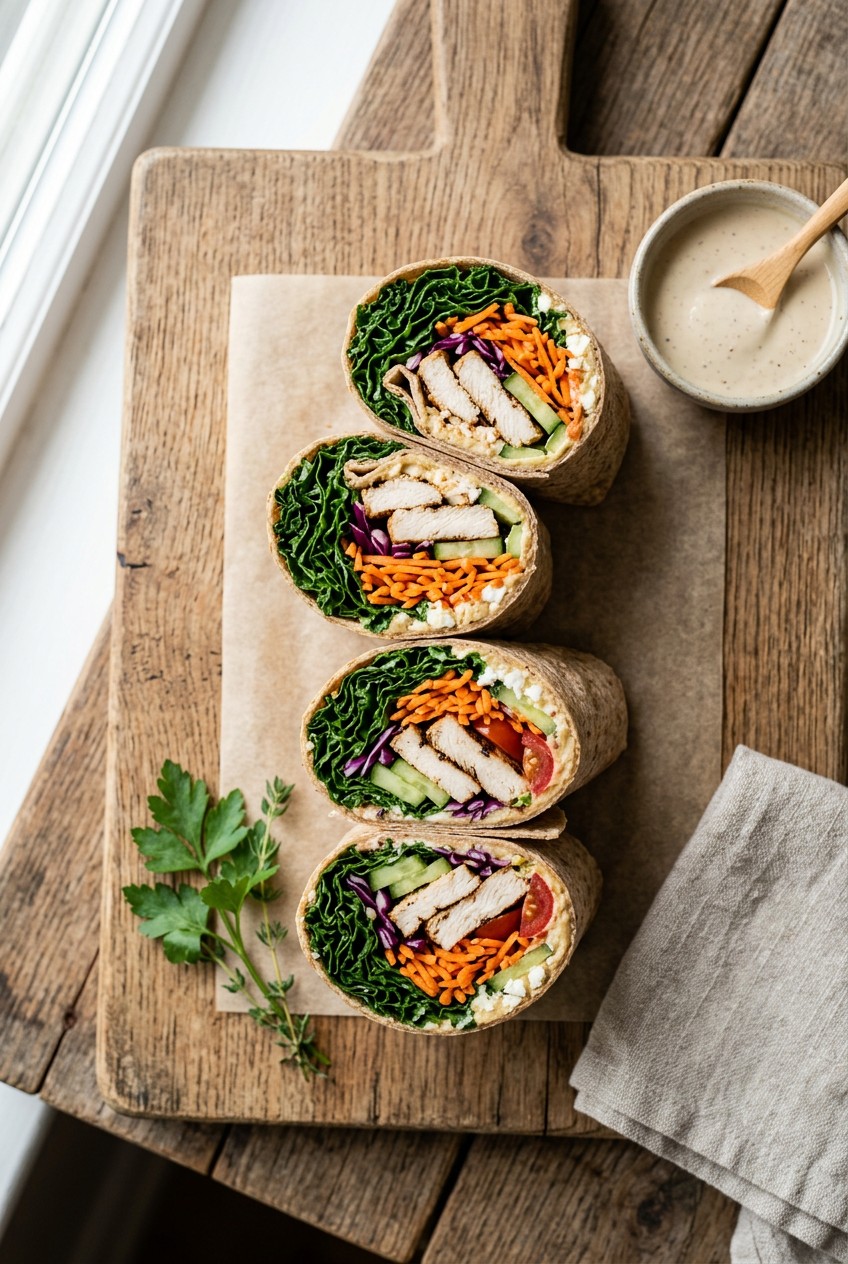
What’s Inside
- Choose the Right Tortilla for Durability
- Implement a Moisture Barrier Layer
- Cool All Cooked Ingredients Completely
- Pack Sauces and Dressings Separately
- Control Wet Ingredient Quantities
- Don’t Overfill Your Wraps
- Roll Your Wraps Tightly
- Opt for High-Protein Fillings
- Utilize Specific Low-Carb Brands
- Store Wraps Properly for Longevity
- Consider Freezing Certain Wraps
- Embrace the Deconstructed Method
Last Tuesday at my desk, I bit into my lunch and a stream of cold, murky tomato water ran straight down my wrist onto my favorite beige sweater. That soggy disaster is exactly why most people quit meal prep wraps. I’ve spent three years figuring out how to stop eating mushy, wet tortillas. Let’s fix your lunch routine. I’ll show you how I build my weekly lunches for under five dollars a serving. You don’t need fancy culinary skills. You just need the right ingredients and a few hard-learned techniques. I did this wrong for months. My fridge used to be a graveyard of split tortillas and wilted spinach. Now, I actually look forward to opening my lunchbox.
1. Choose the Right Tortilla for Durability

Not all wraps work for meal prep. I learned this when I bought those ultra-thin spinach wraps because they looked healthy. Big mistake. They dissolve into green paste the second they touch moisture. Skip the thin stuff. It tastes like wet cardboard anyway. You need a sturdy foundation if you want lunch to survive until Thursday. I swear by Mission Carb Balance Flour Tortillas. You can grab an 8-count pack for exactly $5.19 at Target. They’re fibrous and hold up to heavy fillings without tearing. For my classic chicken Caesar, I use 150g of sliced grilled chicken, 2 tablespoons of parmesan, and 1/4 cup of chopped romaine. To stay under five dollars, I buy the family pack of chicken on Sunday and grill it all at once. Here’s a trick most people miss: warm your tortillas. A quick 15 seconds in a hot cast iron pan makes them pliable. I tried rolling cold tortillas for months and they’d just crack, spilling chicken everywhere. Warming them releases a nutty aroma and makes the rolling process stress-free. Trust me.
2. Implement a Moisture Barrier Layer

A moisture barrier is the key to preventing soggy lunches. I ruined a whole week of meals in 2023 by putting sliced tomatoes against the bread. By Wednesday, my lunch was melting into the glass container. It tasted gross. Now, I spread a thick, dry layer onto the tortilla first. Joseph’s Lavash Bread is my favorite. You can buy a two-pack (16 wraps) for $24.95 online, or find them cheaper locally. They have 6g of net carbs and 60 calories per serving. To protect the lavash, I spread 1 tablespoon of whipped cream cheese edge-to-edge. Garlic hummus works too. Once the barrier is down, I add 4 oz of deli turkey, 2 slices of crispy bacon, and 1 slice of provolone. The cream cheese blocks moisture from the turkey, keeping the lavash dry. Large, dry leaves of romaine work as a secondary barrier, too. Don’t skip this, or you won’t enjoy your Thursday lunch.
3. Cool All Cooked Ingredients Completely

Hot fillings release steam. Steam condenses inside a sealed container and turns your lunch into a soggy sponge. I used to cook spicy beef on Sunday night, scoop it into tortillas while steaming hot, and toss them in the fridge. I couldn’t figure out why my Monday lunch felt like a wet towel. Always let cooked components cool to room temperature for at least 15 minutes before assembling. For my spicy beef wraps, I brown 1.1 lbs of lean beef mince. I buy the 93% lean beef at Walmart for $6.49 a pound. I season it with 1 teaspoon of smoked paprika and 1/2 teaspoon of garlic powder. The smell of that paprika hitting the skillet is incredible. I spread the beef on a baking sheet so it cools faster. Once it’s room temperature, I portion it out. I add 1/4 cup of diced red onions and 2 tablespoons of cheddar. Letting the meat cool ensures the fat and juices settle, so they won’t leak when you take a bite. You might also like: 15 Brilliant Salmon Dinner Ideas for Any Style

M MCIRCO 10-Pack,22 Oz Glass Meal Prep Containers
M MCIRCO 10-Pack punches above its price — 86 buyers rated it 4.5 stars. I would buy it again.
4. Pack Sauces and Dressings Separately

Sauces are the primary culprit for ruined lunches. A common mistake is adding dressing during prep. I once poured vinaigrette into Greek wraps on a Sunday. By Tuesday, the tortilla had disintegrated into mush. Packing thin sauces separately is mandatory. I bought 2-ounce plastic dressing cups from Amazon, and they’re lifesavers. For my Greek chicken version, I pack 4 oz of grilled chicken, 1/2 cup of diced cucumbers, and 1/4 cup of kalamata olives inside. Then, I put 2 tablespoons of tzatziki in a separate cup. I buy the store-brand tzatziki from Whole Foods for $4.99 for an 8 oz tub. It’s thick, tangy, and smells of fresh dill. When I’m ready to eat, I just dip the wrap bite by bite. This keeps everything dry all week. If you’re using a yogurt-based dressing or watery vinaigrette, don’t put it inside the wrap. Keep it on the side and your future self will thank you. You might also like: 15 Stunning Easy Lunch Ideas You Need to See
5. Control Wet Ingredient Quantities

Ingredients high in water content will destroy your meal prep. Tomatoes and cucumbers are notorious. I used to slice whole tomatoes and throw them in my lunchbox, only to find a puddle of pink water at noon. If you use wet vegetables, prep them right. I buy vine-ripe tomatoes from Sprouts Farmers Market for $2.99 a pound. I slice them open and scoop out the wet seeds with a spoon. Then, I pat the tomato flesh dry with a paper towel. It sounds tedious, but it’s mandatory. For a veggie wrap, I use 2 tablespoons of hummus, 1/4 cup of deseeded tomatoes, 1/4 cup of shredded carrots, and 1/4 cup of diced bell peppers. The peppers and carrots provide a massive crunch without leaking. If I don’t have time to deseed tomatoes, I leave them out. A dry, crunchy wrap beats a soggy mess every time. You might also like: 15 Gorgeous Chicken Breast Dinner Ideas That Make a Real Difference
6. Don’t Overfill Your Wraps

Overfilling is a rookie mistake that leads to exploding lunches. I used to pile ingredients so high I couldn’t fold the edges. I’d try to force it closed, the tortilla would rip, and I’d end up eating a deconstructed salad off my lap. Aim to cover no more than one-third of the tortilla surface, leaving space for a secure roll. For my buffalo chicken version, I stick to strict measurements. I use 150g of cooked chicken and 200g of shredded cabbage and carrots. I toss the chicken in 1 tablespoon of Frank’s RedHot, which costs $3.49 a bottle at Kroger. I place the filling off-center, fold in the sides, and roll tightly. Leaving two-thirds of empty space allows the tortilla to wrap around itself, creating a thick wall that won’t burst. It might look small, but once it’s rolled, it’s filling and structurally sound.

8 Pack 36oz Large Glass Meal Prep Containers with lids
Honestly, 8 Pack 36oz Large Glass Meal Prep Containers with lids surprised me — sturdier than it looks in the photos, and over 866 buyers gave it 4.5 stars.
7. Roll Your Wraps Tightly

A loosely rolled lunch allows air to circulate, which dries out ingredients. I spent years rolling food loosely, and it would always spill out after the first bite. You have to practice rolling tightly. For my tuna salad, I use a 4 oz can of albacore tuna from Trader Joe’s for $1.99. I mix it with 1 tablespoon of mayonnaise and 1/4 cup of diced celery. The snap of celery with creamy tuna is amazing. I place the filling on my moisture barrier, fold the left and right edges in an inch, and roll from the bottom up, tucking the filling under my fingers. Once rolled, I wrap the whole thing in parchment paper, then aluminum foil. The foil acts like a corset, holding the shape in the fridge. When I’m ready to eat, I peel the foil down like a banana. It catches rogue pieces of celery and keeps my hands clean.
8. Opt for High-Protein Fillings

High-protein lunches are great for staying full. If I don’t pack enough protein, I’m starving by 3:00 PM and reaching for office donuts. I focus on packing meals with dense meats. For weekly lunches, I prep 1.6 lbs of diced chicken on Sundays. I season it with salt, pepper, and oregano. For a high-protein breakfast burrito, I use Siete Almond Flour Tortillas. They’re a great gluten-free option. I buy the 20-pack at Costco for $11.89. Inside, I pack 2 scrambled eggs, 2 oz of turkey sausage, and 1 tablespoon of salsa (packed separately). The almond flour tortillas have a nutty flavor and chewy texture that pairs beautifully with sausage. Because I’m packing so much protein, these meals keep me full until dinner. Remember to warm the Siete tortillas first, as almond flour cracks if you bend it cold.
9. Utilize Specific Low-Carb Brands

For low-carb weeks, I’m picky. Most low-carb tortillas taste like dust and fall apart. I’ve tested almost everything. Egglife Egg White Wraps are my obsession for a zero-carb, gluten-free, and dairy-free alternative. You can find them at Target for $5.99 for a 6-pack. They provide 5g of protein per wrap. For a deli-style lunch, I use one Egglife wrap, 4 oz of black forest ham, 1 slice of sharp cheddar, and 1 teaspoon of Dijon mustard. There is one negative: they have a rubbery, squeaky texture if you eat them straight from the fridge. I learned that the hard way. The trick is to let them sit for 10 minutes at room temperature, or warm them in a skillet. Once they lose the fridge chill, they soften up and mimic a thin crepe. They’re perfect for heavy deli meats.
![[8-Pack,30 oz]Glass Meal Prep Containers](https://m.media-amazon.com/images/I/713Zfdsgi4L._AC_UL320_.jpg)
[8-Pack,30 oz]Glass Meal Prep Containers
[8-Pack punches above its price — 7 buyers rated it 4.5 stars. I would buy it again.
10. Store Wraps Properly for Longevity

How you store food is just as important as what you put inside. Once assembled, these meals stay fresh for up to 3 days. If you throw them loose into a bag, they’ll get soggy from fridge humidity. I invest in heavy-duty storage. I use Bayco glass container sets, which I bought on Amazon for $28 for an 18-piece set. They have locking lids with silicone seals that keep the air out. For my BBQ pork, I use 4 oz of pulled pork and a handful of dry coleslaw. Here’s my favorite hack: I fold a dry paper towel and place it at the bottom of the glass container. The paper towel absorbs condensation that builds up during the week. My lunches stay dry. I also keep the 2 tablespoons of BBQ sauce in a separate cup so the pork doesn’t soak through the bread by Wednesday.
11. Consider Freezing Certain Wraps

While not all ingredients freeze well, you can freeze certain combinations for two months. I do this when I find meat on sale and want to prep a massive batch. You can’t freeze watery vegetables like lettuce or tomatoes, because they’ll turn into black mush. I stick to cooked proteins, firm beans, and cheese. For my freezer stash, I make simple bean and cheese burritos. I use 1/2 cup of refried beans and 1/4 cup of shredded Monterey Jack. I wrap them in foil and store them in Stasher reusable silicone bags. I buy the half-gallon Stasher bags at Whole Foods for $12.99. They protect against freezer burn much better than cheap plastic. When I need a quick meal, I pull one out and thaw it overnight in the fridge. The next day, I heat it in a toaster oven. The cheese gets melty, and the outside gets a nice crunch. It’s a lifesaver on busy weeks.
12. Embrace the Deconstructed Method

For ingredients prone to sogginess, sometimes the best wrap is one you haven’t rolled yet. I call this the deconstructed approach. If I’m craving a chicken bacon ranch wrap, I know the ranch and wet tomatoes will destroy the bread if I assemble it on Sunday. Instead, I use Bentgo Prep 3-Compartment containers. You can get a set of 10 for around $13 on Amazon. I also love the Rubbermaid Brilliance 2-compartment containers, which cost $16.99 for a 5-pack at Target. In the main compartment, I fold up a dry, fresh tortilla. In the second, I put 4 oz of diced chicken, 2 slices of crumbled bacon, and a handful of spinach. In the tiny third compartment, I put my ranch and cherry tomatoes. When I sit down at my desk, I assemble it fresh in thirty seconds. The tortilla is soft, the bacon is crunchy, and the spinach isn’t wilted. It requires a bit of assembly at work, but the texture is worth it. No exaggeration.

KOMUEE 10 Packs 30 oz Glass Meal Prep Containers
Honestly, KOMUEE 10 Packs 30 oz Glass Meal Prep Containers surprised me — sturdier than it looks in the photos, and over 45 buyers gave it 4.5 stars.
Frequently Asked Questions
How do you keep meal prep wraps from getting soggy?
Create a moisture barrier using cream cheese or hummus, cool all cooked ingredients completely before rolling, and always pack wet sauces or dressings in separate containers. Deseeding watery vegetables like tomatoes also helps.
How long do meal prep wraps last in the fridge?
When stored properly in airtight glass containers with a dry paper towel to absorb moisture, most wraps will stay fresh for up to 3 days in the refrigerator without losing their texture.
Can you freeze meal prep wraps?
Yes, but only if they contain freezer-friendly ingredients like cooked meats, beans, and cheese. Avoid freezing wraps with fresh lettuce, cucumbers, or tomatoes, as they will turn mushy upon thawing.
What are the best tortillas for meal prep?
Sturdy, fibrous options like Mission Carb Balance Flour Tortillas or Joseph’s Lavash Bread work best. Avoid ultra-thin spinach or herb wraps, as they tend to tear and dissolve when exposed to moisture.
